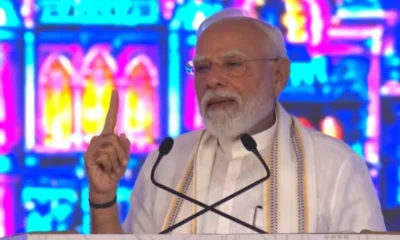
A number of key portfolios – including health, law, information and technology, and railways – have gone to new ministers and junior ministers who have elevated in Prime Minister Narendra Modi’s Council of Ministers.
Prime Minister Narendra Modi’s new cabinet has got 36 new ministers on Wednesday after a mega reshuffle. A number of key portfolios – including health, law, information and technology, and railways – have gone to new ministers and junior ministers who have elevated in Prime Minister Narendra Modi’s Council of Ministers. The total strength of the Council of Ministers is now 78, including the Prime Minister.
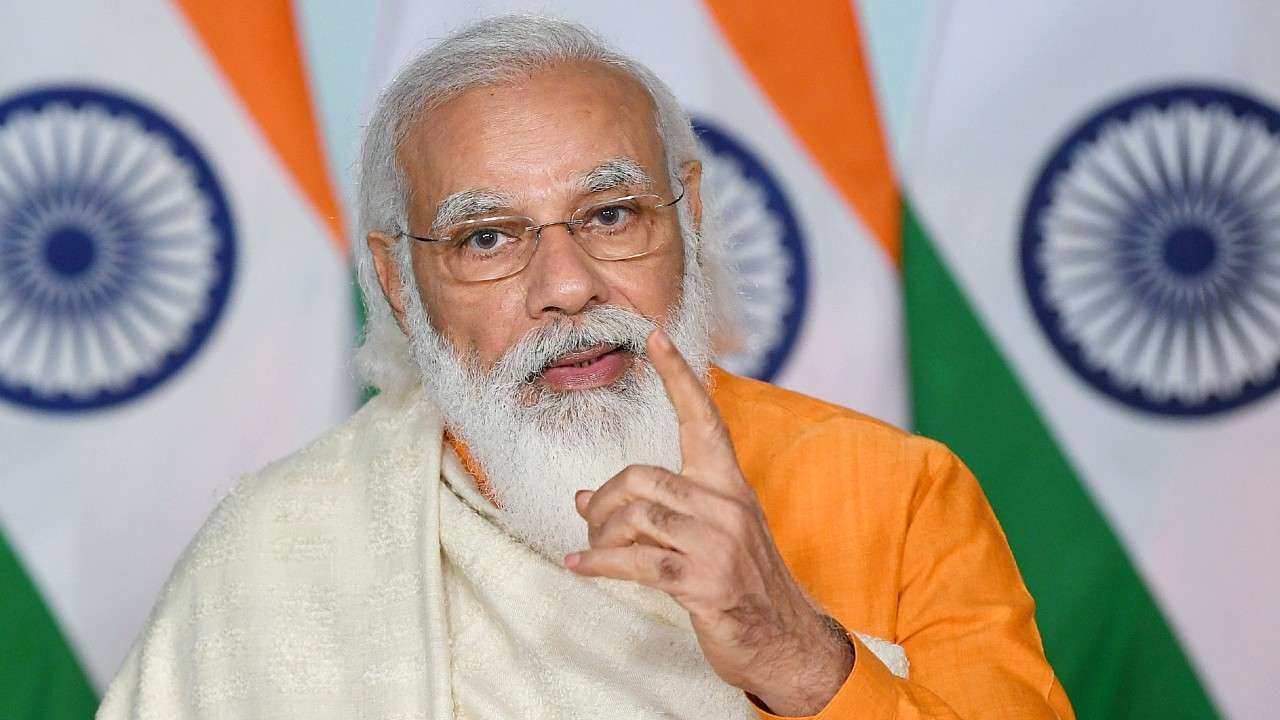
The current reshuffle has boosted the number of cabinet ministers from 21 to 30 and the number of junior ministers from 23 to 45.
Union Home Minister Amit Shah is the Home Minister and has got the charge of the newly-created Ministry of Cooperation.
Jyotiraditya Scindia, who recently left Congress and joined BJP has been given charge of the Civil aviation ministry at a time the sector is struggling under the Covid onslaught.
Anurag Singh Thakur has been given charge of the crucial Information and Broadcasting ministry and he will also handle Youth Affairs and Sports. He was a junior minister of finance and corporate affairs.
Ashwini Vaishnaw, the Rajya Sabha MP from Odisha, has been given charge of the Railways and IT ministry.
Sarbananda Sonowal has been given charge of the Ports, Shipping and Waterways portfolio.
Kiren Rijiju, who earlier handled the Youth Affairs and Sports and the Ayush ministry and was also the Minister of State for Minority Affairs is now been given the crucial Law and Justice Ministry.
Dharmendra Pradhan is now the Education Minister.
Piyush Goyal has been given the Ministry of Commerce and Industry; Ministry of Consumer Affairs, Food and Public Distribution; and ministry of Textiles
The reshuffle follows a protracted review exercise by PM Modi and the BJP top brass in a series of meetings with Ministers. These were held in the wake of the devastating Covid second wave that has set off widespread criticism of the Government for the mismanagement of the crisis.
RASHTRAPATI BHAVAN PRESS COMMUNIQUE
The President of India, as advised by the Prime Minister, has directed the allocation of portfolios among the following members of the council of Ministers
Narendra Modi
Prime Minister and also in-charge of Ministry of Personnel, Public Grievances and Pensions; Department of Atomic Energy; Department of Space; All important policy issues; and All other portfolios not allocated to any Minister
LIST OF CABINET MINISTERS
1.
Raj Nath Singh
Minister of Defence
2.
Amit Shah
Minister of Home Affairs; and minister of Cooperation
3.
Nitin Jairam Gadkari
Minister of Road Transport and Highways
4.
Nirmala Sitharaman
Minister of Finance; and minister of Corporate Affairs
5.
Narendra Singh Tomar
Minister of Agriculture and Farmers Welfare
6.
Dr Subrahmanyam Jaishankar
Minister of External Affairs
7.
Arjun Munda
Minister of Tribal Affairs
8.
Smriti Zubin Irani
Minister of Women and Child Development
9
Piyush Goyal
Minister of Commerce and Industry; Minister of Consumer Affairs, Food and Public Distribution; and minister of Textiles
10.
Dharmendra Pradhan
Minister of Education; and minister of Skill Development and Entrepreneurship
11.
Pralhad Joshi
Minister of Parliamentary Affairs; Minister of Coal; and minister of Mines
12.
Narayan Tatu Rane
Minister of Micro, Small and Medium Enterprises
13.
Sarbananda Sonowal
Minister of Ports, Shipping and Waterways; and minister of AYUSH
14.
Mukhtar Abbas Naqvi
Minister of Minority Affairs
15.
Dr Virendra Kumar
Minister of Social Justice and Empowerment
16.
Giriraj Singh
Minister of Rural Development; administer of Panchayati Raj
17.
Jyotiraditya M. Scindia
Minister of Civil Aviation
18.
Ramchandra Prasad Singh
Minister of Steel
19.
Ashwini Vaishnaw
Minister of Railways; Minister of Communications; and minister of Electronics and Information Technology
20.
Pashu Pati Kumar Paras
Minister of Food Processing Industries
21.
Gajendra Singh Shekhawat
Minister of Jal Shakti
22.
Kiren Rijiju
Minister of Law and Justice
23.
Raj Kumar Singh
Minister of Power; and minister of New and Renewable Energy
24.
Hardeep Singh Puri
Minister of Petroleum and Natural Gas; and minister of Housing and Urban Affairs
25.
Mansukh Mandaviya
Minister of Health and Family Welfare; and minister of Chemicals and Fertilizers
26.
Bhupender Yadav
Minister of Environment, Forest and Climate Change; and minister of Labour and Employment
27.
Dr Mahendra Nath Pandey
Minister of Heavy Industries
28.
Parshottam Rupala
Minister of Fisheries, Animal Husbandry and Dairying
29.
G Kishan Reddy
Minister of Culture; Minister of Tourism; and minister of Development of North Eastern Region
30.
Anurag Singh Thakur
Minister of Information and Broadcasting; and minister of Youth Affairs and Sports
MINISTERS OF STATE (INDEPENDENT CHARGE)
1.
Rao Inderjit Singh
Minister of State (Independent Charge) of the Ministry of Statistics and Programme Implementation; Minister of State (Independent Charge) of the Ministry of Planning; and minister of State in the Ministry of Corporate Affairs
2.
Dr Jitendra Singh
Minister of State (Independent Charge) of the Ministry of Science and Technology; Minister of State (Independent Charge) of the Ministry of Earth Sciences; Minister of State in the Prime Minister’s Office; Minister of State in the Ministry of Personnel, Public Grievances and Pensions; Minister of State in the Department of Atomic Energy; and Minister of State in the Department of Space
MINISTERS OF STATE
1.
Shripad Yesso Naik
Minister of State in the Ministry of Ports, Shipping and Waterways; and minister of State in the Ministry of Tourism
2.
Faggansingh Kulaste
Minister of State in the Ministry of Steel; and minister of State in the Ministry of Rural Development
3.
Prahalad Singh Patel
Minister of State in the Ministry of Jal Shakti; and minister of State in the Ministry of Food Processing Industries
4.
Ashwini Kumar Choubey
Minister of State in the Ministry of Consumer Affairs, Food and Public Distribution; and minister of State in the Ministry of Environment, Forest and Climate Change
5.
Arjun Ram Meghwal
Minister of State in the Ministry of Parliamentary Affairs; and minister of State in the Ministry of Culture
6.
General (Retd) V K Singh
Minister of State in the Ministry of Road Transport and Highways; and minister of State in the Ministry of Civil Aviation
7.
Krishan Pal
Minister of State in the Ministry of Power; and minister of State in the Ministry of Heavy Industries
8.
Danve Raosaheb Dadarao
Minister of State in the Ministry of Railways; Minister of State in the Ministry of Coal; and minister of State in the Ministry of Mines
9.
Ramdas Athawale
Minister of State in the Ministry of Social Justice and Empowerment
10.
Sadhvi Niranjan Jyoti
Minister of State in the Ministry of Consumer Affairs, Food and Public Distribution; and minister of State in the Ministry of Rural Development
11.
Dr Sanjeev Kumar Balyan
Minister of State in the Ministry of Fisheries, Animal Husbandry and Dairying
12.
Nityanand Rai
Minister of State in the Ministry of Home Affairs
13.
Pankaj Chowdhary
Minister of State in the Ministry of Finance
14.
Anupriya Singh Patel
Minister of State in the Ministry of Commerce and Industry
15.
S P Singh Baghel
Minister of State in the Ministry of Law and Justice
16.
Rajeev Chandrasekhar
Minister of State in the Ministry of Skill Development and Entrepreneurship; and minister of State in the Ministry of Electronics and Information Technology
17.
Shobha Karandlaje
Minister of State in the Ministry of Agriculture and Farmers Welfare
18.
Bhanu Pratap Singh Verma
Minister of State in the Ministry of Micro, Small and Medium Enterprises
19.
Darshana Vikram Jardosh
Minister of State in the Ministry of Textiles; and minister of State in the Ministry of Railways
20.
V Muraleedharan
Minister of State in the Ministry of External Affairs; and minister of State in the Ministry of Parliamentary Affairs
21.
Meenakshi Lekhi
Minister of State in the Ministry of External Affairs; and minister of State in the Ministry of Culture
22.
Som Parkash
Minister of State in the Ministry of Commerce and Industry
23
Renuka Singh Saruta
Minister of State in the Ministry of Tribal Affairs
24.
Rameswar Teli
Minister of State in the Ministry of Petroleum and Natural Gas; and minister of State in the Ministry of Labour and Employment
25.
Kailash Choudhary
Minister of State in the Ministry of Agriculture and Farmers Welfare
26.
Annapurna Devi
Minister of State in the Ministry of Education
27.
A Narayanaswamy
Minister of State in the Ministry of Social Justice and Empowerment
28.
Kaushal Kishore
Minister of State in the Ministry of Housing and Urban Affairs
29.
Ajay Bhatt
Minister of State in the Ministry of Defence; and minister of State in the Ministry of Tourism
30.
B L Verma
Minister of State in the Ministry of Development of North Eastern Region; and minister of State in the Ministry of Cooperation
31.
Ajay Kumar
Minister of State in the Ministry of Home Affairs
32.
Devusinh Chauhan
Minister of State in the Ministry of Communications
33.
Bhagwanth Khuba
Minister of State in the Ministry of New and Renewable Energy; and minister of State in the Ministry of Chemicals and Fertilizers
34.
Kapil Moreshwar Patil
Minister of State in the Ministry of Panchayati Raj
35.
Pratima Bhoumik
Minister of State in the Ministry of Social Justice and Empowerment
36.
Dr Subhas Sarkar
Minister of State in the Ministry of Education
37.
Dr Bhagwat Kishanrao Karad
Minister of State in the Ministry of Finance
38.
Dr Rajkumar Ranjan Singh
Minister of State in the Ministry of External Affairs; and minister of State in the Ministry of Education
39.
Dr Bharati Pravin Pawar
Minister of State in the Ministry of Health and Family Welfare
40.
Bishweswar Tudu
Minister of State in the Ministry of Tribal Affairs; and minister of State in the Ministry of Jal Shakti
41.
Shantanu Thakur
Minister of State in the Ministry of Ports, Shipping and Waterways
42.
Dr Munjapara Mahendrabhai
Minister of State in the Ministry of Women and Child Development; and minister of State in the Ministry of AYUSH
43.
John Barla
Minister of State in the Ministry of Minority Affairs
44.
Dr L Murugan
Minister of State in the Ministry of Fisheries, Animal Husbandry and Dairying; and minister of State in the Ministry of Information and Broadcasting
45.
Nisith Pramanik
Minister of State in the Ministry of Home Affairs; and minister of State in the Ministry of Youth Affairs and Sports
What the cabinet looked like till July 6
Name
Ministry
Narendra Modi
Ministry of Personnel, Public Grievances and Pensions Department of Atomic Energy Department of Space All important policy issues and all other portfolios not allocated to any Minister
Rajnath Singh
Ministry of Defence
Amit Shah
Ministry of Home Affairs
Nitin Gadkari
Ministry of Road Transport and Highways Ministry of Micro, Small and Medium Enterprises
Ministry of Chemicals and Fertilizers
Nirmala Sitharaman
Ministry of Finance Ministry of Corporate Affairs
Narendra Singh Tomar
Ministry of Agriculture & Farmers Welfare Ministry of Rural Development Ministry of Panchayati Raj Ministry of Food Processing Industries
Ministry of Law and Justice Ministry of Communications Ministry of Electronics and Information Technology
Ministry of Social Justice and Empowerment
Dr. Subrahmanyam Jaishankar
Ministry of External Affairs
Ministry of Education
Arjun Munda
Ministry of Tribal Affairs
Smriti Zubin Irani
Ministry of Women and Child Development Ministry of Textiles
Ministry of Health and Family Welfare Ministry of Science and Technology Ministry of Earth Sciences
Ministry of Environment, Forest and Climate Change Ministry of Information and Broadcasting Ministry of Heavy Industries and Public Enterprises
Piyush Goyal
Ministry of Railways Ministry of Commerce and Industry Ministry of Consumer Affairs, Food and Public Distribution
Dharmendra Pradhan
Ministry of Petroleum and Natural Gas Ministry of Steel
Mukhtar Abbas Naqvi
Ministry of Minority Affairs
Pralhad Joshi
Ministry of Parliamentary Affairs Ministry of Coal Ministry of Mines
Mahendra Nath Pandey
Ministry of Skill Development and Entrepreneurship
Giriraj Singh
Ministry of Animal Husbandry, Dairying and Fisheries
Gajendra Singh Shekhawat
Ministry of Jal Shakti
Ministers of State (Independent Charge)
Name
Ministry
Ministry of Labour and Employment
Rao Inderjit Singh
Ministry of Statistics and Programme Implementation Ministry of Planning
Shripad Yesso Naik
Ministry of Ayurveda, Yoga and Naturopathy, Unani, Siddha and Homoeopathy (AYUSH)
Jitendra Singh
Ministry of Development of North Eastern Region
Kiren Rijiju
Ministry of Youth Affairs and Sports
Prahalad Singh Patel
Ministry of Culture Ministry of Tourism
Raj Kumar Singh
Ministry of Power Ministry of New and Renewable Energy
Hardeep Singh Puri
Ministry of Housing and Urban Affairs Ministry of Civil Aviation
Mansukh L. Mandaviya
Ministry of Shipping
Ministers of State
Name
Ministry
Shripad Yesso Naik
Ministry of Defence
Dr. Jitendra Singh
Prime Minister’s Office Ministry of Personnel, Public Grievances and Pensions Department of Atomic Energy Department of Space
Kiren Rijiju
Ministry of Minority Affairs
Raj Kumar Singh
Ministry of Skill Development and Entrepreneurship
Hardeep Singh Puri
Ministry of Commerce and Industry
Mansukh L. Mandaviya
Ministry of Chemicals and Fertilizers
Faggansingh Kulaste
Ministry of Steel
Ministry of Health and Family Welfare
Arjun Ram Meghwal
Ministry of Parliamentary Affairs Ministry of Heavy Industries and Public Enterprises
General (Retd.) V.K. Singh
Ministry of Road Transport and Highways
Krishan Pal
Ministry of Social Justice and Empowerment
Ministry of Consumer Affairs, Food and Public Distribution
G. Kishan Reddy
Ministry of Home Affairs
Parshottam Rupala
Ministry of Agriculture & Farmers Welfare
Ramdas Athawale
Ministry of Social Justice and Empowerment
Sadhvi Niranjan Jyoti
Ministry of Rural Development
Ministry of Environment, Forest and Climate Change
Sanjeev Kumar Balyan
Ministry of Animal Husbandry, Dairying and Fisheries
Ministry of Education Ministry of Communications Ministry of Electronics and Information Technology
Anurag Singh Thakur
Ministry of Finance Ministry of Corporate Affairs
Nityanand Rai
Ministry of Home Affairs
Ministry of Jal Shakti Ministry of Social Justice and Empowerment
V. Muraleedharan
Ministry of External Affairs Ministry of Parliamentary Affairs
Renuka Singh Saruta
Ministry of Tribal Affairs
Som Parkash
Ministry of Commerce and Industry
Rameswar Teli
Ministry of Food Processing Industries
Ministry of Micro, Small and Medium Enterprises Ministry of Animal Husbandry, Dairying and Fisheries
PM Modi assures no discrimination in women’s quota, delimitation debate intensifies in Parliament
PM Narendra Modi has assured that women’s reservation will be implemented without discrimination, amid a heated debate over delimitation in Parliament.
Prime Minister Narendra Modi has assured that there will be no discrimination in the implementation of women’s reservation, as Parliament witnessed a sharp debate over the proposed linkage between the quota and delimitation exercise.
During the ongoing special session, the government reiterated its commitment to ensuring fair representation while addressing concerns raised by opposition parties regarding the timing and structure of the legislation.
The proposed framework aims to reserve 33 percent of seats for women in the Lok Sabha and state assemblies. However, its implementation is tied to a fresh delimitation exercise, which is expected after the next census.
Opposition questions timing and intent
Opposition leaders have raised concerns that linking the women’s quota to delimitation could delay its implementation. They argue that the process of redrawing constituencies may push the actual rollout further into the future.
The issue has triggered a broader political confrontation, with multiple parties questioning whether the move could alter representation across states.
Some critics have also alleged that the delimitation exercise could disproportionately benefit certain regions based on population, a charge the government has rejected.
Government reiterates commitment to fair implementation
Responding to these concerns, the Centre has maintained that the reforms are necessary to ensure accurate and updated representation based on population data.
Leaders from the ruling side have repeatedly emphasized that the process will be carried out transparently and without bias. The assurance that there will be “no discrimination” is aimed at addressing fears among states and opposition parties.
The debate marks a key moment in Parliament, with both sides engaging in intense exchanges over one of the most significant electoral reforms in recent years.
Give all tickets to Muslim women, Amit Shah says, attacking Akhilesh Yadav on sub-quota demand
A sharp exchange between Amit Shah and Akhilesh Yadav in Parliament over sub-quota for Muslim women highlights key divisions on women’s reservation implementation.
A heated exchange broke out in Parliament during discussions on the women’s reservation framework, with Union Home Minister Amit Shah and Samajwadi Party chief Akhilesh Yadav locking horns over the demand for a sub-quota for Muslim women.
The debate unfolded as the government pushed forward key legislative measures to implement 33% reservation for women in the Lok Sabha and state assemblies.
Akhilesh Yadav argued that the proposed reservation must ensure representation for women from marginalised communities, including Other Backward Classes (OBCs) and Muslim women. He said that without such provisions, large sections could remain excluded from political participation.
He also questioned the timing of the bill, alleging that the Centre was avoiding a caste census. According to him, a census would lead to renewed demands for caste-based reservations, which the government is reluctant to address.
Government rejects religion-based quota
Responding to the demand, Amit Shah made it clear that reservation based on religion is not permitted under the Constitution.
He stated that any proposal to provide quota to Muslims on religious grounds would be unconstitutional, firmly rejecting the idea of a separate sub-quota for Muslim women within the broader reservation framework.
The government has maintained that the existing framework already includes provisions for Scheduled Castes (SC) and Scheduled Tribes (ST) women within the overall reservation structure.
Wider political divide over implementation
The issue of sub-categorisation within the women’s quota has emerged as a major flashpoint, even as most opposition parties broadly support the idea of women’s reservation.
Samajwadi Party leaders reiterated that their support for the bill depends on inclusion of OBC and minority women, while the government continues to defend its constitutional position.
The debate is part of a broader discussion during the special Parliament session, where multiple bills linked to delimitation and implementation of the women’s quota are being taken up.
No state will lose a seat, Centre assures as delimitation debate takes centre stage in Parliament
Parliament’s special session begins with key focus on implementing women’s reservation and delimitation, setting the stage for major electoral changes.
A special session of Parliament commenced on Thursday, with the Centre set to take up crucial legislation related to women’s reservation and delimitation of constituencies. The session, scheduled over three days, is expected to witness intense debate as the government pushes forward its legislative agenda.
At the centre of discussions is the proposal to operationalise the women’s reservation law, which seeks to allocate 33 percent of seats in the Lok Sabha and state assemblies to women. The law, passed earlier, requires enabling provisions before it can be implemented.
The rollout of the reservation is closely tied to the delimitation exercise — a process that redraws parliamentary constituencies based on updated population data. The implementation is expected only after the next census and delimitation process are completed.
The government is aiming to put in place the framework so that the reservation can be enforced in future elections, likely around 2029.
Delimitation and numbers at play
Delimitation is a key aspect of the proposed changes, as it will determine how seats are redistributed and which constituencies are reserved. The exercise is expected to reflect population shifts and may also involve an increase in the total number of Lok Sabha seats.
This linkage has made the issue politically sensitive, with several opposition parties backing women’s reservation in principle but raising concerns over how and when delimitation will be carried out.
Political reactions and expected debate
The session is likely to see sharp exchanges between the government and opposition. While there is broad agreement on increasing women’s representation, disagreements remain over the timing, process, and potential political implications of the delimitation exercise.
Some leaders have argued that delimitation could significantly alter the balance of representation among states, making it a contentious issue beyond the women’s quota itself.
The government, however, has framed the move as a step toward strengthening women’s participation in governance and ensuring more inclusive policymaking.
APN News is today the most watched and the most credible and respected news channel in India. APN has been at the forefront of every single news revolution. The channel is being recognized for its in-depth, analytical reportage and hard hitting discussions on burning issues; without any bias or vested interests.