English हिन्दी
Connect with us

India News

India condemns vandalism at temple in California

The BAPS organization took to social media, expressing their outrage and calling for unity in the face of hate.

Published

on

On Sunday, March 9, India strongly condemned an incident of vandalism that took place at a Hindu temple in Chino Hills, California, and called for “stringent action” against those responsible. The Indian government expressed its concern over the attack, emphasizing the need for proper security measures at places of worship in light of this troubling event.

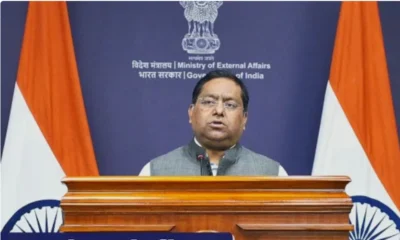
External Affairs Ministry spokesperson Randhir Jaiswal addressed the media regarding the incident, stating, “We have seen reports regarding the vandalism at a Hindu temple in Chino Hills, California. We condemn such despicable acts in the strongest terms.” He further urged local law enforcement authorities to take decisive action against the perpetrators of this act and stressed the importance of ensuring adequate security for places of worship to prevent further incidents.

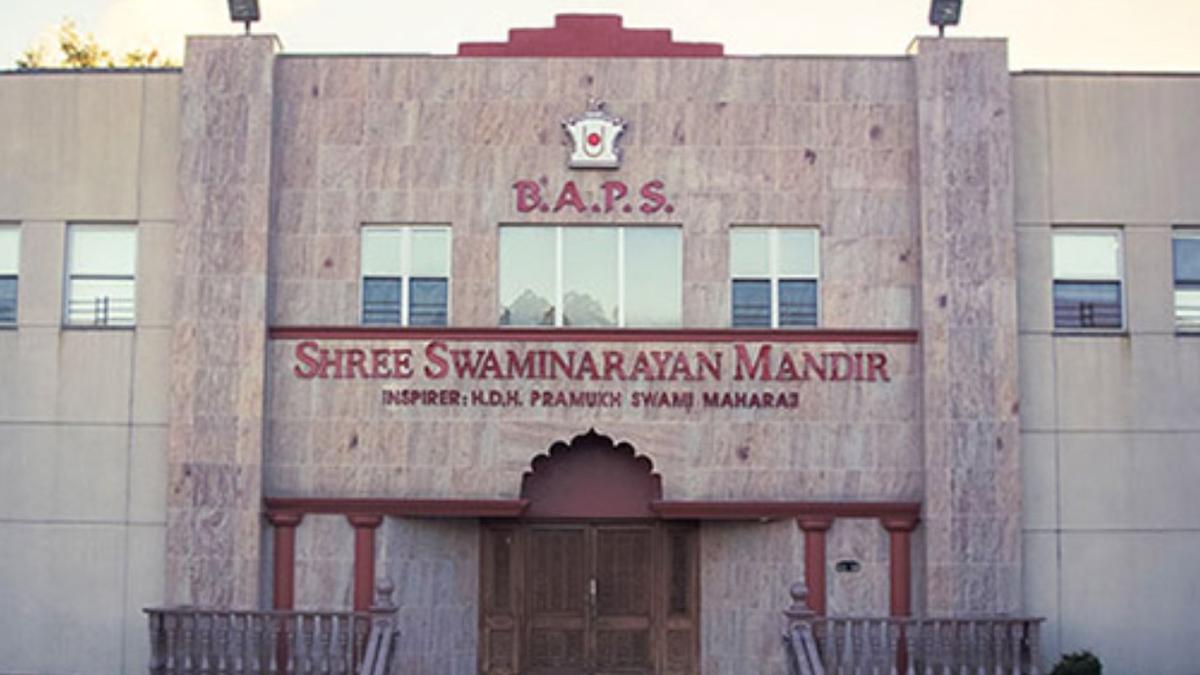
The Bochasanwasi Akshar Purushottam Swaminarayan Sanstha (BAPS), which oversees the Shri Swaminarayan Mandir in Chino Hills, reported the vandalism on March 8, 2025. The temple has been a center for the Hindu community in the area, and the desecration has caused significant distress among its members. The BAPS organization took to social media, expressing their outrage and calling for unity in the face of hate.
In their statement on X, BAPS Public Affairs remarked, “In the face of another Mandir desecration, this time in Chino Hills, CA, the Hindu community stands steadfast against hate. Together with the community in Chino Hills and Southern California, we will never let hate take root.” This declaration reflects the resilience of the Hindu community in confronting acts of intolerance and discrimination.

U.S. lawmakers have also expressed their outrage over similar incidents, notably pointing to a recent act of vandalism at a temple in New York. Their statements underline a broader concern regarding the safety of religious institutions and the rising tide of hate crimes targeting various faiths across the country.

In summary, India’s condemnation of the vandalism in Chino Hills highlights the need for protective measures for places of worship and a collective commitment to combating hate in all forms.

India News

No uniform civil code provisions will be imposed on tribals, clarifies Amit Shah

Union Home Minister Amit Shah has assured tribal communities that the proposed Uniform Civil Code will not interfere with their customs, urging them not to be misled by misinformation.

Published

on

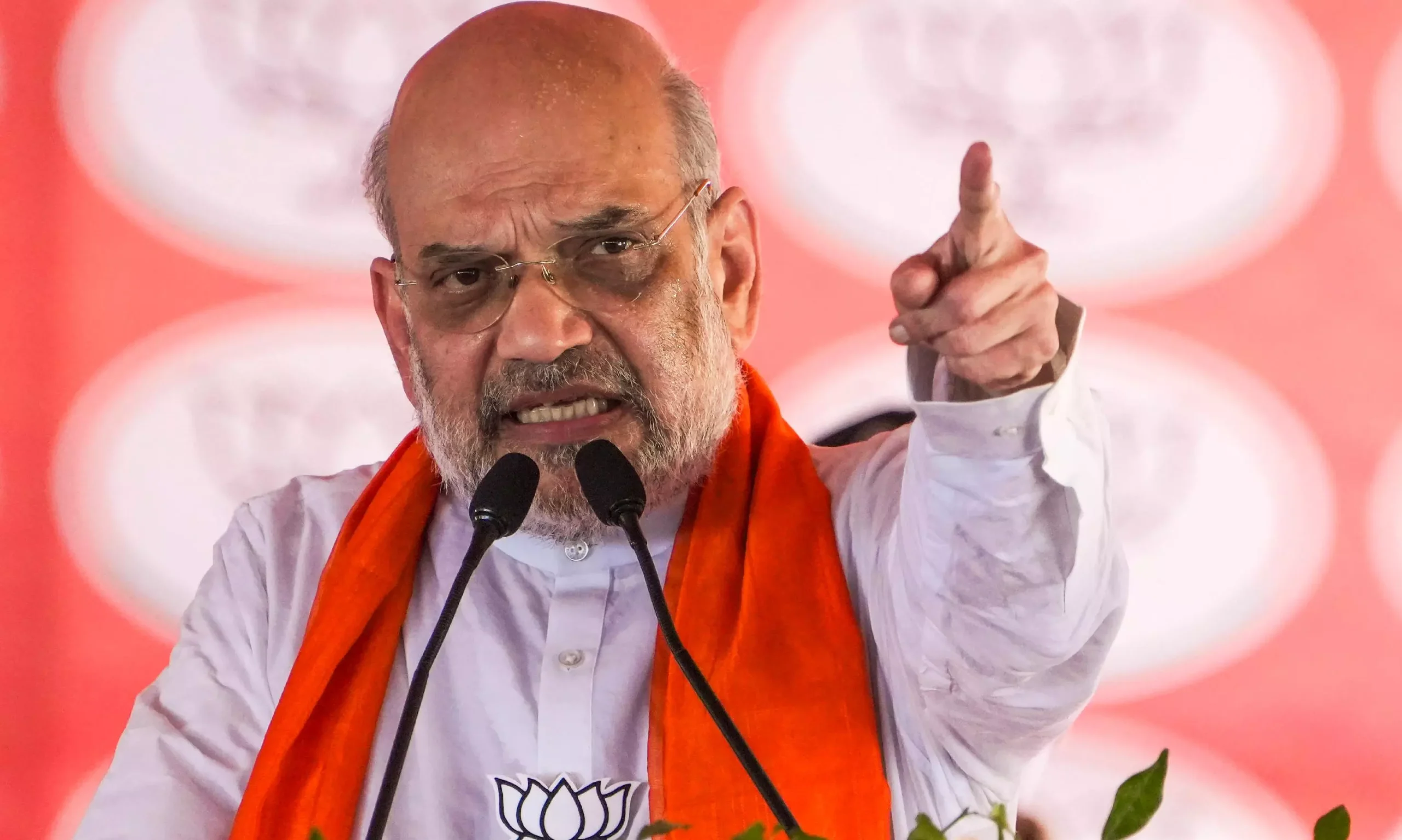
Union Home Minister Amit Shah on Sunday declared that the proposed Uniform Civil Code (UCC) will not impact tribal populations in any manner. He called upon the community to stay vigilant against “conspiracies” and misinformation circulating on the subject.

Addressing the Janjati Sanskritik Samagam—a tribal conclave organized by the Janjati Suraksha Manch at the Red Fort grounds to mark the 150th birth anniversary year of Birsa Munda—Shah stated that specific provisions have been implemented in states ruled by the ruling party to exclude tribal communities from the scope of the code.

Clarification on customs and traditions

The Home Minister highlighted that a deliberate narrative has emerged suggesting the proposed legislation would strip tribal societies of their distinct culture, traditions, and customary lifestyles.

He explicitly clarified that the central government has no intention of forcing UCC regulations upon tribal or Vanvasi communities. Shah pointed out that where regional administrations have initiated the code, care has been taken by the leadership to ensure that indigenous populations remain fully outside its jurisdiction. He requested attendees to disseminate this assurance deeply into forest zones and rural villages to erase lingering apprehensions.

Focus on security and community development

Beyond the legislative framework, Shah detailed the progress made toward curbing internal security threats, stating that the nation is steadily advancing toward eradicating Naxalism entirely. He noted that violent disruptions had severely restricted progress in these belts for decades, leading to the loss of thousands of tribal lives. According to the minister, regional stability will now pave the way for accelerated development across remote hills and forests.

The address also covered constitutional rights regarding personal faith. Shah mentioned that the original framework of the Constitution grants every citizen the dignity to practice their traditional beliefs without facing coercion, temptation, or material inducement for religious conversion.

Reflecting on financial allocations, the minister criticized earlier political administrations for keeping tribal welfare funding low. He underscored that the current administration under Prime Minister Narendra Modi significantly elevated the dedicated tribal budget from a previous Rs 28,000 crore to Rs 1.54 lakh crore. Terming the vast gathering a historical movement for cultural preservation, Shah described the societal awakening as a major step toward safeguarding tribal heritage for future generations.

Continue Reading

India News

Petrol crosses Rs 100 mark in Delhi after fresh Rs 2 hike amid global tensions

Petrol and diesel prices have been hiked by Rs 2 per litre in Delhi, pushing petrol past the Rs 100 mark. The revision marks the fourth increase within two weeks, driven by the ongoing Iran-US conflict.

Published

on

fuel price hike

In a significant blow to daily commuters, domestic fuel prices have been raised once again. Petrol and diesel rates were increased by Rs 2 per litre on Monday, marking the fourth such upward revision in the last two weeks. With this latest hike, the price of petrol has officially breached the psychological threshold of Rs 100 per litre in the national capital.

The consecutive revisions come on the back of severe disruptions in global oil supplies triggered by the ongoing military escalation between Iran and the United States. As international crude markets navigate the fallout of the West Asia crisis, domestic oil marketing companies have steadily passed the financial burden onto consumers to cope with surging production costs. Prior to this update, fuel rates had already experienced multiple sharp spikes over the last fortnight, compounding the financial strain on households.

Media reports indicate that while the central government had previously managed to hold steady on retail prices during the early phases of the geopolitical disruption, the sustained pressure on global energy supply routes has left local distributors with little choice but to adjust domestic rates accordingly.

Continue Reading

India News

Delhi heatwave alert as mercury touches 44 degrees across capital

Delhi witnessed its hottest May day since 2024 on Monday as dry scorching winds pushed local temperatures past the 44 degrees Celsius mark, prompting a multi-day weather alert.

Published

on

heatwave

The national capital was gripped by relentless dry winds and piercing heat on Monday, turning the city into a virtual furnace as maximum temperatures breached the 44 degrees Celsius mark in several localities. Residents are now bracing for an extended period of punishing summer conditions over the coming week.

According to the official weather department, Delhi’s base station at Safdarjung registered a maximum temperature of 43.4 degrees Celsius, which is 3 degrees higher than the seasonal normal. Meanwhile, the minimum temperature settled at 26.3 degrees Celsius. Although official heatwave criteria were not formally declared for the entire city, Monday marked the hottest day in May since 2024. The previous high for the month was observed on May 17, 2024, when the temperature reached 43.6 degrees Celsius.

Localized temperatures surge beyond 44 degrees

Among regional tracking stations, Ridge recorded the highest temperature at 44.6 degrees Celsius (3.1 degrees above normal). It was closely followed by Ayanagar at 44.4 degrees Celsius, Lodhi Road at 43.8 degrees Celsius, and Palam at 43.5 degrees Celsius. The minimum temperatures across most suburban pockets hovered around 26 degrees Celsius, aligning mostly with seasonal expectations.

The weather office has forecast sustained heatwave conditions across northwestern and central India. The capital is expected to see temperatures fluctuate between 43 and 45 degrees Celsius. Formally, a heatwave is logged when maximum temperatures cross 40 degrees Celsius and remain 4.5 to 6.4 degrees above normal for a continuous duration. A yellow alert remains active for Tuesday, with expectations of a maximum temperature of 44 degrees Celsius and a minimum around 28 degrees Celsius.

Thar Desert winds trap heat over Delhi-NCR

Independent weather experts stated that intense northwesterly winds traveling from Rajasthan’s Thar Desert and parts of central Pakistan are driving the surge. As these winds cross large arid stretches, they turn exceptionally dry, trapping heat near the ground surface and escalating local conditions.

Experts also noted that elevated night temperatures are a result of severe daytime heating. Because the ground lacks sufficient time to release the stored heat overnight, nights remain uncomfortably warm. With no forecast for thunderstorms or pre-monsoon showers over the next 10 days, the dry spell is likely to persist, heightening the risk of heat-related illnesses and sunstrokes.

Furthermore, environmental researchers highlighted that according to district-level vulnerability assessments, more than half of Delhi’s districts face a very high to extreme risk from heat. The lack of nighttime cooling reduces the human body’s capacity to recover from daytime thermal stress. On the environmental front, the city’s air quality index (AQI) was recorded at 173, remaining in the ‘moderate’ category.

Continue Reading

Trending

© Copyright 2022 APNLIVE.com