
India News
Kanjhawala killing: Woman dies after car drags her 4 km, court sends all 5 accused to 3-day police remand
The family of deceased demands imposing sections of murder and rape against accused youth


Delhi Police’s theory has come under question in the death case of a 20-year-old girl, who was dragged on the road for about 4 km in the Delhi amid New Year celebrations. Police say that it is a fatal accident, but the family members are persistent on calling it murder.
Meanwhile, the five accused were produced before the Delhi’s Rohini court on Monday. The court has sent them to police remand for three days.
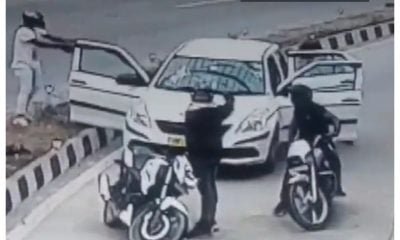
Watch the viral CCTV footage here:
The victim’s mother says that her daughter was wearing many clothes, but when her body was found, she was completely naked. There was not even a single cloth. What kind of accident is this, she asks.
Meanwhile, Delhi Police PRO Suman Alva said that there is news on many media groups about inclusion of sections of rape and murder in the FIR in this case. This is not true, he said, adding that it was the victim’s family demand that these sections should also be included in the investigation. The Medical Board will conduct the autopsy of the body first and further action will be taken only after the report comes.
On December 31, in Delhi’s Kanjhawala area, 5 car-borne youth hit a 20-year-old woman. After the accident, the youth tired to flee in their car. The girl got stuck under the car and was dragged on the road for about 4 km. According to the police, she died on the spot. The police have arrested all the five youths.
Woman’s flesh peeled off to bones
A CCTV footage of the incident has come to the fore, in which, the woman can be seen getting dragged under the car. According to reports, the woman was trapped under the car for four kilometres. Due to being dragged, the bones of the woman’s back and head were badly worn off. The bones of both the legs were also broken, due to which she died a very painful death. Her clothes were torn too and when her dead body was found, there was not a single cloth left on her body.
Know here about the victim
The name of the victim is Rekha. She lived in Aman Vihar. Her family consists of her mother and two brothers and four sisters. She was the sole bread-earner and worked in an event management company. She had left home for work in an event on New Year. It was learnt that she was returning from one such event on Saturday-Sunday night. She was going home riding her scooty. At the same time, the five accused youth were also on the same route in their car.
Read Also: 14 coaches of Suryanagari Express derail in Rajasthan, 24 passengers injured, 12 trains diverted
Family not satisfied with police investigation, says, Nirbhaya-like case
The family has levelled more allegations against the accused youth saying that this is a case of murder after rape. Her clothes cannot be torn just like that. When she was found, there was not a single cloth on her body. The family wants a thorough investigation into the matter. Prem Singh, maternal uncle of the victim girl said that this case is like Nirbhaya and that he wants justice. There should be a fair investigation in this matter.
Police claim – it is just a fatal accident
DCP Harendra Singh said that Kanjhawala area belongs to Rohini sub city. They had received information of a woman being dragged from a car.
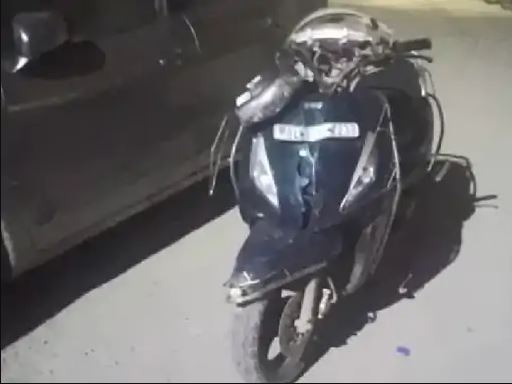
On this, the police there verified the number of the car. After this the people present in car were arrested. During interrogation, it was found that there was an accident with a scooty in Sultanpur area. After which, the girl was kept getting dragged along with the car. This whole matter is of accident. The woman’s body got mutilated due to the accident. DCP Singh also said that the news in the media of sexual assault and murder was totally wrong.
Medical test of accused will be conducted
The police have arrested all the five accused. The car has also been taken into custody. A case of culpable homicide has been registered against the accused. Medical tests of the accused are being conducted to ascertain whether they were intoxicated.
My head hangs in shame: LG Delhi
Lieutenant Governor of Delhi VK Saxena has expressed his condolences in the accident. He has tweeted that his head hangs in shame at this inhuman crime in Kanjhawla-Sultanpuri.
He also wrote that he was shocked at the monstrous insensitivity of the perpetrators. He has been monitoring the case and that all aspects were being thoroughly looked into.
Swati Maliwal issues notice to Delhi police
DCW Chairperson Swati Maliwal has reacted on this matter. She said that a naked dead body of a woman was found in Delhi’s Kanjhawala, it is being told that some boys in an inebriated state hit her scooty with a car and dragged her for several kilometres.
She also said that this matter was very dangerous, and that she was issuing summons to Delhi Police. The whole truth should come out. Along with this, she has also raised questions on the preparations of Delhi Police regarding the New Year.







India News
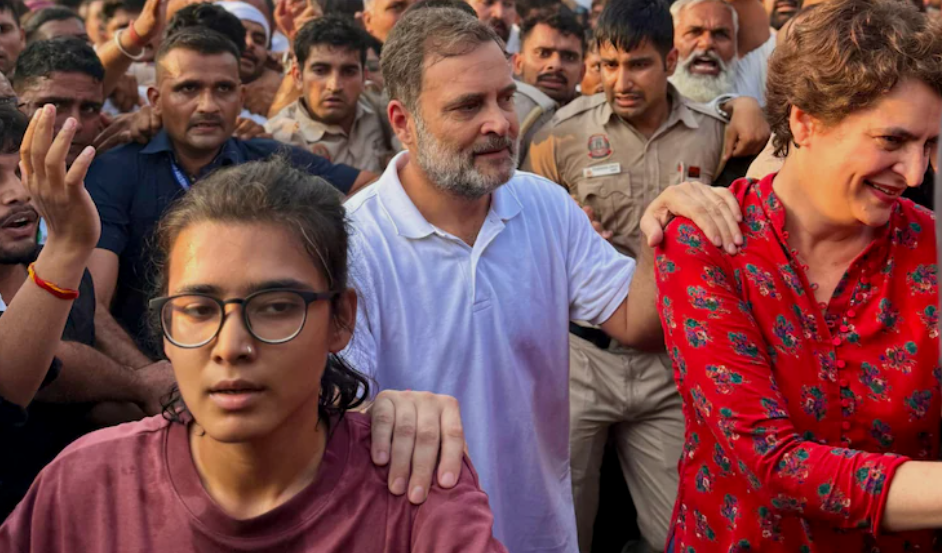
Nobody can browbeat judiciary, Chief Justice warns over Rahul Gandhi’s march
The Supreme Court issued notices to opposition leaders, including Rahul Gandhi and Akhilesh Yadav, over their march to the court on October 12 concerning irregularities in the Special Intensive Revision of electoral rolls.

India News
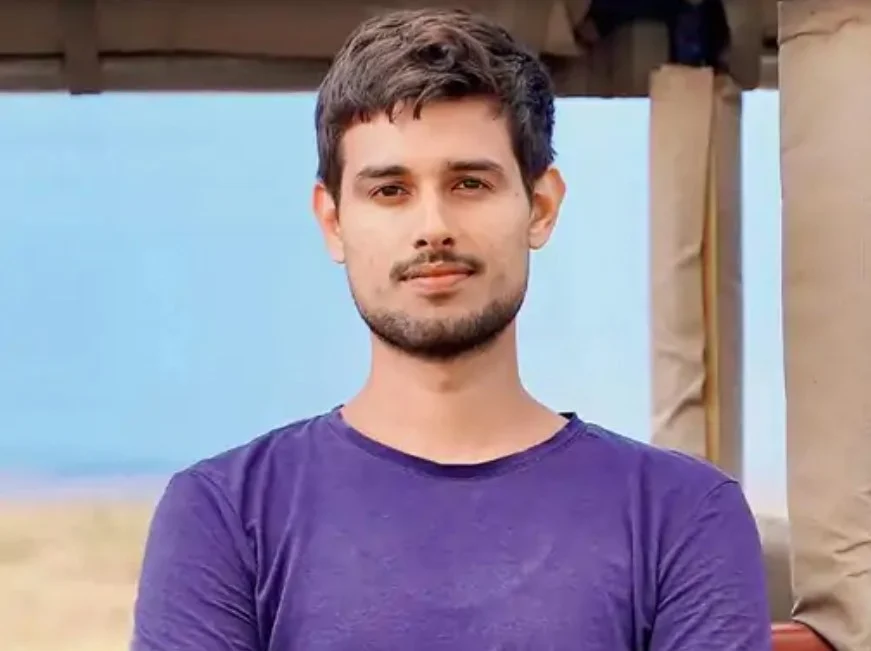
Dhruv Rathee gets fresh summons in 2018 BJP IT cell video case
YouTuber Dhruv Rathee has received fresh summons from a Delhi court in a 2018 criminal defamation case filed by Vikas Pandey over a video concerning the BJP IT Cell. The matter will next be heard on October 17.
India News
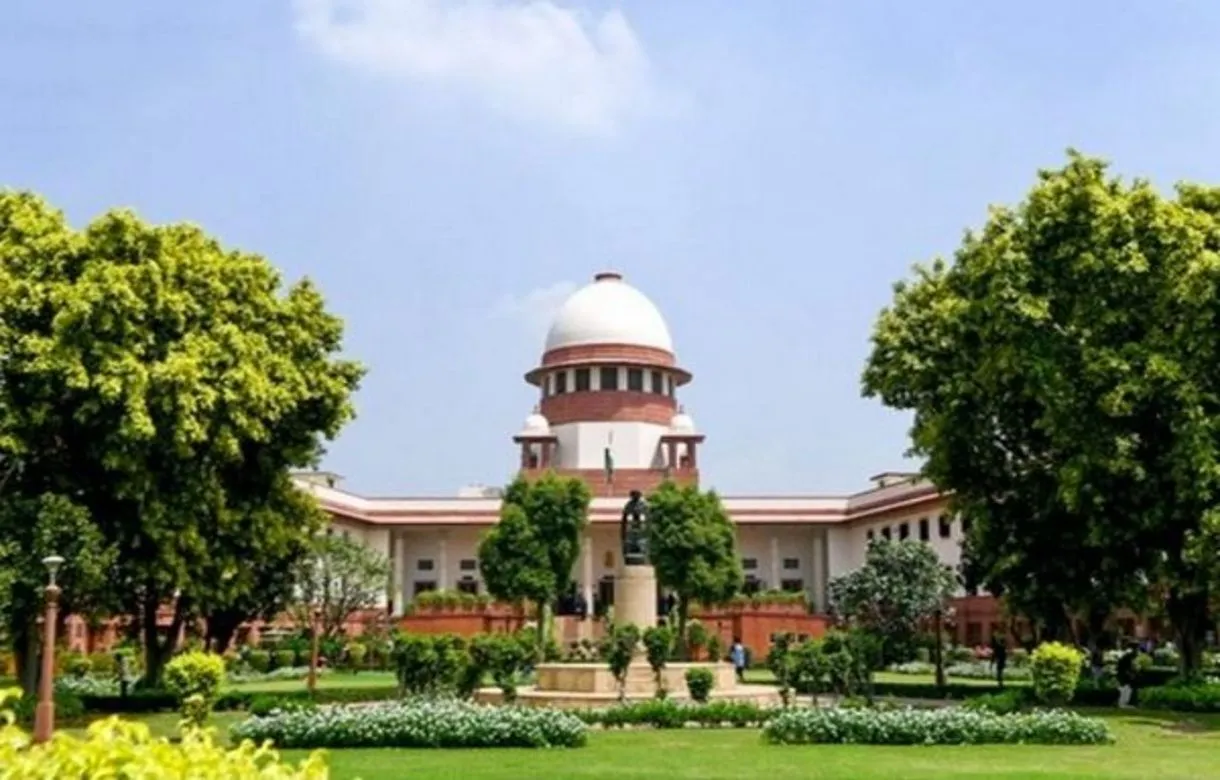
Supreme Court questions EC over missing records in Sringeri election dispute
The Supreme Court questioned the Election Commission over missing video footage of the 2023 counting in Karnataka’s Sringeri constituency. The case involves a revised result following a recount of postal ballots.

Meerut murder: Muskaan Rastogi and Sahil Shukla get death sentence

Rahul Gandhi joins India Gate protest by Ankita Bhandari’s parents

Supreme Court questions EC over missing records in Sringeri election dispute

Dhruv Rathee gets fresh summons in 2018 BJP IT cell video case

Nobody can browbeat judiciary, Chief Justice warns over Rahul Gandhi’s march
Nobody can browbeat judiciary, Chief Justice warns over Rahul Gandhi’s march
Dhruv Rathee gets fresh summons in 2018 BJP IT cell video case
Supreme Court questions EC over missing records in Sringeri election dispute
Rahul Gandhi joins India Gate protest by Ankita Bhandari’s parents
Meerut murder: Muskaan Rastogi and Sahil Shukla get death sentence

Afghan Men Try To Hang With The Jet Engine Of The Aircraft in Kabul- Afghanistan News – Kabul News
Trending Top 10 News: 10000 Crore Fine on Flipkart, Apple to Launch Unique Feature, Hdfc Bank Job Ad

Trending Top 10 News: Nokia 6310, Apple sales, Bachpan ka Pyar Video Kid, Dainik Bhaskar IT Raid

Trending Top 10 News: Canada bans Indian flights, Rain in Delhi NCR, AIMIM Twitter hacked, Raj Kundra case

Trending Top 10 News: Shein India, Apple New Service, Pocket Oxygen, Oppo Launched New Phone
-
 India News18 hours ago
Meerut murder: Muskaan Rastogi and Sahil Shukla get death sentence
-
 India News17 hours ago
Rahul Gandhi joins India Gate protest by Ankita Bhandari’s parents
-
 India News17 hours ago
Supreme Court questions EC over missing records in Sringeri election dispute
-
 India News4 hours ago
Dhruv Rathee gets fresh summons in 2018 BJP IT cell video case
-
 India News1 hour ago
Nobody can browbeat judiciary, Chief Justice warns over Rahul Gandhi’s march
