English हिन्दी
Connect with us

India News

CBI imbroglio: Supreme Court reinstates Alok Verma as CBI chief, with conditions

Published

on

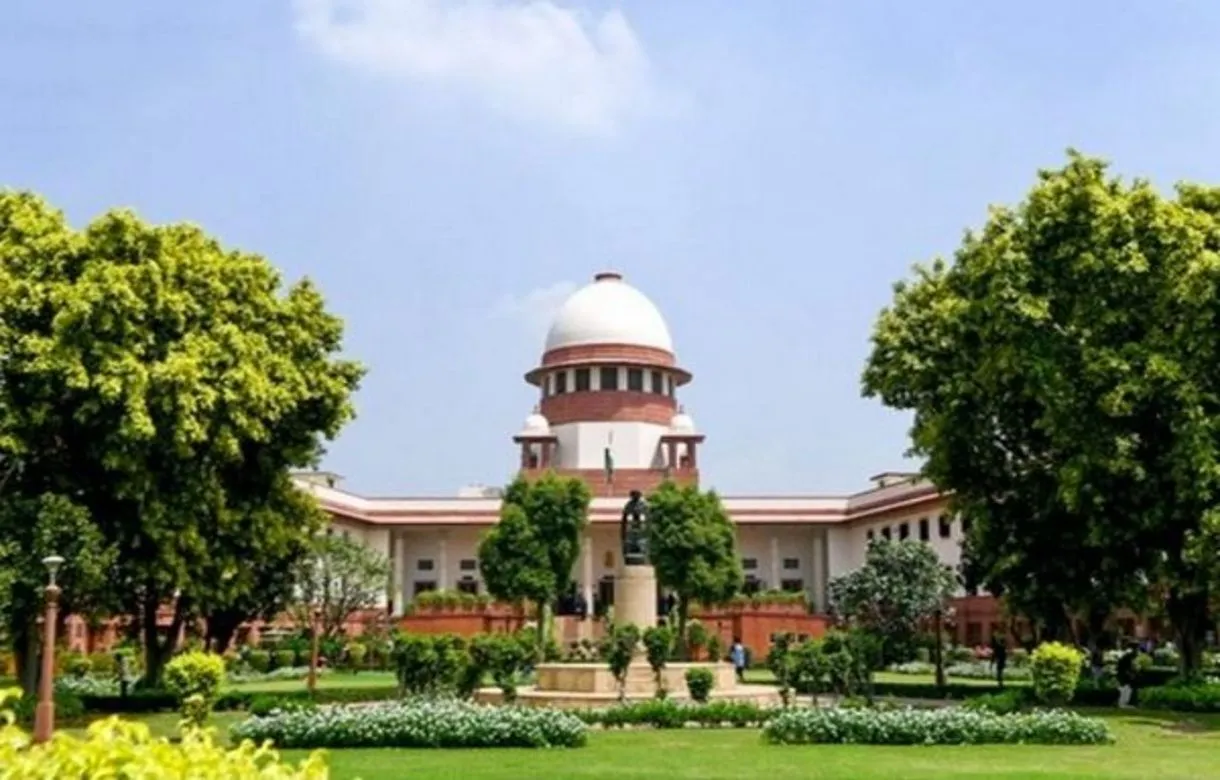
[vc_row][vc_column][vc_column_text]The Supreme Court today (Tuesday, Jan 8) set aside Narendra Modi government’s post-midnight order of Oct 23 divesting Alok Verma of his charge to act as head of the CBI.

The apex court observed that the government should have referred to the Select Committee consisting of the Chief Justice of India (CJI), Prime Minister and Leader of Opposition to initiate Alok Verma’s removal and directed the High Power Committee under DSPE Act to act within a week to consider Verma case.

Alok Verma can go back to his office now but cannot take any major policy decisions till the High Powered Committee decides on his status.

The judgment on Tuesday was penned by CJI Ranjan Gogoi. However, the CJI didn’t attend the court and the judgment was pronounced by Justices SK Kaul and KM Joseph.

The Supreme Court said it was quashing the order sending him on leave since the government had no authority to take action against the CBI Director. The only institution that can take any action against a CBI director is the special committee that appoints the director, the Supreme Court ruled today. “The legislative intent of insulating the CBI director is manifest,” said the three judges who set aside the government’s move unanimously.

The decision comes just 23 days before Verma’s tenure as CBI Director comes to an end: his term ends on January 31.

Verma had filed a plea against the Centre’s decision to divest him of powers and sending him on leave.

The Centre had also sent CBI’s Special Director Rakesh Asthana on leave and appointed CBI‘s Joint Director M Nageswara Rao, a 1986 batch Odisha-cadre IPS officer as interim director. Nageswar Rao took charge and signed off on the transfer of half-a-dozen officers on Verma’s team.

In its verdict, the Supreme Court has observed that the procedure to remove an incumbent CBI director has been set out in law. “If there was intent to specify interim measures for Director CBI then the legislation would have contained the provision,” the Supreme Court observed, referring to the government appointing M Nageshwar Rao as interim CBI chief.

Asthana remains on forced leave. There is also no decision on the transfers ordered by Nageswar Rao.

The public spat between the two top officers of India’s premier investigative agency witnessed a lot of mudslinging with both levelling allegations of corruption against each other.

Verma had sought quashing of three orders of October 23, 2018 — one by the Central Vigilance Commission (CVC) and two by the Department of Personnel and Training (DoPT), as being without jurisdiction and in violation of Articles 14, 19 and 21 of the Constitution.

The Centre had justified its decision to divest Verma of his duties and sending him on leave before the apex court saying he and Asthana were fighting like “Kilkenny cats”, exposing the country’s premier investigating agency to “public ridicule”.

On December 6, after hearing arguments on behalf of Verma, the Centre, the CVC and others, a bench headed by Chief Justice Ranjan Gogoi had reserved the judgement.

Political reactions

In the charged political atmosphere in view of 2019 Lok Sabha elections due after a couple of months, the verdict was seen as a setback to the Narendra Modi government which has been accused of manipulating CBI and the country’s other investigative agencies to promote its political interests and harass its rivals.

Finance Minister Arun Jaitley defended the government’s action of sending the two senior officers of the CBI on leave and took the plea that it was done on the recommendation of the CVC (Central Vigilance Commission). “This action was taken perfectly bonafide as there were cross-allegations made by both the officers, and in accordance with recommendations of the CVC. The government felt that in the larger interest of fair and impartial investigation and credibility of CBI, the two officers must recuse themselves,” Jaitley told reporters outside Parliament.

Opposition projected the judgement as vindication of their criticism that the government was behaving arbitrarily.

The Congress, which alleges that Verma was removed because he intended to launch a probe into the Rafale jet deal, said, “We welcome the Supreme Court’s verdict lambasting the government against their illegal removal of Alok Verma as CBI Director.

Congress leader Mallikarjun Kharge said the verdict is a lesson for the government. “We’re not against one individual, welcome SC’s judgement, it’s a lesson for govt. Today you’ll use these agencies to pressurise people, tomorrow somebody else will, What will happen to democracy then?” he told reporters, reported news agency ANI

Congress leader Randeep Singh Surjewala said Narendra Modi is the first prime minister to have “his illegal orders set aside by the Supreme Court.”

“Modiji adds another 1st to his list. After being the first PM to be exposed destroying the #CBI before the SC, After having ruined CVC’s credibility (requiring supervision by former SC judge),Mr. Modi has now become 1st PM to have his illegal orders set aside by the SC,” he tweeted.

“Let this be a lesson to you about the strength of our democracy and the Constitution. Let this be a lesson that howsoever despotic u may be, law catches up in the end,” he added.

Arvind Kejriwal tweeted that the court ruling was a “direct indictment” of Prime Minister Narendra Modi.

He also accused Modi government of “ruining all institutions and democracy” in the country.  “Wasn’t CBI director illegally removed at midnight to stall the probe in Rafale scam which directly leads to PM himself?” he tweeted

PDP leader Mehbooba Mufti said it was time for Centre to stop arm-twisting agencies.[/vc_column_text][/vc_column][/vc_row]

India News

Centre caps airfares to curb surge amid IndiGo crisis

To protect passengers from soaring fares amid IndiGo’s operational crisis, the Centre has introduced temporary airfare caps and ordered expedited refunds for cancelled flights.

Published

on

As operational disruptions at IndiGo entered their fifth day, the Civil Aviation Ministry moved to prevent steep ticket price hikes by imposing fare caps across affected routes. The decision comes as hundreds of flights were cancelled, leaving passengers stranded at airports nationwide.

Ministry steps in to prevent “opportunistic pricing”

The ministry said it had taken note of unusually high fares being charged by some airlines during the ongoing travel disruption. Invoking regulatory powers, it ordered all carriers to follow newly prescribed fare caps until flight schedules stabilise.

According to the statement, the move aims to prevent any exploitation of travellers—especially senior citizens, students and those undertaking urgent medical travel—during the crisis. Airlines and online travel platforms will continue to be monitored through real-time fare data.

IndiGo told to clear refunds by Sunday evening

In a separate direction, the ministry asked IndiGo to ensure all refunds for cancelled or disrupted flights are processed by 8 pm on December 7. It also instructed airlines not to impose rescheduling fees for passengers whose plans were affected.

Hundreds of cancellations as pilot shortage triggers meltdown

IndiGo, which operates around 2,300 daily flights with a fleet of over 400 aircraft, has seen widespread cancellations due to a planning-related pilot shortage. Operational delays are expected to continue for several more days.

Scenes of severe inconvenience have unfolded at airports, with passengers reporting long waits, disrupted travel plans, and a lack of clarity from the airline.

IndiGo issues apology, promises gradual restoration

The airline apologised publicly, saying it understood the difficulties faced by passengers. IndiGo assured that refunds for cancelled flights would be processed automatically and added that full normalisation of domestic operations is likely between December 10 and 15, though recovery may take time due to the scale of disruption.

Minister claims crisis nearing resolution

Civil Aviation Minister Ram Mohan Naidu said the situation is “on the verge of getting resolved”. He noted that major metro airports such as Delhi, Mumbai and Chennai had cleared most backlogs, and that IndiGo would resume operations with limited capacity before gradually increasing flights.

Continue Reading

India News

Centre plans major crackdown on IndiGo amid mass cancellations

Published

on

The Centre is preparing strong action against IndiGo after widespread disruption triggered by the airline’s handling of new pilot rest rules, according to sources. With thousands of passengers stranded and over 500 flights cancelled on consecutive days, the government is now likely to seek the removal of CEO Pieter Elbers, alongside other stringent measures.

Government weighs removal of IndiGo CEO

Sources indicate that the airline may be asked to remove its chief executive following what officials view as poor management of revised duty and rest regulations for pilots. The developments led to severe operational breakdown across airports and sparked public outrage.

Heavy penalties and flight curbs under consideration

According to officials, an unprecedented crackdown is being prepared. This includes the possibility of a hefty financial penalty on the carrier, which commands nearly two-thirds of India’s domestic aviation market.

Authorities are also evaluating whether the number of flights permitted to IndiGo should be temporarily reduced, marking what could become the toughest action taken against any airline in recent years.

IndiGo representatives were summoned by the aviation ministry on Friday evening as the government sought explanations for the crisis and measures to restore order.

Continue Reading

India News

Lok Sabha clears bill to levy cess on pan masala and similar goods for health, security funding

The Lok Sabha has passed a bill to impose a cess on pan masala manufacturing units, aiming to create a dedicated revenue source for public health and national security initiatives.

Published

on

Nirmala Sitharaman

The Lok Sabha has approved the Health Security se National Security Cess Bill, 2025, paving the way for a new cess on pan masala manufacturing units. The legislation aims to generate dedicated funds for strengthening national security and improving public health, both areas identified as critical national priorities.

Bill aims to create predictable funding stream

Finance Minister Nirmala Sitharaman, responding to the debate before the bill was passed by voice vote, said that the cess will be shared with states because public health falls under the state list.

The new cess will be applied over and above the GST, based on production capacity and machinery used in units manufacturing pan masala and similar goods. The minister clarified that this cess will not affect GST revenue, and that pan masala already attracts the maximum GST slab of 40 per cent.

According to the bill text, the objective is to build a “dedicated and predictable resource stream” to support expenditure related to health and national security.

Sitharaman also mentioned that cess collection as a percentage of gross total revenue currently stands at 6.1 per cent, lower than the 7 per cent average between 2010 and 2014.

Continue Reading

Trending

© Copyright 2022 APNLIVE.com