English हिन्दी
Connect with us

India News

Centre warns states of possible violence amid Iran-Israel tensions

Published

on

Israel news

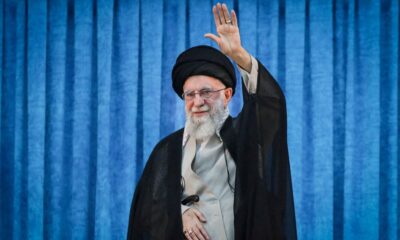
As tensions between Iran and Israel escalate following the reported killing of Iran’s Supreme Leader Ali Khamenei, the Centre has issued a nationwide alert asking states to remain vigilant against possible violence and protests.

According to sources, the Ministry of Home Affairs (MHA) has asked state governments to closely track activities of both pro-Iran and anti-Iran groups. The advisory comes after reports of protests by members of the Shia community in different parts of the country following the February 28 killing of the Iranian leader.

Heightened security around embassies and key sites

The MHA has cautioned that international developments could have repercussions for India’s internal security. States have been instructed to enhance security arrangements, particularly around the Iranian, US and Israeli embassies and consulates.

In addition to diplomatic missions, the alert includes tourist destinations, Jewish institutions and establishments linked to Western countries as potentially sensitive locations. States have been advised to increase deployment of security personnel at key sites and maintain a visible presence to deter any untoward incidents.

Police units have also been directed to carry out intensified checks in crowded areas and remain alert to the possibility of explosives, including Improvised Explosive Devices (IEDs).

Monitoring of social media and rapid response preparedness

The advisory places special emphasis on surveillance of social media platforms to prevent the circulation of inflammatory content or rumours that could disturb communal harmony. Cyber cells across states have been tasked with monitoring digital spaces for provocative messages.

Directors General of Police have been asked to ensure that rapid response teams are on standby to deal swiftly with any emerging situation.

Escalation in West Asia

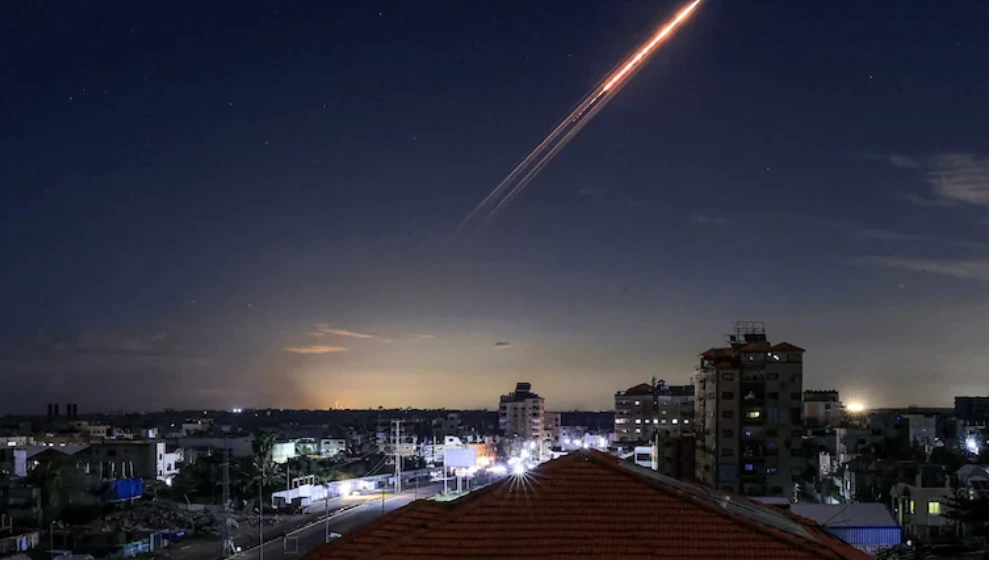
The developments come after Israel, with support from the United States, launched strikes on Tehran, triggering a renewed phase of military confrontation in the region. The Pentagon reportedly named the operation “Operation Epic Fury”.

Explosions were heard across the Iranian capital, with reports suggesting that the strikes occurred near the offices of Ali Khamenei. Former US President Donald Trump later announced that Khamenei had been killed.

Subsequently, Israel carried out strikes targeting Beirut and southern Lebanon, citing retaliation for attacks by Hezbollah following the killing of the Iranian leader.

India News

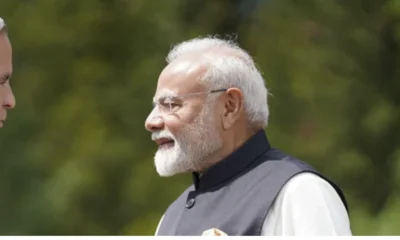
Modi-Xi meeting draws global attention, China says India should be partner

Chinese Foreign Minister Wang Yi said the Modi-Xi meeting at the BRICS summit reached a consensus on partnership, border peace and wider cooperation.

Published

on

Chinese Foreign Minister Wang Yi has said Prime Minister Narendra Modi and Chinese President Xi Jinping reached a key consensus during their meeting on the sidelines of the 18th BRICS Summit in New Delhi, with both sides viewing India and China as partners rather than rivals.

The meeting between Modi and Xi took place on September 12 during Xi’s two-day visit to New Delhi for the BRICS summit. According to Wang, the two leaders held a candid and in-depth discussion on strategic, long-term and broader issues concerning India-China relations.

India-China partnership highlighted

Wang said the “most important consensus” reached by the two leaders was that China and India should be partners.

According to the Chinese foreign minister, Xi said the two countries could draw on each other’s strengths, support one another and pursue common development.

Wang also said the Modi-Xi meeting attracted widespread international attention.

He described the recent improvement in China-India relations as a shift from a “restart” towards a “renewed elevation”, while saying that cooperation between the two countries has continued to expand.

Focus on border peace

The two countries agreed to jointly maintain peace and tranquility in their border areas, Wang said.

He added that both sides pledged to strengthen political mutual trust, appropriately manage differences and contradictions, and maintain peace along the border.

During his meeting with Modi, Xi called for mutual respect and understanding to help overcome disruptions in bilateral ties. He also advocated progress on India-China relations and border issues, with the two tracks reinforcing each other.

Wang said Modi responded positively and reaffirmed that India approaches its relationship with China from a strategic and long-term perspective.

Modi says India ready to be China’s partner

According to Wang’s account of the meeting, PM Modi said India was ready to be a partner rather than an adversary to China.

Modi also viewed the development of the two countries as an opportunity rather than a challenge, Wang said.

He added that India remains committed to high-level exchanges with China, stronger strategic communication and broader people-to-people ties based on mutual respect and trust.

Cooperation in BRICS and other forums

The two leaders also agreed to support each other’s BRICS chairmanship, according to Wang.

They discussed stronger coordination through multilateral platforms, including the United Nations, the Shanghai Cooperation Organisation and the G20.

The two sides also agreed to expand cooperation in areas including cultural and people-to-people exchanges and direct air connectivity, Wang said.

Wang said China and India should deepen mutually beneficial cooperation and contribute to cooperation across the Global South.

China calls for implementation of consensus

Chinese Foreign Ministry spokesman Guo Jiakun said China would work with India to implement the understandings reached by Modi and Xi.

Guo said Beijing would seek to expand the areas of cooperation, deepen people-to-people exchanges and strengthen coordination in multilateral forums.

He also said China would continue efforts to improve bilateral ties and support each other’s development, with the aim of contributing to peace and prosperity in the region and beyond.

PM Modi and Xi Jinping reached a key consensus that India and China should be partners, not rivals, Chinese Foreign Minister Wang Yi said after their BRICS meeting.

The two sides also discussed border peace, BRICS cooperation and stronger bilateral ties.

Continue Reading

India News

3 Italians leave Delhi without immigration clearance, Air India gets notice

Three Italian nationals flew from Delhi to Munich without immigration clearance after travelling from Amritsar. The Civil Aviation Ministry has issued Air India a show-cause notice.

Published

on

Three Italian nationals travelled from Delhi to Munich without completing mandatory immigration clearance, prompting the Ministry of Civil Aviation to issue a show-cause notice to Air India.

The incident took place in the early hours of September 4. The three passengers had arrived in Delhi from Amritsar on Air India flight AI-1115 at around 12:50 am before boarding Lufthansa flight LH-763 to Munich at approximately 1:45 am.

The ministry has sought an explanation from Air India and given the airline seven days from receipt of the notice to respond.

How the passengers bypassed immigration

The three passengers were travelling under Air India’s hub-and-spoke arrangement, in which travellers from smaller airports connect to international destinations through a major hub.

They travelled from Amritsar to Delhi and were issued domestic, or “D”, boarding passes for their Air India flight. They were also issued boarding passes for their onward Lufthansa flight to Munich at Amritsar.

According to the ministry’s notice, Air India’s standard operating procedure provides for two categories of boarding passes — “D” for domestic passengers and “I” for international passengers. The ministry has questioned the issuance of the additional boarding passes in this case.

After arriving in Delhi, the passengers were taken from Gate 39 towards the International-to-International Transfer Area. They then reached the departure area and boarded the Lufthansa flight without passing through the immigration checkpoint.

Ministry flags five SOP provisions

The Ministry of Civil Aviation has flagged five provisions of Air India’s Domestic-International Operations SOP in connection with the incident.

These include rules concerning the categories of boarding passes, segregation of domestic and international passengers after disembarkation, and access to the International-to-International Transfer Desk.

The ministry has also raised questions over Air India’s requirement to maintain a nodal officer and monitoring team at hub and spoke airports around the clock. These mechanisms are intended to ensure that passengers do not enter the international departure process through an incorrect route without completing the required formalities.

The ministry said the monitoring mechanism failed in this case.

Ministry seeks answers from Air India

The show-cause notice asks Air India to explain how passengers holding domestic boarding passes were able to enter the international transfer area.

It has also sought clarification on why the passengers were issued boarding passes for their onward Lufthansa flight at Amritsar and has asked about the role of Air India personnel and SATS staff involved in handling the passengers.

The ministry has further sought information about the designated nodal officer and monitoring team’s presence and actions at the time. It has questioned why the required reconciliation of domestic and international passengers was not completed promptly.

Questions have also been raised over whether the General Declaration, passenger manifest and API-PNR data concerning the passengers were shared with immigration authorities in time and whether their status was accurately reflected in those records.

Lapse detected during manual reconciliation

According to the notice, the lapse was detected later during manual reconciliation.

The incident has therefore raised questions about both the handling of the passengers and the systems intended to prevent domestic-arrival passengers from entering the international departure process without completing immigration clearance.

Air India gets seven days to respond

The Ministry of Civil Aviation has asked Air India to explain why action should not be initiated against the airline for failing to follow the prescribed SOP and take adequate precautions.

The airline has seven days from receiving the notice to submit its response.

The ministry has warned that failure to respond within the stipulated period could be treated as having no explanation to offer, after which administrative and regulatory action may be considered based on the available records.

What is the hub-and-spoke model?

Under a hub-and-spoke model, passengers from smaller airports travel through a major airport before connecting to international destinations.

In this case, the passengers travelled from Amritsar to Delhi before connecting to a Munich-bound international flight.

At the hub airport, passengers arriving on domestic flights but holding onward international bookings must be identified and routed through the prescribed process, including immigration clearance before leaving India.

In the Delhi incident, the three Italian passengers instead entered the international transfer process and boarded their Munich flight without completing the required immigration formalities.

Continue Reading

India News

Vande Mataram played before India-Afghanistan T20I, congress questions move

The full six-stanza version of Vande Mataram was played before India’s first T20I against Afghanistan in Delhi, prompting Congress leader Udit Raj to question the move.

Published

on

The full version of the national song Vande Mataram was played before the first T20 International between India and Afghanistan at the Arun Jaitley Stadium in Delhi on Sunday. The rendition took place before the start of the match and marked a first at an international sporting event, according to the report.

All six stanzas of Vande Mataram were played before the match. The development drew a reaction from the Congress, which has opposed the playing of all six stanzas and has maintained that only the first two should be used at its party events.

Congress questions the move

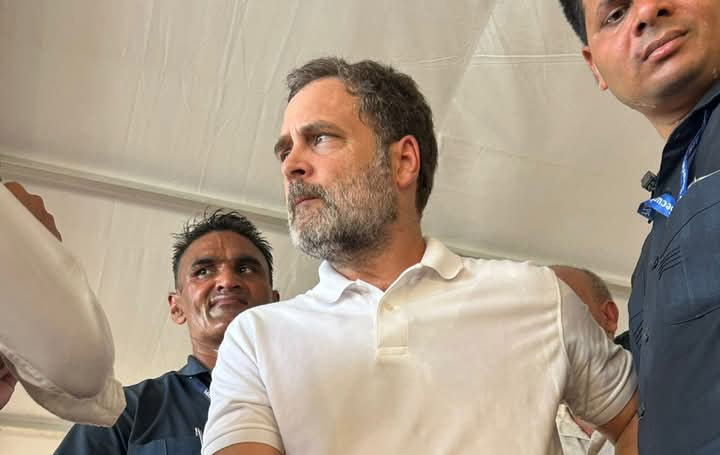
Congress leader Udit Raj questioned the reasoning behind playing the complete version of the national song at the India-Afghanistan match.

He asked whether the move would address issues such as employment, the performance of the Indian cricket team, science and technology, exports, rising debt or concerns among Gen Z. He alleged that the move was aimed at creating a particular narrative.

The Congress Working Committee had recently passed a resolution stating that the party would continue to use the first two stanzas of Vande Mataram at its events, referring to the party’s 1937 position on the song.

What happened at the India-Afghanistan match?

The full six-stanza version of Vande Mataram was played at the Arun Jaitley Stadium before India’s first T20I against Afghanistan.

The report also said, citing BCCI sources, that Vande Mataram will subsequently be played before the first match of every home series.

The national song was played before the national anthem. The match was the opening game of India’s three-match T20I series against Afghanistan.

Congress and the two-stanza version

The Congress has recently reiterated its position on the rendition of Vande Mataram. The party’s Working Committee cited its 1937 resolution while deciding to use only the first two stanzas at Congress events.

The first two stanzas were chosen by the Indian National Congress in 1937, while the Constituent Assembly recognised Vande Mataram as the National Song in 1950, according to the report.

The issue has also generated political exchanges between the Congress and other parties in recent weeks over the use of the complete version of the song at public events.

Government guidelines on Vande Mataram

The report noted that the Ministry of Home Affairs issued guidelines on February 6 concerning the rendition of Vande Mataram as part of the 150th-anniversary commemorations of the national song.

The guidelines prescribed an official rendition lasting 3 minutes and 10 seconds and said those present should stand at attention while the song was being played.

They also provided for the complete six-stanza version to be played at specified formal government functions, including certain events attended by the President or Governors.

What did Congress leader Udit Raj say?

Udit Raj questioned the purpose of playing the complete version at the cricket match and linked his criticism to broader concerns such as employment, the economy, technology and issues facing young people. He said the move was intended to create a narrative.

The controversy comes amid a wider political debate over the rendition of Vande Mataram and whether the complete six-stanza version should be used at public and political events.

Continue Reading

Trending

© Copyright 2022 APNLIVE.com

Left Menu Icon