English हिन्दी
Connect with us

Latest world news

PM Modi chairs high-level security meet over Iran-Israel escalation

Published

on

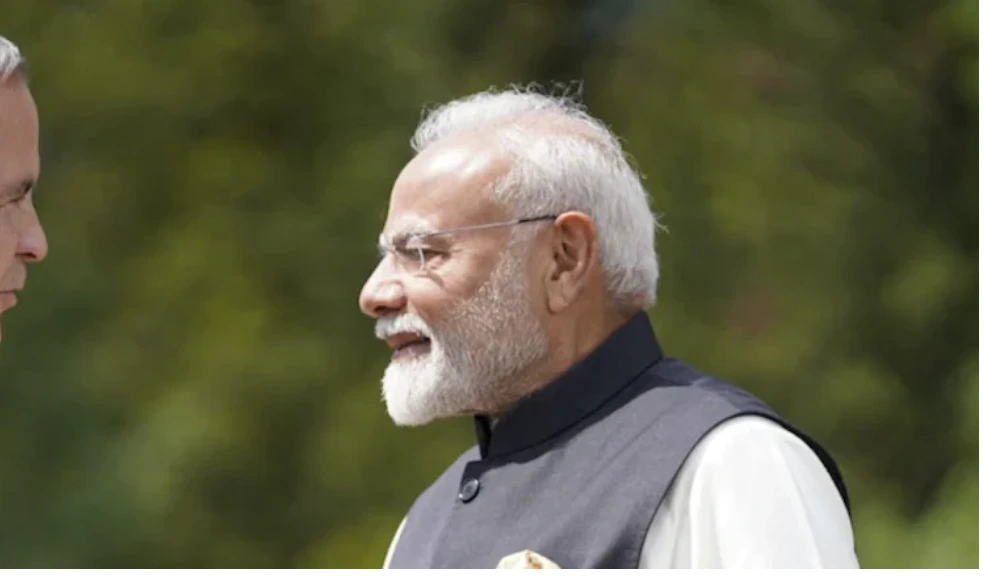
Prime Minister Narendra Modi on Sunday night chaired a meeting of the Cabinet Committee on Security (CCS) to assess the rapidly evolving situation in West Asia following the US-Israel military action against Iran and the reported killing of Iran’s Supreme Leader Ali Khamenei.

The high-level meeting took place soon after the prime minister returned to New Delhi at around 9.30 pm after concluding his two-day visit to Rajasthan, Gujarat, Tamil Nadu and Puducherry. According to sources, the CCS reviewed developments arising from the fresh round of hostilities in the region and their potential implications for India.

Those present at the meeting included Defence Minister Rajnath Singh, Home Minister Amit Shah, External Affairs Minister S. Jaishankar and Finance Minister Nirmala Sitharaman. Senior officials such as National Security Advisor Ajit Doval, Chief of Defence Staff Anil Chauhan, Cabinet Secretary T. V. Somanathan and Foreign Secretary Vikram Misri also attended.

Safety of Indian nationals discussed

Sources indicated that the CCS deliberated on measures to ensure the safety of Indian citizens in the region. Nearly 10,000 Indians are currently in Iran, while more than 40,000 reside in Israel. The broader Gulf and West Asia region is home to an estimated nine million Indians.

With airspace across parts of West Asia largely shut amid military escalation, flight operations have been disrupted. Hundreds of Indian passengers are reported to be stranded at major transit hubs such as Dubai and Doha, prompting appeals on social media for government assistance.

The Ministry of External Affairs said Indian missions in the affected countries are in touch with nationals and have activated helplines to provide support.

Strait of Hormuz and oil supply concerns

The meeting is also understood to have reviewed the situation arising from the reported closure of the Strait of Hormuz by Iranian authorities. The strait is a crucial maritime route for global energy supplies, including oil shipments destined for India.

In the past, India has carried out large-scale evacuation operations in conflict zones, including in West Asia, to bring back its citizens safely.

Escalation in West Asia

Iran’s Supreme Leader Ali Khamenei was reported killed in a major strike carried out early Saturday by Israel and the United States. Iranian state television and the state-run IRNA news agency announced the 86-year-old leader’s death on Sunday.

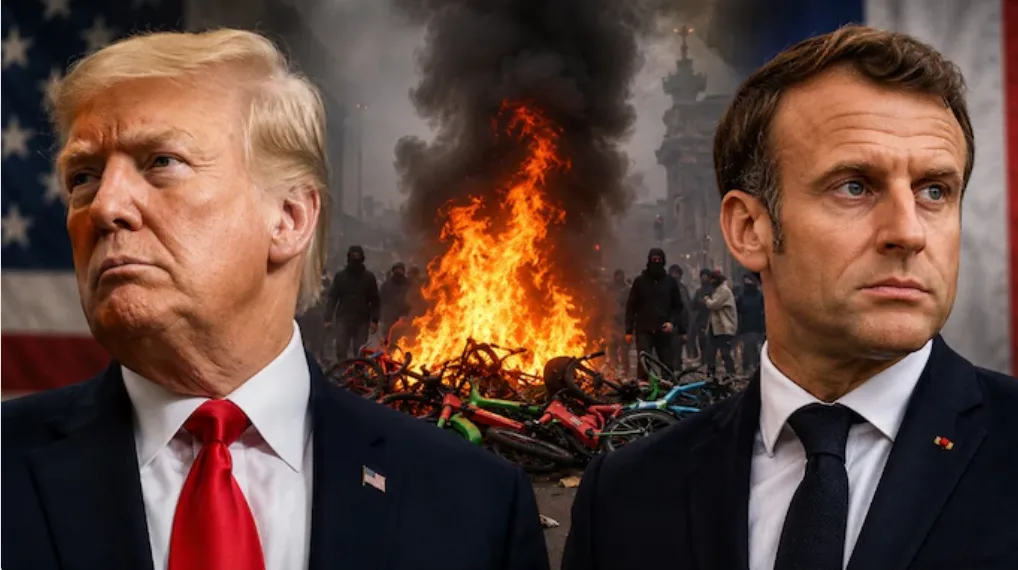
US President Donald Trump said the action gave Iranians their “greatest chance” to “take back their country” and indicated that military operations would continue as long as necessary.

Iran responded by launching drones and missiles targeting Israel, US military installations in the Gulf region, and areas including the global business hub of Dubai.

Meanwhile, members of the Shia community in several parts of India held gatherings on Sunday to express grief and protest over Khamenei’s killing.

Latest world news

Mojtaba Khamenei named Iran’s new supreme leader after death of Ali Khamenei

Iran’s Assembly of Experts has selected Mojtaba Khamenei as the country’s new supreme leader following the death of Ali Khamenei amid escalating regional conflict.

Published

on

Mojtaba

Mojtaba Khamenei has been appointed the new Supreme Leader of Iran, replacing his father Ali Khamenei, according to state media reports.

The decision was taken by the Assembly of Experts, an 88-member council responsible for selecting the country’s supreme leader. The body said it had chosen Mojtaba Khamenei through a decisive vote, naming him the third leader of the Islamic Republic.

Mojtaba Khamenei, a mid-ranking cleric with strong connections within Iran’s security establishment, had long been seen as a potential successor to his father. His influence within the powerful Revolutionary Guards and networks associated with his father’s office had made him a prominent figure in Iran’s political structure.

His appointment comes amid a sharp escalation in tensions in the region. Ali Khamenei was reportedly killed in strikes carried out during the ongoing conflict involving Iran, the United States and Israel. The situation has led to rising hostilities and military exchanges in recent days.

The role of supreme leader in Iran carries ultimate authority over key state institutions, including the military, judiciary and major political decisions.

The development may further strain relations between Tehran and Washington. Donald Trump recently said the United States should have a say in who leads Iran, a remark likely to draw criticism from Iranian authorities.

Meanwhile, fighting linked to the conflict has continued across the region. Strikes targeting infrastructure in Tehran have caused fires at fuel facilities, sending thick smoke into the sky and raising environmental concerns.

Iranian officials have condemned the attacks as dangerous escalation, while Israeli authorities have defended the strikes, saying the targeted facilities were connected to Iran’s military operations.

As the conflict continues, Iran’s new leadership now faces the challenge of navigating both internal political pressures and rising regional tensions.

Continue Reading

Latest world news

India says it never depended on permission to import Russian oil

India says it continues to import Russian oil based on competitive pricing and national interest, while energy supplies remain stable despite global tensions.

Published

on

India on Saturday reiterated that it has never relied on permission from any country to purchase Russian oil, even as the United States recently issued a temporary waiver allowing certain shipments to continue.

The Centre said India’s energy strategy remains focused on securing crude oil at the most competitive prices while maintaining stable supplies despite rising tensions in global shipping routes.

India continues Russian oil imports

According to the government, India continues to import Russian crude and has done so consistently throughout the Russia-Ukraine conflict.

Officials said Russia remains India’s largest crude oil supplier, with imports rising significantly after 2022 due to discounted prices and the demand from domestic refineries.

“India has never depended on permission from any country to buy Russian oil,” the Centre said in a statement, adding that purchases are based on affordability and national interest.

Energy supplies remain secure

The government said India’s energy supply remains stable despite disruptions along the Strait of Hormuz route amid tensions linked to the Iran-US-Israel conflict.

To strengthen energy security, India has expanded its crude oil sourcing network from 27 countries to 40 countries, creating multiple supply options.

The Centre also said the country currently holds more than 250 million barrels of crude oil and petroleum products across its reserves and supply chain. This stockpile provides a buffer equivalent to around seven to eight weeks of consumption.

India’s refining capacity stands at 258 million metric tonnes per annum, which the government said exceeds current domestic demand.

US waiver and global oil market volatility

The United States on Thursday temporarily eased sanctions on Russia to allow oil already loaded on vessels at sea to be sold to India.

Officials in New Delhi said describing the waiver as enabling such purchases overlooks the fact that the trade has continued for years.

“India is a net exporter of refined products to the world — a position that reinforces, not undermines, its energy security,” the Centre said.

Meanwhile, tensions in the Middle East have affected global oil markets. Military actions involving the United States and Israel against Iran, along with retaliatory strikes by Tehran across the Gulf region, have disrupted shipping routes and energy flows.

Global oil prices surged 8.5 per cent on Friday and had climbed nearly 30 per cent over the previous week, following remarks by US President Donald Trump that the conflict would end only with Iran’s “unconditional surrender”.

Earlier in February, Washington removed a 25 per cent tariff on Indian exports under an interim trade agreement. The US administration said the decision followed a commitment by India to halt Russian oil purchases. However, no such commitment appears in the joint statement issued at the time, and the Indian government has not confirmed or denied the claim.

Continue Reading

India News

Trump’s handling of India ties a major mistake, says former Australia PM Tony Abbott

Former Australian prime minister Tony Abbott says Donald Trump’s tariffs and engagement with Pakistan leadership unnecessarily strained relations with India.

Published

on

donald-trump

Former Australian prime minister Tony Abbott has said that one of the biggest mistakes made by US President Donald Trump so far has been the way he handled relations with India.

Speaking in an interview with media, Abbott said he does not fully support Trump’s foreign policy approach and highlighted several steps that, in his view, unnecessarily strained ties with New Delhi.

Abbott said these included the imposition of punitive tariffs on Indian goods, claims by Trump that he had mediated tensions between India and Pakistan, and the hosting of Pakistan’s army chief Asim Munir at the White House.

According to Abbott, these actions “gratuitously alienated” India, particularly given New Delhi’s longstanding concerns about terrorism originating from Pakistan.

Tariff dispute and trade deal

Tensions between the United States and India had earlier escalated after Washington imposed 25 per cent reciprocal tariffs on several Indian products. An additional 25 per cent levy was also linked to India’s continued purchases of Russian oil.

However, a trade agreement announced by Trump in February signalled a partial easing of those tensions. Under the arrangement, the US reduced tariffs on several Indian goods.

Trump said the decision followed a commitment from Prime Minister Narendra Modi to halt purchases of oil from Russia while the war in Ukraine continued.

The agreement helped ease months of friction between the two countries over energy purchases, which Washington had argued were helping fund the ongoing conflict.

Trump has also repeatedly referred to his close personal ties with Modi, describing the Indian leader as one of his greatest friends.

Abbott comments on Middle East conflict

Abbott also spoke about the uncertainty surrounding the ongoing conflict involving Iran, Israel and the United States.

He said it was impossible to predict whether the situation would lead to a regime change in Tehran, noting that the current leadership still enjoys support among sections of the Iranian population.

At the same time, Abbott suggested that the weakening of Iran’s nuclear capabilities could significantly limit the country’s ability to project aggression in the future.

He also said the intensity of the conflict could gradually decline.

According to Abbott, Iranian attacks had already reduced compared to earlier phases of the conflict, while Israeli and American strikes had intensified and largely focused on regime facilities rather than civilian infrastructure.

Fresh attacks reported

In the hours following his remarks, Iran launched new missiles and drones targeting Israel and several Gulf countries hosting US military bases.

Explosions were reported inside Israel as air defence systems intercepted incoming projectiles.

Countries including the United Arab Emirates, Kuwait, Qatar, Bahrain and Saudi Arabia also reported attacks.

Continue Reading

Trending

© Copyright 2022 APNLIVE.com