English हिन्दी
Connect with us

Latest world news

Iran to hold six-day funeral for Ali Khamenei, son Mojtaba to skip ceremonies over security concerns

Iran has announced a six-day funeral for former Supreme Leader Ali Khamenei, while his son Mojtaba Khamenei is expected to skip the ceremonies due to security concerns. India is also likely to send an official delegation.

Published

on

Ayatollah Ali Khamenei

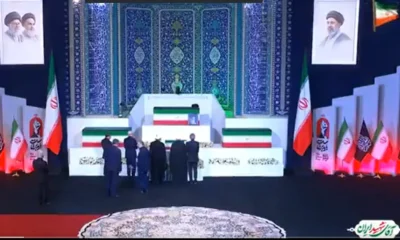
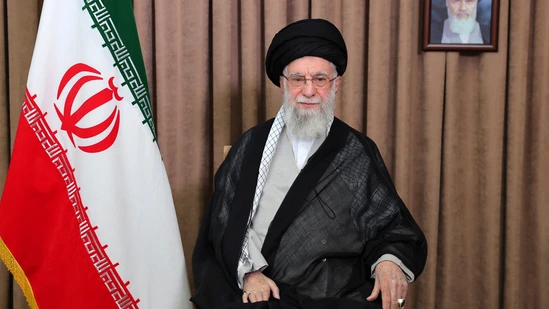
Iran has announced a six-day funeral programme for former Supreme Leader Ali Khamenei, with authorities expecting massive public participation while heightened security keeps his son Mojtaba away.

Iran is preparing for an elaborate six-day funeral ceremony for its former Supreme Leader Ali Khamenei, who was killed earlier this year, with authorities expecting millions of people to participate in the nationwide mourning events.

However, Ali Khamenei’s son, Mojtaba Khamenei, will reportedly remain absent from the public ceremonies because of security concerns, according to his representative in India.

Mojtaba Khamenei to avoid public appearance

According to Ayatollah Hakim Elahi, Israeli security threats and surveillance concerns have made Mojtaba Khamenei’s attendance at the funeral too risky. His public appearance during the ceremonies has therefore been ruled out as a precaution.

Ali Khamenei, who led Iran for 36 years, was killed on February 28 after the United States and Israel launched military strikes on Iran, triggering a wider conflict in the Middle East.

Funeral ceremonies to continue for six days

The official mourning programme will begin in Tehran on July 4 before moving to other important religious locations across the country.

After events in the Iranian capital, ceremonies will also be held in the holy city of Qom on July 7. The final rites will conclude on July 9 with Ali Khamenei’s burial in Mashhad, his hometown and one of Iran’s most significant religious centres.

Iranian authorities expect millions of mourners to participate in the funeral processions, making the event one of the most closely watched international developments. Posters, banners and giant billboards honouring the late leader have already been installed across several cities.

Although Islamic tradition generally calls for burial within 24 hours of death, the funeral timeline was delayed because Iran was in a state of war following the outbreak of the regional conflict.

Indian delegation likely to attend

According to sources, India is expected to send an official delegation to the funeral ceremonies.

The delegation is likely to include Bihar Governor General Syed Hasnain, Minister of State for External Affairs Pavitra Margarita and senior Congress leader Salman Khurshid, who is expected to represent the opposition party during the burial ceremonies.

Iranian President Masoud Pezeshkian had also extended an invitation to Prime Minister Narendra Modi to attend the state funeral. However, the Prime Minister is not expected to be part of the visiting delegation.

Iran-US tensions remain despite peace agreement

Although Iran and the United States signed a peace agreement last month, military tensions have continued in parts of the Middle East.

Recent exchanges included Iranian action against a commercial vessel in the Strait of Hormuz and US strikes targeting Iranian military positions. Iran also launched attacks on US military bases in Kuwait and Bahrain, prompting criticism from both countries.

However, the intensity of hostilities has eased in recent days.

Meanwhile, separate talks involving US and Iranian negotiators concluded in Doha with mediation efforts by Qatar and Pakistan. According to Qatar’s foreign ministry spokesperson, discussions made “positive progress” on issues linked to a 14-point Memorandum of Understanding (MoU).

India News

For second time, US strikes ship with Indian crew near Strait of Hormuz

Published

on

By

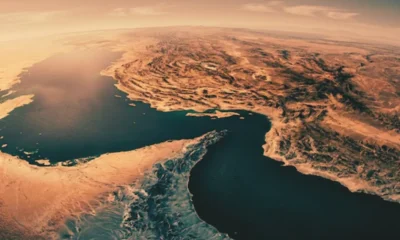
Strait of Hormuz

The United States Central Command (CENTCOM) has said that an oil tanker carrying Indian crew was drifting with its engine switched off near the Strait of Hormuz before it was struck by US forces.

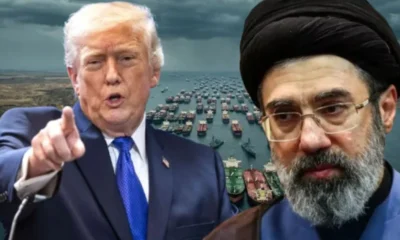
A CENTCOM spokesperson said the vessel had stopped due to engine failure and was drifting after its crew repeatedly sought additional time to carry out repairs. US officials said the tanker was struck only after it failed to comply with directives issued by US forces enforcing a blockade on vessels allegedly transporting Iranian oil. The military said the strike was aimed at disabling the ship by targeting its engine room rather than sinking it.

The incident involved a tanker carrying Indian seafarers near the Gulf of Oman, close to the Strait of Hormuz, one of the world’s busiest maritime trade routes. The strike triggered a fire onboard, prompting rescue efforts by Omani authorities and maritime agencies. Indian authorities closely monitored the situation and coordinated with local officials regarding the welfare of the crew members.

The incident has drawn concern in India, with the government emphasising the safety of Indian nationals working aboard commercial vessels in the conflict-hit region. The Ministry of External Affairs has remained in touch with the authorities concerned as tensions between the United States and Iran continue to pose risks to international shipping.

In June, three Indian sailors were killed in a US strike on another oil tanker. The Strait of Hormuz handles a significant share of the word’s oil trade, and the latest incident has renewed concerns over the security of merchant vessels operating in the region. Maritime experts have warned that escalating hostilities could further disrupt commercial shipping and endanger civilian crews navigating one of the world’s most strategically important waterways.

Continue Reading

Latest world news

Trump announces phased tariff of up to 200% on generic drug imports, India may face impact

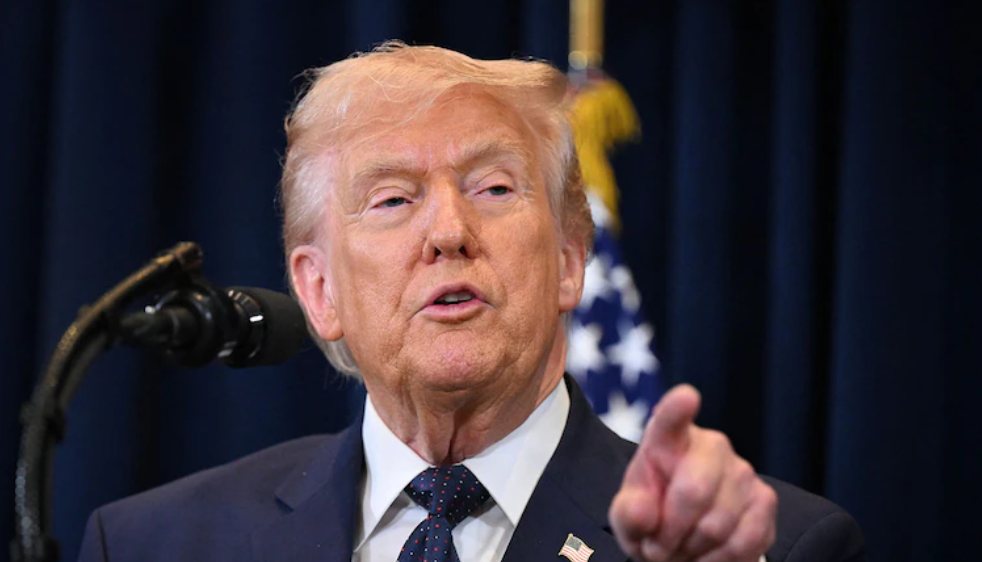
US President Donald Trump has announced a phased tariff plan on imported generic medicines, raising duties to 200% after three years, a move that could affect India’s pharmaceutical exports.

Published

on

Donald Trump

The United States has announced a phased tariff plan for imported generic medicines that could have implications for pharmaceutical exporters, including India. US President Donald Trump said the policy is intended to encourage companies to shift generic drug manufacturing to the United States by imposing steep tariffs after a two-year transition period.

The announcement is particularly important for India, one of the world’s largest suppliers of affordable generic medicines and a major exporter to the US market.

Trump outlines phased tariff plan

In a post on his Truth Social platform, President Trump said the new policy will take effect from August 1, 2026. Under the plan, imported generic medicines will continue to attract zero tariffs for the first two years.

Beginning in the third year, the tariff will increase to 100%, before rising further to 200% thereafter.

Trump said the measure is designed to encourage pharmaceutical companies to establish manufacturing facilities in the United States instead of relying on imports.

He added that companies choosing not to invest in US-based production during the transition period would face the higher tariff rates. According to Trump, the existing policy governing patented, branded and innovative medicines will remain unchanged.

Why India could be affected

India is widely regarded as the “pharmacy of the world” because of its large-scale production and export of generic medicines.

Indian generic drugs account for nearly 40% of the US generic medicine market by volume. According to a Global Trade Research Initiative (GTRI) report, India exported pharmaceutical products worth USD 9.7 billion to the United States during the 2024-25 financial year, representing around 38% of the country’s total pharmaceutical exports of USD 25.8 billion.

However, the immediate impact of the newly announced tariff policy on Indian pharmaceutical companies remains uncertain.

Existing trade agreement and industry concerns

India and the United States struck a trade pact in February that states India would receive negotiated outcomes regarding generic pharmaceuticals and pharmaceutical ingredients.

Despite that provision, previous tariff threats by Trump had already raised concerns within the pharmaceutical industry over the future of affordable medicine exports from India.

Indian pharmaceutical companies supply a wide range of generic medicines used to treat conditions including hypertension, diabetes, depression, cancer, infectious diseases and mental health disorders.

According to a Financial Post report cited in the source material, around 65% of birth control pill prescriptions in the United States during 2024 were manufactured by two India-based companies — Glenmark Pharmaceuticals Ltd. and Lupin Ltd.

Continue Reading

Latest world news

FIFA World Cup 2026 final creates history with spectacular closing ceremony and first-ever Halftime Show

Published

on

The FIFA World Cup 2026 final was marked by an unforgettable celebration as football, music and entertainment came together on one stage at New York New Jersey Stadium in East Rutherford, New Jersey. Ahead of Spain’s victory over Argentina, fans witnessed a grand closing ceremony followed by the tournament’s first-ever official Halftime Show, featuring internationally renowned artists and football legends.

The event showcased performances, cultural celebrations and visual spectacles that reflected the global appeal of the FIFA World Cup.

Star-studded closing ceremony opens the final

The festivities began before kick-off with streamer IShowSpeed performing his World Cup song Champions. Opera tenor Christopher Macchio followed with a rendition of America the Beautiful, while Post Malone and Swae Lee energized the crowd with their hit Sunflower.

Academy Award-winning singer Jennifer Hudson performed the United States national anthem before FIFA Music Ambassador Robbie Williams, Nicole Scherzinger and Laura Pausini took the stage to perform the official FIFA anthem Desire.

Former World Cup-winning captains Andres Iniesta and Mario Kempes later carried the iconic FIFA World Cup Trophy onto the pitch before actor Tom Cruise concluded the ceremony with a message highlighting football’s ability to unite people across the world.

National anthems and legendary introductions

Before the final got underway, Spain’s national anthem was performed by trombonist Indalecio “Inda” Bonet alongside Spanish Brass, while Argentine singer Maria Becerra delivered her country’s national anthem.

Adding to the excitement, renowned announcers Bruce Buffer and Michael Buffer introduced the teams in front of a packed stadium.

First-ever FIFA World Cup Halftime Show makes history

After a scoreless first half, the FIFA World Cup introduced its inaugural official Halftime Show, marking a new chapter in the tournament’s history.

Madonna opened the performance with her hit Music, joined on stage by Brazilian football legends Ronaldo and Ronaldinho.

The entertainment continued with The Muppets performing Seven Nation Army, followed by BTS performing Dynamite.

Actor Jason Sudeikis appeared in character as Ted Lasso before Justin Bieber performed a special version of Everything Hallelujah with football-themed lyrics.

Shakira and Burna Boy returned to perform the official FIFA World Cup 2026 song Dai Dai, having also featured during the tournament’s opening ceremony in Mexico City.

Grand finale celebrates unity through music and football

The Halftime Show concluded with an ensemble performance featuring the PS22 Chorus, a live band, The Muppets, Sesame Street characters and Coldplay frontman Chris Martin, who curated the historic production. Together they performed the original song We Dance before a fireworks display brought the celebrations to a memorable close.

The ceremony highlighted football’s global reach by combining sport, music and culture, creating one of the most elaborate entertainment spectacles in FIFA World Cup history.

Continue Reading

Trending

© Copyright 2022 APNLIVE.com