
India News
Challenges & Future of Arbitration and Mediation in India


[vc_row][vc_column][vc_column_text]Legal luminaries to provide insights at the Legal Leadership Conclave organised by India Legal magazine and ENC grouptomorrow(Saturday, Aug 17) at Bengaluru
At a time when India launches on the path to establish itself as a leading economic power, India Legal magazine, a leading weekly on all matters legal and constitutional, has taken the initiative to organise an event for brainstorming on a key aspect relating to conduct of business in the country.
Many of the top legal luminaries of the country, experts in their domain, will gather at the Legal Leadership Conclave to be held tomorrow (Saturday, Aug 17) at Taj West End, Bengaluru, on the theme of challenges and future of arbitration and mediation in India to provide their valuable insights on different aspects of the subject.
The event is being held in partnership with the ENC group and APN, together with JASHN Events.[/vc_column_text][/vc_column][/vc_row][vc_row][vc_column][vc_column_text css=”.vc_custom_1565957779560{border-top-width: 10px !important;border-right-width: 10px !important;border-bottom-width: 10px !important;border-left-width: 10px !important;padding-top: 10px !important;padding-right: 10px !important;padding-bottom: 10px !important;padding-left: 10px !important;background-color: #bababa !important;border-radius: 10px !important;}”]Here is a brief note about the eminent persons of law who will address the conclave:
Justice MN Venkatachaliah, former Chief Justice of India (1993-94), the patron of the ENC group is the chief guest at the conclave.
Justice TS Thakur, 43rd Chief Justice of India, has held arbitration to be the most viable form of dispute resolution that could reduce pressure on courts allowing quicker delivery of justice. He will chair the first technical session of the LegalLeadershipConclave organised by India Legal Magazine.
Justice BN Srikrishna, a former Supreme Court judge, who will speak on challenges and reforms in Indian arbitration and mediation system at the conclave, is currently the chairman of the Financial Sector Legislative Reforms Commission (FSLRC) and also works as an independent arbitrator.
Justice Alok Aradhe, serving as Judge, Karnataka High Court since Nov 17, 2018, had worked on Arbitration and Company Matters at the very start of his career in law as an advocate. One of the distinguished participants in first technical session of the conclave, he will speak on Challenges to arbitral awards – commercial courts and need for training of judges.
Justice (Retd) V Jagannathan, who was a judge in Karnataka High Court and served on Arbitration and Conciliation Centre – Bengaluru, will speak on “Arbitration as an effective tool for ADR process” in the first technical session.
Justice RV Raveendran, a former judge of the Supreme Court of India, who has a formidable reputation as an expert in arbitration, will chair the second technical session at the conclave.
Justice (Ms) BV Nagarathna of the Karnataka High Court has earlier practised law pertaining to, among other things, arbitration and conciliation. An eminent speaker to address the second technical session, she will talk about “Mediation: Achievements and Challenges”.
Senior advocate Sriram Panchu, who has been in the forefront of the mediation movement in India and is an internationally recognized Indian mediator, will speak on “Arbitration and Mediation: Strange bedfellows or harmonious partners”.
Senior Advocate and Mediator Shiv Kumar, one of the eminent speakers at the conclave, will talk about “Med-Arb: Need for Statutory Reforms and Training” in the second technical session.
Deepak Sharma, Managing Director, North-Starcom MediaVest Group, will speak on “Branding India as International Mediation hub”.
Prof Ashok R Patil of national Law School of India University, a director of the Online Consumer Mediation Centre set up by the Ministry of Consumer Affairs, Government of India, will speak on “Online Mediation: Future techniques of mediation” in the 2nd technical session of the conclave.[/vc_column_text][/vc_column][/vc_row][vc_row][vc_column][vc_column_text]Arbitration and Mediation are the forms of Alternative Dispute Resolution. As opposed to litigation which is adversarial, these are means for resolving disputes. With the problem of mounting pendency of cases these can provide an alternative ways to resolve disputes or conflicts.
While such resolution of disputes is a key catalyst for economic growth, India, although an emerging global powerhouse, lags far behind most developed economies in this regard.
As India moves towards the aim of becoming a $5 trillion economy in the next five years, it is imperative that to find ways to address the increasing judicial backlog, ease the burden on courts and encourage investor confidence.
In the search for newer and more efficient solutions, the case for bolstering alternative dispute resolution mechanisms, if there ever needed to be one, has never been stronger.
The laws relating to arbitration, mediation and conciliation have been on the statute books for over two decades now, but we are yet to fully reap their benefits.
Recently, Parliament passed the New Delhi International Arbitration Centre Bill to set up an independent and autonomous regime for institutionalised domestic and international arbitration. But a considerable distance needs to be travelled to turn India into an international arbitration hub competing with the likes of those in Singapore, London and Paris.
With this conclave, India Legal aims to bring together various stakeholders to discuss and evaluate how this turnaround can be achieved.
Legal leadership Conclave is a series of discussions and events being held nationwide on a wide range of contemporary legal issues with the participation of sitting judges of the Supreme Court and High Courts and several other legal luminaries and thought leaders under the banner of ENC Group.
Earlier conclaves focused on similar areas of core interest to businesses. The Legal Leadership Conclave held at Mumbai in April had Insolvency and Bankruptcy Code (IBC) as the topic for discussion.
[/vc_column_text][/vc_column][/vc_row]





India News
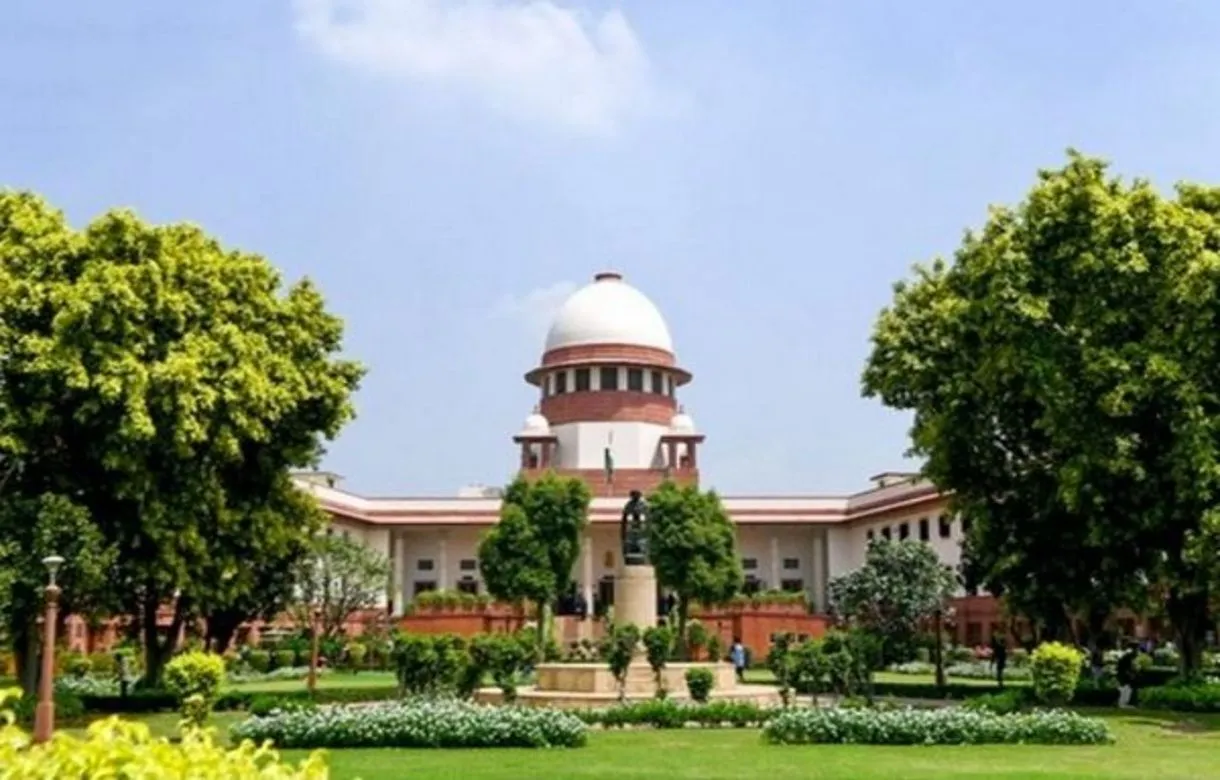
Supreme Court questions EC over missing records in Sringeri election dispute
The Supreme Court questioned the Election Commission over missing video footage of the 2023 counting in Karnataka’s Sringeri constituency. The case involves a revised result following a recount of postal ballots.

India News
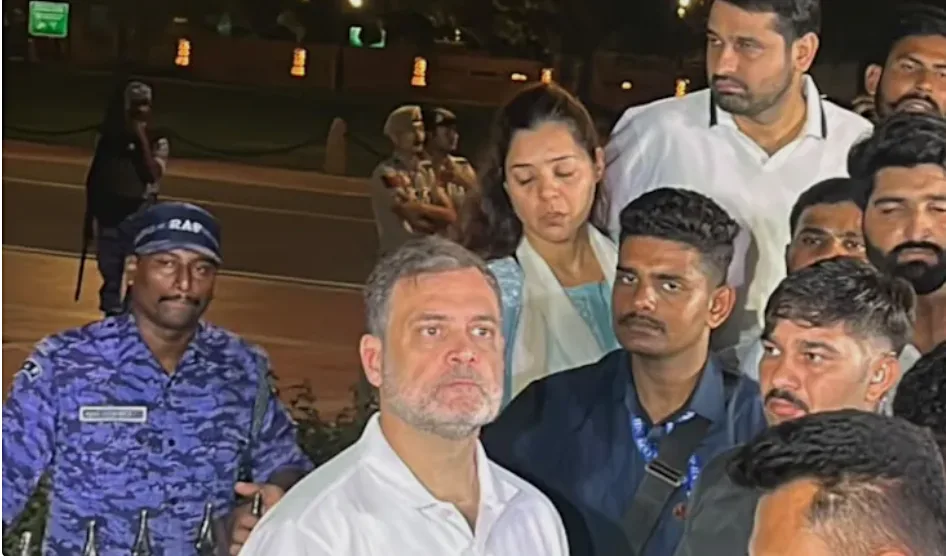
Rahul Gandhi joins India Gate protest by Ankita Bhandari’s parents
Rahul Gandhi joined the protest by Ankita Bhandari’s parents at India Gate in New Delhi on October 14. The demonstration has brought renewed attention to the 2022 murder case and the family’s concerns following Dushyant Gautam’s appointment as Sikkim Governor.
India News
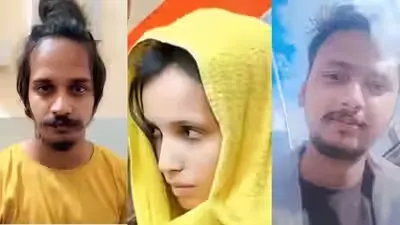
Meerut murder: Muskaan Rastogi and Sahil Shukla get death sentence
A Meerut court has sentenced Muskaan Rastogi and Sahil Shukla to death in the blue drum murder case involving the killing of merchant navy officer Saurabh Rajput in March 2025.

CJP leaders Saurav Das, Ashutosh Ranka, Ajinkya Shinde sent to 5-day judicial custody

PM Modi speaks to Mark Carney as India and Canada push to strengthen ties

S Jaishankar says India is a natural option for Russia amid Europe tensions

Meerut murder: Muskaan Rastogi and Sahil Shukla get death sentence

Rahul Gandhi joins India Gate protest by Ankita Bhandari’s parents

Supreme Court questions EC over missing records in Sringeri election dispute
Rahul Gandhi joins India Gate protest by Ankita Bhandari’s parents
Meerut murder: Muskaan Rastogi and Sahil Shukla get death sentence
PM Modi speaks to Mark Carney as India and Canada push to strengthen ties
S Jaishankar says India is a natural option for Russia amid Europe tensions

Afghan Men Try To Hang With The Jet Engine Of The Aircraft in Kabul- Afghanistan News – Kabul News
Trending Top 10 News: 10000 Crore Fine on Flipkart, Apple to Launch Unique Feature, Hdfc Bank Job Ad

Trending Top 10 News: Nokia 6310, Apple sales, Bachpan ka Pyar Video Kid, Dainik Bhaskar IT Raid

Trending Top 10 News: Canada bans Indian flights, Rain in Delhi NCR, AIMIM Twitter hacked, Raj Kundra case

Trending Top 10 News: Shein India, Apple New Service, Pocket Oxygen, Oppo Launched New Phone
-
 India News24 hours ago
CJP leaders Saurav Das, Ashutosh Ranka, Ajinkya Shinde sent to 5-day judicial custody
-
 India News23 hours ago
PM Modi speaks to Mark Carney as India and Canada push to strengthen ties
-
 Latest world news24 hours ago
S Jaishankar says India is a natural option for Russia amid Europe tensions
-
 India News13 hours ago
Meerut murder: Muskaan Rastogi and Sahil Shukla get death sentence
-
 India News12 hours ago
Rahul Gandhi joins India Gate protest by Ankita Bhandari’s parents
-
 India News12 hours ago
Supreme Court questions EC over missing records in Sringeri election dispute
