
India News
China encourage India to deal with Hong Kong on Nirav Modi


In a surprising development China has advised India to deal directly with Hong Kong on Nirav Modi issue and Beijing would leave it to the local administration to take a decision on India’s request for repatriation. Modi is suspected to be hiding in Hong Kong.
Geng Shuang, the spokesman of Chinese Foreign Ministry said in Beijing on Monday, “According to the one country, two systems (policy) and basic law of the HKSAR (Hong Kong Special Administrative Region), under the assistance and authorisation of the Central government, the HKSAR can make arrangements on judicial mutual assistance with other countries”.
He encouraged India to deal with Hong Kong on the matter. “If India makes a relevant request to the HKSAR, we believe the HKSAR will follow the basic law and relevant laws, and under relevant judicial agreements with India, on relevant issue,”

Despite being part of China, HKSAR is run by a local government elected through a democratic election under what Beijing calls the “one country, two systems” policy.
Meanwhile, the income-tax department is reportedly set to initiate proceedings against jeweller Nirav Modi, wanted in the Rs 14,000-crore PNB fraud, under the black money law tat provides for imprisonment of upto to seven years for not disclosing foreign assets.
The department has written tax authotities in Jersey, the Bahamas, Cyprus, Singapore and Mauritius, seeking details of Modi’s accounts and entities linked with him.
The CBI and other agencies are investigating into the PNB fraud which was allegedly perpetrated through issuing and rolling over of guarantees in violation of the rules. Modi and his uncle Mehul Choksi, also a jeweller, their companies and bank officials are accused of involvement. Both left India before the news of the fraud became public.
Nirav Modi left the country on January 1 while his home, showrooms and offices in Mumbai, Delhi and Surat were searched on February 15 after PNB complained of staggering fraud at the cost of the taxpayer to benefit the celebrity jeweller and others.
Nirav Modi was seen in a group photo in Davos with Prime Minister Narendra Modi. Congress party has accused PM Modi of helping “Chhota Modi” escape the country through he had been aware of a scame since 2016 when a whistleblower wrote to him on Nirav Modi’s uncle Mehul Choksi and warned that he would leave the country.









India News
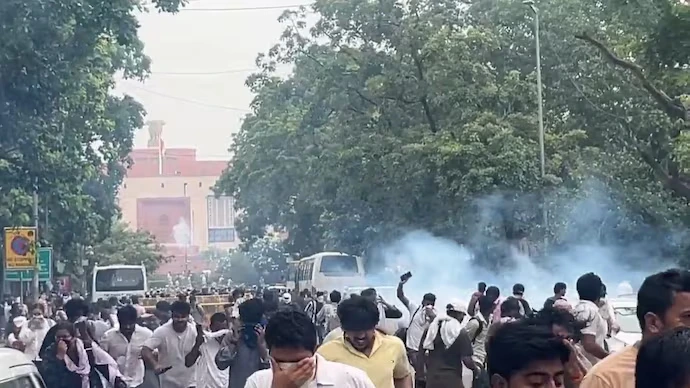
Delhi deploys 25,000 personnel, installs CCTV cameras ahead of CJP march
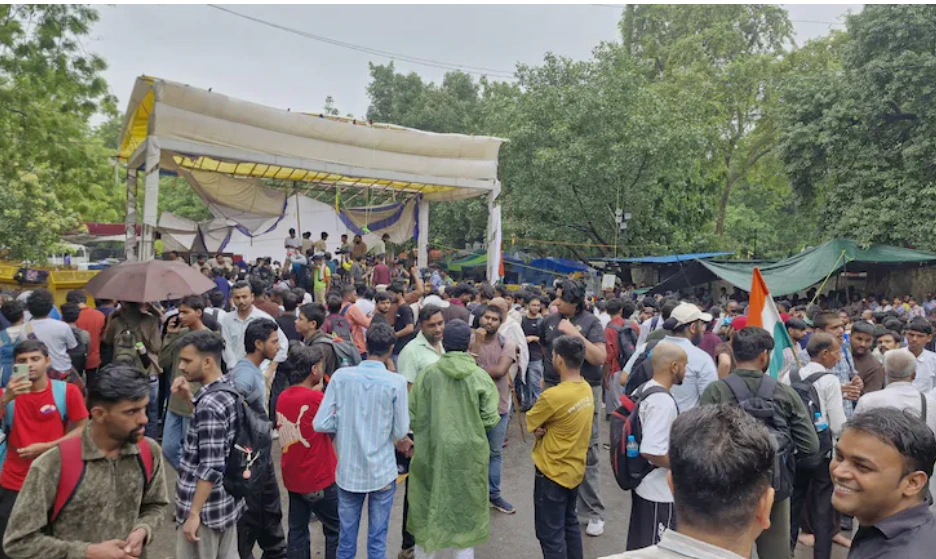
More than 25,000 police and paramilitary personnel have been deployed in Delhi ahead of the CJP’s planned protest march at Connaught Place. Authorities have also imposed restrictions and stepped up CCTV surveillance.

India News
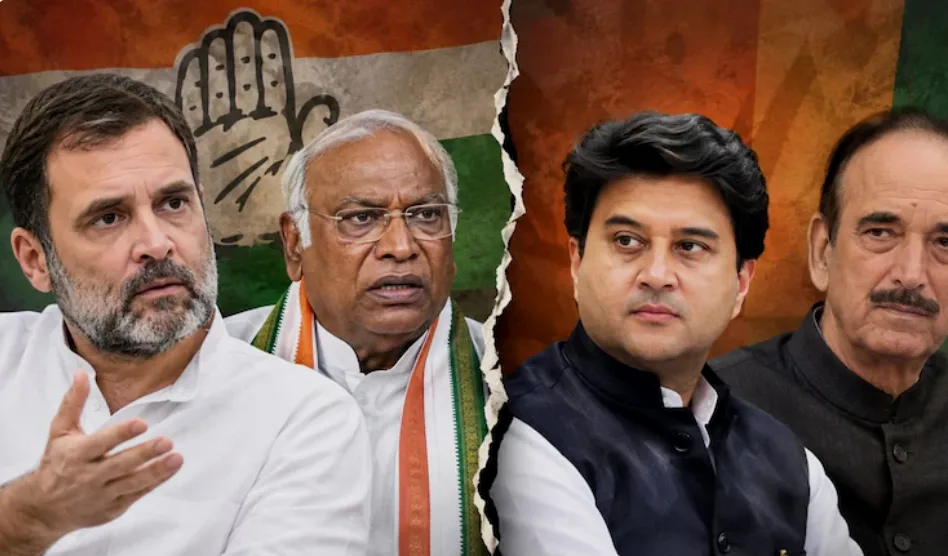
Mallikarjun Kharge’s ‘Your Friends’ jab at Rahul Gandhi over congress exits
Congress president Mallikarjun Kharge took a dig at Rahul Gandhi after the Leader of the Opposition reportedly described former party leaders Jyotiraditya Scindia and Ghulam Nabi Azad as among those who had left the Congress.
India News
Delhi Police offers 11-person limit for CJP’s Connaught Place protest
Delhi Police has offered to facilitate a group of 11 people at Central Park in Connaught Place for the Cockroach Janata Party’s October 16 protest, while warning that violations of prohibitory orders could invite legal action.

India-US trade deal first phase finalised, drafting underway

Election Commission orders voter roll revision in 17 states, UTs

Actor Imran Khan asked to leave India after CJP protest

Delhi Police offers 11-person limit for CJP’s Connaught Place protest

Mallikarjun Kharge’s ‘Your Friends’ jab at Rahul Gandhi over congress exits

Magnitude 7 earthquake strikes Russia’s Kamchatka Peninsula

Delhi deploys 25,000 personnel, installs CCTV cameras ahead of CJP march
Mallikarjun Kharge’s ‘Your Friends’ jab at Rahul Gandhi over congress exits
Delhi Police offers 11-person limit for CJP’s Connaught Place protest
Actor Imran Khan asked to leave India after CJP protest

Afghan Men Try To Hang With The Jet Engine Of The Aircraft in Kabul- Afghanistan News – Kabul News
Trending Top 10 News: 10000 Crore Fine on Flipkart, Apple to Launch Unique Feature, Hdfc Bank Job Ad

Trending Top 10 News: Nokia 6310, Apple sales, Bachpan ka Pyar Video Kid, Dainik Bhaskar IT Raid

Trending Top 10 News: Canada bans Indian flights, Rain in Delhi NCR, AIMIM Twitter hacked, Raj Kundra case

Trending Top 10 News: Shein India, Apple New Service, Pocket Oxygen, Oppo Launched New Phone
-
 India News22 hours ago
India-US trade deal first phase finalised, drafting underway
-
 India News19 hours ago
Election Commission orders voter roll revision in 17 states, UTs
-
 India News19 hours ago
Actor Imran Khan asked to leave India after CJP protest
-
 India News18 hours ago
Delhi Police offers 11-person limit for CJP’s Connaught Place protest
-
 India News6 hours ago
Mallikarjun Kharge’s ‘Your Friends’ jab at Rahul Gandhi over congress exits
-
 India News6 hours ago
Delhi deploys 25,000 personnel, installs CCTV cameras ahead of CJP march
-
 Latest world news6 hours ago
Magnitude 7 earthquake strikes Russia’s Kamchatka Peninsula
