English हिन्दी
Connect with us

India News

Citing principle of fairness, SC awards farmers more compensation than they sought

Published

on

Citing principle of fairness, SC awards farmers more compensation than they sought
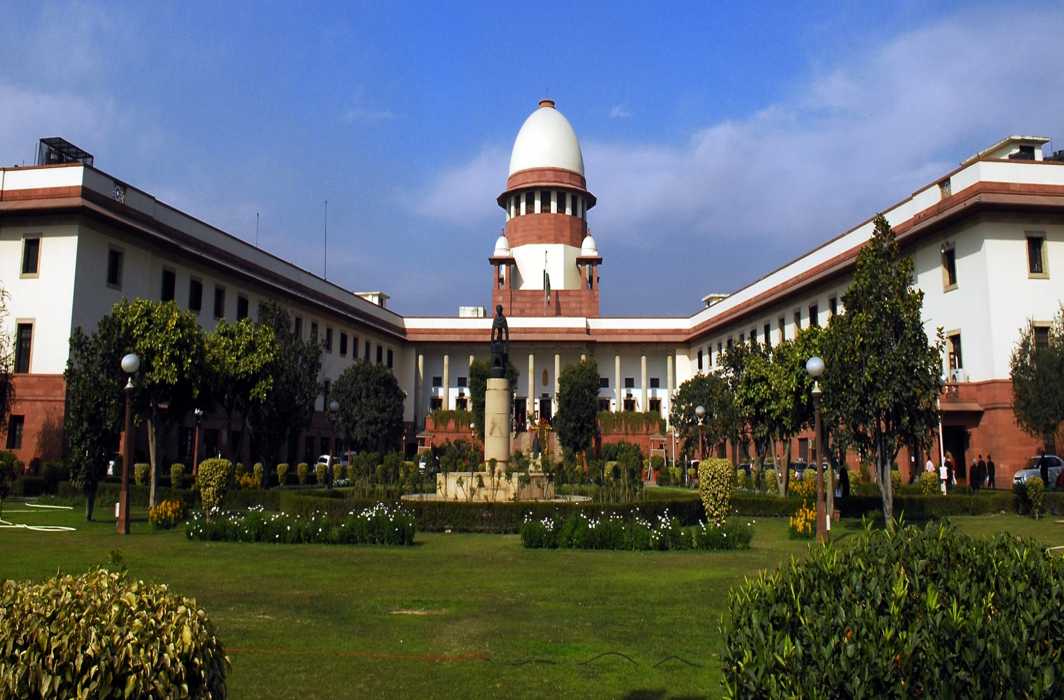
[vc_row][vc_column][vc_column_text]In a path-breaking judgment, SC hikes compensation sum from Rs 115 per square yard to Rs 297 per square yard

~By Sujit Bhar

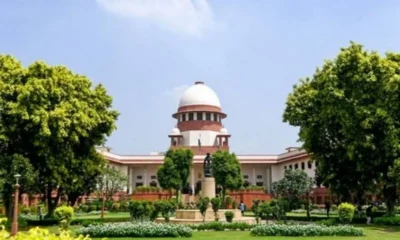
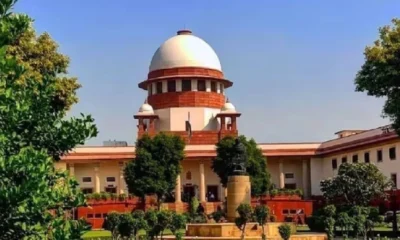
In an extraordinary judgment, the Supreme Court on September 11 directed that some villagers in Uttar Pradesh, whose land had been acquired by the state at the rate of Rs 115 per square yard, actually deserved to be paid Rs 297 per square yard, even if the farmers had not demanded compensation at that rate.

In delivering this judgment – in the matter of Narendra & Ors. v State of Uttar Pradesh & Ors – the court made an  observation which should go down in history as a precedent as judgments come. The court observed that “the mere fact that the compensation which was claimed by some of the villagers was at lesser rate than the compensation which is ultimately determined to be fair compensation, should not be a ground to deny such persons appropriate and fair compensation on the ground that they claimed compensation at a lesser rate”.

The Allahabad High Court had granted compensation to the villagers – those whose land had been acquired by the state – at the rate of Rs 115 per square yard. However, the Supreme Court set aside this judgment and set the higher compensation limit, saying that the difference in compensation, along with other statutory benefits, was directed to be paid to them within a period of three months.

Why is this verdict special? That is because a fair consideration of a demand does not just look at the demand, but also to peripheral situations that exist, often beyond the field of view of the petitioner.

Justice is not a one-dimensional, monochromatic word. It encapsulates a philosophy that Plato gave birth to while considering the genesis of justice. Being fair is one way to describe it, but Plato, in using the Greek word “dikaisyne”, pushed it more towards “morality” or “righteousness”. While these, in ancient times, were the right duties of a man, they also take into consideration societal aspects of fairness and morality. If in one tradition honour killing is righteous and moral, it isn’t in another. That is a paradox that needs to be dealt with.

What Plato wanted to do was show that justice is the quality of soul, a lack of selfishness and a general belief that it was done for the general good. It would have had been difficult in a society where death for honour was a purely divine experience.

Over and above, societal expectations on compensation vary. How would a square yard of a person’s personal farmland, handed down through generations, and his or her only source of sustenance, be compensated? At stake is not only his income, but his/her very identity.

Those are philosophical considerations and the debate can be endless. In more prosaic terms, however, compensation is indemnification, payment of damages, making amends, that which is necessary to restore an injured party to his former position. Those are the legal peripherals, as per Black’s Law Dictionary. And in judging each and every aspect of that comes the question of morality. And that is where the Supreme Court judgement has scored high on principles. That is what makes this judgment extraordinary.

While it is common practice to assume that a demand has to be judged within the ambit of normal standards, it is also inferred that the demand can be considered as the upper limit in resolution of the debate. In this case, the top court went beyond that and assumed that the demands were probably not made with full knowledge of the market.  The apex court felt morally liable to adjudicate on moral guidelines.

The Indian Supreme Court deserves a big thank you for that.[/vc_column_text][/vc_column][/vc_row]

India News

Siddaramaiah to step down as Karnataka Chief Minister, names DK Shivakumar as successor

In a major political development, Karnataka Chief Minister Siddaramaiah has announced his decision to step down, clearing the path for his deputy, DK Shivakumar, to assume leadership.

Published

on

Bringing the curtain down on a long-standing leadership dispute within the state ruling party, Karnataka Chief Minister Siddaramaiah announced on Thursday morning that he will resign from his post. The significant announcement was made during a breakfast meeting hosted at his official residence, ‘Kaveri’, in Bengaluru, where senior cabinet ministers and Deputy Chief Minister DK Shivakumar were present.

Siddaramaiah informed his cabinet colleagues that he will formally tender his resignation at 3:00 PM. He further requested the ministers to extend their support to DK Shivakumar, declaring him as the next Chief Minister of the state.

A graceful transition of power

The breakfast meeting, which featured traditional Kannada dishes like masala dosa, idli, and kesaribath, served as a poignant farewell from the veteran leader who recently completed three years of his second term in office. Ministers present at the gathering described the atmosphere as emotional yet graceful. While some cabinet members broke down in tears following the announcement, Siddaramaiah remained poised, expressing his gratitude to the team for their cooperation during his tenure.

Ahead of the formal discussions, the two top leaders displayed a strong message of camaraderie and unity. Images released from the residence showed DK Shivakumar touching the Chief Minister’s feet to seek his blessings, followed by a warm embrace between the duo. Following the meeting, the state party unit shared these images on social media with a caption emphasizing that unity remains their core strength and public service their eternal commitment.

High command intervention ends long-standing dispute

The decision follows 48 hours of intense consultations in New Delhi with the party’s central leadership, including Mallikarjun Kharge and Rahul Gandhi. Media reports indicate that the party high command actively facilitated the transition, offering the outgoing Chief Minister a national role, which includes a Rajya Sabha seat.

As the Governor is currently out of the state on personal matters, Siddaramaiah is expected to hand over his resignation letter to the Governor’s secretary at Raj Bhavan. Following the formal acceptance of the resignation, a Legislature Party meeting will be convened to officially elect Shivakumar as the new leader before the scheduled swearing-in ceremony. Meanwhile, celebrations have already erupted outside Shivakumar’s residence, where supporters gathered to distribute sweets and chant slogans welcoming his upcoming elevation.

Continue Reading

India News

Rain and thunderstorms to bring relief to Delhi NCR from intense heatwave

Delhi and NCR are set to get a break from the scorching summer heat as the IMD forecasts thunderstorms and light rain, bringing down the mercury significantly over the weekend.

Published

on

Weather

The persistent heatwave gripping Delhi and the National Capital Region (NCR) is expected to ease down as changing weather conditions promise sudden relief. The India Meteorological Department (IMD) has forecast a drop in temperatures alongside incoming thunderstorms and rain across the northern plains.

Thunderstorms and rain predicted for Delhi NCR

According to the weather department, Delhi’s maximum temperature is expected to settle around 43 degrees Celsius, while the minimum is likely to hover near 29 degrees Celsius. The afternoon and evening hours are expected to witness light to very light rainfall, accompanied by strong winds and squalls moving at speeds of 50-60 kmph.

A more drastic change in weather conditions is anticipated on May 29, when maximum temperatures could drop sharply to around 36 degrees Celsius, with minimums decreasing to about 26 degrees Celsius. The region is likely to witness thunderstorms, lightning, rain, and squalls with wind speeds ranging between 40-50 kmph. This cooler trend is predicted to continue through May 30 and 31, keeping the maximum temperatures locked around 35-36 degrees Celsius.

Scorching temperatures persist across northern and central India

Before the arrival of these rains, severe heatwave conditions continued to scorch several parts of the country. Media reports indicate that Banda in Uttar Pradesh recorded a maximum temperature of 47.8 degrees Celsius, followed closely by Prayagraj at 46.4 degrees Celsius and Jhansi at 46 degrees Celsius. The states of Haryana, Chandigarh, and Delhi also registered daytime temperatures ranging between 45 and 46 degrees Celsius.

In Rajasthan, cities like Pilani saw temperatures touch 47 degrees Celsius, while Sri Ganganagar recorded readings 5.5 degrees above normal. Meanwhile, Maharashtra’s Vidarbha region experienced marginal relief, though temperatures remained high around 45 to 46 degrees Celsius. In Nagpur, the intense heatwave conditions led to 11 suspected heatstroke deaths within a 24-hour period.

Southwest monsoon advancement and safety advisories

On a national level, the IMD stated that environmental conditions are turning favorable for the further advance of the southwest monsoon into parts of the Arabian Sea, Lakshadweep, and the Bay of Bengal. Since India relies heavily on the monsoon for its annual rainfall, farming, and drinking water, its timely progression remains critical.

Amidst these soaring temperatures, Prime Minister Narendra Modi urged the public to take necessary precautions. In a statement shared on social media, he advised citizens to stay hydrated, carry water when stepping out, and offer assistance to those working under the sun to combat the harsh summer heat.

Continue Reading

India News

Siddaramaiah not interested in taking Rajya Sabha post, say sources

Sources reveal that Karnataka Chief Minister Siddaramaiah has turned down an offer for a Rajya Sabha seat, preferring to remain active as an MLA in state politics despite leadership transition talks by the Congress high command.

Published

on

The political landscape in Karnataka is witnessing intense developments as Chief Minister Siddaramaiah has reportedly expressed his unwillingness to accept a Rajya Sabha berth or transition into a national role in New Delhi. According to sources familiar with the discussions, the veteran leader prefers to remain active within state politics and continue his tenure as an MLA rather than shifting his focus to the national capital.

High command pushes for transition

This revelation comes on the heels of marathon high-level meetings convened by the Congress leadership in Delhi to address the ongoing leadership discussions in Karnataka. Insiders state that the party central leadership has backed Deputy Chief Minister D.K. Shivakumar to take over the top post, in line with internal understandings following the 2023 assembly elections.

To facilitate a smooth leadership transition in the state, the high command offered Siddaramaiah a parliamentary seat in the upcoming Rajya Sabha elections alongside a prominent national role. However, sources indicate that the Chief Minister has rejected this proposal and requested more time to deliberate on his next steps.

Official stance downplays leadership shift

Publicly, senior party leaders have sought to quell rumors regarding an immediate change of guard. Following a lengthy deliberation at the party headquarters, General Secretary K.C. Venugopal stated to the media that the discussions were exclusively centered around selecting candidates for the upcoming Rajya Sabha and Legislative Council seats in Karnataka. He dismissed reports of an imminent chief ministerial swap as mere speculation.

Siddaramaiah also echoed this sentiment when questioned by journalists, emphatically denying that any leadership changes were debated during the official meeting. Despite these denials, political circles remain abuzz, as the Chief Minister has reportedly met with cabinet ministers and loyalists to discuss the evolving situation before returning to Bengaluru.

Continue Reading

Trending

© Copyright 2022 APNLIVE.com