English हिन्दी
Connect with us

India News

Covid-19 vaccination to be allowed in workplaces, check eligibility, and other details here

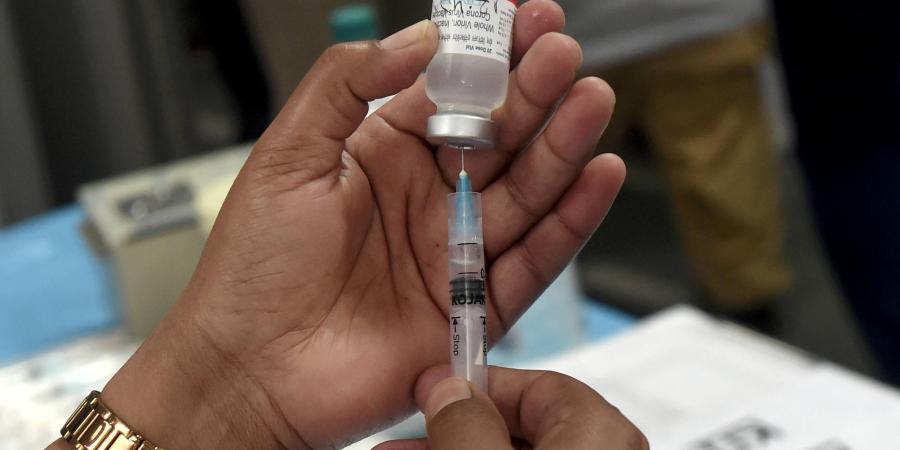
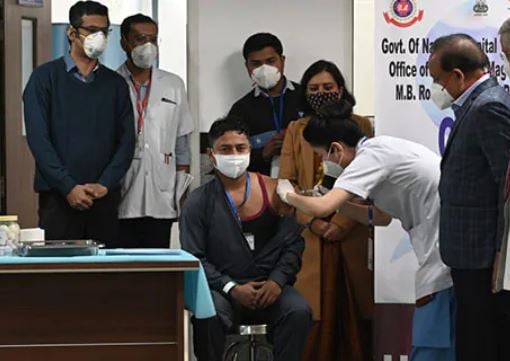
In a bid to increase the pace of immunisation drive amid the Covid-19 surge, the Union Health Ministry on Wednesday has launched Covid-19 vaccination for employees at their workplaces, both private and government, starting from April 11.

Published

on

covid vaccination

In a bid to increase the pace of immunisation drive amid the Covid-19 surge, the Union Health Ministry on Wednesday has launched Covid-19 vaccination for employees at their workplaces, both private and government, starting from April 11.
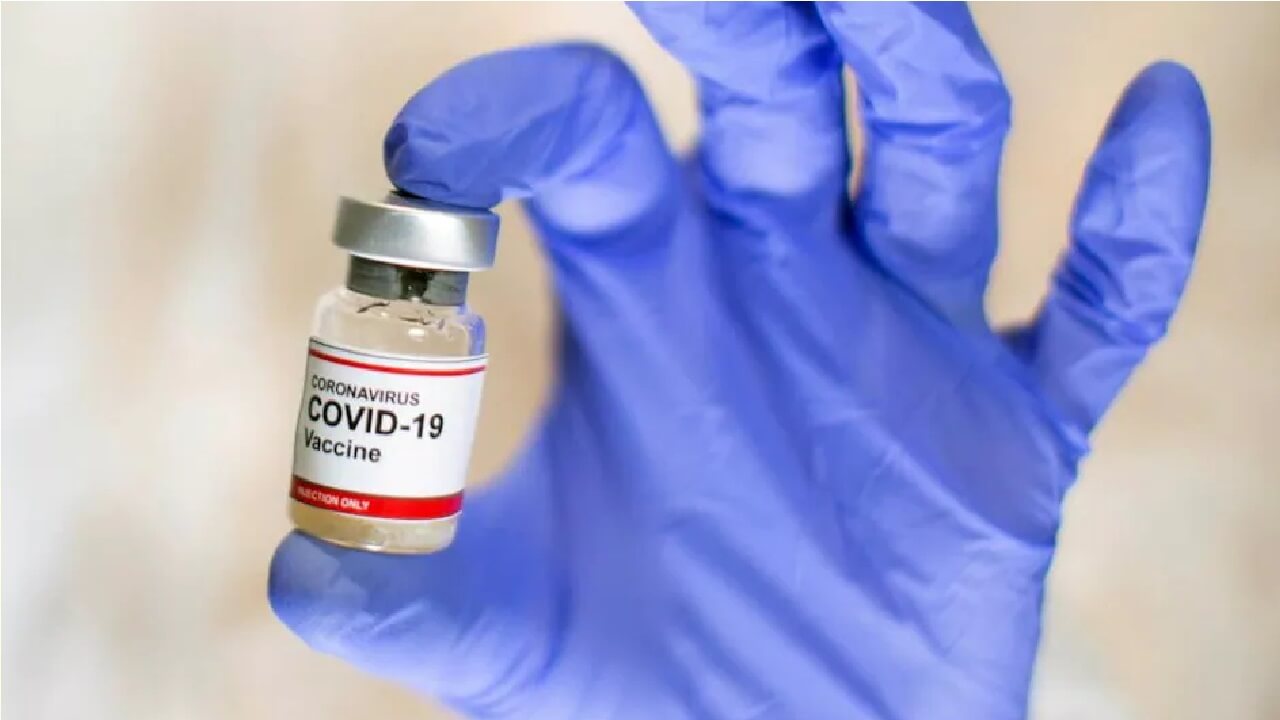
The health ministry has directed all States and Union territories to organise Covid-19 inoculation sessions at workplaces having about 100 eligible and willing beneficiaries. Organising vaccination at offices will not only be convenient to the staff at workplaces but also help to avoid travel and hence reducing the risk of exposure to the Covid-19 virus,  the ministry said in a statement.

Who is eligible for the vaccine?

Amid a huge demand to allow vaccine accessibility to all adults, the health ministry had written to the Chief Secretary, saying that efforts have been to consistently make the vaccination drive more pragmatic and also more acceptable and purposeful to the beneficiaries with the help of state and union territories. On similar lines, vaccination drives be conducted at workplaces for employees who are aged 45 years and above, said the ministry in the letter.

No outsiders including employees’ family members will be allowed for inoculation at Covid Vaccination Center(CVC) at workplaces. The employees who wish to take the shot must be registered in CoWin portal prior to vaccination. The government has directed CVC Nodal officer to ensure the registration of all targeted beneficiaries and provide a facility for on-spot registration only to employees of the workplace.

How will the vaccination process roll out?

All government and private workplaces will be identified for conducting the vaccination sessions by the District Task Force and Urban Task Force chaired by District Magistrate and Municipal Commissioner respectively. Once identified, all such government and private offices will be tagged as CVC at workplaces and will be registered in the CoWin portal. 

Following which the management team of the workplace will assign one of their senior staff as a nodal officer to coordinate with district health authorities or private Covid Vaccination Centres and support vaccination activities. The officer will facilitate registration of beneficiaries, availability of physical and IT infrastructure, and oversight to vaccination process, according to the health ministry.

Which vaccines will be administered?

As the Centre has already clarified that only one type of vaccine will be administered in the first and second dose of a beneficiary, similarly the employees who have taken the first dose of one type of vaccine shall be given the second dose of the same vaccine at the workplace. If an employee has been administered the first dose of the second type of vaccine, he or she shall not be vaccinated n in the CVC at the workplace. However, those who have taken a shot of the same vaccine as the first dose may be provided a second dose at the Work Place CVC, the health ministry said.

How much Covid-19 vaccine will cost?

The Covid-19 vaccination at government offices conducted by the district health authorities will be provided free of cost while at the private CVC, the vaccines will be on payment basis of rate same as at a private health facility.

Read Also: New Zealand temporarily bans entry of travellers from India over Covid-19 surge

At private CVC, the vaccine cost is fixed at cost of Rs 150 per person per dose which is subjected to the maximum service charge of Rs 100per person per dose. Hence the total amount recoverable by private health facilities is Rs 250 per person per dose, according to the health ministry.

India News

Congress, BJP attack Bhagwant Mann over remarks on Punjab blasts

Congress and BJP have jointly criticised Punjab CM Bhagwant Mann after he linked recent blasts near defence sites to political motives, triggering a controversy.

Published

on

Bhagwant Mann

A political row has erupted in Punjab after Chief Minister Bhagwant Mann linked recent blast incidents to political motives, drawing sharp criticism from both the Congress and the Bharatiya Janata Party (BJP).

The controversy follows two low-intensity explosions reported within a short span of time — one near the Border Security Force (BSF) headquarters in Jalandhar and another close to an army cantonment area in Amritsar. The incidents raised concerns over security, particularly given the sensitive nature of the locations.

In response, Mann suggested that the blasts could be part of a larger political strategy. His remarks triggered a strong backlash, with opposition parties accusing him of politicising a serious security issue.

Leaders from the Congress criticised the Chief Minister’s statement, calling it inappropriate and alleging that such comments undermine the gravity of the situation. They stressed that matters related to national security should be handled with caution and responsibility.

The BJP also joined the criticism, questioning the basis of Mann’s claims and urging the state government to focus on investigation and law enforcement instead of making political allegations.

The developments have led to an unusual moment where both Congress and BJP appear aligned in their criticism of the Aam Aadmi Party-led government in the state.

Meanwhile, the blasts themselves have intensified concerns over safety in border regions, with authorities continuing their investigation into the incidents. No casualties were reported, but the proximity to defence establishments has made the issue particularly sensitive.

The episode has further escalated political tensions in the state, with security and accountability emerging as key points of debate.

Continue Reading

India News

Himanta Biswa Sarma resigns as Assam chief minister, oath ceremony likely after May 11

Himanta Biswa Sarma resigns as Assam Chief Minister after BJP-led NDA’s victory. He will continue as caretaker CM until the new government is sworn in after May 11.

Published

on

Himanta sharma

Assam Chief Minister Himanta Biswa Sarma resigned from his post on Wednesday, paving the way for the formation of a new government after the BJP-led NDA secured a decisive victory in the 2026 Assembly elections.

Sarma submitted his resignation to Governor Lakshman Prasad Acharya at Lok Bhawan in Guwahati. The Governor accepted the resignation and asked him to continue as the caretaker Chief Minister until the new government takes charge.

The resignation comes after the NDA’s strong electoral performance, where the alliance won a clear majority in the 126-member Assembly, ensuring its return to power for another term.

Oath ceremony expected after May 11

Speaking to reporters after submitting his resignation, Sarma said the swearing-in ceremony for the new government is likely to be held after May 11.

He indicated that Prime Minister Narendra Modi has been invited to attend the ceremony but is unavailable until May 11, which has influenced the tentative schedule.

Decision on next chief minister soon

Sources suggest that central observers, including senior BJP leaders, are expected to arrive shortly to oversee the selection of the legislature party leader. The newly elected MLAs will then decide on the next Chief Minister.

Despite the formal resignation, party sources indicate that Sarma is likely to continue in the role for another term, given the BJP’s strong mandate in the state.

The move marks the beginning of the government formation process in Assam following the election results declared earlier this week.

Continue Reading

India News

Rahul Gandhi and Vijay alliance took shape through backchannel talks, early signals from Congress leaders

Congress outreach and political calculations led to Rahul Gandhi and Vijay coming together after the Tamil Nadu 2026 election results.

Published

on

The coming together of Rahul Gandhi and actor-politician Vijay in Tamil Nadu after the 2026 Assembly elections was not sudden, but the result of behind-the-scenes political manoeuvring and early signals within the Congress.

According to media reports, some leaders in the Tamil Nadu Congress had already sensed the scale of Vijay’s surge during the campaign, anticipating what was later described as a “wave” in favour of his party.

After the results, where Vijay’s Tamilaga Vettri Kazhagam (TVK) emerged as the single largest party but fell short of a majority, communication channels between the Congress leadership and Vijay quickly became active.

A key moment in this evolving political equation was a phone call from Rahul Gandhi to Vijay, congratulating him on the party’s strong performance. The conversation was seen as more than a courtesy, signalling the possibility of cooperation at a time when government formation required additional support.

Reports indicate that discussions within Congress weighed the political benefits of supporting Vijay, especially given the shifting dynamics in the state where traditional dominance by major Dravidian parties has been challenged.

With TVK needing allies to cross the majority mark, Congress emerged as a potential partner, leading to a broader political realignment in the state. This development also triggered tensions within opposition alliances, highlighting the strategic importance of the decision.

The evolving partnership reflects a mix of electoral pragmatism and changing voter sentiment, particularly the growing influence of younger voters, which leaders acknowledged as a key factor in the election outcome.

Continue Reading

Trending

© Copyright 2022 APNLIVE.com