English हिन्दी
Connect with us

India News

Delhi prohibits entry of taxis registered in other states, following court remarks

The Delhi government has issued an order stating that only taxis with the Delhi registration number will be permitted to operate in the city.

Published

on

Following the Supreme Court’s remarks, the Delhi government on Wednesday said that app-based taxis registered in other states would not be allowed to enter the city. The Delhi Transport Department will issue a separate order specifying the start date of the prohibition.

The Delhi government has issued an order stating that only taxis with the Delhi registration number will be permitted to operate in the city.
It was just a day after exhibiting a slight improvement when it was in the very poor category that Delhi’s total air quality reverted to the severe category.

According to information from the Central Pollution Control Board (CPCB), the city’s overall air quality index (AQI) was 421 at 7 am.

Meanwhile, environment Minister Gopal Rai of Delhi stated on Wednesday that the government has postponed implementing the odd-even car rationing plan until the Supreme Court (SC) releases an order evaluating the program’s efficacy in reducing air pollution.

During a news conference in the nation’s capital, Rai announced that the Delhi government would present the findings of two significant studies carried out by the Delhi Technical University and the Chicago-based Energy Policy Institute of the University to ascertain the efficacy of the odd-even scheme.

Every year, the Supreme Court issues numerous directives aimed at easing the concerns of those dealing with the issue of air pollution, particularly in the Delhi-National Capital Region (NCR) during the months of October and November.

On Tuesday, Gahlot ordered officials to make sure that adequate border checks were made, claiming that polluting cars were still entering the city freely despite GRAP stage IV limitations being in place due to the poor quality of the air.

After the capital’s air quality fell to severe plus (AQI above 450) levels on Sunday, restrictions under GRAP stage IV went into effect. These included a ban on all types of construction work and the entry of trucks that emit pollution.

He further warned that any laxity in this regard may invite strictures and mentioned that the Supreme Court was keeping a careful eye on Delhi’s pollution condition.

The chairman of the Delhi Pollution Control Committee (DPCC), the Principal Secretary, and the Environment and Transport Commissioner have all received notice of the decision.Delhi prohibits entry of app-based taxis registered in other states, following court remarks.

India News

Delhi-NCR GRAP 3 imposed as pollution worsens ahead of Diwali

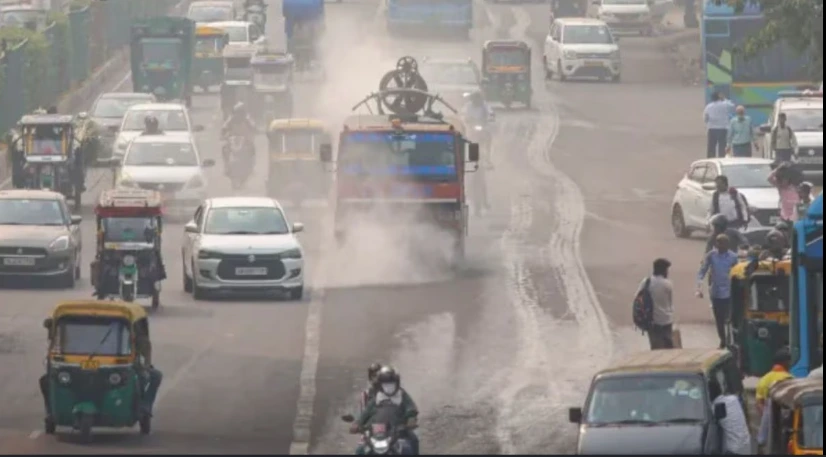
GRAP Stage III has been imposed across Delhi-NCR with immediate effect as Delhi’s average AQI reached 382, putting the air quality in the “Very Poor” category ahead of Diwali.

Published

on

The Commission for Air Quality Management (CAQM) has imposed Stage III of the Graded Response Action Plan (GRAP) across Delhi-NCR with immediate effect as air quality deteriorated ahead of Diwali.

The decision was taken as a precautionary measure after Delhi’s average Air Quality Index (AQI) reached 382 on Friday, placing the national capital in the “Very Poor” category. 

GRAP 3 comes into effect across NCR

The CAQM’s Sub-Committee on GRAP decided to invoke Stage III across the entire National Capital Region.

GRAP is an emergency response framework under which pollution-control measures become progressively stricter as air quality deteriorates. The four stages correspond to different levels of air pollution, with “Poor” covering AQI levels of 201-300, “Very Poor” 301-400, “Severe” 401-450 and “Severe Plus” above 450.

The Stage III decision comes less than two days before Diwali, when authorities are particularly concerned about a further deterioration in air quality.

Pollution levels remain a concern

Delhi’s average AQI of 382 indicates that pollution levels have remained high across the capital. The move to GRAP Stage III is intended to prevent further deterioration in air quality across Delhi-NCR.

The latest decision follows earlier pollution-control measures implemented under the revised GRAP framework as air quality worsened in the region. 

What GRAP means for Delhi-NCR

The GRAP framework provides for increasingly stringent measures as pollution levels rise. Stage III brings stricter restrictions than the earlier stages, particularly in areas linked to dust and emissions.

The latest CAQM decision applies across Delhi-NCR with immediate effect. Details of the measures to be enforced under the newly invoked Stage III should be followed through official directions issued by the authorities.

The development comes amid heightened concern over air pollution in the national capital region ahead of Diwali.

Continue Reading

India News

Why no govt official has been named in Mahadev betting app case?

Published

on

By

By Neeraj Mishra

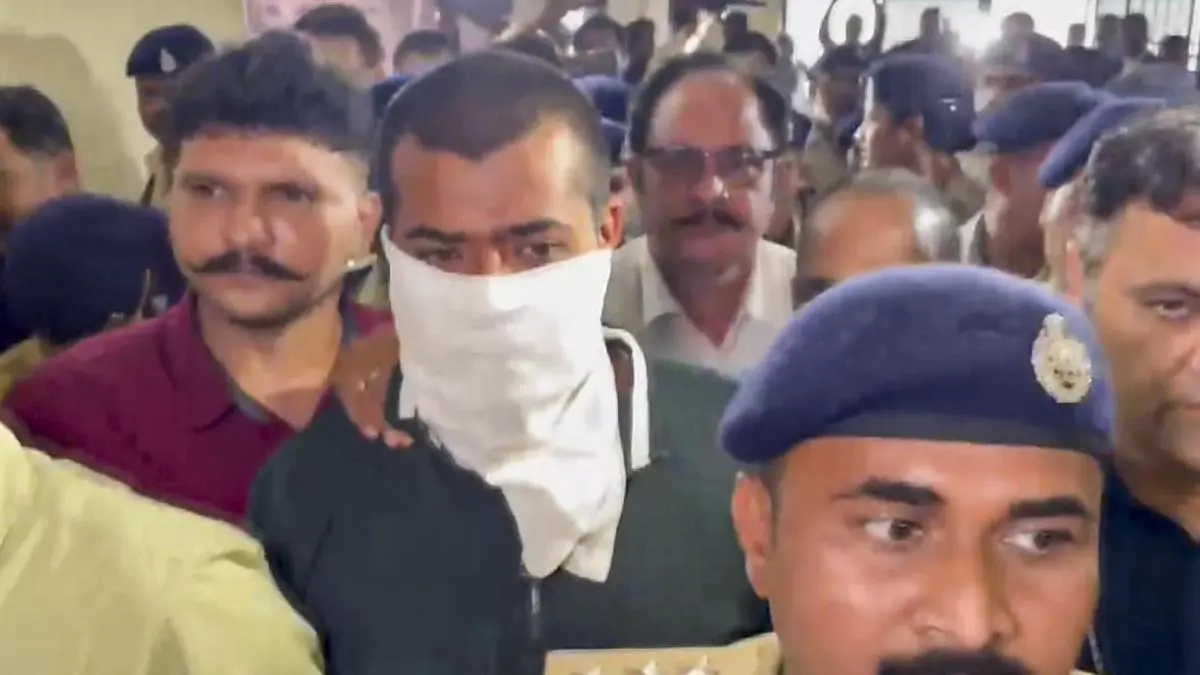
A Rs 94,000-crore betting scam took place in the country and so far the only police official taking the heat is a measly ASI. The Chhattisgarh government, the CBI and the ED would all like us to believe that a betting racket backed by hawala operators spread right up to Dubai could be run on the shoulders of an Assistant Sub-Inspector of Durg district! And all this alleged money was made within three years of operations making it the most profitable venture ever.

The fact is that big names are hiding behind the curtains pulled tight together by the investigators themselves. There is an IG rank officer, two SPs, two IAS officers and several other state police officials who have been named by sources and perfunctorily questioned with no great enthusiasm by the investigating agencies. Their political masters are protecting them both from investigations and the media.    

This Wednesday a special CBI court in Raipur granted the CBI eight-day remand of alleged kingpin Saurabh Chandrakar, who was finally extradited by Oman after months of back and forth. The CBI for some strange reason then requested the court to take Chandrakar to Delhi to which the accused’s lawyer also did not object. Since the original crime scene is in Durg and most of the possible dubious characters are in Raipur, one would assume keeping him in Chhattisgarh would have been appropriate.

But perhaps it’s a bigger ring and the CBI is also aware of the pitfalls ahead. Rs 94000 crore is a figure in the chargesheet but knowledgeable sources in the gambling racket in the state believe that  while Mahadev book was initially backed by people close to then Chief Minster Bhupesh Baghel, it was later taken over by the IPL gangs since the main source of income is the IPL season. It is estimated that more than Rs 25000 crore changed hands every season. The handlers or the Khai party easily makes almost half of it nice and clean.

Baghel’s son and some of his sidekicks have been questioned but not named in the chargesheets so far. On the day Chandrakar was being produced in Raipur court, his partner in crime Ravi Uppal was arrested in Dubai and may soon be extradited. But the way things are, no big names will come out.

It’s possible that Baghel may face the heat when the 2028 state assembly elections come around but it is also clear that the Mahadev operations have probably been taken over by some other gang backed by some powerful political bosses in India. So Chandrakar was allowed to get married in Dubai with Bollywood stars in attendance and not extradited for two years. Now that everything has been snatched from him and he is no longer an asset, he’s surrendered along with Uppal. Mahadev, believe this writer, will live on.

Continue Reading

India News

Farooq, Omar Abdullah to meet upset NC MLAs amid party discontent

Farooq Abdullah and Omar Abdullah are set to meet National Conference MLAs who have raised concerns following the recent Cabinet expansion in Jammu and Kashmir.
Published

on

Omar Abdullah

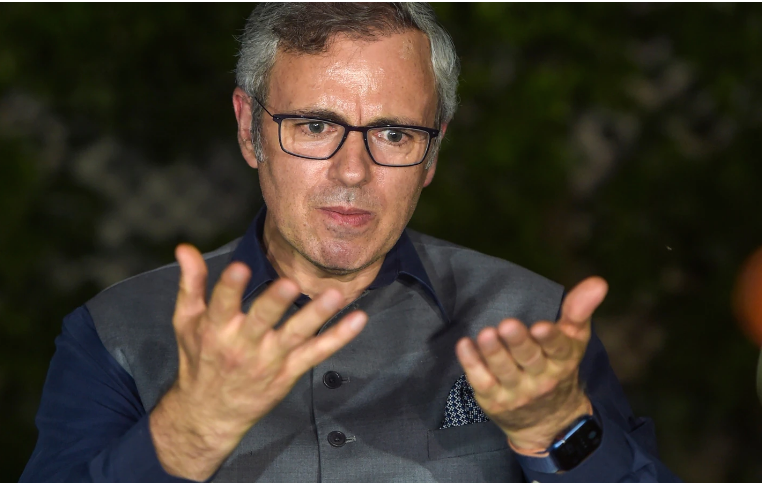
Jammu and Kashmir National Conference (NC) president Farooq Abdullah and Chief Minister Omar Abdullah are set to meet a group of party legislators who have raised concerns following the recent expansion of the Union Territory’s Council of Ministers.

The meeting is scheduled in Srinagar on Friday as the party leadership attempts to address grievances raised by several NC MLAs. Reports indicate that the legislators had met separately ahead of their interaction with the Abdullahs to finalise the issues they wanted to raise. 

The developments come days after Omar Abdullah expanded his Cabinet, inducting four new ministers and dropping Independent MLA Satish Sharma from the Council of Ministers. The reshuffle has led to discontent among sections of the ruling National Conference, particularly among legislators who were not included in the new ministerial team. 

What the NC MLAs want

The legislators have raised concerns about the functioning of the party and government, including the need for greater authority for elected representatives, stronger party organisation at the grassroots level and better implementation of commitments made to voters.

Some members of the group have also demanded changes involving ministers and the Chief Minister’s advisor Nasir Aslam Wani. Earlier reports said the legislators had prepared a memorandum outlining their grievances and demands. 

The group has stressed that its concerns are aimed at strengthening the party rather than destabilising the government. One legislator described the focus as improving the party’s functioning at the grassroots level and ensuring that MLAs are empowered to address public grievances.

Cabinet expansion triggered tensions

The latest discontent followed Omar Abdullah’s Cabinet expansion, under which four new ministers were inducted. They include Ali Mohammad Sagar, Mir Saifullah, Shamima Firdous and Altaf Ahmad Kaloo. Independent MLA Satish Sharma was dropped from the Council of Ministers. 

The Cabinet changes had already prompted concerns among some senior legislators over ministerial representation and the functioning of the party organisation. The disagreement has since developed into a broader discussion about the role and empowerment of elected representatives.

The meeting with Farooq and Omar Abdullah is therefore significant as the party leadership seeks to engage directly with the legislators and address their concerns.

Continue Reading

Trending

© Copyright 2022 APNLIVE.com