
India News
ABVP wins 3 seats in Delhi University elections, NSUI bags Vice President post
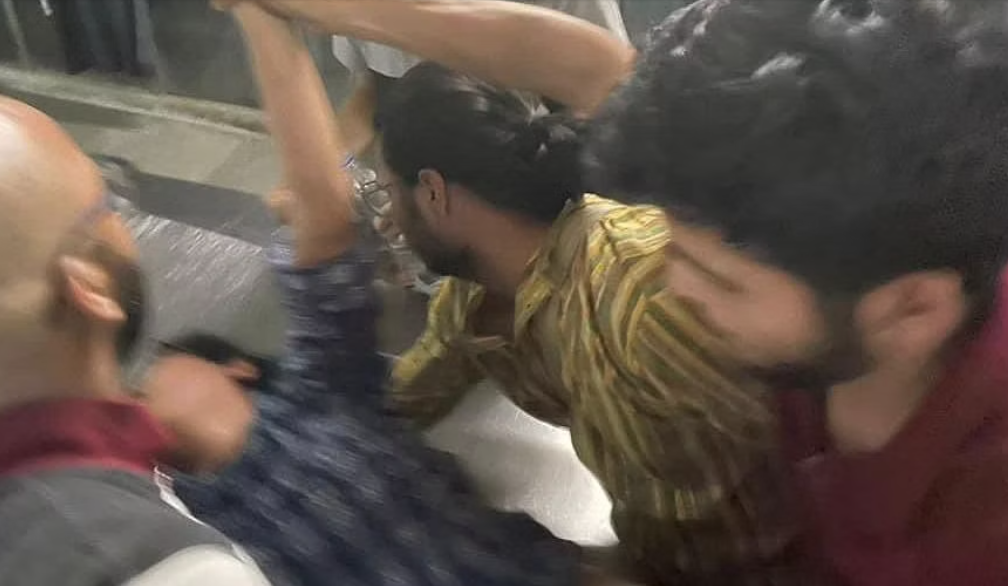
ABVP won three out of four seats in Delhi University elections.


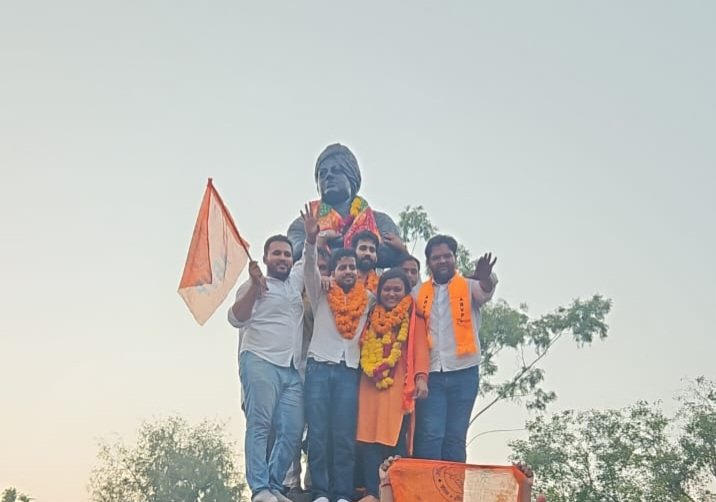
Akhil Bharatiya Vidyarthi Parishad (ABVP) won three out of four seats in Delhi University elections.
The University of Delhi on Saturday announced the Delhi University Students Union (DUSU) election results. Akhil Bharatiya Vidyarthi Parishad (ABVP) won three out of four central panel posts in the elections while the National Students Union (NSUI) bagged the Vice-President Post.
Tushar Dedha from the ABVP has secured the President post whereas the Vice President post has been won by Abhi Dahiya of NSUI. Aparajita, an ABVP candidate won the Secretary post in the DUSU elections. Sachin Baisla from ABVP has won the panel post of Joint Secretary.
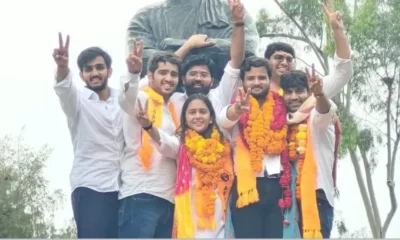
ABVP supporters celebrated the win as their organisation won three central panel posts in Delhi University Students Union (DUSU) elections.
The DUSU election was held on September 22. There were 24 candidates in the race for the four central panel posts.
The elections were conducted through EVMs at 52 colleges and departments for the four posts. The paper ballot was used for the college union elections. The total turnout of voters was 42 percent.

The vote sharing in the Delhi University Student Union elections was quite surprising. The ABVP candidate for the President post Tushar Dedha got 23,460 votes while Hitesh Gulia, an opponent candidate from NSUI received a total of 20,345 votes for the President post.
For the post of Vice President, NSUI’s candidate Abhi Dahiya surpassed ABVP’s Sushant Dhankhar with 22,331 votes meanwhile ABVP candidate got 20,502 votes for the post.
Arpita from ABVP got a total of 24,534 votes while NSUI’s candidate Yakshna Sharma received 11,597 votes for the post of Secretary in the DUSU elections.
The Akhil Bharatiya Vidyarthi Parishad candidate won the seat with a total of 24,955 votes meanwhile candidate from the National Students Union Shubham Kumar got 14,960 votes in the elections.
After a big win of the ABVP candidates on three seats of the central panel, the Minister of State for Railways and Textiles Darshana Jadosh extended her congratulations to the right-wing allies for their victory in the DUSU elections.
The Bharatiya Janata Party President, JP Nadda extended his congratulations to the ABVP for their victory in the DUSU elections.
Inspired by the ideals of Swami Vivekananda, ABVP has always kindled a flame of nationalism and selfless service in the hearts of our youth, the BJP President said. He congratulated all the Karyakartas of ABVP for their emphatic victory in Delhi University Elections 2023. This triumph shows the ubiquitous acceptance of the ideology of ‘nation first’ among our young generation, who will shape our nation’s tomorrow, Nadda added.






India News
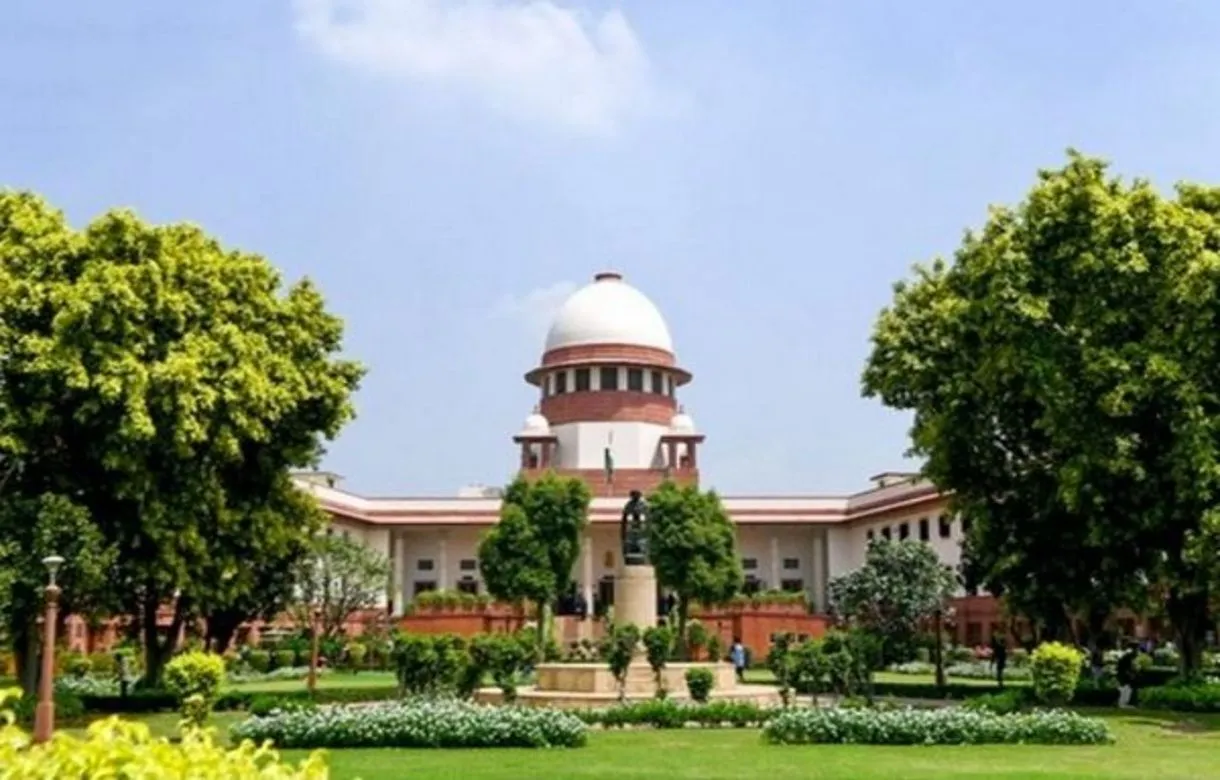
Supreme Court questions EC over missing records in Sringeri election dispute
The Supreme Court questioned the Election Commission over missing video footage of the 2023 counting in Karnataka’s Sringeri constituency. The case involves a revised result following a recount of postal ballots.

India News
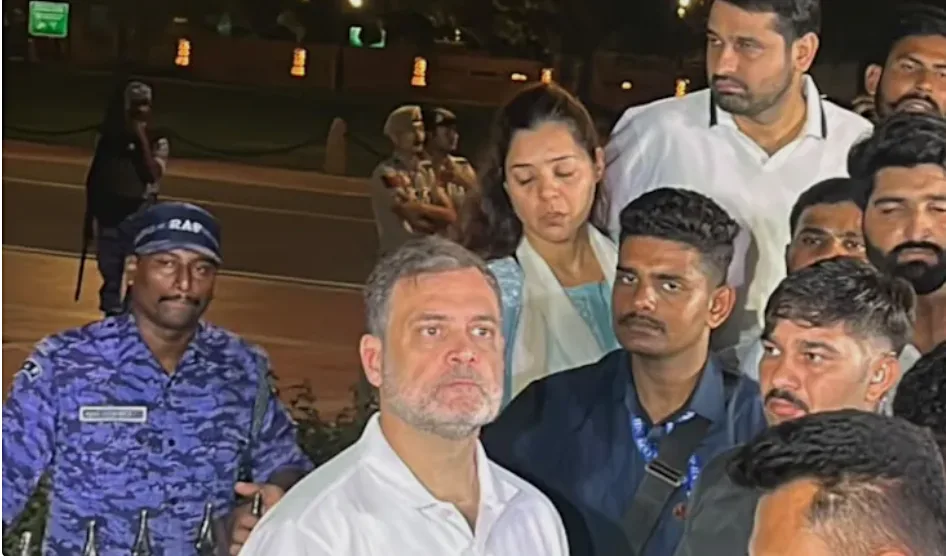
Rahul Gandhi joins India Gate protest by Ankita Bhandari’s parents
Rahul Gandhi joined the protest by Ankita Bhandari’s parents at India Gate in New Delhi on October 14. The demonstration has brought renewed attention to the 2022 murder case and the family’s concerns following Dushyant Gautam’s appointment as Sikkim Governor.
India News
Meerut murder: Muskaan Rastogi and Sahil Shukla get death sentence
A Meerut court has sentenced Muskaan Rastogi and Sahil Shukla to death in the blue drum murder case involving the killing of merchant navy officer Saurabh Rajput in March 2025.

CJP leaders Saurav Das, Ashutosh Ranka, Ajinkya Shinde sent to 5-day judicial custody

PM Modi speaks to Mark Carney as India and Canada push to strengthen ties

S Jaishankar says India is a natural option for Russia amid Europe tensions

Meerut murder: Muskaan Rastogi and Sahil Shukla get death sentence

Rahul Gandhi joins India Gate protest by Ankita Bhandari’s parents

Supreme Court questions EC over missing records in Sringeri election dispute
Rahul Gandhi joins India Gate protest by Ankita Bhandari’s parents
Meerut murder: Muskaan Rastogi and Sahil Shukla get death sentence
PM Modi speaks to Mark Carney as India and Canada push to strengthen ties
S Jaishankar says India is a natural option for Russia amid Europe tensions

Afghan Men Try To Hang With The Jet Engine Of The Aircraft in Kabul- Afghanistan News – Kabul News
Trending Top 10 News: 10000 Crore Fine on Flipkart, Apple to Launch Unique Feature, Hdfc Bank Job Ad

Trending Top 10 News: Nokia 6310, Apple sales, Bachpan ka Pyar Video Kid, Dainik Bhaskar IT Raid

Trending Top 10 News: Canada bans Indian flights, Rain in Delhi NCR, AIMIM Twitter hacked, Raj Kundra case

Trending Top 10 News: Shein India, Apple New Service, Pocket Oxygen, Oppo Launched New Phone
-
 India News21 hours ago
CJP leaders Saurav Das, Ashutosh Ranka, Ajinkya Shinde sent to 5-day judicial custody
-
 India News21 hours ago
PM Modi speaks to Mark Carney as India and Canada push to strengthen ties
-
 Latest world news21 hours ago
S Jaishankar says India is a natural option for Russia amid Europe tensions
-
 India News10 hours ago
Meerut murder: Muskaan Rastogi and Sahil Shukla get death sentence
-
 India News10 hours ago
Rahul Gandhi joins India Gate protest by Ankita Bhandari’s parents
-
 India News9 hours ago
Supreme Court questions EC over missing records in Sringeri election dispute
