
India News
In early morning encounter, top Lashkar commander Abu Dujana killed in Pulwama

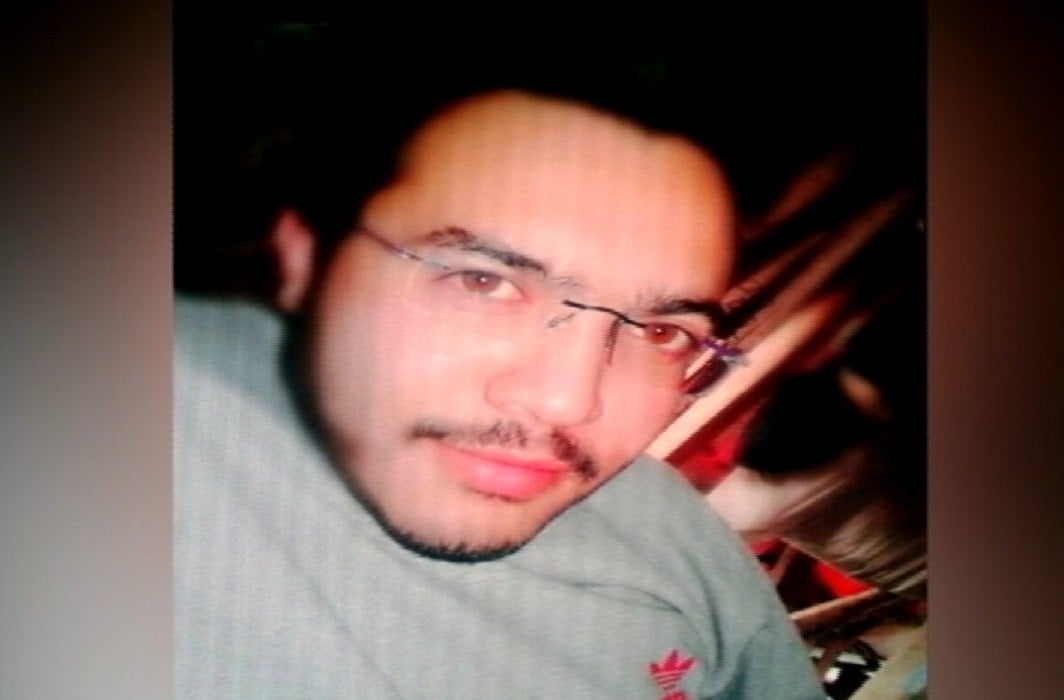
[vc_row][vc_column][vc_column_text]Clashes between civilians and armed forces erupt at encounter site in Hakripora village, mobile internet services suspended across the Valley
In a major boost for the counter-terror security forces deployed in Kashmir, Abu Dujana – terrorist outfit Lashkar-e-Taiba’s (LeT) divisional commander in Kashmir – was gunned down early on Tuesday morning along with his accomplice Arif Lilhaari in an encounter at Hakripora village in Kashmir’s Pulwama district.
The joint encounter operation that began at 4.30 am on Tuesday, was carried out by 182 Battalion, 183 Battalion, Central Reserve Police Force (CRPF), 55 Rashtriya Rifles (RR) and the Special Operations Group (SOG).[/vc_column_text][vc_raw_html]JTNDYmxvY2txdW90ZSUyMGNsYXNzJTNEJTIydHdpdHRlci10d2VldCUyMiUyMGRhdGEtbGFuZyUzRCUyMmVuJTIyJTNFJTNDcCUyMGxhbmclM0QlMjJlbiUyMiUyMGRpciUzRCUyMmx0ciUyMiUzRUxFVCUyMGNoaWVmJTIwQ29tbWFuZGVyJTIwQWJ1JTIwRHVqYW5hJTIwb2YlMjBQYWtpc3RhbiUyMGFsb25nd2l0aCUyMGhpcyUyMGFjY29tcGxpY2UlMjBraWxsZWQlMjBpbiUyMEhha3JpcG9yYSUyMFB1bHdhbWEuJTIwSHVnZSUyMGFjaGlldmVtZW50JTIwZm9yJTIwcG9saWNlJTIwJTI2YW1wJTNCJTIwU0YuJTNDJTJGcCUzRSUyNm1kYXNoJTNCJTIwSiUyNmFtcCUzQkslMjBQb2xpY2UlMjAlMjglNDBKbXVLbXJQb2xpY2UlMjklMjAlM0NhJTIwaHJlZiUzRCUyMmh0dHBzJTNBJTJGJTJGdHdpdHRlci5jb20lMkZKbXVLbXJQb2xpY2UlMkZzdGF0dXMlMkY4OTIyNTk5NDE3MjA3ODQ4OTYlMjIlM0VBdWd1c3QlMjAxJTJDJTIwMjAxNyUzQyUyRmElM0UlM0MlMkZibG9ja3F1b3RlJTNFJTBBJTNDc2NyaXB0JTIwYXN5bmMlMjBzcmMlM0QlMjIlMkYlMkZwbGF0Zm9ybS50d2l0dGVyLmNvbSUyRndpZGdldHMuanMlMjIlMjBjaGFyc2V0JTNEJTIydXRmLTglMjIlM0UlM0MlMkZzY3JpcHQlM0UlMEE=[/vc_raw_html][vc_column_text]It is learnt that late on Monday night the security forces got a tip off about Abu Dujana through technical intelligence, when his phone suddenly became active in the Pulwama area. The joint operation team immediately began a search and cordon exercise around Hakripora village. Dujana, sources said, had given security forces the slip on at least five earlier occasions and was listed among the top most wanted terrorists in the Valley with a bounty of Rs15 lakh.
According to reports, militants opened fire during the operation leading to a fierce gun battle that raged on for five hours, ending at around 9.30 am on Tuesday.
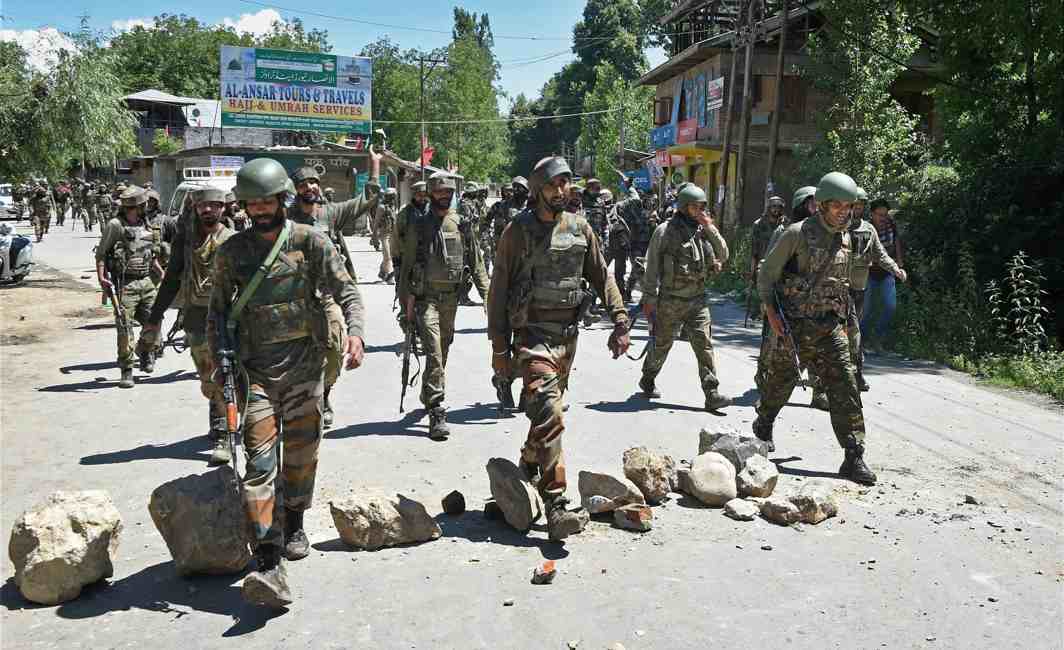
Locals protest against encounter, 1 killed in clashes
Sources in the J&K police said that soon after the gun battle between the security forces and the LeT militants began, over 100 protestors gathered around the encounter site and began pelting stones at the security personnel. One person was killed and at least 15 others injured in the clashes that followed.
While there was no official word on the identity of the deceased, locals who had brought him to the Pulwama district hospital identified the deceased as one Firdaus Ahmad, a police official said.
The official said that even as the encounter was raging on, the joint operation team had to also handle the stone-pelters and was “forced to use tear gas shells, pellets and fire few live rounds to disperse the protestors”.
The civilian unrest carried on even after the encounter ended, said sources. As the security forces were retreating from the encounter site, some youth started pelting stones at them near the Pulwama district hospital. The forces had to again respond by opening fire, resulting in injuries to two persons including a nurse working inside the hospital.
Local media reported spontaneous protests erupting in several parts of south Kashmir in the aftermath of Dujana’s encounter.
Fearing an en core of the violent unrest that kept the Valley on the boil for months following the killing of Hizbul Mujahideen commander Burhan Wani in July last year, mobile internet services have been suspended across Kashmir, an official said, “as a preventive measure to curb dissemination of misleading information, rumour-mongering and calls for further protests”.
Who was Abu Dujana?
Dujana hailed from the Gilgit-Baltistan region of Pakistan-occupied-Kashmir (PoK) and had reportedly joined the LeT when he was just 17. In the past two years Dujana was successful in eluding security forces five times. In May, Dujana had escaped from the Harkipora village under the cover of a stone pelting mob.
Sources said Dujana had first infiltrated into India in 2010 after which he developed LeT’s network across Jammu and Kashmir, especially south Kashmir, which has been a hotbed of militancy since the past year. According to one report, in 2014 Dujana had turned up at a funeral of a militant in Kakpora area of Pulwama while other reports suggest that he had also attended the funeral of Burhan Wani last year.
The slain LeT divisional commander is said to be the mastermind behind the Pampore terror attack that killed at least eight CRPF men in 2016. It is believed that Dujana was also in touch with Zakir Musa whom the Al Qaeda, last week, named as the head of its newly formed splinter group in Kashmir.
According to local media reports from Kashmir, Dujana’s handlers in Pakistan were irked by his marriage with a local girl in Pulwama. It is being speculated that at the time of his encounter Dujana was in Hakripira to visit his wife.[/vc_column_text][vc_row_inner][vc_column_inner][vc_column_text]Kerala youth who joined Islamic State killed in Afghan airstrike
A 23-year-old man from Kasargod in Kerala – identified as one Marwan Ismail – who was suspected to have joined the terror outfit Islamic State (IS) in 2016, was reportedly killed in an air strike in Afghanistan recently.
A report by news agency PTI said: “Kasargod police confirmed, on Tuesday, that Ismail’s father had received a message through Telegram app two days ago informing him about the death of his son in an undisclosed location in Afghanistan. The message, purportedly sent by Ashfaq Majeed who was among the 21 youths from Kerala who allegedly went missing and joined the Islamic State last year, was also sent to social activist BC Abdul Rahman.”[/vc_column_text][/vc_column_inner][/vc_row_inner][/vc_column][/vc_row]






India News
Mallikarjun Kharge seeks all-party meeting with PM Modi on delimitation
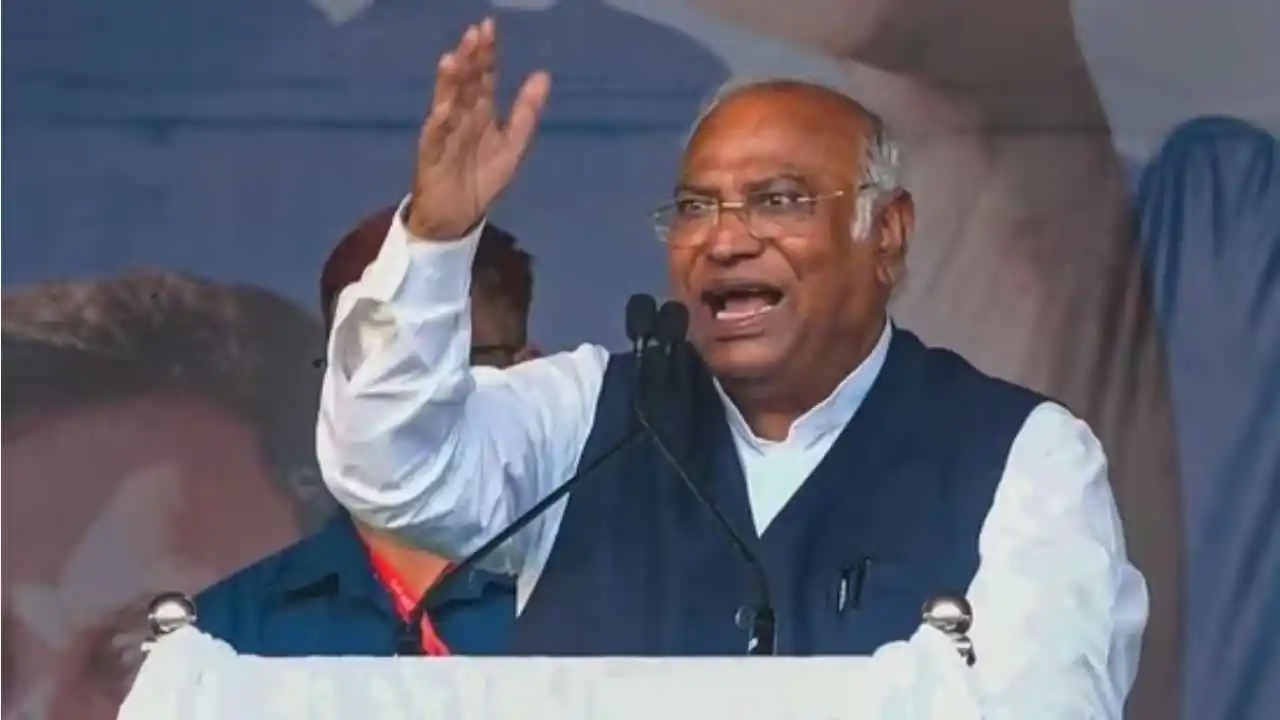
Congress president Mallikarjun Kharge has written to Prime Minister Narendra Modi for the fourth time, seeking an all-party meeting on delimitation. He also flagged the 64-day delay in proroguing Parliament’s Monsoon Session.

India News
Abhijeet Dipke detained ahead of CJP’s national flag march in Delhi
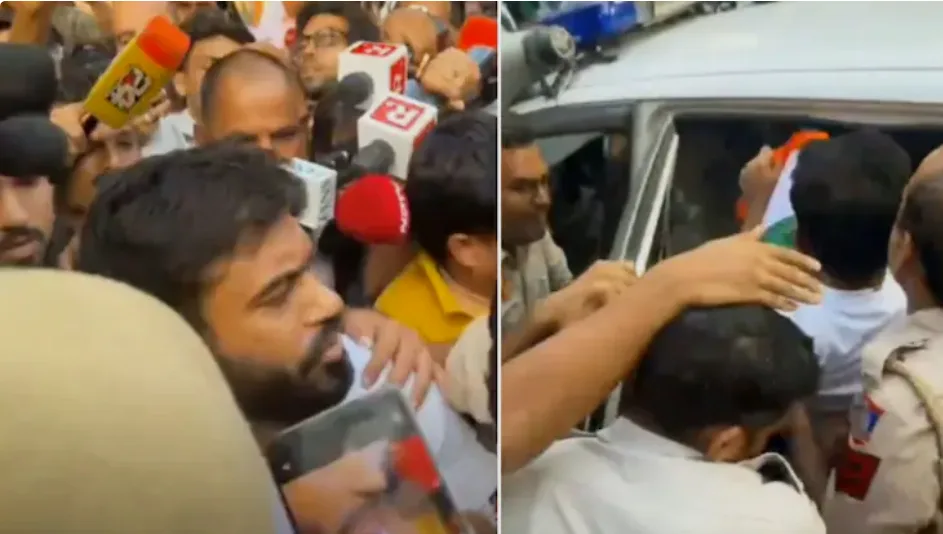
Cockroach Janta Party founder Abhijeet Dipke was detained by Delhi Police on October 16, 2026, shortly before a planned national flag march. The proposed rally followed the judicial custody of two CJP members who had waved the Tricolour at Jantar Mantar.
India News
Delhi deploys 25,000 personnel, installs CCTV cameras ahead of CJP march
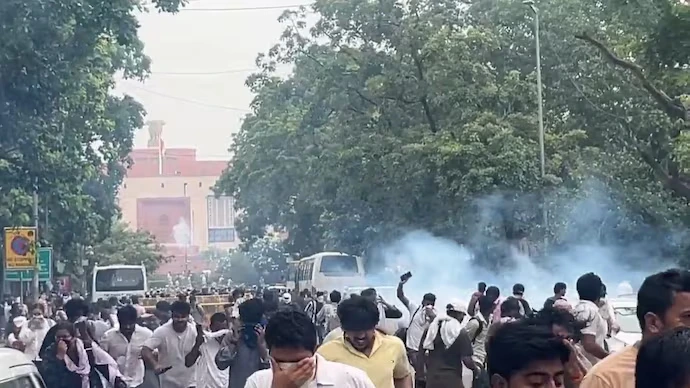
More than 25,000 police and paramilitary personnel have been deployed in Delhi ahead of the CJP’s planned protest march at Connaught Place. Authorities have also imposed restrictions and stepped up CCTV surveillance.

Election Commission orders voter roll revision in 17 states, UTs

Delhi Police offers 11-person limit for CJP’s Connaught Place protest

Actor Imran Khan asked to leave India after CJP protest

Magnitude 7 earthquake strikes Russia’s Kamchatka Peninsula

Mallikarjun Kharge’s ‘Your Friends’ jab at Rahul Gandhi over congress exits

Mallikarjun Kharge seeks all-party meeting with PM Modi on delimitation

Abhijeet Dipke detained ahead of CJP’s national flag march in Delhi
Magnitude 7 earthquake strikes Russia’s Kamchatka Peninsula

Delhi deploys 25,000 personnel, installs CCTV cameras ahead of CJP march
Mallikarjun Kharge’s ‘Your Friends’ jab at Rahul Gandhi over congress exits

Afghan Men Try To Hang With The Jet Engine Of The Aircraft in Kabul- Afghanistan News – Kabul News
Trending Top 10 News: 10000 Crore Fine on Flipkart, Apple to Launch Unique Feature, Hdfc Bank Job Ad

Trending Top 10 News: Nokia 6310, Apple sales, Bachpan ka Pyar Video Kid, Dainik Bhaskar IT Raid

Trending Top 10 News: Canada bans Indian flights, Rain in Delhi NCR, AIMIM Twitter hacked, Raj Kundra case

Trending Top 10 News: Shein India, Apple New Service, Pocket Oxygen, Oppo Launched New Phone
-
 India News24 hours ago
Election Commission orders voter roll revision in 17 states, UTs
-
 India News22 hours ago
Delhi Police offers 11-person limit for CJP’s Connaught Place protest
-
 India News23 hours ago
Actor Imran Khan asked to leave India after CJP protest
-
 Latest world news10 hours ago
Magnitude 7 earthquake strikes Russia’s Kamchatka Peninsula
-
 India News11 hours ago
Mallikarjun Kharge’s ‘Your Friends’ jab at Rahul Gandhi over congress exits
-
 India News10 hours ago
Delhi deploys 25,000 personnel, installs CCTV cameras ahead of CJP march
-
 India News1 hour ago
Abhijeet Dipke detained ahead of CJP’s national flag march in Delhi
-
 India News7 mins ago
Mallikarjun Kharge seeks all-party meeting with PM Modi on delimitation
