English हिन्दी
Connect with us

India News

EC recommends disqualification of 20 AAP MLAs for Office Of Profit

Published

on

EC recommends disqualification of 20 AAP MLAs for Office Of Profit

[vc_row][vc_column][vc_column_text]

Disqualification of 20 MLAs will leave AAP with a reduced strength of 42 in the 70-member Delhi Assembly, still in majority, while by-polls would have to be held for the vacant seats.

In a major jolt to Delhi chief minister Arvind Kejriwal’s government, the Election Commission has reportedly recommended to President Ram Nath Kovind to disqualify 20 of the Aam Aadmi Party’s (AAP) 63 legislators for allegedly holding offices of profit.

The EC’s opinion has been communicated to the President just three days before Chief Election Commissioner AK Joti retires.

The President is bound to go by the recommendation of the Commission, reported PTI. In cases where petitions are made seeking disqualification of lawmakers, the President sends a reference to the EC which decides on the case by sending back its opinion.

Initially, the case was against 21 MLAs but it now stands at 20 after Rajouri Garden MLA Jarnail Singh resigned to contest against Parkash Singh Badal in the Punjab Assembly elections last year.

The MLAs whose fate hangs in balance are Alka Lamba, Adarsh Shastri, Sanjeev Jha, Rajesh Gupta, Kailash Gehlot, Vijendra Garg, Praveen Kumar, Sharad Kumar, Madan Lal Khufiya, Shiv Charan Goyal, Sarita Singh, Naresh Yadav, Rajesh Rishi, Anil Kumar, Som Dutt, Avtar Singh, Sukhvir Singh Dala, Manoj Kumar, Nitin Tyagi and Jarnail Singh (Tilak Nagar).

The EC has refused to comment on the development, saying that the matter is still sub judice. Sources confirmed that AAP MLAs including Madanlal, Nitin Tyagi, Rajesh Gupta have moved the Delhi High Court against the disqualification order by the Election Commission.

Advocate Samir Vashist urgently mentioned the matter in the court of Acting Chief Justice Gita Mittal who sent the matter to the court of Justice Rekha Palli.

“It was only AK Joti, Election commissioner, who heard that matter. We were asked to give written submissions which we had done saying that whenever the order is passed, we should be informed about it. But the order came without any prior intimation to us,” AAP MLA Madanlal said.

Delhi chief minister Kejriwal and his party colleagues too have refrained from officially commenting on the issue, maintaining that they would first study the EC’s recommendation and the order of the President. Kejriwal has convened a meeting of his ministers and associates from the party to discuss the situation and prepare for the aftermath of the disqualification.

However, AAP spokesperson Nagendar Sharma tweeted:

This must be the first ever recommendation in EC history where a recommendation has been sent without even hearing the main matter on merits. NO HEARING TOOK PLACE IN EC ON THE POINT OF OFFICE OF PROFIT[/vc_column_text][vc_raw_html]JTNDYmxvY2txdW90ZSUyMGNsYXNzJTNEJTIydHdpdHRlci10d2VldCUyMiUyMGRhdGEtbGFuZyUzRCUyMmVuJTIyJTNFJTNDcCUyMGxhbmclM0QlMjJlbiUyMiUyMGRpciUzRCUyMmx0ciUyMiUzRVRoaXMlMjBtdXN0JTIwYmUlMjB0aGUlMjBmaXJzdCUyMGV2ZXIlMjByZWNvbW1lbmRhdGlvbiUyMGluJTIwRUMlMjBoaXN0b3J5JTIwd2hlcmUlMjBhJTIwcmVjb21tZW5kYXRpb24lMjBoYXMlMjBiZWVuJTIwc2VudCUyMHdpdGhvdXQlMjBldmVuJTIwaGVhcmluZyUyMHRoZSUyMG1haW4lMjBtYXR0ZXIlMjBvbiUyMG1lcml0cy4lMjBOTyUyMEhFQVJJTkclMjBUT09LJTIwUExBQ0UlMjBJTiUyMEVDJTIwT04lMjBUSEUlMjBQT0lOVCUyME9GJTIwT0ZGSUNFJTIwT0YlMjBQUk9GSVQlM0MlMkZwJTNFJTI2bWRhc2glM0IlMjBOYWdlbmRhciUyMFNoYXJtYSUyMCUyOCU0MHNoYXJtYW5hZ2VuZGFyJTI5JTIwJTNDYSUyMGhyZWYlM0QlMjJodHRwcyUzQSUyRiUyRnR3aXR0ZXIuY29tJTJGc2hhcm1hbmFnZW5kYXIlMkZzdGF0dXMlMkY5NTQyNzYyMDExODY1MTI4OTYlM0ZyZWZfc3JjJTNEdHdzcmMlMjU1RXRmdyUyMiUzRUphbnVhcnklMjAxOSUyQyUyMDIwMTglM0MlMkZhJTNFJTNDJTJGYmxvY2txdW90ZSUzRSUwQSUzQ3NjcmlwdCUyMGFzeW5jJTIwc3JjJTNEJTIyaHR0cHMlM0ElMkYlMkZwbGF0Zm9ybS50d2l0dGVyLmNvbSUyRndpZGdldHMuanMlMjIlMjBjaGFyc2V0JTNEJTIydXRmLTglMjIlM0UlM0MlMkZzY3JpcHQlM0UlMEE=[/vc_raw_html][vc_column_text]If the MLAs are indeed disqualified and AAP fails to get relief from the Delhi High Court against the order, Delhi will witness a by-poll for these 20 seats. The by-election would be a major challenge for AAP since it would come at a time when the party’s credibility will have taken a hit in wake of the disqualifications. The party is already facing an implosion of sorts ever since it declared its candidates for the forthcoming Rajya Sabha polls and decided to deny a ticket to founding-member Kumar Vishwas.

The legislators who have reportedly been disqualified were embroiled in a controversy over holding offices of profit allegations that had been made against many of them soon after they were elected to the Delhi Assembly in 2015 when AAP registered a historic win, bagging 67 of the state’s 70 seats. Lawyer and political activist Prashant Patel had claimed that since these legislators were also serving as parliamentary secretaries – an office for which the government pays a fixed salary – they ought to be disqualified on the grounds of holding an office of profit. The legislators had pleaded for the case against them to be dropped by the EC in June 2017, but their pleas were rejected.

In August 2017, the Delhi High Court had refused the MLAs’ plea for staying the poll panel’s order upholding maintainability of Patel’s petition despite quashing their appointment as parliamentary secretaries in 2016.

In October 2017, AAP had got a minor relief when President Ram Nath Kovind rejected a petition seeking disqualification of AAP MLA Surendra Singh for allegedly holding an office of profit after an opinion was given in the matter by the Election Commission. The petition against Surendra Singh had alleged that the AAP MLA had been earning a salary from the Public Works Department of the Delhi government as well as from New Delhi Municipal Council. President Kovind had, however, rejected the demand forSingh’s disqualification stating that the in the poll panel’s opinion Singh was not holding an ‘office’ under the government within the meaning of section 15(1) (a) of the Government of National Capital Territory of Delhi Act, as he was a member of the NDMC by virtue of the NDMC Act and the government had no role in the appointment or dismissal of such members.

While neither the EC nor the AAP have officially confirmed the media reports over these disqualifications, Delhi Congress unit chief Ajay Maken has been quick to assert that Kejriwal has “no right to continue” as the chief minister. In a series of tweets, Maken attacked the Delhi chief minister and said: “half of his cabinet ministers (have been) removed on corruption charges. 20 MLAs who were enjoying ministerial perks would be disqualified.” Delhi BJP chief Manoj Tewari also echoed Maken’s views and demanded Kejriwal’s resignation.

Meanwhile, AAP leader Saurav Bhardwaj hit out at Chief Election Commissioner AK Joti for indulging in a conspiracy to help the BJP in Delhi.[/vc_column_text][/vc_column][/vc_row]

India News

Amit Shah counters delimitation concerns, says southern states to gain Lok Sabha seats

Amit Shah assures Parliament that southern states will gain Lok Sabha seats after delimitation, countering opposition criticism during the women’s reservation debate.

Published

on

Amit Shah

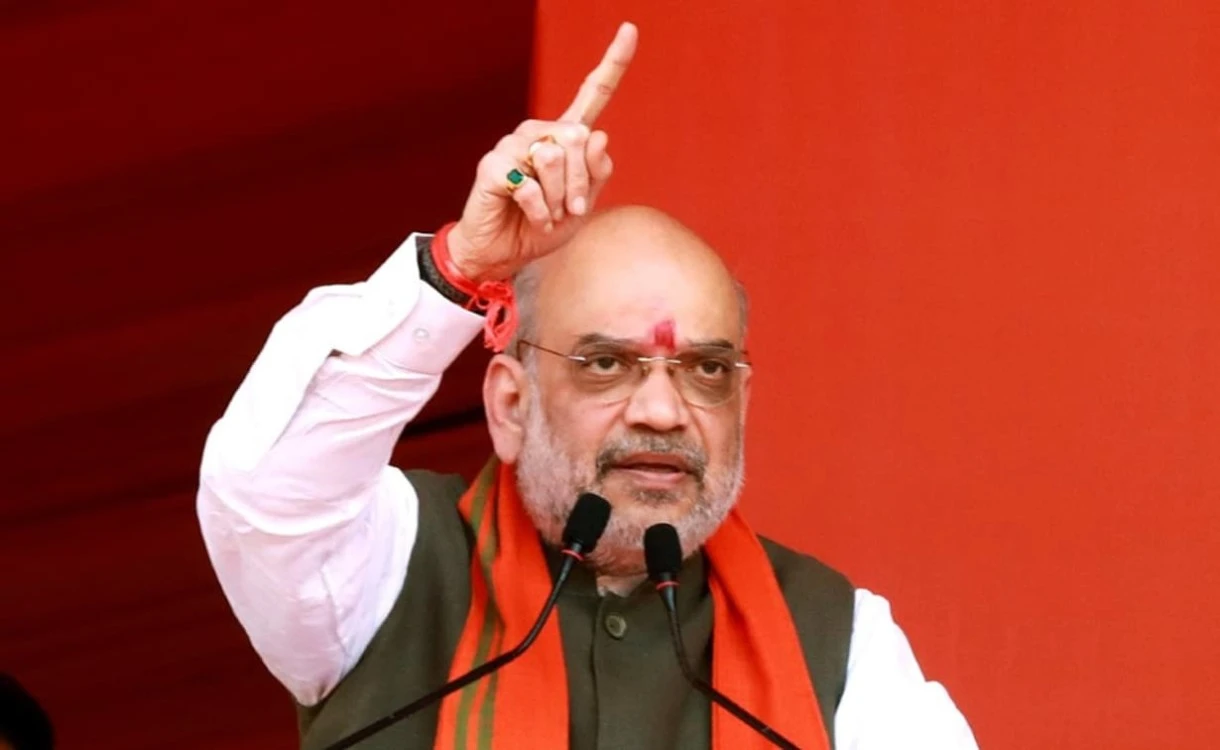
Union Home Minister Amit Shah on Thursday addressed concerns over the proposed delimitation exercise, asserting in the Lok Sabha that southern states will not lose representation but instead see an increase in their number of seats.

His remarks came during a heated debate linked to the implementation of women’s reservation, where opposition parties have raised fears that population-based delimitation could reduce the political weight of southern states.

Shah rejected these claims, calling them misleading, and said the proposed framework ensures fairness while expanding the overall strength of the Lok Sabha.

Seat count to rise with expansion of Lok Sabha

The government has indicated that the total number of Lok Sabha seats could increase significantly as part of the delimitation process. In this expanded House, the combined representation of southern states is expected to rise from 129 seats at present to around 195 seats.

Shah emphasised that no state will lose seats in absolute terms, and the exercise is designed to reflect population changes while maintaining balance across regions.

State-wise projections shared in Parliament

During his address, Shah also provided indicative figures for individual southern states, suggesting notable increases in representation. According to the projections:

  • Tamil Nadu could see its seats rise substantially
  • Kerala, Telangana, and Andhra Pradesh are also expected to gain additional seats
  • Karnataka’s representation may increase as well

These figures were presented to counter the argument that delimitation would disproportionately favour northern states.

Political debate intensifies over linkage with women’s quota

The delimitation exercise has been closely linked to the rollout of women’s reservation, which proposes one-third seats for women in Parliament and state assemblies.

Opposition leaders have questioned this linkage, arguing that tying reservation to delimitation could delay its implementation and raise federal concerns. Some leaders have also warned that the move could impact national unity if apprehensions among states are not addressed.

The government, however, maintains that the reforms are necessary to ensure equitable representation and to align the electoral system with demographic realities.

Centre dismisses ‘false narrative’ on southern states

Shah reiterated that concerns about southern states losing influence are unfounded. He said the delimitation process will increase representation across regions and described the criticism as a “false narrative” aimed at creating confusion.

The issue is expected to remain a key flashpoint as Parliament continues discussions on the women’s reservation framework and related legislative changes.

Continue Reading

India News

PM Modi assures no discrimination in women’s quota, delimitation debate intensifies in Parliament

PM Narendra Modi has assured that women’s reservation will be implemented without discrimination, amid a heated debate over delimitation in Parliament.

Published

on

PM modi

Prime Minister Narendra Modi has assured that there will be no discrimination in the implementation of women’s reservation, as Parliament witnessed a sharp debate over the proposed linkage between the quota and delimitation exercise.

During the ongoing special session, the government reiterated its commitment to ensuring fair representation while addressing concerns raised by opposition parties regarding the timing and structure of the legislation.

The proposed framework aims to reserve 33 percent of seats for women in the Lok Sabha and state assemblies. However, its implementation is tied to a fresh delimitation exercise, which is expected after the next census.

Opposition questions timing and intent

Opposition leaders have raised concerns that linking the women’s quota to delimitation could delay its implementation. They argue that the process of redrawing constituencies may push the actual rollout further into the future.

The issue has triggered a broader political confrontation, with multiple parties questioning whether the move could alter representation across states.

Some critics have also alleged that the delimitation exercise could disproportionately benefit certain regions based on population, a charge the government has rejected.

Government reiterates commitment to fair implementation

Responding to these concerns, the Centre has maintained that the reforms are necessary to ensure accurate and updated representation based on population data.

Leaders from the ruling side have repeatedly emphasized that the process will be carried out transparently and without bias. The assurance that there will be “no discrimination” is aimed at addressing fears among states and opposition parties.

The debate marks a key moment in Parliament, with both sides engaging in intense exchanges over one of the most significant electoral reforms in recent years.

Continue Reading

India News

Give all tickets to Muslim women, Amit Shah says, attacking Akhilesh Yadav on sub-quota demand

A sharp exchange between Amit Shah and Akhilesh Yadav in Parliament over sub-quota for Muslim women highlights key divisions on women’s reservation implementation.

Published

on

A heated exchange broke out in Parliament during discussions on the women’s reservation framework, with Union Home Minister Amit Shah and Samajwadi Party chief Akhilesh Yadav locking horns over the demand for a sub-quota for Muslim women.

The debate unfolded as the government pushed forward key legislative measures to implement 33% reservation for women in the Lok Sabha and state assemblies.

Akhilesh Yadav argued that the proposed reservation must ensure representation for women from marginalised communities, including Other Backward Classes (OBCs) and Muslim women. He said that without such provisions, large sections could remain excluded from political participation.

He also questioned the timing of the bill, alleging that the Centre was avoiding a caste census. According to him, a census would lead to renewed demands for caste-based reservations, which the government is reluctant to address.

Government rejects religion-based quota

Responding to the demand, Amit Shah made it clear that reservation based on religion is not permitted under the Constitution.

He stated that any proposal to provide quota to Muslims on religious grounds would be unconstitutional, firmly rejecting the idea of a separate sub-quota for Muslim women within the broader reservation framework.

The government has maintained that the existing framework already includes provisions for Scheduled Castes (SC) and Scheduled Tribes (ST) women within the overall reservation structure.

Wider political divide over implementation

The issue of sub-categorisation within the women’s quota has emerged as a major flashpoint, even as most opposition parties broadly support the idea of women’s reservation.

Samajwadi Party leaders reiterated that their support for the bill depends on inclusion of OBC and minority women, while the government continues to defend its constitutional position.

The debate is part of a broader discussion during the special Parliament session, where multiple bills linked to delimitation and implementation of the women’s quota are being taken up.

Continue Reading

Trending

© Copyright 2022 APNLIVE.com