
India News
Election Commission condemn Telangana CM’s election schedule remarks


In one of the unprecedented controversy between Election Commission and a sitting political leader about the election schedule, Chief Election Commissioner Om Prakash Rawat has denied that Telangana’s acting Chief Minister K. Chandrasekhar Rao had called him to speak about the state election schedule before making it public.
While talking to media persons on Friday, Rawat said, “The Commission strongly condemns the way the Chief Minister of Telangana announced the supposed schedule. It is uncalled for. The Telangana Assembly was dissolved suddenly. We have asked for a report from the State Chief Electoral Office (CEO) regarding election arrangements.” EC team will be visiting the State on September 11 to assess the ground situation, he said.
Rawat further said, “No decision has been taken on the poll schedule yet. Telangana Chief Minister K. Chandrasekhar Rao did not speak with me. It is very unfortunate for a Chief Minister to say this. The Assembly election schedule will be decided by the Election Commission and not on the basis of astrology.”
Read More: KCR dissolves Telangana assembly 8 months before full term to have polls by year-end
“Whenever a House is dissolved prematurely, as per the Supreme Court guidelines laid down in 2002, the ECI is required to initiate immediate steps for holding elections for constituting the Legislative Assembly on the first occasion and in any case, within six months from the date of premature dissolution of the Assembly,” said Mr. Rawat.
 Telengana acting CM gave a statement on Thursday that he had finalised the schedule to dissolve the Assembly after speaking with Chief Election Commission and the two other Election Commissioners and that the state elections would be held in November along with four other states.
He said, “The election notification is expected in the first week of October, polls in November and results in December”. The Telangana Pradesh Congress Committee had objected to it.
On Friday, CEC was asked if the elections in the state would indeed be held in November as Mr Rao had said, Rawat said, “The Assembly election schedule will be decided by the Election Commission and not on the basis of astrology.”
Read More: Law Commission says simultaneous polls better, but idea needs to be debated further
The CEC said that neither the CM nor anyone else could talk about the election schedule, and only the Election Commission could do so. He emphasised that the Constitution had empowered only the Election Commission to announce the schedule and conduct the elections and no one should interfere in this. He added that Telengana state elections would be conducted at the earliest and on priority as he did not want a caretaker government to take decisions.
According to sources, in case the EC receives a report confirming full preparedness, the election may be conducted along with those in Madhya Pradesh, Rajasthan, Chhattisgarh and Mizoram by December 15. However, if more arrangements are to be made, it may be held in January next year, ensuring that its results do not influence the 2019 Lok Sabha polls.





India News
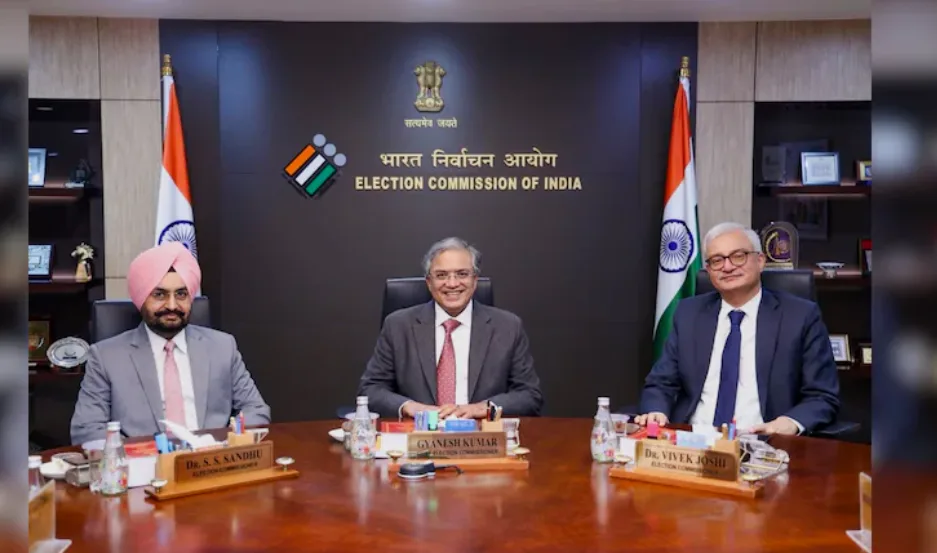
Two election commissioners complained against senior poll officer, RTI reveals
An RTI response has shed light on complaints by two Election Commissioners against a senior poll panel officer and the Cabinet Secretariat’s decision not to intervene directly.

India News
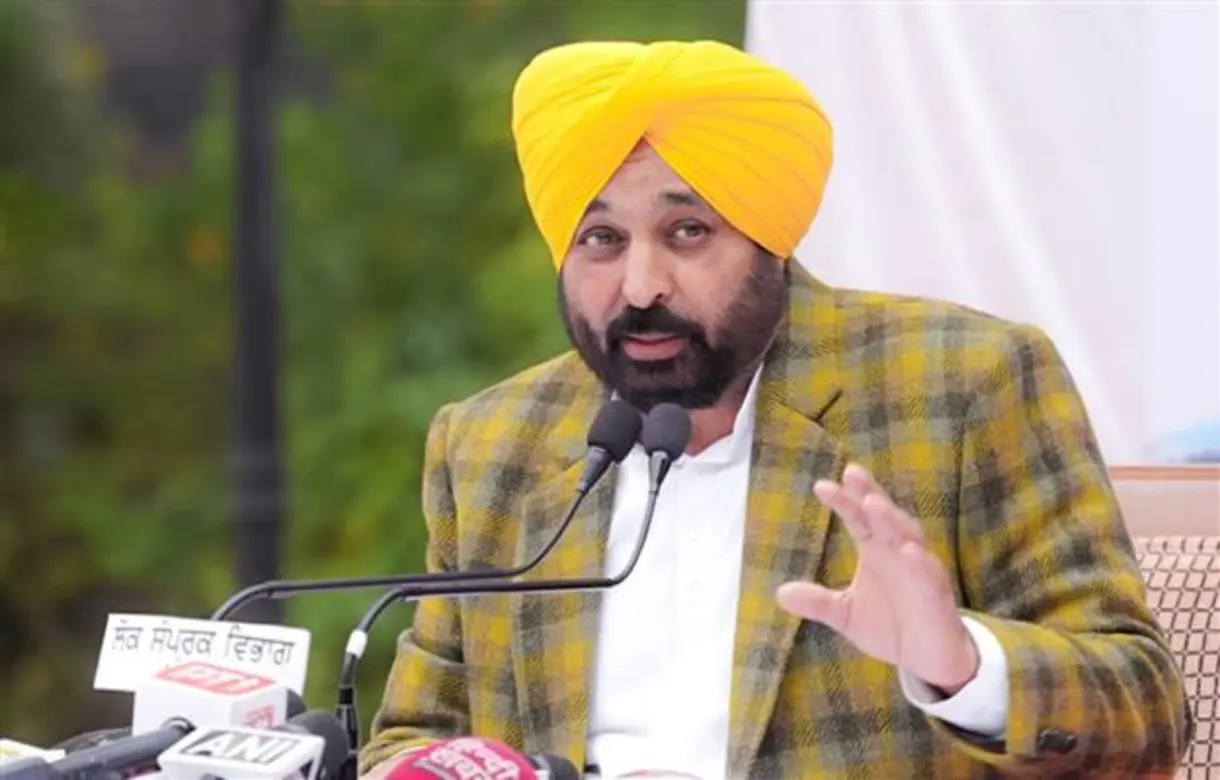
Punjab strike hits public services as 3 lakh employees and roadways workers protest
Punjab is facing disruption to government work and public transport as over three lakh government employees participate in a mass leave protest and roadways workers continue their strike over pending demands.
India News
Amit Shah says congress won’t return to power for 30 years
Union Home Minister Amit Shah took a swipe at Rahul Gandhi over the Opposition’s vote theft allegations, asserting that the Congress would not return to power for the next 30 years.


Magnitude 7 earthquake strikes Tibet after floods

Yogi Government cites Rs.15,233 crore seizures in UP gangster crackdown

PM Modi attacks Rahul Gandhi with failed product jibe

Amit Shah says congress won’t return to power for 30 years

Punjab strike hits public services as 3 lakh employees and roadways workers protest

Two election commissioners complained against senior poll officer, RTI reveals
Punjab strike hits public services as 3 lakh employees and roadways workers protest
Amit Shah says congress won’t return to power for 30 years
Magnitude 7 earthquake strikes Tibet after floods
PM Modi attacks Rahul Gandhi with failed product jibe

Afghan Men Try To Hang With The Jet Engine Of The Aircraft in Kabul- Afghanistan News – Kabul News
Trending Top 10 News: 10000 Crore Fine on Flipkart, Apple to Launch Unique Feature, Hdfc Bank Job Ad

Trending Top 10 News: Nokia 6310, Apple sales, Bachpan ka Pyar Video Kid, Dainik Bhaskar IT Raid

Trending Top 10 News: Canada bans Indian flights, Rain in Delhi NCR, AIMIM Twitter hacked, Raj Kundra case

Trending Top 10 News: Shein India, Apple New Service, Pocket Oxygen, Oppo Launched New Phone
-
 Latest world news20 hours ago
Magnitude 7 earthquake strikes Tibet after floods
-
 India News23 hours ago
Yogi Government cites Rs.15,233 crore seizures in UP gangster crackdown
-
 India News20 hours ago
PM Modi attacks Rahul Gandhi with failed product jibe
-
 India News19 hours ago
Amit Shah says congress won’t return to power for 30 years
-
 India News8 hours ago
Punjab strike hits public services as 3 lakh employees and roadways workers protest
-
 India News8 hours ago
Two election commissioners complained against senior poll officer, RTI reveals
