
India News
Reflections on The Supreme Court Liberating Gays And Lesbians


By Saeed Naqvi
Those travelling to England for the first time in the sixties were recipients of a tract from the British High Commission listing the dos and don’ts. Among the don’ts was a paragraph in italics:
“A single woman may invite you to her apartment for tea and refreshments. This must not be taken for license.” That the tract did not warn me about the risks of accepting gentlemen’s hospitality was presumably because Victorianism had not quite faded in the sixties.
In those days the androgynous appeal of Twiggy, the modelling sensation was the big draw. The fashion industry had marketed flat chested girls, looking like boys, as the new sex symbols. The trend had been initiated by the haute couture in Paris. Balenciaga and Givenchy were in love and presumably had copious sex too, as did others in that business. You were a square if you were straight.
If men were going to be so unidirectional, women too were beginning to experience things they called freedom. All generalization are hopelessly inadequate. The freedom was in fact a device to protect self esteem, increasingly bruised by the casual indifference of men. Women’s emancipation clashed headlong with the “femininity” which poetry, thumri, folk songs, love letters had burdened our aesthetics with for centuries.
“Motia hiraye gayee, Rama
Kaise dhoon dhoon, (search)
Dhoondat, dhoondat,
baorae gayee, Rama”
(I have lost the pearl, my father’s gift,
O’Rama, how to find it?
I am going mad searching for it.)
The pearl has been lost in a moment of passionate ecstasy.
:Hiraye aanyein kangana
Gaunwaye aanyein jobana
nadia naarey”
“Defiantly, she surrendered her virginity by the riverside. In the sexual ecstasy, she lost her gold bangle.”
This raw ecstasy in the two folk songs is not the stuff of sex today – when urban emancipation conditions sexual behaviour.
Behari Lal Chaube (1595-1663), describes a “devar” husband’s younger brother, a constant in erotic Hindi poetry, throwing a flower playfully on his sister in law.
“Goosebumps of joy appeared on her limbs,
Mistaking them for insect bites
I hastened with a jar of ointment.
But when she smiled I
guessed the truth
and stayed my hand.”
Even Ghalib (1797-1869) puts his urbanity aside in her presence.
“Is nazakat ka bura ho, woh
bhaley hain bhi to kya
Haath aayein to unhein haath
lagaye na baney”
(Though wonderful she be, I hesitate to touch her, such is the delicacy of her form)
Even Josh Malihabadi (1894-1982), proud of his several love affairs, is mesmerized by her shyness.
(Haya ki shama jal uthi
harim e dil rubai mein
Ghumaya sar jhuka ke
der tak kangan kalai mein.”
(When I asked for her hand, her eyes were like shyness illuminated.
For a long while she played with her bangles.”
Raghupati Sahai Firaq Gorakhpuri (1896-1982), describes:
“Woh hai ghuncha, ghuncha jo dekhiye
Woh hai choomiye to dahan dahan.”
(Look at her, and she is a half open bud.
Kiss her and she is all mouth.)
John Keats in his letters could address Fanny Brawne as “My dear girl”. Try the patronizing tone, however steeped in lyric, on the professional MBA you are trying to date and she will hurl a paperweight at you.
 Make allowance for some exaggeration either way, and the truth remains incontrovertible: gender equality has wrenched man-woman equation from romantic traditions which admittedly engendered inequality. When T.S. Elliot’s single woman, after her one night stand,
“paces about her room again, alone
She smoothes her hair with automatic hands,
And puts a record on the gramophone.”
The boredom of it is palpable.
The emancipated, professional woman is light years away from the village belle who lost her pearl during sex. In asserting her gender equality does the contemporary woman cause her partner to feel inadequate and begin to withdraw from women for emotional security? In brief, the belle who lost the pearl is more relaxing; the emancipated woman, more challenging.
Freudian complexities which attend evolving man-woman equation causes some of the youth of both sexes to find greater comfort, relaxation and friendship in seeking out persons of their own sex for all purpose relationships. The withdrawal of men from the market causes women to move in the other direction.
This sociologically conditioned augmentation of the LGBT community is only a fraction of those who are gay or heterosexual for hormonal reasons.
Social reasons for this increase will cause the stream to join the torrent, a function of many streams, which could lead to unsettling demographic changes. That is possibly the most frightening consequence of the issue the Supreme Court addressed in a historic judgement.
The judgement brings out of the purdah that which was hidden. Does a whole body of poetry on that which was behind the curtain become kosher too? It is great poetry from Chaucer and Iqbal to Jaffar Zatalli, Chirkeen, Rafi Ahmad Khan, Mahshar Enayati, Abba Changezi, Uriyan Hyderabadi. Do we have their Lordship’s permission to bring it all out in the open?









India News
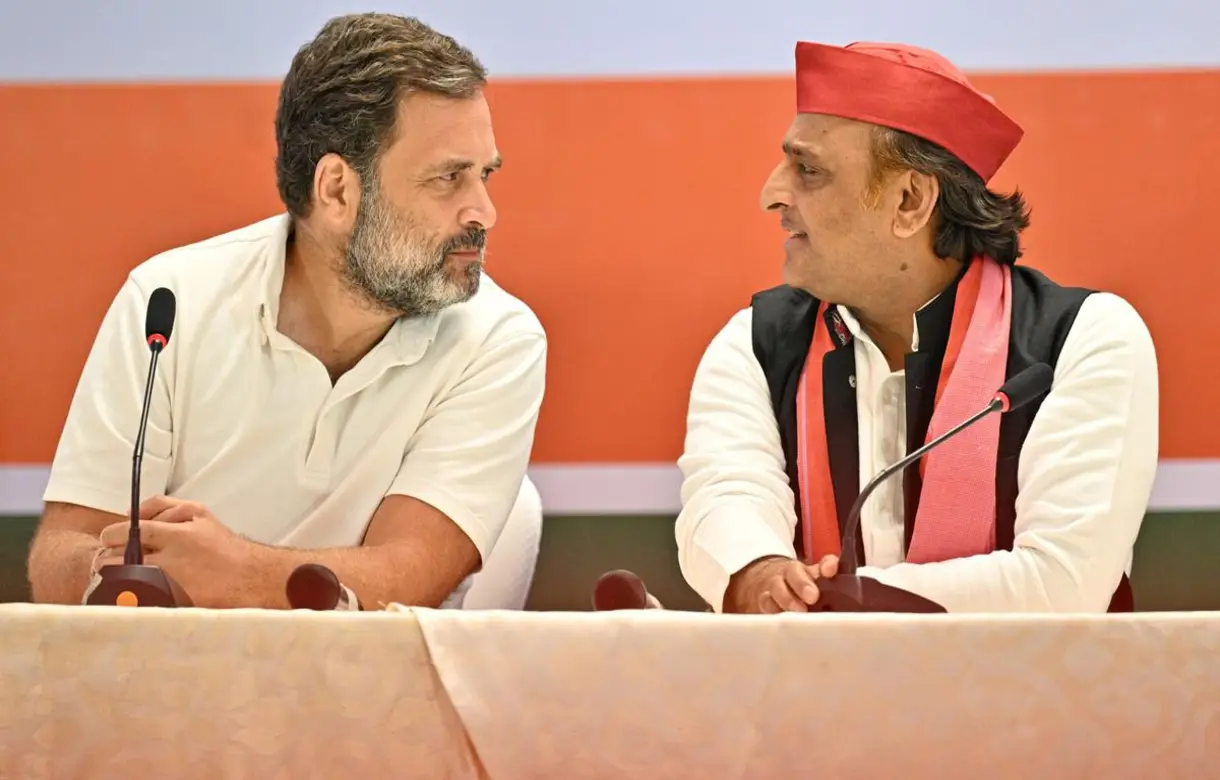
Congress seeks 175-200 seats in UP, Samajwadi Party stresses on winnability
Congress has initiated seat-sharing talks with the Samajwadi Party for the 2027 UP Assembly elections, seeking to contest 175–200 seats. The SP has emphasised winnability as the key criterion for allocating constituencies.

India News
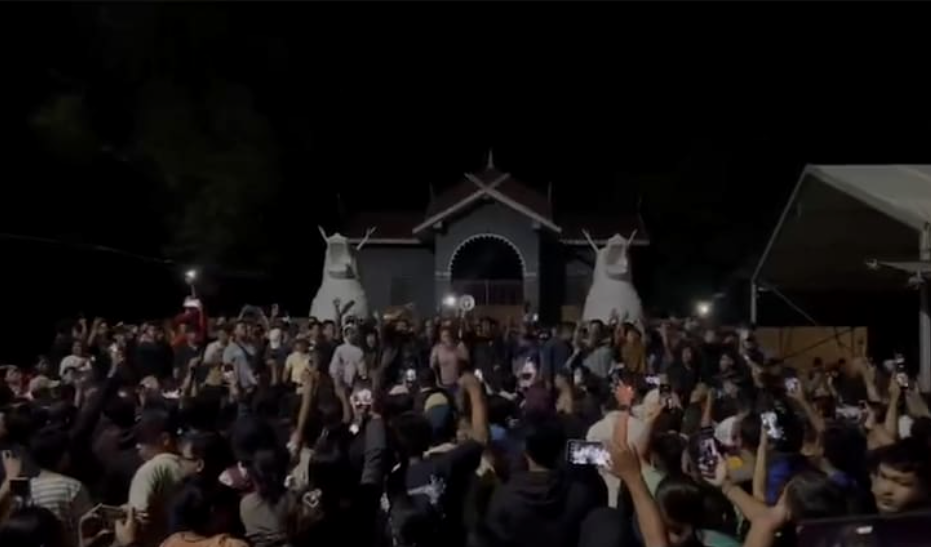
Thousands bang utensils, beat drums in Manipur protest over continued killings
Thousands of people staged a sound protest across Manipur’s five valley districts on Friday, October 23, banging utensils, beating drums and honking vehicle horns to protest continued killings and the prolonged ethnic conflict.
India News
MEA responds after ITBP chief flags ongoing face-offs with China in Arunachal
India said deviations by Chinese forces from established patrolling patterns periodically disturb the situation along the Line of Actual Control, as the government addressed remarks by the ITBP chief about ongoing face-offs in Arunachal Pradesh.

Om Prakash Mathur sworn in as Keralam Governor

PM Modi to inaugurate Rs 169-crore RBI data centre in Odisha on October 25

Delhi High Court rejects Neha Bora’s plea against peace bond notice

MEA responds after ITBP chief flags ongoing face-offs with China in Arunachal

Thousands bang utensils, beat drums in Manipur protest over continued killings

Congress seeks 175-200 seats in UP, Samajwadi Party stresses on winnability
Thousands bang utensils, beat drums in Manipur protest over continued killings
MEA responds after ITBP chief flags ongoing face-offs with China in Arunachal
Delhi High Court rejects Neha Bora’s plea against peace bond notice
PM Modi to inaugurate Rs 169-crore RBI data centre in Odisha on October 25

Afghan Men Try To Hang With The Jet Engine Of The Aircraft in Kabul- Afghanistan News – Kabul News
Trending Top 10 News: 10000 Crore Fine on Flipkart, Apple to Launch Unique Feature, Hdfc Bank Job Ad

Trending Top 10 News: Nokia 6310, Apple sales, Bachpan ka Pyar Video Kid, Dainik Bhaskar IT Raid

Trending Top 10 News: Canada bans Indian flights, Rain in Delhi NCR, AIMIM Twitter hacked, Raj Kundra case

Trending Top 10 News: Shein India, Apple New Service, Pocket Oxygen, Oppo Launched New Phone
-
 India News18 hours ago
Om Prakash Mathur sworn in as Keralam Governor
-
 India News17 hours ago
PM Modi to inaugurate Rs 169-crore RBI data centre in Odisha on October 25
-
 India News16 hours ago
Delhi High Court rejects Neha Bora’s plea against peace bond notice
-
 India News16 hours ago
MEA responds after ITBP chief flags ongoing face-offs with China in Arunachal
-
 India News3 hours ago
Thousands bang utensils, beat drums in Manipur protest over continued killings
-
 India News3 hours ago
Congress seeks 175-200 seats in UP, Samajwadi Party stresses on winnability
