English हिन्दी
Connect with us

India News

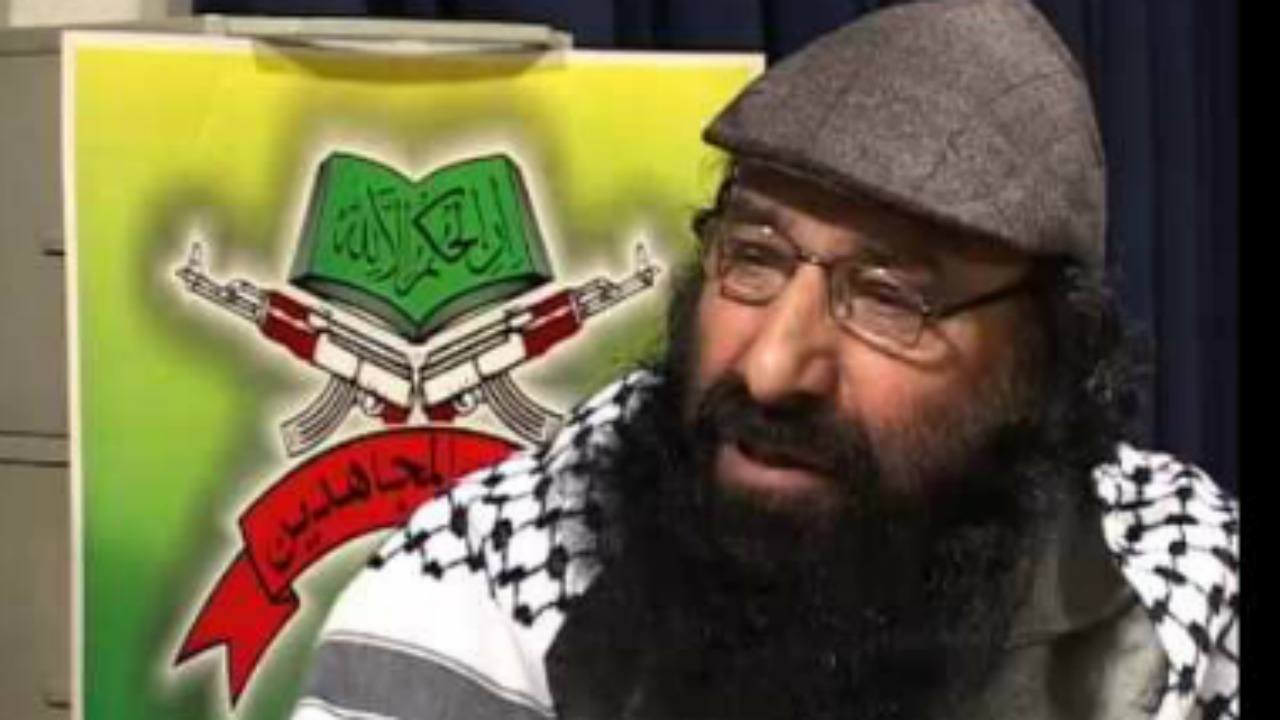
Enjoying Pakistan’s full backing, Salahuddin declares he has carried out terror ops in India

Published

on

Enjoying Pakistan’s full backing, Salahuddin declares he has carried out terror ops in India

[vc_row][vc_column][vc_column_text]Just about a week after being declared a global terrorist by US, Hizbul Mujahideen chief Syed Salahuddin told Geo TV, a Pakistani TV channel, that he has carried out terrorist attacks in India and he could strike India at any time.

Pakistan had slammed US designation of Salahuddin as a global terrorist, calling it “completely unjustified”. “The designation of individuals supporting the Kashmiri right to self-determination as terrorists is completely unjustified,” it had said.

Salahuddin is wanted in more than 50 terror cases including assassinations, abduction, attacks on security forces, and hawala funding in India. His outfit Hizbul Mujahideen (HM) has claimed responsibility for several attacks in India in the past, including the April 2014 explosives attack in J&K which injured 17 people.

The US designated Salahuddin as a ‘global terrorist’ on June 26, hours ahead of Prime Minister Narendra Modi’s first meeting with US President Donald Trump in Washington. The US State Department had said: “Department of State has designated Mohammad Yusuf Shah, also known as (AKA) Syed Salahuddin, as a Specially Designated Global Terrorist (SDGT) under Section 1(b) of Executive Order (E.O.) 13224, which imposes sanctions on foreign persons who have committed, or pose a significant risk of committing, acts of terrorism that threaten the security of US nationals or the national security, foreign policy, or economy of the United States. .”

The state department’s notification said that Salahuddin-led HM “has claimed responsibility for several attacks” including the April 2014 explosives attack in Kashmir, which injured 17 people. He has also time and again vowed to block any peaceful resolution to the Kashmir conflict and threatened to train more Kashmiri suicide bombers, the state department said.

The US state department’s notification stated that all Americans are now “generally prohibited from engaging in transactions with Salahuddin and all of Salahuddin’s property and interests in property subject to United States jurisdiction are blocked”.

Salahuddin rejected US charges, calling himself a freedom fighter and not a terrorist. He vowed to continue fighting for the ‘liberation’ of Kashmir.

At a rally in Pakistan occupied Kashmir’s (PoK) Muzaffarabad on Saturday, Salahuddin called US President Donald Trump “crazy” for the action against him. He also called the Trump administration “idiotic”, saying it was “a gift to (Indian Prime Minister Narendra) Modi”. “Donald Trump’s decision will be thrown out if anyone challenges it in American courts. No other Western nation has endorsed what this crazy Donald Trump has done,” Salahuddin said.

“The US cannot provide a single example of when I and other Kashmiri fighters committed any act of terrorism,” he said, addressing the media at the Centre Press Club in Muzaffarabad. “Kashmiri freedom fighters have a code of conduct to not harm minorities, the elderly, children and women, and if sometimes the enemy offers a peace deal, we accept it.”

“This (the Trump administration’s) idiocy can neither weaken our courage, nor stop the freedom struggle and the target-oriented actions of freedom fighters,” Salahuddin added

In the interview with Geo TV, Salahuddin said, “Till now our focus was on Indian occupation forces. All the operations that we have done or are underway, we focus only on the installations of these occupational forces.”

Salahuddin described Kashmir as ‘home’, and said Burhan Wani’s death last year has triggered an uprising in the Valley. After Wani was killed in an encounter with security forces last July, Salahuddin had vowed to turn the state into “a graveyard for Indian forces”.

“If we would have taken our operations out of Kashmir at that time, India would get a chance to label Kashmir-e-Tehreek a terrorist organisation. We have support and we can target any place in India, at any time,” he said, during the interview. He explained that the international scene has changed since 9/11.

He added he purchases weapons from the international market.

Cases against Syed Salahuddin:

Hizbul Mujahideen chief Mohammad Yousuf Shah alias Syed Salahuddin, declared a ‘Specially Designated Global Terrorist’ by the US, is wanted in more than 50 terror cases including assassinations, abduction, attacks on security forces, and hawala funding in India.

In some cases, charge sheets have been filed and investigations are on in others but progress in these cases has been tardy since Salahuddin has been absconding, based as he is in PoK since 1993.

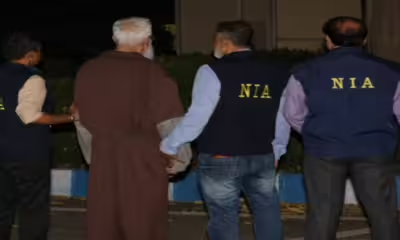
According to the police, he has been declared as a proclaimed offender in a Rs 80 crore terror funding case by a special National Investigation Agency (NIA) court in 2013.

There is also an Interpol Red Notice pending against Salahuddin who is also the head of the United Jihad Council, an umbrella group of over a dozen terrorist outfits based in PoK.

He is wanted include the killing of Superintendent of Police Mohammad Amin Khan in August 2012. There were seven accused, including Salahuddin in the case.

Salahuddin’s brush with law began in 1987, the year he contested the Assembly polls, widely believed to have been rigged. He contested elections from Amira Kadal, a constituency in Srinagar, on the ticket of Muslim United Front — an amalgam of different political and religious organisations. He lost to National Conference stalwart late Ghulam Mohidin Shah. Later, he was booked for seditious speech under the Terrorist and Disruptive Act, 1987 (the case was registered in 1987). But by the time the charge sheet for the case was filed in 1997, Salahuddin had crossed over into PoK and had become the HM chief.

Salahuddin is wanted in the 2002 attack on People’s Democratic Party workers in which three cops and one terrorist were killed in Budgam district of central Kashmir. The case has been charge sheeted without any further progress.

Salahuddin is also wanted in the tourist bus attack in 2006 in Srinagar. According to police, grenades were hurled at a tourist bus in Lal Chowk on the instructions of Salahuddin, resulting in injuries to a few tourists.

Police have registered numerous cases against Salahuddin for threatening Panchs and Sarpanchs besides calling for the poll boycott to derail democracy in Jammu and Kashmir.

According to a NIA chargesheet, Salahuddin in 1999 chaired a meeting of Hizbul’s Markazi Majlis-e-Shura, a top body of its decision making, in connivance with the agencies of Pakistan-founded Jammu Kashmir Affectees Relief Trust (JKART) – a frontal organisation of HM. The objective was to raise funds from Pakistan and other countries in the name of relief for rehabilitation of affected persons in Jammu and Kashmir and use it for furthering terrorist activities in India.[/vc_column_text][/vc_column][/vc_row]

India News

Sonia Gandhi calls weakening of MGNREGA a collective moral failure, targets Centre in op-ed

Sonia Gandhi has accused the Centre of weakening MGNREGA, calling it a collective moral failure with serious consequences for crores of working people.

Published

on

Sonia Gandhi

Congress Parliamentary Party chairperson Sonia Gandhi has sharply criticised the Central government over what she described as the steady dismantling of rights-based legislation, with a particular focus on the Mahatma Gandhi National Rural Employment Guarantee Act (MGNREGA).

In a recent opinion article published in a leading English daily, Sonia Gandhi argued that MGNREGA was envisioned as more than a welfare measure. She said the rural employment scheme gave legal backing to the constitutional right to work and was rooted in Mahatma Gandhi’s idea of Sarvodaya, or welfare for all.

Calling its weakening a serious failure, she wrote that the decline of MGNREGA represents a “collective moral failure” that will have lasting financial and human consequences for crores of working people across India. She stressed that safeguarding such rights-based frameworks is crucial at a time when, according to her, multiple protections are under strain.

Concerns raised over education, environment and land laws

Sonia Gandhi also flagged concerns beyond rural employment. Referring to education policy, she claimed that the Right to Education has been undermined following the National Education Policy 2020, alleging that it has led to the closure of around one lakh primary schools across the country.

On environmental and land-related legislation, she stated that the Forest Rights Act, 2006, was weakened through the Forest (Conservation) Rules, 2022. According to her, these changes removed the role of the gram sabha in decisions related to the diversion of forest land.

She further alleged that the Right to Fair Compensation and Transparency in Land Acquisition, Rehabilitation and Resettlement Act has been significantly diluted, while adding that the National Green Tribunal has seen its authority reduced over the years.

Warning on agriculture and food security laws

Touching upon agriculture reforms, Sonia Gandhi referred to the now-repealed three farm laws, claiming they were an attempt to deny farmers the right to a minimum support price. She also cautioned that the National Food Security Act, 2013, could face similar threats in the future.

Reiterating her central argument, she urged unity to protect statutory rights, stating that the erosion of such laws has implications that extend well beyond policy, affecting livelihoods and dignity on the ground.

Continue Reading

India News

Thick smog engulfs Delhi, flights and trains delayed as air quality slips to very poor

Delhi remained under a thick smog cover as air quality dipped into the very poor category, causing delays in flights and train services due to low visibility.

Published

on

delhi-air-quality

A dense blanket of smog covered Delhi on Saturday morning, pushing air quality into the ‘very poor’ category and disrupting flight and train operations across the national capital and adjoining areas. Reduced visibility due to smog led to delays in air and rail traffic, while authorities warned that pollution levels could worsen further in the coming days.

The Air Quality Index (AQI) in Delhi was recorded at 380, placing it in the ‘very poor’ bracket. Visuals from Bhairav Marg near Pragati Maidan showed motorists using headlights during early hours, as visibility remained low. At around 7 am, the AQI at this location stood at 433.

Nearly half of Delhi’s air quality monitoring stations reported ‘severe’ pollution levels. Anand Vihar recorded an AQI of 428 with PM2.5 as the dominant pollutant, while Jahangirpuri reported an AQI of 425.

Transport services hit by low visibility

Flight operations at Delhi airport were impacted due to low visibility conditions. The airport issued an advisory asking passengers to check with their respective airlines for updated flight information, as low visibility procedures were in place. Runway visibility was reported to be between 800 and 1,200 metres.

Live flight tracking data showed multiple flights running behind schedule. One airline also warned passengers about possible disruptions at several airports in northern and eastern India, including Delhi, due to dense fog conditions. Travellers were advised to verify flight status before heading to the airport, with options offered on select flights to reschedule or seek refunds without additional charges.

Rail services were also affected, with more than 30 trains running late by an average of three to four hours. Some long-distance trains reported delays of over six to eight hours, causing inconvenience to passengers travelling to and from the capital.

Air quality likely to worsen

The weather department had earlier forecast dense to very dense fog at isolated places over Delhi and several parts of north and central India. According to the Air Quality Early Warning System for Delhi, pollution levels are expected to remain in the ‘very poor’ category on Saturday and may slip into the ‘severe’ category on Sunday and Monday. In view of the deteriorating conditions, an ‘orange’ alert has been issued for Saturday.

Continue Reading

India News

PM Modi inaugurates India’s first nature-themed airport terminal in Assam

Prime Minister Narendra Modi inaugurates the new nature-themed terminal at Guwahati airport, the largest in Northeast India, built around bamboo, orchids and regional heritage.

Published

on

PM modi in Assam

Prime Minister Narendra Modi is set to inaugurate the new terminal building of Lokapriya Gopinath Bordoloi International (LGBI) Airport in Guwahati today, marking a major milestone for aviation infrastructure in the Northeast. Built at an estimated cost of around Rs 4,000 crore, the facility is being projected as the largest airport terminal in the region and a key boost to connectivity, tourism and economic activity in Assam.

The Prime Minister is scheduled to arrive in Guwahati around 3 pm as part of his two-day visit to the state.

Northeast’s largest airport terminal takes shape in Guwahati

The newly constructed terminal is nearly seven times larger than the existing one and has been designed to cater to the region’s rapidly growing air traffic. Once fully operational, it is expected to handle up to 13.1 million passengers annually by 2032.

Officials said the terminal is planned as a regional connectivity hub, with a focus on strengthening air links between India and Southeast Asia. The airport will be capable of handling up to 34 air traffic movements per hour, the highest capacity among airports in the Northeast. The facility will also be equipped with one of the most advanced Instrument Landing Systems to support safer and more efficient operations.

Nature-inspired design rooted in Assam’s identity

What sets the Guwahati terminal apart is its distinctive nature-themed architecture. Conceptualised under the theme “Bamboo Orchids”, it is being described as India’s first airport terminal inspired entirely by natural and cultural elements.

The interiors draw from the landscapes of Northeast India, with design elements reflecting indigenous orchids, locally known as Kopou Phool, and the flow of the Brahmaputra river. The terminal incorporates more than 2,000 species of plants, includes a dedicated zone inspired by Kaziranga National Park, and features artefacts representing Majuli Island.

A key architectural highlight is the expansive bamboo vault, created using around 140 metric tonnes of locally sourced bamboo. The space has been envisioned as a multifunctional cultural centre aimed at encouraging community interaction and showcasing the region’s heritage. Design elements such as japi motifs, the iconic rhino symbol and 57 orchid-inspired columns further reinforce the cultural narrative.

Arriving passengers will also experience a unique “Sky Forest”, featuring nearly one lakh plants of indigenous species, designed to create an immersive forest-like ambience within the terminal.

Focus on digital integration and passenger convenience

Spread over nearly 1.4 lakh square metres, the integrated new terminal has been designed to handle around 1.3 crore passengers annually. It is supported by significant upgrades to the runway, airfield systems, aprons and taxiways.

The terminal places strong emphasis on digital integration, with 14 entry points, including four DigiYatra gates, aimed at easing passenger movement. Facilities such as full-body scanners for non-intrusive security checks, automated baggage handling systems, fast-track immigration and AI-driven airport operations have been incorporated to ensure smoother travel experiences.

Other engagements during PM Modi’s Assam visit

During his two-day stay, the Prime Minister will also lay foundation stones for multiple development projects and address public gatherings. He is scheduled to visit the Swahid Smarak Kshetra to pay tribute to the martyrs of the historic Assam Movement.

Later in the day, PM Modi will perform the bhoomipujan for a new brownfield Ammonia-Urea Fertiliser Project at Namrup in Dibrugarh district, within the existing premises of the Brahmaputra Valley Fertiliser Corporation Limited.

Continue Reading

Trending

© Copyright 2022 APNLIVE.com