English हिन्दी
Connect with us

India News

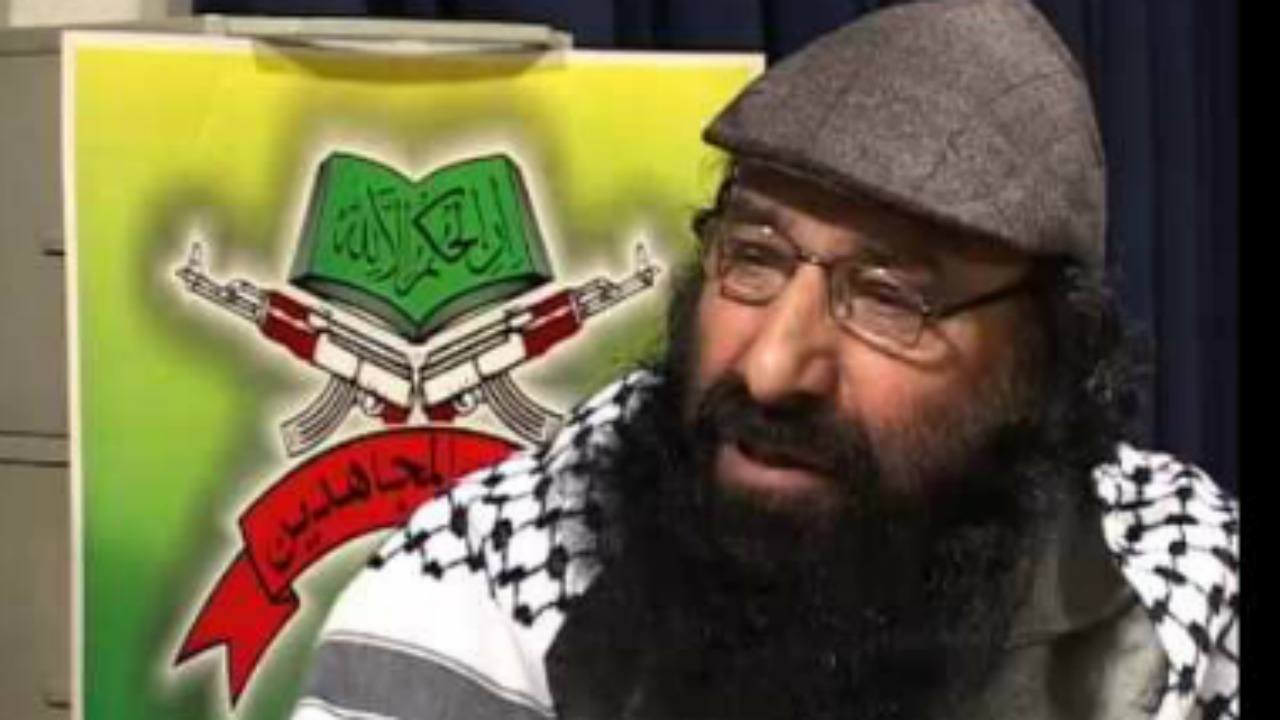
Enjoying Pakistan’s full backing, Salahuddin declares he has carried out terror ops in India

Published

on

Enjoying Pakistan’s full backing, Salahuddin declares he has carried out terror ops in India

[vc_row][vc_column][vc_column_text]Just about a week after being declared a global terrorist by US, Hizbul Mujahideen chief Syed Salahuddin told Geo TV, a Pakistani TV channel, that he has carried out terrorist attacks in India and he could strike India at any time.

Pakistan had slammed US designation of Salahuddin as a global terrorist, calling it “completely unjustified”. “The designation of individuals supporting the Kashmiri right to self-determination as terrorists is completely unjustified,” it had said.

Salahuddin is wanted in more than 50 terror cases including assassinations, abduction, attacks on security forces, and hawala funding in India. His outfit Hizbul Mujahideen (HM) has claimed responsibility for several attacks in India in the past, including the April 2014 explosives attack in J&K which injured 17 people.

The US designated Salahuddin as a ‘global terrorist’ on June 26, hours ahead of Prime Minister Narendra Modi’s first meeting with US President Donald Trump in Washington. The US State Department had said: “Department of State has designated Mohammad Yusuf Shah, also known as (AKA) Syed Salahuddin, as a Specially Designated Global Terrorist (SDGT) under Section 1(b) of Executive Order (E.O.) 13224, which imposes sanctions on foreign persons who have committed, or pose a significant risk of committing, acts of terrorism that threaten the security of US nationals or the national security, foreign policy, or economy of the United States. .”

The state department’s notification said that Salahuddin-led HM “has claimed responsibility for several attacks” including the April 2014 explosives attack in Kashmir, which injured 17 people. He has also time and again vowed to block any peaceful resolution to the Kashmir conflict and threatened to train more Kashmiri suicide bombers, the state department said.

The US state department’s notification stated that all Americans are now “generally prohibited from engaging in transactions with Salahuddin and all of Salahuddin’s property and interests in property subject to United States jurisdiction are blocked”.

Salahuddin rejected US charges, calling himself a freedom fighter and not a terrorist. He vowed to continue fighting for the ‘liberation’ of Kashmir.

At a rally in Pakistan occupied Kashmir’s (PoK) Muzaffarabad on Saturday, Salahuddin called US President Donald Trump “crazy” for the action against him. He also called the Trump administration “idiotic”, saying it was “a gift to (Indian Prime Minister Narendra) Modi”. “Donald Trump’s decision will be thrown out if anyone challenges it in American courts. No other Western nation has endorsed what this crazy Donald Trump has done,” Salahuddin said.

“The US cannot provide a single example of when I and other Kashmiri fighters committed any act of terrorism,” he said, addressing the media at the Centre Press Club in Muzaffarabad. “Kashmiri freedom fighters have a code of conduct to not harm minorities, the elderly, children and women, and if sometimes the enemy offers a peace deal, we accept it.”

“This (the Trump administration’s) idiocy can neither weaken our courage, nor stop the freedom struggle and the target-oriented actions of freedom fighters,” Salahuddin added

In the interview with Geo TV, Salahuddin said, “Till now our focus was on Indian occupation forces. All the operations that we have done or are underway, we focus only on the installations of these occupational forces.”

Salahuddin described Kashmir as ‘home’, and said Burhan Wani’s death last year has triggered an uprising in the Valley. After Wani was killed in an encounter with security forces last July, Salahuddin had vowed to turn the state into “a graveyard for Indian forces”.

“If we would have taken our operations out of Kashmir at that time, India would get a chance to label Kashmir-e-Tehreek a terrorist organisation. We have support and we can target any place in India, at any time,” he said, during the interview. He explained that the international scene has changed since 9/11.

He added he purchases weapons from the international market.

Cases against Syed Salahuddin:

Hizbul Mujahideen chief Mohammad Yousuf Shah alias Syed Salahuddin, declared a ‘Specially Designated Global Terrorist’ by the US, is wanted in more than 50 terror cases including assassinations, abduction, attacks on security forces, and hawala funding in India.

In some cases, charge sheets have been filed and investigations are on in others but progress in these cases has been tardy since Salahuddin has been absconding, based as he is in PoK since 1993.

According to the police, he has been declared as a proclaimed offender in a Rs 80 crore terror funding case by a special National Investigation Agency (NIA) court in 2013.

There is also an Interpol Red Notice pending against Salahuddin who is also the head of the United Jihad Council, an umbrella group of over a dozen terrorist outfits based in PoK.

He is wanted include the killing of Superintendent of Police Mohammad Amin Khan in August 2012. There were seven accused, including Salahuddin in the case.

Salahuddin’s brush with law began in 1987, the year he contested the Assembly polls, widely believed to have been rigged. He contested elections from Amira Kadal, a constituency in Srinagar, on the ticket of Muslim United Front — an amalgam of different political and religious organisations. He lost to National Conference stalwart late Ghulam Mohidin Shah. Later, he was booked for seditious speech under the Terrorist and Disruptive Act, 1987 (the case was registered in 1987). But by the time the charge sheet for the case was filed in 1997, Salahuddin had crossed over into PoK and had become the HM chief.

Salahuddin is wanted in the 2002 attack on People’s Democratic Party workers in which three cops and one terrorist were killed in Budgam district of central Kashmir. The case has been charge sheeted without any further progress.

Salahuddin is also wanted in the tourist bus attack in 2006 in Srinagar. According to police, grenades were hurled at a tourist bus in Lal Chowk on the instructions of Salahuddin, resulting in injuries to a few tourists.

Police have registered numerous cases against Salahuddin for threatening Panchs and Sarpanchs besides calling for the poll boycott to derail democracy in Jammu and Kashmir.

According to a NIA chargesheet, Salahuddin in 1999 chaired a meeting of Hizbul’s Markazi Majlis-e-Shura, a top body of its decision making, in connivance with the agencies of Pakistan-founded Jammu Kashmir Affectees Relief Trust (JKART) – a frontal organisation of HM. The objective was to raise funds from Pakistan and other countries in the name of relief for rehabilitation of affected persons in Jammu and Kashmir and use it for furthering terrorist activities in India.[/vc_column_text][/vc_column][/vc_row]

India News

PM Modi assures no discrimination in women’s quota, delimitation debate intensifies in Parliament

PM Narendra Modi has assured that women’s reservation will be implemented without discrimination, amid a heated debate over delimitation in Parliament.

Published

on

PM modi

Prime Minister Narendra Modi has assured that there will be no discrimination in the implementation of women’s reservation, as Parliament witnessed a sharp debate over the proposed linkage between the quota and delimitation exercise.

During the ongoing special session, the government reiterated its commitment to ensuring fair representation while addressing concerns raised by opposition parties regarding the timing and structure of the legislation.

The proposed framework aims to reserve 33 percent of seats for women in the Lok Sabha and state assemblies. However, its implementation is tied to a fresh delimitation exercise, which is expected after the next census.

Opposition questions timing and intent

Opposition leaders have raised concerns that linking the women’s quota to delimitation could delay its implementation. They argue that the process of redrawing constituencies may push the actual rollout further into the future.

The issue has triggered a broader political confrontation, with multiple parties questioning whether the move could alter representation across states.

Some critics have also alleged that the delimitation exercise could disproportionately benefit certain regions based on population, a charge the government has rejected.

Government reiterates commitment to fair implementation

Responding to these concerns, the Centre has maintained that the reforms are necessary to ensure accurate and updated representation based on population data.

Leaders from the ruling side have repeatedly emphasized that the process will be carried out transparently and without bias. The assurance that there will be “no discrimination” is aimed at addressing fears among states and opposition parties.

The debate marks a key moment in Parliament, with both sides engaging in intense exchanges over one of the most significant electoral reforms in recent years.

Continue Reading

India News

Give all tickets to Muslim women, Amit Shah says, attacking Akhilesh Yadav on sub-quota demand

A sharp exchange between Amit Shah and Akhilesh Yadav in Parliament over sub-quota for Muslim women highlights key divisions on women’s reservation implementation.

Published

on

A heated exchange broke out in Parliament during discussions on the women’s reservation framework, with Union Home Minister Amit Shah and Samajwadi Party chief Akhilesh Yadav locking horns over the demand for a sub-quota for Muslim women.

The debate unfolded as the government pushed forward key legislative measures to implement 33% reservation for women in the Lok Sabha and state assemblies.

Akhilesh Yadav argued that the proposed reservation must ensure representation for women from marginalised communities, including Other Backward Classes (OBCs) and Muslim women. He said that without such provisions, large sections could remain excluded from political participation.

He also questioned the timing of the bill, alleging that the Centre was avoiding a caste census. According to him, a census would lead to renewed demands for caste-based reservations, which the government is reluctant to address.

Government rejects religion-based quota

Responding to the demand, Amit Shah made it clear that reservation based on religion is not permitted under the Constitution.

He stated that any proposal to provide quota to Muslims on religious grounds would be unconstitutional, firmly rejecting the idea of a separate sub-quota for Muslim women within the broader reservation framework.

The government has maintained that the existing framework already includes provisions for Scheduled Castes (SC) and Scheduled Tribes (ST) women within the overall reservation structure.

Wider political divide over implementation

The issue of sub-categorisation within the women’s quota has emerged as a major flashpoint, even as most opposition parties broadly support the idea of women’s reservation.

Samajwadi Party leaders reiterated that their support for the bill depends on inclusion of OBC and minority women, while the government continues to defend its constitutional position.

The debate is part of a broader discussion during the special Parliament session, where multiple bills linked to delimitation and implementation of the women’s quota are being taken up.

Continue Reading

India News

No state will lose a seat, Centre assures as delimitation debate takes centre stage in Parliament

Parliament’s special session begins with key focus on implementing women’s reservation and delimitation, setting the stage for major electoral changes.

Published

on

Parliament

A special session of Parliament commenced on Thursday, with the Centre set to take up crucial legislation related to women’s reservation and delimitation of constituencies. The session, scheduled over three days, is expected to witness intense debate as the government pushes forward its legislative agenda.

At the centre of discussions is the proposal to operationalise the women’s reservation law, which seeks to allocate 33 percent of seats in the Lok Sabha and state assemblies to women. The law, passed earlier, requires enabling provisions before it can be implemented.

The rollout of the reservation is closely tied to the delimitation exercise — a process that redraws parliamentary constituencies based on updated population data. The implementation is expected only after the next census and delimitation process are completed.

The government is aiming to put in place the framework so that the reservation can be enforced in future elections, likely around 2029.

Delimitation and numbers at play

Delimitation is a key aspect of the proposed changes, as it will determine how seats are redistributed and which constituencies are reserved. The exercise is expected to reflect population shifts and may also involve an increase in the total number of Lok Sabha seats.

This linkage has made the issue politically sensitive, with several opposition parties backing women’s reservation in principle but raising concerns over how and when delimitation will be carried out.

Political reactions and expected debate

The session is likely to see sharp exchanges between the government and opposition. While there is broad agreement on increasing women’s representation, disagreements remain over the timing, process, and potential political implications of the delimitation exercise.

Some leaders have argued that delimitation could significantly alter the balance of representation among states, making it a contentious issue beyond the women’s quota itself.

The government, however, has framed the move as a step toward strengthening women’s participation in governance and ensuring more inclusive policymaking.

Continue Reading

Trending

© Copyright 2022 APNLIVE.com