
Economy news
Finance Minister Nirmala Sitharaman announces leave travel voucher, festival advance to boost consumer demand
The FM announced proposals regarding consumer spending and capital expenditure. She said the coronavirus pandemic has adversely affected the economy but the government’s Atmanirbhar Bharat package has addressed the needs of poor and weak sections of society.


Finance Minister Nirmala Sithraman on Monday announced proposals to ensure greater consumer spending to spur demand and thereby revitalise the economy by announcing a leave travel cash voucher scheme for government employees and those employed by PSUs and a special festival advance scheme. She said the coronavirus pandemic has affected the economy but the government’s Atmanirbhar Bharat package has addressed the needs of poor and weak sections of society. The supply constraints have eased but consumer demand is still affected, and these schemes will ensure greater demand, she said.
Finance Minister Sitharaman’s proposal to stimulate consumer demand in the economy which has two components. Proposals include:
> LTC Cash Voucher Scheme
> Special Festival Advance Scheme
LTC Cash Voucher Scheme:

-Government employees, many organised sector employees, have escaped economic effects of coronavirus pandemic. Their salaries have been protected and savings increased. The FM said the employees need to be incentivised to contribute to the revival of demand for the benefit of the less fortunate. The government employees will get LTC (Leave Travel Concession) in a block of 4 years.

-Air or rail fare as per scale is reimbursed. Leave encashment of 10 days. Due to coronavirus pandemic, employees are not in a position to avail LTC in the current block of 2018-21
-An employee opting LTC Cash Voucher Scheme will have to buy goods and services worth three times the fare and one time leave encashment, and do so before March 31, 2021.
-Money must be spent on goods attracting GST of 12 percent through digital mode. An employee will also have to produce a GST invoice.The scheme would cost Rs 5,675 crore if central government employees opt for it. For PSB and PSU employees, its cost would be Rs 1,900 crore.
– Demand infusion in the economy by Central Government and Central PSE/PSB employees is estimated to be Rs. 19,000 crore approx. Demand infusion by state government employees will be Rs. 9,000 crore. Additional consumer demand generated will be Rs. 28,000 crore.
Special Festival Advance Scheme

- Read Also: NEET result 2020 likely to be announced today: NTA may declare merit list and answer key; know expected cut-off
- – Special Festival Advance scheme was abolished on the recommendations of 7th Pay Commission. It is to be restored for festivals till March 31, 2021. Interest fee advance of Rs. 10,000 to be recoverable in a maximum of 10 instalments. If given by all state governments Rs. 8,000 is crore likely to be disbursed. In case of 50 percent adoption by states, Rs. 4,000 crore is expected to be disbursed
- – Employees will get a pre-loaded RuPay card and its bank charges will be covered by the government. Capital expenditure to give special assistance to states.
Government will give special, interest free, 50-year loans to states for Rs. 12,000 crore capital expenditure. It is divided in 3 parts.
– 2,500 crore for North East,
– 7,500 crore for other states, in proportion to share in Finance Commission devolution (50% initially, balance after use of first instalment)
– 2,000 crore for states which meet at least three out of four reforms given in Atma Nirbhar fiscal deficit package.
– Rs 25,000 crore additional budget will be provided for spending on defence infrastructure, roads, water supply, urban development, domestically produced capital equipment.
A total of Rs 73,000 crore package has been anounced by Finance Minister Sitharaman to boost consumer demand.
- – 36,000 crore additional consumer demand (Rs 28,000 crore through LTC,Rs. 8,000 crore through festival advance). Rs 37,000 crore central, state capital expenditure.






Economy news
ITR filing last date today: What taxpayers must know about penalties and delays
The deadline for ITR filing ends today, September 15. Missing it may lead to penalties, interest charges, refund delays, and loss of tax benefits.

Economy news
India’s GDP surges 7.8% in Q1, outpaces estimates and China
India’s GDP surged 7.8% in Q1 2025-26, the highest in five quarters, driven by strong services and agriculture sector growth, according to NSO data.
Economy news
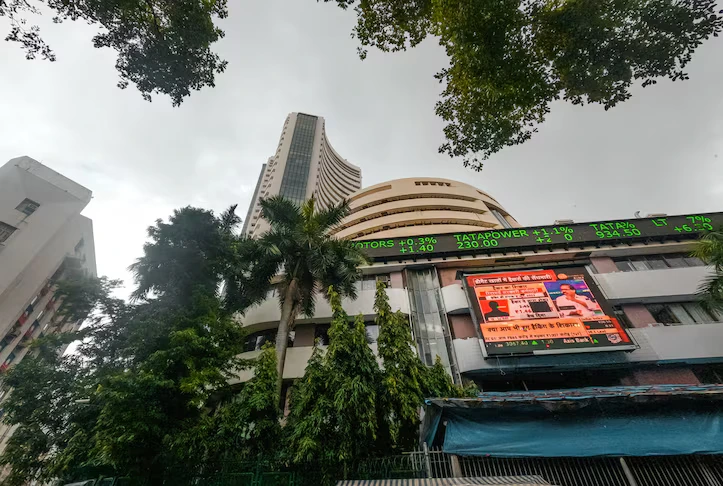
Sensex falls 600 points, nifty slips 180 as US tariffs hit Indian markets
Indian equity markets witnessed sharp declines as US tariffs on Indian imports took effect. Sensex dropped over 600 points, while Nifty fell nearly 180 points in early trade.

Centre assures action on LPG supply disruption, court closes distributors’ plea

Mamata Banerjee warns BJP, EC over Bengal polls, says they will be accountable

Top US counterterrorism official resigns over Iran war, cites conscience

US strikes Iranian missile sites near Hormuz with 5,000-pound bunker buster bombs

Netanyahu dismisses death rumours in video with US envoy, says I’m alive

Delhi Palam fire leaves 6 dead, massive rescue operation underway

Centre mandates 60% free seat allocation on flights, caps selection fees
Netanyahu dismisses death rumours in video with US envoy, says I’m alive
US strikes Iranian missile sites near Hormuz with 5,000-pound bunker buster bombs
Top US counterterrorism official resigns over Iran war, cites conscience

Afghan Men Try To Hang With The Jet Engine Of The Aircraft in Kabul- Afghanistan News – Kabul News
Trending Top 10 News: 10000 Crore Fine on Flipkart, Apple to Launch Unique Feature, Hdfc Bank Job Ad

Trending Top 10 News: Nokia 6310, Apple sales, Bachpan ka Pyar Video Kid, Dainik Bhaskar IT Raid

Trending Top 10 News: Canada bans Indian flights, Rain in Delhi NCR, AIMIM Twitter hacked, Raj Kundra case

Trending Top 10 News: Shein India, Apple New Service, Pocket Oxygen, Oppo Launched New Phone
-
India News19 hours ago
Centre assures action on LPG supply disruption, court closes distributors’ plea
-
 India News17 hours ago
Mamata Banerjee warns BJP, EC over Bengal polls, says they will be accountable
-
 Latest world news16 hours ago
Top US counterterrorism official resigns over Iran war, cites conscience
-
 Latest world news3 hours ago
US strikes Iranian missile sites near Hormuz with 5,000-pound bunker buster bombs
-
 Latest world news3 hours ago
Netanyahu dismisses death rumours in video with US envoy, says I’m alive
-
 India News2 hours ago
Centre mandates 60% free seat allocation on flights, caps selection fees
-
 India News1 hour ago
Delhi Palam fire leaves 6 dead, massive rescue operation underway
