English हिन्दी
Connect with us

India News

Beating the model code of conduct: Candidates can’t give cash but governments can

There has been a flood of offers and sops from both parties, ironically started by the BJP which has been at the forefront of a campaign to eliminate freebies

Published

on

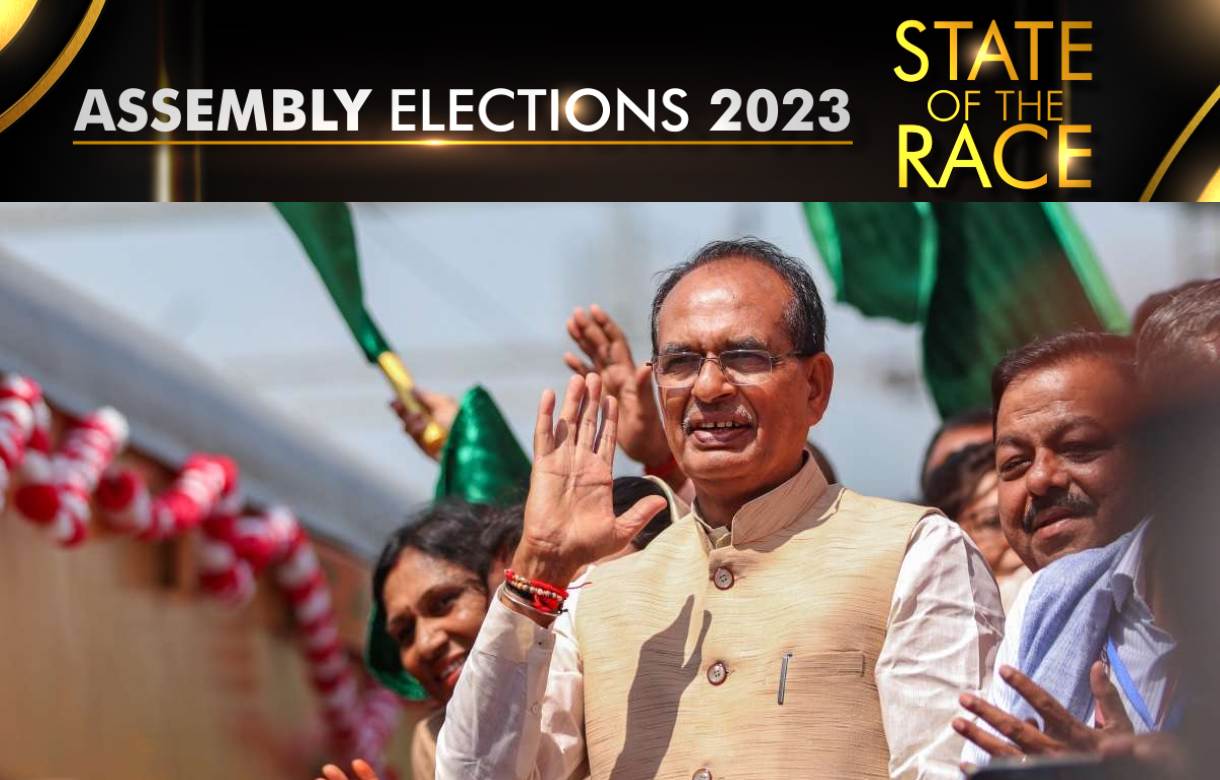
Shivraj Singh Chouhan

By Neeraj Mishra

Diwali has slowed down the race in Madhya Pradesh and Chhattisgarh while people celebrate and reflect on the booty on offer in the two states. There has been a flood of offers and sops from both parties, ironically started by the BJP, which has been at the forefront of a campaign to eliminate what it calls “freebies” and their impact on the economy. A lawyer associated with the party has even filed a PIL in the Supreme Court calling for an end to freebies offered by parties ahead of elections.

Sops should first be cleared by a board consisting of Income Tax payers. But in the current elections, it is not the free promises but the misuse of state apparatus that is making waves. After 17 years in the saddle, Shivraj Singh Chouhan suddenly woke up to the power of the word “free” and made it state policy. Just before the election dates were announced, he offered Rs 3,000 per month to all “pyari behenas”.

Two instalments have been delivered, one on Rakhi and the other on Karva Chauth. Similarly in Chhattisgarh, Chief Minister Bhupesh Baghel has offered Rs 2,500 per month to all unemployed youth below the age of 35. Three instalments have been delivered. If this is not enticement, what is? But it is not covered under the Model Code of Conduct as defined by the Election Commission of India.

Candidates can’t give cash but governments can. There is more, Chouhan has offered Rs 500 subsidy on gas to every “vivahit mahila”. So have Baghel and his Rajasthan counterpart Ashok Gehlot. Chouhan has another Seekho Kamao Scheme 2023 where all unemployed youth are being given Rs 10,000 so that they can learn some skill and start their own business.

This, of course, includes learning how to make tea and pakoras. All state governments going to elections have launched their own Mukhmantri Awas Yojana on the lines of the PM Awas Yojana. The above are instances of direct cash transfer by the state and the ruling party which gives it an obvious edge. So where is the level playing field for all candidates?

To level the field, opposition parties in both states have adopted the more the merrier promises. If the Congress in Chhattisgarh wanted to give Rs 2,800 per quintal of rice, the BJP immediately promised Rs 3,100 forcing the Congress to revise its offer to Rs 3,200. So the BJP decided to offer Rs 12,000 to every woman in the state per year. For this, it has started a fill-the-form campaign. All women who filled a BJP form declaring that they want the Rs 12,000 will be given Rs 12,000 if the party comes to power. So again this is a model contravention of the model code of conduct.

There is no cash given now but it will be given definitely. Modi ki Guarantee hai. Congress got smart and upped it to Rs 15,000 per year. So now just calculate the cash dole out. Every married woman will get Rs 3000 per month in MP. So if a family has only two women, the mother-in-law and the daughter-in-law, then the household gets Rs 72,000 per year. Add to it LPG cylinder for Rs 500 and Rs 1 per kg rice, so where is the need to work? Of course, the government will also give Rs 10 lakh health insurance cover and a PM or CM Awas.

There are other free ideas to avail of, from school dress to cycle and sewing machine to pakora stalls. In Chhattisgarh, each farmer will get Rs 1,000 above the MSP per quintal. It’s far above what the rest of the country gets. If there are two unemployed sons because farming is not employment, then each gets Rs 24,000 per year. The wife and daughter get Rs 12,000 or Rs 15,000 per year. Of course, the same gas, housing and health schemes apply here apart from free rice, dal and chana. Are we trying to bring up a generation which does not need to work? Is it only moot to ask this or wait for the Supreme Court to deliver its verdict?

India News

PM Modi assures no discrimination in women’s quota, delimitation debate intensifies in Parliament

PM Narendra Modi has assured that women’s reservation will be implemented without discrimination, amid a heated debate over delimitation in Parliament.

Published

on

PM modi

Prime Minister Narendra Modi has assured that there will be no discrimination in the implementation of women’s reservation, as Parliament witnessed a sharp debate over the proposed linkage between the quota and delimitation exercise.

During the ongoing special session, the government reiterated its commitment to ensuring fair representation while addressing concerns raised by opposition parties regarding the timing and structure of the legislation.

The proposed framework aims to reserve 33 percent of seats for women in the Lok Sabha and state assemblies. However, its implementation is tied to a fresh delimitation exercise, which is expected after the next census.

Opposition questions timing and intent

Opposition leaders have raised concerns that linking the women’s quota to delimitation could delay its implementation. They argue that the process of redrawing constituencies may push the actual rollout further into the future.

The issue has triggered a broader political confrontation, with multiple parties questioning whether the move could alter representation across states.

Some critics have also alleged that the delimitation exercise could disproportionately benefit certain regions based on population, a charge the government has rejected.

Government reiterates commitment to fair implementation

Responding to these concerns, the Centre has maintained that the reforms are necessary to ensure accurate and updated representation based on population data.

Leaders from the ruling side have repeatedly emphasized that the process will be carried out transparently and without bias. The assurance that there will be “no discrimination” is aimed at addressing fears among states and opposition parties.

The debate marks a key moment in Parliament, with both sides engaging in intense exchanges over one of the most significant electoral reforms in recent years.

Continue Reading

India News

Give all tickets to Muslim women, Amit Shah says, attacking Akhilesh Yadav on sub-quota demand

A sharp exchange between Amit Shah and Akhilesh Yadav in Parliament over sub-quota for Muslim women highlights key divisions on women’s reservation implementation.

Published

on

A heated exchange broke out in Parliament during discussions on the women’s reservation framework, with Union Home Minister Amit Shah and Samajwadi Party chief Akhilesh Yadav locking horns over the demand for a sub-quota for Muslim women.

The debate unfolded as the government pushed forward key legislative measures to implement 33% reservation for women in the Lok Sabha and state assemblies.

Akhilesh Yadav argued that the proposed reservation must ensure representation for women from marginalised communities, including Other Backward Classes (OBCs) and Muslim women. He said that without such provisions, large sections could remain excluded from political participation.

He also questioned the timing of the bill, alleging that the Centre was avoiding a caste census. According to him, a census would lead to renewed demands for caste-based reservations, which the government is reluctant to address.

Government rejects religion-based quota

Responding to the demand, Amit Shah made it clear that reservation based on religion is not permitted under the Constitution.

He stated that any proposal to provide quota to Muslims on religious grounds would be unconstitutional, firmly rejecting the idea of a separate sub-quota for Muslim women within the broader reservation framework.

The government has maintained that the existing framework already includes provisions for Scheduled Castes (SC) and Scheduled Tribes (ST) women within the overall reservation structure.

Wider political divide over implementation

The issue of sub-categorisation within the women’s quota has emerged as a major flashpoint, even as most opposition parties broadly support the idea of women’s reservation.

Samajwadi Party leaders reiterated that their support for the bill depends on inclusion of OBC and minority women, while the government continues to defend its constitutional position.

The debate is part of a broader discussion during the special Parliament session, where multiple bills linked to delimitation and implementation of the women’s quota are being taken up.

Continue Reading

India News

No state will lose a seat, Centre assures as delimitation debate takes centre stage in Parliament

Parliament’s special session begins with key focus on implementing women’s reservation and delimitation, setting the stage for major electoral changes.

Published

on

Parliament

A special session of Parliament commenced on Thursday, with the Centre set to take up crucial legislation related to women’s reservation and delimitation of constituencies. The session, scheduled over three days, is expected to witness intense debate as the government pushes forward its legislative agenda.

At the centre of discussions is the proposal to operationalise the women’s reservation law, which seeks to allocate 33 percent of seats in the Lok Sabha and state assemblies to women. The law, passed earlier, requires enabling provisions before it can be implemented.

The rollout of the reservation is closely tied to the delimitation exercise — a process that redraws parliamentary constituencies based on updated population data. The implementation is expected only after the next census and delimitation process are completed.

The government is aiming to put in place the framework so that the reservation can be enforced in future elections, likely around 2029.

Delimitation and numbers at play

Delimitation is a key aspect of the proposed changes, as it will determine how seats are redistributed and which constituencies are reserved. The exercise is expected to reflect population shifts and may also involve an increase in the total number of Lok Sabha seats.

This linkage has made the issue politically sensitive, with several opposition parties backing women’s reservation in principle but raising concerns over how and when delimitation will be carried out.

Political reactions and expected debate

The session is likely to see sharp exchanges between the government and opposition. While there is broad agreement on increasing women’s representation, disagreements remain over the timing, process, and potential political implications of the delimitation exercise.

Some leaders have argued that delimitation could significantly alter the balance of representation among states, making it a contentious issue beyond the women’s quota itself.

The government, however, has framed the move as a step toward strengthening women’s participation in governance and ensuring more inclusive policymaking.

Continue Reading

Trending

© Copyright 2022 APNLIVE.com