English हिन्दी
Connect with us

India News

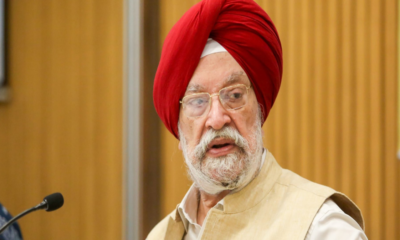
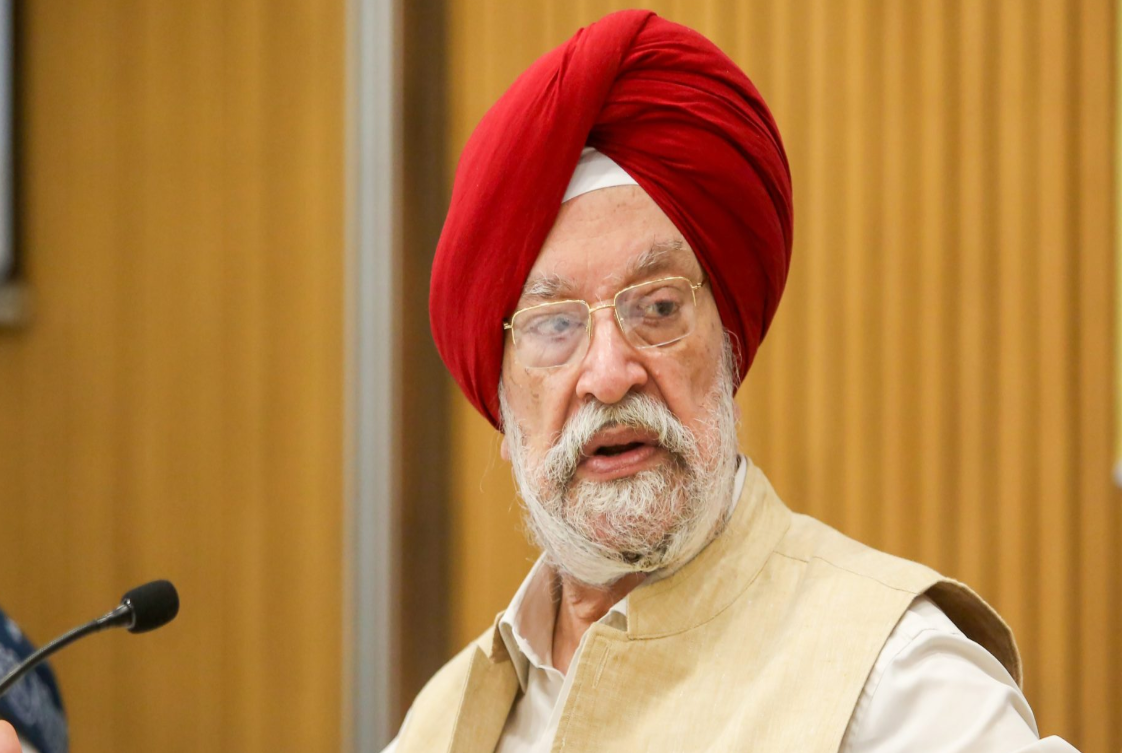
Fuel prices may fall if crude stays low for 2-3 months, says Hardeep Puri

Hardeep Singh Puri says petrol and diesel prices may be reviewed if crude oil prices remain low for another two to three months, as oil companies are currently refining costly crude purchased during the West Asia conflict.

Published

on

Hardeep singh puri

Consumers hoping for cheaper petrol and diesel may have to wait a little longer, with Union Petroleum Minister Hardeep Singh Puri indicating that any reduction in fuel prices will depend on whether international crude oil prices remain low over the next two to three months.

The minister said oil marketing companies (OMCs) are currently processing crude oil purchased during the peak of the West Asia conflict, when global prices were significantly higher. As a result, the recent decline in crude oil prices has not yet translated into lower retail fuel prices.

Price cut depends on sustained decline in crude oil

Speaking to reporters on Thursday, Puri said a discussion on reducing petrol and diesel prices would become relevant only if global crude prices continue to remain at lower levels for a sustained period.

He explained that the crude oil being refined today was largely purchased around two months ago, when prices were elevated due to geopolitical tensions. Since oil companies procure crude well in advance, the impact of lower international prices is reflected only after a delay.

According to the minister, if the current trend of softer crude prices continues for another two to three months, the situation could be reviewed. However, he described any immediate expectation of a fuel price reduction as hypothetical.

Oil companies absorbed massive losses during West Asia conflict

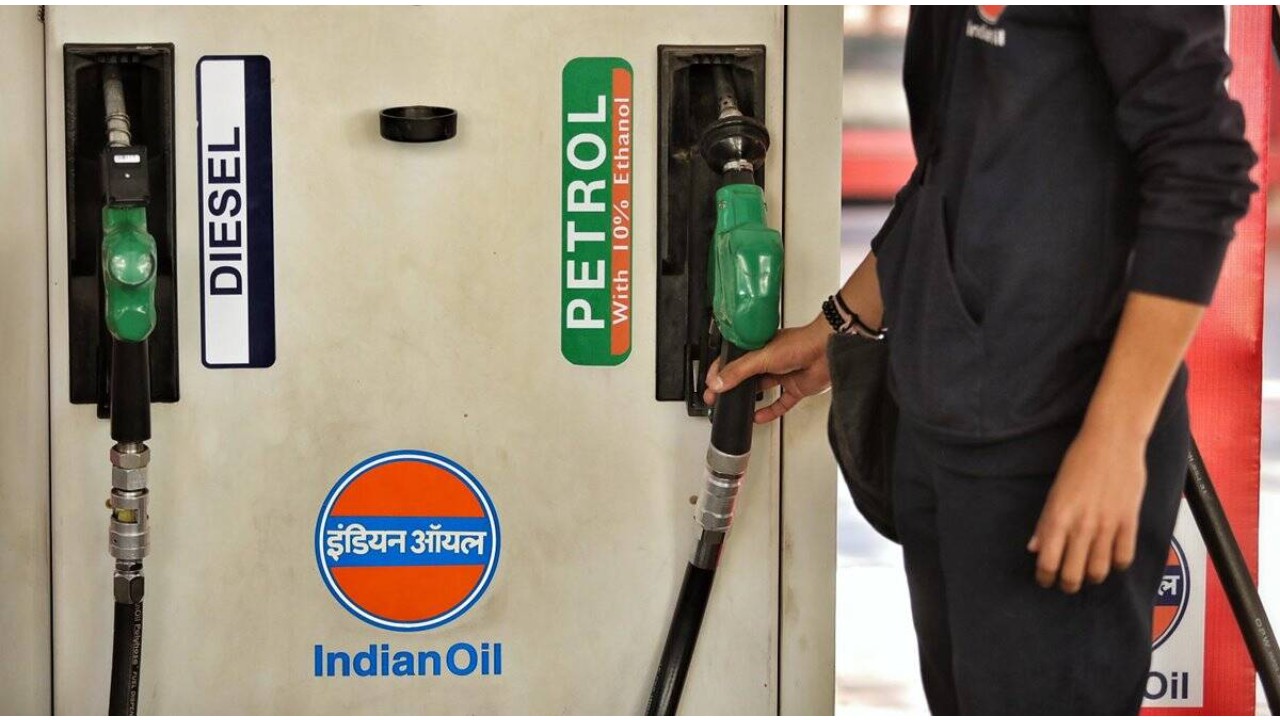
Puri said state-run oil marketing companies collectively incurred losses of Rs 74,781 crore up to June 30 after selling petrol, diesel and LPG below their actual cost during the period of high crude oil prices triggered by the West Asia conflict.

Despite the sharp rise in global crude prices, he said India kept domestic fuel price increases relatively limited compared to several other countries.

The minister noted that while petrol prices increased by nearly 20 per cent in many developed nations and around 35 per cent in neighbouring countries, the increase in India was restricted to about 5.58 per cent during the crisis period.

He also highlighted that fuel supplies remained uninterrupted across more than 1.07 lakh retail fuel outlets between late February and the end of June.

Nayara Energy cuts fuel prices

Private fuel retailer Nayara Energy reduced petrol prices by Rs 5 per litre and diesel prices by Rs 3 per litre across its retail network from July 1, becoming the first major retailer to announce a price cut after international crude prices eased.

However, Puri clarified that Nayara’s decision should not be viewed as a broader trend across the sector. He said the company had earlier raised petrol prices by Rs 5 per litre during the crude price surge and has now effectively rolled back that increase.

In contrast, state-run oil marketing companies had not increased retail fuel prices during the crisis, leaving them with little room for a similar rollback.

Why lower crude prices haven’t reached consumers yet

Global crude oil prices had crossed 110 US dollars per barrel during the Iran-related conflict, significantly increasing procurement costs for Indian refiners.

Prices started easing only in the second half of June after an agreement helped de-escalate the conflict. Since crude oil is generally purchased at least two months before it is refined into petrol and diesel, the fuel currently being supplied is based on earlier, more expensive purchases.

As a result, consumers may have to wait before any sustained decline in international crude oil prices is reflected at fuel stations.

India News

Rahul Gandhi, INDIA bloc MPs head to Gandhi Smriti in solidarity with students

Rahul Gandhi and INDIA bloc MPs headed to Gandhi Smriti in New Delhi to express support for students amid the NEET paper leak row, while Congress renewed its demand for the Education Minister’s resignation.

Published

on

Leader of the Opposition Rahul Gandhi on Thursday led Congress and INDIA bloc Members of Parliament to Gandhi Smriti in New Delhi, saying the visit was meant to express solidarity with students affected by the NEET paper leak controversy and those injured during recent protests.

The move came as the Opposition intensified its campaign over alleged irregularities in competitive examinations, with Congress continuing to demand accountability from the Centre.

Rahul Gandhi says Opposition stands with students

After attending a meeting at Rahul Gandhi’s residence, Congress and INDIA bloc leaders left for Gandhi Smriti on Tees January Marg. Security arrangements were tightened outside the residence, with barricades placed in the area before the leaders departed.

Visuals from the spot showed Congress MP Priyanka Gandhi Vadra and several Opposition lawmakers boarding buses for the visit.

In a statement shared on social media, Rahul Gandhi said the Opposition leaders were heading to Gandhi Smriti to remember students who had allegedly lost their lives following the NEET paper leak controversy and to support those injured while participating in protests demanding justice and accountability.

He also said that students across the country were not alone and that the INDIA bloc stood with them and their demands.

Congress continues demand for Education Minister’s resignation

The visit comes amid the Congress party’s continued demand for the resignation of Union Education Minister Dharmendra Pradhan over the handling of the alleged paper leak issue.

Two days earlier, Rahul Gandhi, Priyanka Gandhi Vadra and several Opposition leaders were detained while attempting to protest outside Prime Minister Narendra Modi’s residence over the matter.

The Opposition has maintained that greater accountability and reforms are needed to restore confidence in the examination system.

Continue Reading

India News

Supreme Court judges amendment Bill to come up in Lok Sabha as NEET issue intensifies in Parliament

The Lok Sabha will consider the Supreme Court (Number of Judges) Amendment Bill, 2026, while the Opposition demands discussions on the NEET paper leak, student protests and education reforms.

Published

on

The Monsoon Session of Parliament is set for another eventful day on Thursday as the Lok Sabha is scheduled to take up the Supreme Court (Number of Judges) Amendment Bill, 2026, while the Opposition presses for an immediate discussion on the NEET-UG 2026 paper leak and education reforms.

Union Law Minister Arjun Ram Meghwal is slated to move the Bill for consideration and passage. The proposed legislation seeks to amend the Supreme Court (Number of Judges) Act, 1956.

Lok Sabha to discuss Supreme Court judges amendment Bill

Alongside the Bill, the Lok Sabha will also consider a statutory resolution moved by Opposition MPs Sougata Ray, N.K. Premachandran, and Adv. Dean Kuriakose seeking to disapprove the Supreme Court (Number of Judges) Amendment Ordinance, which was promulgated by the President on May 16, 2026.

As per the revised List of Business, both the statutory resolution and the Amendment Bill will be discussed together.

Opposition seeks debate on NEET paper leak

Ahead of the day’s proceedings, Congress Rajya Sabha MP Randeep Surjewala submitted a notice under Rule 267 seeking suspension of the House’s scheduled business to discuss the NEET-UG 2026 paper leak, police action against protesting students and broader reforms in the country’s examination system.

In his notice, Surjewala said the issue warranted immediate discussion, citing the cancellation of NEET-UG 2026 following allegations of an organised paper leak network that affected over 22 lakh candidates. He also referred to repeated paper leaks in multiple recruitment examinations, alleging continuing systemic shortcomings despite legal safeguards.

Meanwhile, Congress MP K.C. Venugopal also sought a discussion in the Lok Sabha on the NEET paper leak and the reported crackdown on student protesters.

NDA MPs to stage protest

The political atmosphere is also expected to remain charged, with NDA MPs scheduled to hold a protest against the Congress at Parliament’s Makar Dwar before the proceedings begin.

The developments are likely to make the NEET controversy and judicial reforms two of the key issues dominating Parliament during the day’s session.

Continue Reading

India News

PM Modi announces fast-track courts for paper leak cases, says guilty won’t be spared

Prime Minister Narendra Modi announced fast-track courts for paper leak cases, promising swift punishment as the Opposition and CJP continued protests over alleged examination irregularities.

Published

on

PM Modi

Student welfare remains the government’s top priority, Prime Minister Narendra Modi said on Thursday as he announced the creation of fast-track courts to handle paper leak cases. The announcement comes amid ongoing protests over alleged examination irregularities and political confrontation over the issue.

PM announces fast-track courts for paper leak cases

In a post on X, Prime Minister Modi said nothing is more important than the welfare and future of the country’s youth. He announced that the government has decided to establish fast-track courts to ensure swift trials and stringent punishment for those involved in paper leak cases.

The Prime Minister said he has directed the concerned authorities and officials to take all necessary steps to implement the decision. According to him, the move is part of a broader series of measures taken by the government to safeguard students’ interests and bring those responsible for paper leaks to justice.

He also asserted that anyone attempting to harm the future of young people would not be spared.

Rahul Gandhi responds, reiterates Opposition’s demands

Soon after the Prime Minister’s announcement, Leader of Opposition Rahul Gandhi criticised the government, alleging that it had failed to protect the country’s education system.

In a post on X, Rahul Gandhi claimed the government had allowed the education system to deteriorate and protected those responsible. He also repeated the Opposition’s demands, including the resignation of Education Minister Dharmendra Pradhan, an apology to students and action against those accused of assaulting protesters.

Earlier on Wednesday, Rahul Gandhi had alleged that there had been more than 150 paper leaks in the past 10 years and claimed there had not been a single conviction in such cases.

Protests continue over paper leak issue

The Prime Minister’s announcement came as protests by the Cockroach Janta Party (CJP) and Opposition parties continued in Delhi over alleged examination irregularities.

Reacting to the announcement, CJP reiterated its demand that Education Minister Dharmendra Pradhan resign.

Earlier this week, Prime Minister Modi had also described paper leaks as a “ghor paap” (grave sin) during the NDA meeting.

Meanwhile, the Opposition has continued to seek a statement from the Prime Minister in Parliament on the paper leak issue and the police action against protesting students. It has also maintained its demand for the Education Minister’s resignation before any discussion takes place in Parliament.

The government, however, has said it is prepared for a debate on the issue and has accused the Opposition of preventing the discussion by insisting on the minister’s resignation as a precondition.

Continue Reading

Trending

© Copyright 2022 APNLIVE.com