English हिन्दी
Connect with us

India News

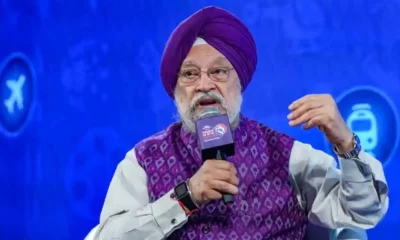
Hardeep Singh Puri dismisses E20 fuel controversy, says carmakers are comfortable with ethanol blend

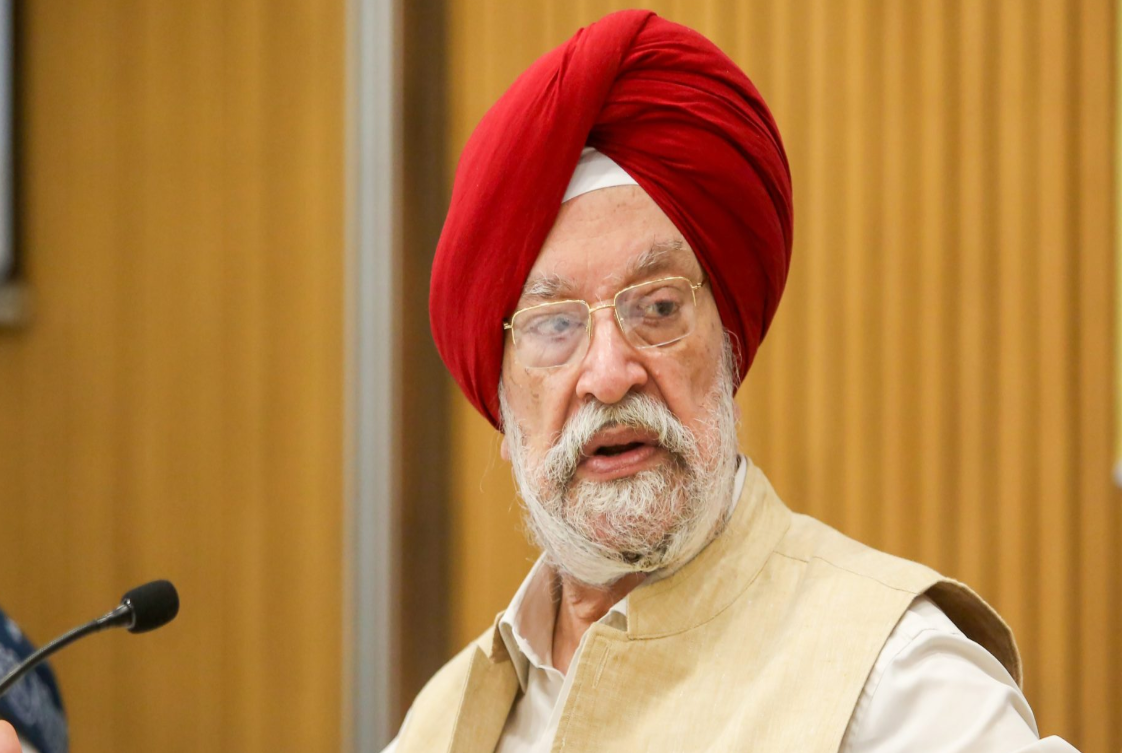
Union Minister Hardeep Singh Puri has rejected concerns over E20 petrol, saying the controversy is based on misreporting and that automobile manufacturers have found no problems with the ethanol-blended fuel, which has been in use across India for over a year.

Published

on

Hardeep singh puri

Union Petroleum and Natural Gas Minister Hardeep Singh Puri has rejected concerns surrounding the government’s E20 petrol programme, describing the controversy as a result of “misreporting and misinterpretation”. The minister said automobile manufacturers have not raised concerns over the use of E20 fuel and questioned why the issue has resurfaced after the blended fuel has already been in use across the country for more than a year.

The government has been expanding ethanol blending in petrol as part of its broader strategy to reduce dependence on imported crude oil, lower carbon emissions and support India’s agricultural sector. E20 petrol contains 20 per cent ethanol and has been rolled out after compatibility assessments involving vehicle manufacturers and research institutions.

Puri rejects claims over E20 fuel

Responding to criticism circulating on social media, Puri said there is no evidence to support claims that E20 petrol damages vehicle engines or creates operational problems. He noted that millions of vehicles are already running on the fuel without widespread issues being reported.

According to the minister, nearly 20 crore two-wheelers and around 20 lakh four-wheelers are using E20 fuel. He added that vehicle manufacturers as well as service professionals have consistently indicated that they have not experienced any significant difficulties with the ethanol blend.

Questioning the timing of the debate, Puri said the fuel has already been available for a considerable period, making the sudden wave of criticism difficult to understand.

Government says E20 has been in use for over a year

The minister highlighted that India had already been using E15 fuel for more than three years before transitioning to E20. He said E20 petrol has been available nationwide since April 2025, meaning it has already completed more than a year of public use.

Puri also clarified that while discussions around higher ethanol blends such as E25 continue, the government has not announced any immediate rollout. He said testing is currently underway, and any future decision will be based on scientific evaluation and consultations with stakeholders, including automobile manufacturers.

Government says future ethanol blends will undergo testing

Addressing speculation about higher ethanol blends, Puri said the government is taking a cautious approach before introducing E25 petrol. He stressed that ongoing tests will be completed first, after which the findings will be reviewed before any policy decision is taken.

The minister said discussions with automobile manufacturers and other stakeholders would be an important part of the process before moving ahead with any higher ethanol blend.

“I neither make the cars nor the fuel. The car manufacturers are comfortable with the E20 fuel. Each one of them has made a statement,” Puri said, reiterating that vehicle makers have already expressed confidence in the current fuel blend.

He also noted that the rollout of E85 fuel would take additional time as it would require supporting infrastructure, including suitable fuel dispensing facilities at petrol pumps.

Government continues to promote ethanol blending

The Centre has identified ethanol blending as a key component of its energy transition strategy. Besides reducing India’s dependence on imported crude oil, the programme is intended to cut vehicular emissions and create additional demand for agricultural produce used in ethanol production.

The government has gradually increased ethanol blending targets over the past few years while working with automobile manufacturers and research agencies to ensure vehicle compatibility with higher ethanol blends.

Puri had earlier stated that the government welcomes constructive criticism of its policies but would not accept what he described as rumours regarding biofuel blending. His latest remarks come amid renewed social media discussions claiming that E20 fuel reduces vehicle mileage or causes engine-related issues.

Reiterating the government’s position, the minister said existing data and feedback from manufacturers do not indicate widespread problems with E20 petrol, adding that any future decisions on higher ethanol blends would continue to be based on testing, scientific assessment and stakeholder consultations.

India News

Delhi Police arrest 2 Lucknow University law students for disrupting Supreme Court proceedings

Published

on

By

The Delhi Police on Tuesday arrested Lucknow University law students Prabal Pratap Singh and Chandrabhan for disrupting proceedings inside the Supreme Court. The incident took place on July 10 in Courtroom No. 13 during a hearing before the bench of Justice K.V. Viswanathan and Justice Alok Aradhe.

Police said Prabal Pratap Singh, a third-year LLB student from Etawah, Uttar Pradesh, interrupted the court proceedings by shouting slogans, using abusive language against Chief Justice of India Justice Surya Kant, throwing court papers into the air, and creating chaos inside the courtroom. His associate, Chandrabhan, allegedly supported the disruption.

Security personnel in the Supreme Court overpowered the two and removed them from the courtroom, allowing the hearing to resume. The Court had magnanimously let them go without punishing them, CJI Surya Kant had also dismissed any action against the two law students saying they were like children.

Police said the accused had approached the Supreme Court in connection with a legal dispute after challenging an order of the Allahabad High Court. Investigators believe the disruption was linked to dissatisfaction with the progress of the case, although the exact motive is still being examined.

Following the incident, the Tilak Marg Police Station registered an FIR under relevant sections of the Bharatiya Nyaya Sanhita (BNS), including charges of obstructing public servants from performing their duties, disturbing judicial proceedings, and acting with common intention. After their arrest, both accused were produced before a Delhi court, which remanded them to two days of police custody for questioning.

The incident has raised fresh concerns over security inside the country’s highest court. Although the Supreme Court has strict entry procedures and multiple security checks, the disruption has prompted authorities to review existing security arrangements to prevent similar incidents in the future.

Police are now analyzing CCTV footage, questioning the accused, and investigating whether anyone else was involved or if the act was planned in advance. Further legal action will depend on the findings of the investigation.

Continue Reading

India News

Congress invites Mamata Banerjee to July 21 event, asks her to admit leaving party was a mistake

The West Bengal Congress has invited Mamata Banerjee to its July 21 programme, asking her to publicly acknowledge that leaving the Congress was a political mistake while paying tribute to the 1993 martyrs.

Published

on

Mamata Banerjee

The West Bengal Congress has invited Trinamool Congress (TMC) chief Mamata Banerjee to its July 21 programme in Kolkata, saying she should publicly acknowledge that quitting the Congress nearly three decades ago was a political mistake.

The invitation came from West Bengal Congress president Subhankar Sarkar, who addressed reporters after reviewing preparations for the party’s ‘Martyrs’ Day’ programme at Shahid Minar.

Congress asks Mamata to acknowledge 1993 movement

Sarkar said Banerjee should recognise the historical importance of the July 21, 1993 movement instead of trying to alter its legacy.

According to him, the movement was organised under the banner of the Youth Congress, making it an integral part of the Congress’ political history.

He said political leaders who respect their own political journey earn greater public respect and urged Banerjee to pay tribute to the martyrs at the Congress programme.

‘Leaving Congress was a mistake’

Sarkar said Banerjee’s participation in the event would carry greater significance if she publicly admitted that leaving the Congress was the wrong political decision.

He described such a move as an act of political atonement and said the Congress stage remains open for anyone wishing to pay homage to those who died during the July 21, 1993 movement.

July 21 remains politically significant in West Bengal

The July 21, 1993 protest, led by Mamata Banerjee during her time in the Youth Congress, ended in police firing in which 13 people allegedly lost their lives.

After leaving the Congress in December 1997 to form the Trinamool Congress, Banerjee continued observing July 21 every year through large public rallies that gradually became a major display of the party’s organisational strength. The Congress, meanwhile, continued marking the day with comparatively smaller programmes.

Multiple events planned this year

The political landscape has changed following the TMC’s loss of power in the West Bengal Assembly elections, with the party also facing internal rebellion.

A rebel TMC faction led by Ritabrata Banerjee has announced a separate observance near the Mahatma Gandhi statue in Esplanade. Meanwhile, police have denied permission to another group loyal to the former chief minister to hold its programme at its traditional venue in front of Victoria House. The matter is currently pending before the court.

Continue Reading

India News

Delhi-Meerut Namo Bharat corridor set to extend till Haridwar and Rishikesh

The proposed 150-km Meerut-Haridwar-Rishikesh Namo Bharat corridor has received in-principle approval, with DPR survey work underway to expand rapid rail connectivity between Delhi-NCR, western Uttar Pradesh and Uttarakhand.

Published

on

The proposed expansion of the Namo Bharat rapid rail network is set to strengthen connectivity between Delhi-NCR and Uttarakhand, with plans to extend the Delhi-Meerut corridor to Haridwar and Rishikesh.

The upcoming Meerut-Haridwar-Rishikesh Regional Rapid Transit System (RRTS) corridor has received in-principle approval, and work on the Detailed Project Report (DPR) survey is currently underway.

The proposal was approved during a meeting attended by Uttarakhand Chief Minister Pushkar Singh Dhami and Union Housing and Urban Affairs Minister Manohar Lal Khattar.

The National Capital Region Transport Corporation (NCRTC), along with the governments of Uttar Pradesh and Uttarakhand, will jointly work on extending the existing Delhi-Meerut Namo Bharat corridor.

Proposed route to cover around 150 km

The proposed rapid rail extension will be around 150 kilometres long and will begin from Modipuram, the last station of the Delhi-Meerut Namo Bharat corridor.

Of the total distance, approximately 72 kilometres will be in Uttar Pradesh, passing through Meerut and Muzaffarnagar, while the remaining 78 kilometres in Uttarakhand will cover Roorkee, Haridwar and Rishikesh.

According to the proposed alignment, the train will run through Modipuram, Daurala, Khaatauli, Muzaffarnagar, Purkazi and Roorkee before reaching Har Ki Pauri in Haridwar and terminating near Lakshman Jhula in Rishikesh.

To facilitate project implementation, the Uttarakhand government has appointed Additional Secretary Reena Joshi as the nodal officer. NCRTC and the Uttar Pradesh government have also designated coordination officers to expedite land acquisition and route survey work.

Direct link with Delhi-Meerut Namo Bharat corridor

The proposed corridor will connect with the existing 82.15-km Delhi-Ghaziabad-Meerut Namo Bharat corridor through Modipuram station.

Once operational, commuters will get direct connectivity to stations including Sahibabad, Duhai, Guldhar, Anand Vihar and Sarai Kale Khan via the existing rapid rail network. The project is also expected to improve access for passengers travelling from Noida and Ghaziabad to Rishikesh.

Better interchange with upcoming rapid rail corridors

The expansion will also integrate with other planned Namo Bharat corridors across the National Capital Region.

Sarai Kale Khan will serve as the principal interchange hub for the proposed Delhi-Gurugram-Shahjahanpur-Neemrana-Alwar corridor, allowing passengers travelling from Haridwar and Rishikesh to reach destinations such as Gurugram, Neemrana and Alwar through the rapid rail network.

Passengers travelling towards Haryana will also benefit from interchanges with the proposed Delhi-Sonipat-Panipat corridor at Sarai Kale Khan or Hazrat Nizamuddin.

In addition, the planned Ghaziabad-Noida International Airport corridor will enable travellers from Haridwar, Rishikesh and Muzaffarnagar to access Noida International Airport in Jewar through the Ghaziabad interchange.

Metro and rail connectivity to improve

Passengers using the Namo Bharat service will continue to have access to the Delhi Metro’s Blue and Pink Lines from Anand Vihar, along with connectivity to Anand Vihar Railway Terminal and the Inter-State Bus Terminal (ISBT).

The Pink Line also provides direct access to Hazrat Nizamuddin Railway Station and the ISBT.

With the proposed expansion, the Namo Bharat network is expected to enhance regional connectivity by linking religious destinations such as Haridwar and Rishikesh with Delhi, the National Capital Region and the upcoming Noida International Airport.

Continue Reading

Trending

© Copyright 2022 APNLIVE.com