English हिन्दी
Connect with us

India News

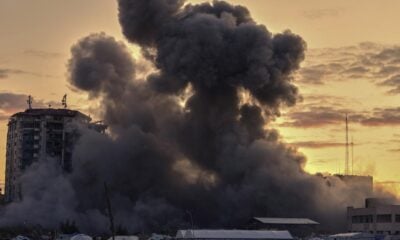
Gaza ceasefire begins after Hamas shares 1st list of hostages to be freed

The Israeli government, under Prime Minister Benjamin Netanyahu, insisted on receiving the complete list of 33 hostages before committing to the ceasefire, emphasizing its unwavering resolve to secure the release of all its citizens.

Published

on

A fragile ceasefire has descended upon the war-torn Gaza Strip, marking a tentative pause in the protracted conflict between Israel and Hamas. The truce, brokered by Qatar and effective as of 9:15 GMT (11:15 local time) on January 19, represents a significant, albeit temporary, de-escalation in a conflict that has claimed the lives of thousands and left a trail of devastation in its wake. The agreement’s precarious nature is underscored by the fact that its implementation directly depends on the release of Israeli hostages held by Hamas.

The initial phase of the ceasefire, designed to last for 42 days, is contingent upon Hamas fulfilling its commitment to release a first tranche of 33 Israeli hostages from the approximately 98 still held captive.

To initiate this crucial first step, Hamas publicly released the names of three female hostages: Romi Gonen, Emily Damari, and Doron Steinbrecher. This symbolic gesture served as a crucial catalyst, paving the way for the cessation of hostilities. However, the delay in the ceasefire’s implementation, initially scheduled for 8:30 AM local time, highlighted the deep-seated mistrust and the complexities inherent in negotiating a lasting peace.

The Israeli government, under Prime Minister Benjamin Netanyahu, insisted on receiving the complete list of 33 hostages before committing to the ceasefire, emphasizing its unwavering resolve to secure the release of all its citizens.
The exchange of hostages is not a one-sided affair. In return for the release of the Israeli captives, Israel has pledged to release approximately 2,000 Palestinian prisoners currently incarcerated in Israeli prisons. This reciprocal element underscores the delicate balance involved in brokering a ceasefire and the intricate negotiations required to achieve a mutually acceptable agreement.

The release of these Palestinian prisoners represents a substantial concession on Israel’s part, reflecting the high stakes and the complex political calculations involved in ending the prolonged hostilities.

The ceasefire’s fragility is underscored by the ongoing uncertainty surrounding its longevity and the prospects for a more sustainable peace. The 42-day timeframe represents only the first phase, with discussions planned for a second phase to commence in two weeks.

This limited timeframe highlights the tentative nature of the agreement and leaves open the possibility of renewed conflict should the negotiations for a second phase falter. The limited scope of the truce emphasizes the deep-seated challenges and the long road ahead toward achieving a durable peace in the region.

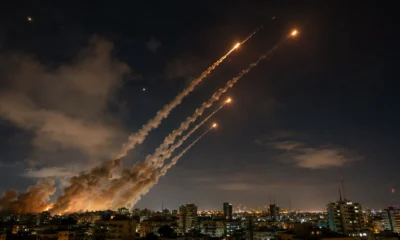
Even with the ceasefire in effect, the shadow of violence continues to loom large. Despite the official commencement of the truce, reports indicate that Israeli airstrikes persisted until the complete list of hostages was provided, illustrating the tension and the unresolved issues that continue to threaten the fragile agreement. This underscores the deep-seated mistrust between the two sides and the difficulty in transitioning from a state of active conflict to a period of sustained peace.

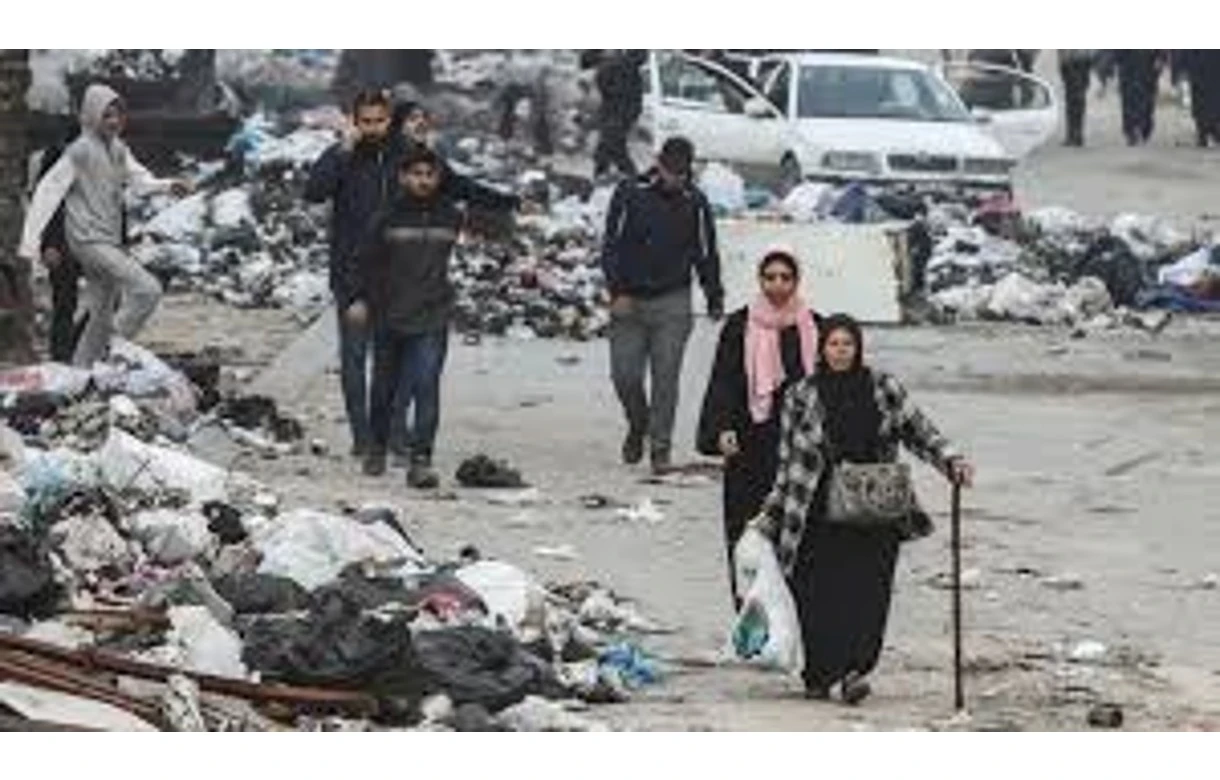
The conflict, which began with the October 7, 2023, Hamas attack that resulted in the deaths of approximately 1,200 Israelis and the capture of hundreds, has unleashed a cascade of violence that has left an indelible mark on the region. The subsequent Israeli offensive has resulted in the deaths of more than 46,000 Palestinians, according to local health officials.

These staggering casualty figures serve as a stark reminder of the devastating human cost of this protracted conflict and the urgent need for a lasting solution. The path to peace remains arduous and fraught with obstacles, but the current ceasefire offers a glimmer of hope, albeit a fragile one, amidst the ruins of war.

Education

NEET UG 2026 scam allegation: Brokers accused of offering government medical seats through OMR sheet manipulation

A fresh complaint has alleged that brokers promised government medical college admissions by manipulating NEET UG 2026 OMR sheets in exchange for large payments.

Published

on

NEET Exam

The controversy surrounding NEET UG 2026 has taken a new turn after allegations surfaced that a group of brokers was offering admission to government medical colleges by manipulating candidates’ OMR answer sheets for a hefty payment. The claims come at a time when the medical entrance examination is already under intense scrutiny following the paper leak row and the subsequent decision to conduct a re-examination.

According to reports, a candidate from Gujarat approached authorities after allegedly being contacted by intermediaries who claimed they could secure enough marks for admission to a government medical college by tampering with OMR sheets. The alleged demand was around Rs. 20 lakh per candidate.

Alleged racket avoided promises of top ranks

The complainant claimed that the brokers did not offer unrealistically high scores or top ranks. Instead, they allegedly promised to increase marks only to the extent required for securing admission to a government medical college, a strategy reportedly designed to avoid raising suspicion during scrutiny.

The matter has reportedly been brought to the attention of the Gujarat Cyber Crime Cell through a written complaint, prompting calls for a detailed investigation into the claims.

OMR manipulation concerns have surfaced before

The allegations have renewed concerns about the security of OMR-based examinations. In recent years, courts and investigating agencies have examined multiple cases involving alleged OMR manipulation linked to medical entrance examinations. The Gujarat High Court recently observed that allegations in a NEET-UG 2024 OMR manipulation case warranted a full trial after investigators claimed students’ answer sheets were altered to inflate scores.

Authorities have also previously received complaints from candidates alleging discrepancies in uploaded OMR sheets, though such claims have been disputed by examination authorities in several instances.

NEET UG 2026 already facing scrutiny

The latest allegations come against the backdrop of the wider NEET UG 2026 controversy. The examination conducted on May 3 was cancelled following allegations of a paper leak, and a fresh examination has been scheduled for June 21. Multiple investigations are underway, while courts and parliamentary bodies are also examining issues related to the conduct of the exam.

Authorities have not publicly confirmed the OMR manipulation allegations, and investigations are expected to determine whether any such network was actually capable of influencing examination outcomes.

Continue Reading

India News

Centre prepares fresh delimitation push, may bring new bill before 2029 Lok Sabha elections

The Centre has initiated consultations with regional parties as it explores a fresh delimitation bill and constituency redraw ahead of the 2029 Lok Sabha elections.

Published

on

Delimitation Bill

The Centre has begun efforts to build political consensus for a renewed delimitation exercise, with the possibility of introducing a fresh bill and completing the process before the 2029 Lok Sabha elections, according to government sources. The move could lead to the first major redrawing of parliamentary constituencies in decades and revive a debate that has remained politically sensitive across several states.

Sources indicated that the government has started discussions with a range of political stakeholders, including regional parties, before taking any legislative steps. Among those reportedly consulted are the Dravida Munnetra Kazhagam and the All India Trinamool Congress, while talks are said to be continuing with other regional formations as well.

Why delimitation is significant

Delimitation refers to the process of redrawing the boundaries of parliamentary and assembly constituencies to reflect changes in population. The current allocation of Lok Sabha seats among states is based on population figures from the 1971 Census, as seat redistribution has remained frozen for decades.

The issue has become increasingly contentious because several southern states have expressed concerns that population-based redistribution could reduce their relative influence in Parliament despite their success in controlling population growth. The Centre has acknowledged these concerns while continuing discussions on possible approaches.

Political debate likely to intensify

The subject of delimitation has already triggered sharp political debate this year. Earlier proposals linked to delimitation and women’s reservation faced opposition from several parties, particularly over questions surrounding representation and the use of census data.

Government representatives have maintained that any future delimitation exercise would not reduce the representation of southern states and have argued that an increase in the overall number of Lok Sabha seats could preserve the existing balance among states while expanding representation.

For now, consultations are continuing, and no final decision on the proposed legislation has been announced. However, the Centre’s latest outreach indicates that delimitation is likely to remain a key political and constitutional issue in the run-up to the 2029 Lok Sabha elections.

Continue Reading

India News

Southwest monsoon reaches Kerala, marking start of India’s rainy season

The IMD has confirmed the onset of the southwest monsoon over Kerala, officially marking the start of India’s four-month rainy season and paving the way for further advance across southern India.

Published

on

The India Meteorological Department (IMD) on Thursday confirmed the onset of the southwest monsoon over Kerala, officially marking the beginning of the country’s annual four-month rainy season.

The monsoon arrived on June 4, around three days later than its normal onset date of June 1. Weather officials said the seasonal rains have covered Kerala and extended into parts of Tamil Nadu, bringing widespread rainfall to several areas.

According to the IMD, conditions remain favourable for the monsoon to advance further into additional parts of southern India over the next few days. The progression of the monsoon is closely watched as it plays a critical role in supporting agriculture, replenishing reservoirs and meeting the country’s water requirements.

Heavy rainfall forecast for Kerala

Several districts in Kerala are expected to receive heavy rainfall as the monsoon strengthens over the region. Weather authorities have issued alerts in parts of the state and advised residents to remain cautious in areas vulnerable to waterlogging and localised flooding.

The arrival of the southwest monsoon is considered one of the most important weather events in India, as it delivers nearly 70 per cent of the country’s annual rainfall. A large section of the agricultural sector depends on timely and adequate monsoon rains for crop cultivation.

Monsoon advance to be monitored closely

While the monsoon has made its official entry into the country through Kerala, meteorologists will continue monitoring its pace and distribution across different regions in the coming weeks.

The IMD has indicated that the monsoon is expected to advance gradually across the Indian mainland, bringing rainfall to more states as the season progresses.

Continue Reading

Trending

© Copyright 2022 APNLIVE.com