English हिन्दी
Connect with us

India News

PM Modi says Genome India Project an important milestone in Biotechnology revolution

He noted that the project, which received approval five years ago, was successfully completed thanks to the relentless efforts of our scientists, who overcame obstacles posed by the Covid pandemic.

Published

on

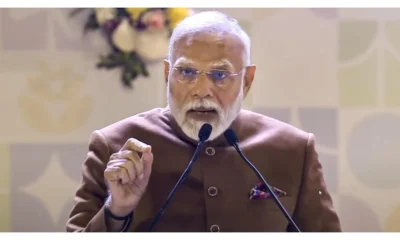
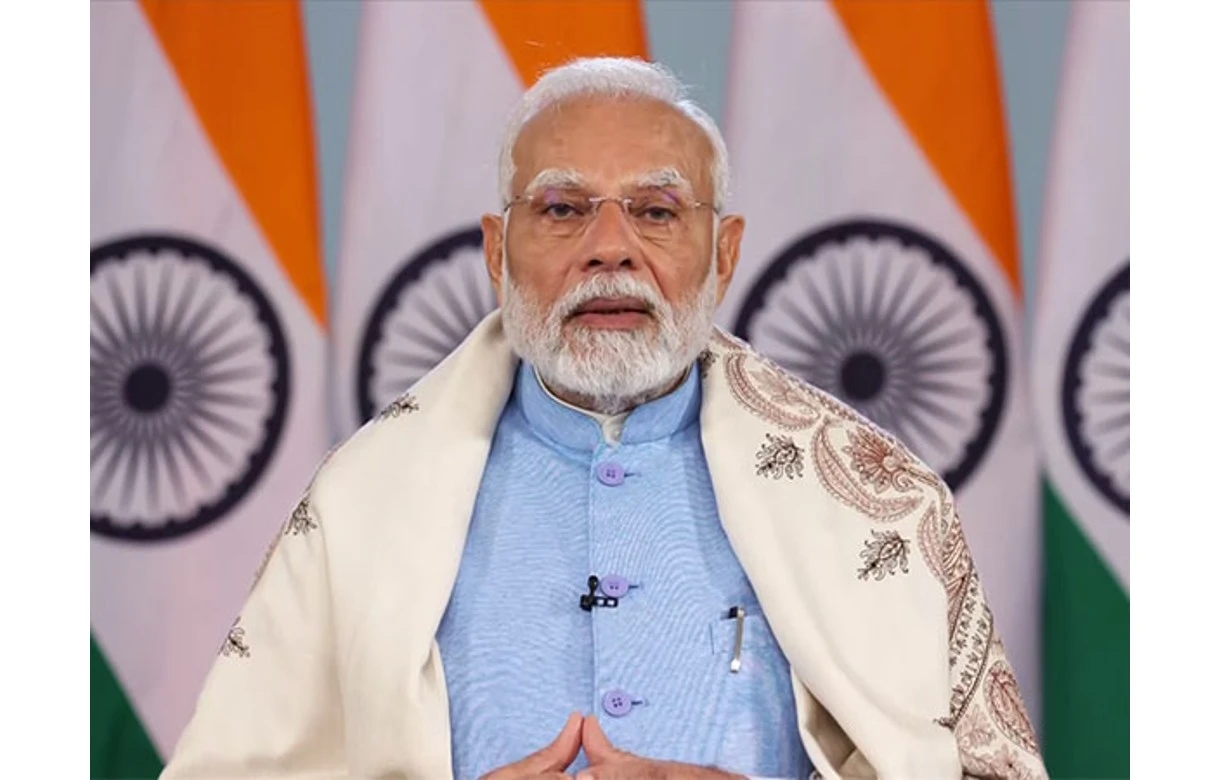
Prime Minister Narendra Modi hailed the completion of the Genome India Project (GIP) on Thursday, describing it as a pivotal moment in the nation’s biotechnology arena.

He noted that the project, which received approval five years ago, was successfully completed thanks to the relentless efforts of our scientists, who overcame obstacles posed by the Covid pandemic.
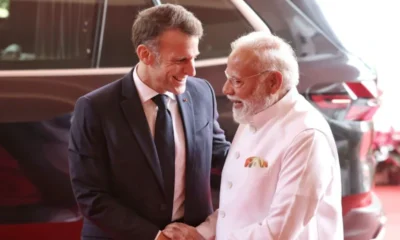
During his address, Modi highlighted the contributions of over 20 esteemed research institutions, including IISc, IITs, CSIR, and DBT-BRIC, that played key roles in this research initiative.

He announced that the genomic sequences of 10,000 Indians are now housed at the Indian Biological Data Center, expressing confidence that this project will become a hallmark in biotechnology research. He extended his congratulations to all stakeholders involved.

“The Genome India Project is a significant milestone in the biotechnology revolution,” Modi declared. He emphasized the project’s success in creating a diverse genetic resource by sequencing genomes from 10,000 individuals representing various populations across the country. This data will be accessible to scientists and researchers, offering insights into India’s genetic landscape and greatly assisting in national policy-making and planning.

Addressing experts and scientists, the Prime Minister acknowledged India’s vast diversity—not only in food, language, and geography but also in the genetic composition of its people. He stressed the importance of understanding genetic identities to devise effective treatments, noting that the nature of diseases can vary significantly.

He specifically pointed out the challenge of sickle cell anemia among tribal communities and the national effort to address it. Modi mentioned that understanding regional variations in genetic disorders necessitates a comprehensive genetic study to recognize the unique genomic patterns within India’s population.

He asserted that this knowledge would enable the development of targeted solutions and effective medications for specific groups, emphasizing that sickle cell anemia is just one example of a broader issue.

He also highlighted the lack of awareness in India regarding many hereditary genetic diseases, stating that the Genome India Project would facilitate the development of effective treatments for such conditions.

In discussing the future, Modi stated, “The integration of biotechnology and biomass in the 21st century is foundational for establishing a developed India as a Bio Economy.” He outlined the goals of the Bio Economy, which include the optimal utilization of natural resources, promotion of bio-based products and services, and the creation of new employment opportunities in this sector. He pointed out that the Bio Economy fosters sustainable development and innovation.

The Prime Minister noted that India’s Bio Economy has seen rapid growth over the past decade, expanding from 10 billions in 2014 to 150 billion today. He emphasized the nation’s ambition to elevate its Bio Economy further and mentioned the recent launch of the Bio E3 Policy.

He articulated that this policy would help India emerge as a leader in the global biotech landscape, akin to the IT revolution, acknowledging the vital role of scientists in this mission and extending his best wishes to them.

India News

Over 24 lakh voters dropped from Kerala draft electoral roll after special revision

The Election Commission has removed over 24 lakh names from Kerala’s draft voter lists after verification during the Special Intensive Revision process.

Published

on

kerala voters delete

Over 24.08 lakh electors have been removed from the draft voter lists in Kerala following the completion of the Special Intensive Revision (SIR) exercise, with the Election Commission publishing the updated draft electoral roll on Tuesday.

As per official data, Kerala has a total of 2,78,50,855 registered electors. Of these, 2,54,42,352 electors submitted their Enumeration Forms during the revision process, which concluded on December 18.

The poll body said the deletions were carried out after verification and were linked to multiple factors, including electors shifting to other states or Union Territories, voters found to be non-existent, individuals who did not submit enumeration forms within the stipulated time, and those who chose not to continue their registration.

Break-up of deleted names

According to the Election Commission, the deleted entries include 6,49,885 names of deceased voters, accounting for 2.33 per cent of the electorate. Another 14,61,769 voters, or 5.25 per cent, were removed after being found shifted or absent, while 1,36,029 voters, around 0.49 per cent, were deleted for being enrolled at multiple locations.

Claims and objections window open

Although the enumeration phase has ended, eligible citizens can still seek corrections. The Commission has opened a claims and objections period from December 23 to January 22, 2026, allowing applications for inclusion of eligible voters or removal of ineligible names from the rolls.

The final electoral roll for Kerala is scheduled to be published on February 21, 2026.

Awareness drives and field-level efforts

The Election Commission said extensive awareness campaigns were conducted across the state to ensure maximum participation. Senior election officials held regular meetings with political parties at the state, district and assembly constituency levels to explain the revision process and share progress updates.

Booth Level Officers (BLOs) carried out house-to-house visits to all electors listed as of October 27, distributing Enumeration Forms and making at least three follow-up visits for collection. Booth Level Agents were permitted to submit up to 50 forms per day to strengthen coordination at the grassroots level.

To support field staff, BLOs were assisted by Anganwadi workers, students from NCC, NSS and election literacy clubs, volunteers, revenue officials and social work students. The poll body said more than 93 per cent mapping of collected forms was achieved through repeated training sessions, video tutorials and doubt-clearing programmes.

Special initiatives during SIR

During the exercise, the Chief Electoral Officer of Kerala launched motivational and outreach initiatives aimed at supporting election staff managing the heavy workload of digitising voter data. District-level programmes were also rolled out to recognise and motivate BLOs and supervisors completing digitisation targets.

In areas with weak network connectivity, a community-based digitisation model was adopted, where BLOs collectively digitised forms from locations with better internet access. Special urban camps were organised across all wards of urban local bodies to ensure comprehensive coverage of city voters.

Continue Reading

India News

India’s LVM3 Baahubali rocket launches heaviest satellite ever from Indian soil

India’s LVM3 ‘Baahubali’ rocket has successfully launched the heaviest satellite ever from Indian soil, placing the BlueBird 6 communication satellite into low Earth orbit.

Published

on

Bahubali Rocket

India has marked a major milestone in its space programme as the Launch Vehicle Mark-3 (LVM3), popularly known as the ‘Baahubali’ rocket, successfully placed the heaviest-ever satellite launched from Indian soil into orbit on Wednesday.

The mission, LVM3-M6, lifted off from the second launch pad at the Sriharikota spaceport in Andhra Pradesh, carrying BlueBird 6, a next-generation communication satellite developed by US-based company AST SpaceMobile.

Mission lifts off from Sriharikota

The 43.5-metre-tall LVM3 rocket, powered by two S200 solid strap-on boosters, took off at 8:55 am after the completion of a 24-hour countdown. The spaceport is located around 135 km east of Chennai.

After a flight lasting nearly 15 minutes, the BlueBird Block-2 satellite separated from the launch vehicle and was injected into its intended low Earth orbit at an altitude of about 520 km.

Confirming the success of the mission, ISRO Chairman and Secretary, Department of Space, Dr V Narayanan said the satellite had been placed “successfully and precisely” into the designated orbit.

Heaviest payload carried by an Indian launcher

According to ISRO, this mission marks the heaviest satellite ever launched from Indian soil using an Indian rocket. Dr Narayanan said the flight was also the third fully commercial mission of the LVM3.

He added that the mission demonstrated the strong performance record of the heavy-lift vehicle and highlighted its reliability in the global launch market.

Focus on space-based mobile broadband

BlueBird 6 is part of the BlueBird Block-2 series of communication satellites. These satellites are designed to provide space-based cellular broadband connectivity directly to standard mobile smartphones, without the need for any special hardware or equipment.

The aim of the technology is to enable broadband services straight from space, expanding connectivity to regions with limited or no terrestrial network coverage.

PM Modi calls launch a proud milestone

Prime Minister Narendra Modi congratulated the teams involved and described the launch as a significant achievement for India’s space sector.

In a statement, the Prime Minister said the successful placement of the US satellite into orbit strengthens India’s heavy-lift launch capability and reinforces the country’s growing role in the global commercial launch market.

Continue Reading

India News

BJP raises seat offer to Eknath Shinde’s Shiv Sena to nearly 90 ahead of Mumbai civic polls, talks continue

The BJP has raised its seat offer to Eknath Shinde’s Shiv Sena to nearly 90 for the upcoming BMC elections, but fresh talks are needed as differences persist within the Mahayuti.

Published

on

With the Brihanmumbai Municipal Corporation (BMC) elections drawing closer, the seat-sharing tussle within the Mahayuti alliance continues, with the BJP increasing its offer to Eknath Shinde-led Shiv Sena but failing to reach the party’s expectations.

According to sources, the BJP has now proposed close to 90 seats for the Shinde faction in the upcoming Mumbai civic polls. This is a significant jump from its earlier offer of 52 seats but still falls short of what Shinde is seeking. The Shiv Sena leader has reportedly reduced his demand from an initial 125 seats to 112, yet remains dissatisfied with the latest formula.

Chief Minister Devendra Fadnavis is expected to hold another round of discussions with Shinde to break the deadlock. Sources indicate that the BJP is unlikely to stretch its offer much further, especially after its strong showing in recent statewide local body elections.

BJP firm after strong local poll performance

The BJP has emerged as the single largest party in the recent local polls, securing 117 municipal president posts. In comparison, the Shinde-led Shiv Sena won 53 posts, while Ajit Pawar’s faction of the NCP secured 37. These results have strengthened the BJP’s negotiating position ahead of the BMC elections.

However, the current seat-sharing calculations could change if Ajit Pawar decides to contest the Mumbai civic polls as part of the alliance. Senior NCP leader Sunil Tatkare confirmed that no final decision has been taken yet, noting that discussions with alliance partners are ongoing.

Nawab Malik factor complicates alliance talks

A major point of contention within the Mahayuti is the issue of senior NCP leader Nawab Malik, who is facing multiple corruption cases, including a money laundering case linked to underworld activities. While the alliance has made it clear that Malik is unacceptable as part of its Mumbai setup, Ajit Pawar is reportedly firm on backing him.

Mumbai BJP chief Ameet Satam has publicly stated that the party would not align with any group that includes Malik. Sources added that if the NCP joins the alliance in Mumbai, it may be asked to project a different leader and contest a limited number of seats.

BMC elections timeline

The countdown to the Brihanmumbai Municipal Corporation elections has already begun, with less than a month left for polling. Voting is scheduled for January 15, with counting set to take place the following day. A total of 2,869 municipal seats will be contested, including 227 seats in the BMC.

Continue Reading

Trending

© Copyright 2022 APNLIVE.com