India News
Gujarat polls ahead: Modi, BJP go all out to appropriate Sardar Patel

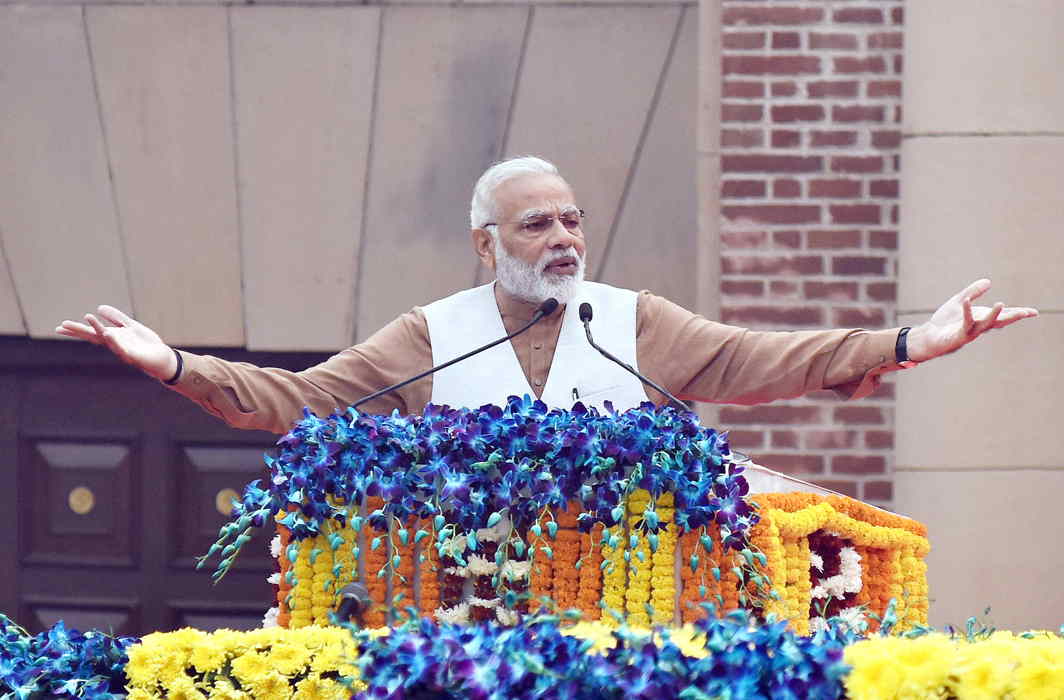
[vc_row][vc_column][vc_column_text]To commemorate 142nd birth anniversary of Vallabhbhai Patel, Prime Minister flags of Run for Unity and claims earlier governments attempted to erase Patel’s legacy
As the country remembered India’s first home minister and deputy prime minister Sardar Vallabhbhai Patel on his 142nd birth anniversary, Prime Minister Narendra Modi and his BJP also went all out to appropriate the ‘Iron Man of India’ who, ironically, had once banned the saffron party’s parent organisation – the Rashtriya Swayamsevak Sangh (RSS).
As Modi flagged off the Run for Unity from a flamboyant event organised at the Major Dhyan Chand National Stadium in the national capital to mark the Rashtriya Ekta Diwas – celebrated to mark Sardar Patel’s birth anniversary and his contribution in uniting India’s over 500 princely states into a composite Republic – it seemed too much of a coincidence that the BJP’s display of an ever-increasing fondness for Patel came weeks before the Gujarat assembly polls.
Modi launched a not-so-veiled attack at the Congress while underscoring the contributions of Sardar Patel towards building the Indian republic.
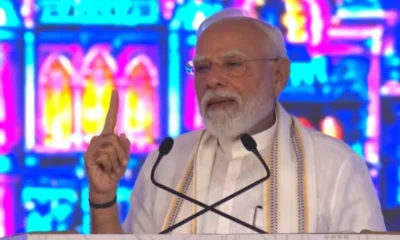
“There have been attempts to run down Sardar Patel, to ensure that his contribution is forgotten. But Sardar is Sardar, whether any government or any party recognises his contribution or not but the nation and the youth will not forget him,” Modi said while addressing the mega-event at the Major Dhyanchand National Stadium.
However, the rich tributes to Sardar Patel, which are obviously well-deserved and undoubtedly should have been made more often by previous Congress regimes, also have a great political significance for Modi.
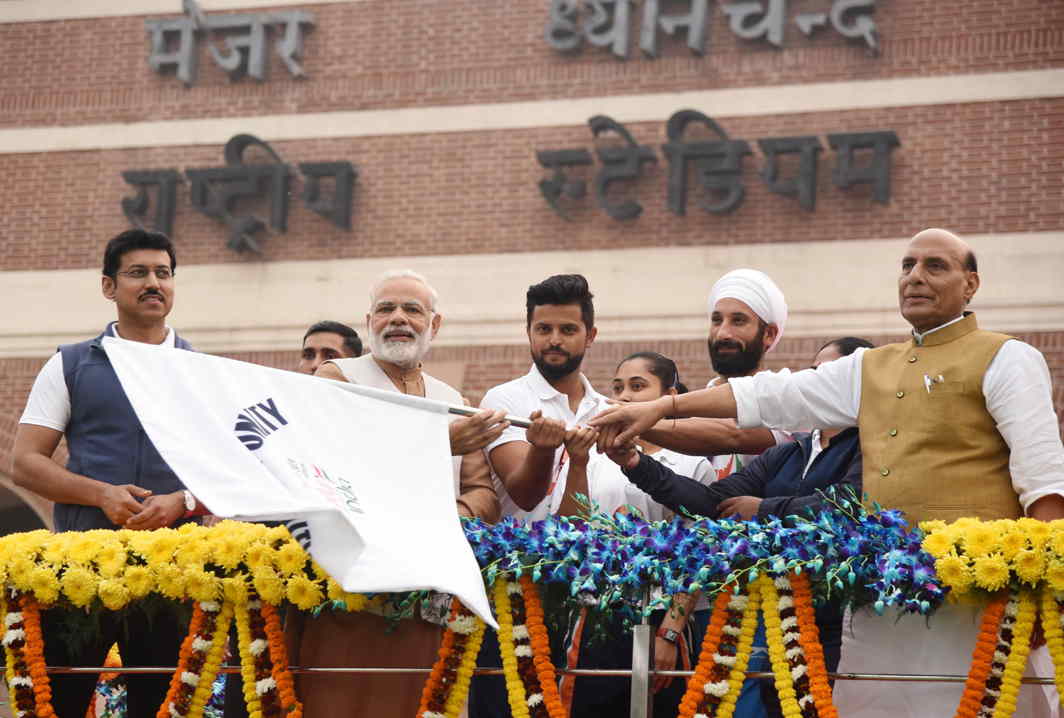
Prime Minister Narendra Modi, home minister Rajnath Singh, minister of state for youth affairs and sports Rajyavardhan Singh Rathore flagging off the Run For Unity from the Major Dhyan Chand National Stadium. Phot credit: PIB
Sardar Patel belonged to a humble agricultural land holding Patidar family from Gujarat, the home state of both, Prime Minister Narendra Modi and BJP national president Amit Shah. The BJP currently faces its toughest poll battle in the past 22 years as Gujarat goes to polls next month and a major reason for this party’s troubles is the raging Patidar agitation in the state that is being led by Hardik Patel, who is threatening to align with the Congress to bring down the state’s saffron government.
In Gujarat, Sardar Patel is an iconic figure whose popularity as the ‘Iron Man of India’ and a hard-nosed realist in Indian politics during the era of Nehruvian socialism arguably surpasses that of Pandit Jawaharlal Nehru, and perhaps even of the Mahatma himself. By batting for Patel’s legacy and trying to project the BJP as the party that is fighting to get the Congress icon his true place in history, Modi is cleverly reaching out to the Gujarati electorate – especially the agitating Patidar community which has also chosen Sardar Patel as their icon.
Paying rich tributes to Sardar Patel, Modi said: “The British government wished that India was disintegrated into smaller states. But Patel used all means (saam, daam, dand, bhed, rajneeti, kutneeti) and succeeded in uniting all princely states into a single nation within a very small span of time,” he said.
The Prime Minister said that it was Rajendra Prasad – India’s first President – who had declared that India had become a united nation only due to the administrative acumen and strong leadership of Sardar Patel but that the country was not giving him due respect.
“Rajendra Babu must be happy now, wherever his soul may be, that we are remembering the contribution of Sardar Patel today even though some people tried to run down and erase his contribution. The nation will continue to remember Patel,” Modi declared.
The Prime Minister hailed Sardar Patel as “the main force behind upholding India’s unity and integrity at the time of Independence.”
In recent years, Modi and his BJP have made repeated attempts to appropriate Sardar Patel – a staunch Congressman, acolyte of Mahatma Gandhi and comrade-in-arms of India’s first Prime Minister, Pandit Jawaharlal Nehru. In the absence of any freedom fighters within their own ranks who can be projected to rival the popularity and stature of Pandit Nehru, the BJP-RSS combine have repeatedly sought to take Sardar Patel for their icon. The saffron combine has floated misrepresentations and grossly exaggerated claims of how the Congress under Pandit Nehru “insulted” Patel and how, in the past six decades since the death of both Nehru and Patel, the Congress party has sought to erase the contributions of Sardar in an effort to ensure that the aura around Nehru doesn’t pale in comparison.
Modi’s efforts to showcase himself and his party as the force that is keeping Patel’s legacy alive have often led the Prime Minister and his party colleagues from making gaffes at public events while trying to portray the reportedly strained relationship between Pandit Nehru and Sardar Patel . The Prime Minister had once famously declared that Pandit Nehru had skipped the funeral of Sardar Patel in December 1950 – a lie that was immediately exposed by the Congress party which released video footage of the country’s first Prime Minister standing beside the funeral pyre of his deputy.
While there is no doubt that Sardar Patel had a huge role to play in uniting India and ensuring that the newly born country of multiple princely states, religions, castes and languages didn’t implode under the sheer pressure of its enormous diversity, Modi and his BJP’s bid to appropriate the icon’s legacy for incremental political and electoral gains in poll-bound Gujarat can’t be ignored either.[/vc_column_text][/vc_column][/vc_row]









India News
Journalist files police complaint against Rahul Gandhi over push allegation
Journalist Richa Parashar has filed a criminal complaint against Rahul Gandhi and others, alleging that she was pushed while covering the Opposition’s march to the Supreme Court. The Congress has denied the allegation.

India News
Delhi court orders release of CJP founder Abhijeet Dipke
A Delhi court on Saturday ordered the conditional release of Cockroach Janta Party founder Abhijeet Dipke, who was detained and subsequently arrested ahead of a planned protest march at Connaught Place.
India News
Anirudh Ravichander to marry Kavya Maran in November, reception on November 21
Anirudh Ravichander and Kavya Maran are set to marry in November, with their Chennai wedding reception scheduled for November 21.


Anirudh Ravichander to marry Kavya Maran in November, reception on November 21

Delhi court orders release of CJP founder Abhijeet Dipke

Journalist files police complaint against Rahul Gandhi over push allegation
Journalist files police complaint against Rahul Gandhi over push allegation
Delhi court orders release of CJP founder Abhijeet Dipke
Anirudh Ravichander to marry Kavya Maran in November, reception on November 21

ED summons Pinarayi Vijayan in money laundering case

LK Advani, 98, hospitalised in Delhi with chest infection

Afghan Men Try To Hang With The Jet Engine Of The Aircraft in Kabul- Afghanistan News – Kabul News
Trending Top 10 News: 10000 Crore Fine on Flipkart, Apple to Launch Unique Feature, Hdfc Bank Job Ad

Trending Top 10 News: Nokia 6310, Apple sales, Bachpan ka Pyar Video Kid, Dainik Bhaskar IT Raid

Trending Top 10 News: Canada bans Indian flights, Rain in Delhi NCR, AIMIM Twitter hacked, Raj Kundra case