English हिन्दी
Connect with us

India News

Operation Sindoor: India hits terror infrastructure in Pakistan and PoK in response to Pahalgam massacre

India retaliated to the Pahalgam terror attack with Operation Sindoor, targeting nine terror sites across Pakistan and PoK in a tri-service military operation.

Published

on

Indian Air Force jets during Operation Sindoor mission

In a decisive and coordinated military operation named Operation Sindoor, India struck nine terror-related sites located in Pakistan and Pakistan-Occupied Kashmir (PoK) early Wednesday morning. The strikes were launched in retaliation to the deadly terrorist attack in Jammu and Kashmir’s Pahalgam on April 22, where 26 civilians lost their lives. This is the most significant retaliatory action since the 2019 Pulwama attack.

The Indian Army, Navy, and Air Force jointly executed the strikes at approximately 1:44 am. According to sources, Prime Minister Narendra Modi personally monitored the developments of the mission as it unfolded. The Indian government emphasized that the strikes were focused, measured, and aimed strictly at terror infrastructure, with no Pakistani military facilities being targeted.

Nine locations targeted with precision, including key terror hubs

India targeted nine locations, which included areas across both the Line of Control (LoC) and the international border. As per reports from Pakistani military sources, the strikes hit locations in Kotli, Bhimber, Gulpur, Muzaffarabad (two sites), Sialkot, Bahawalpur, Muridke, and Chak Amru. Muridke is known to house the headquarters of the terror outfit Lashkar-e-Taiba, while Bahawalpur is associated with Jaish-e-Mohammed operations.

Sources familiar with the mission stated that the Indian Air Force used SCALP (Storm Shadow) cruise missiles, carried by Rafale jets, along with Hammer Smart Bombs to carry out the precision strikes.

Pakistan retaliates along LoC, civilian casualties reported

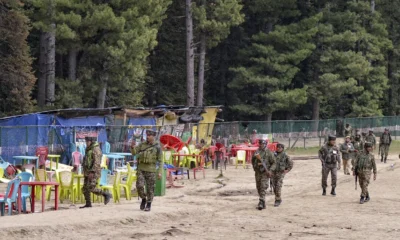
Following the operation, Pakistan initiated cross-border firing and artillery shelling across the Line of Control. In one such incident in the Bhimber Gali sector of the Poonch-Rajauri region, three Indian civilians were reported killed due to shelling. Indian troops responded in a calibrated and appropriate manner, defence sources confirmed.

Pakistani Prime Minister Shehbaz Sharif termed the strikes as an “act of war” and vowed a strong response. Pakistan’s military also raised concerns about the future of the Simla Agreement and the LoC framework.

Diplomatic fallout precedes military action

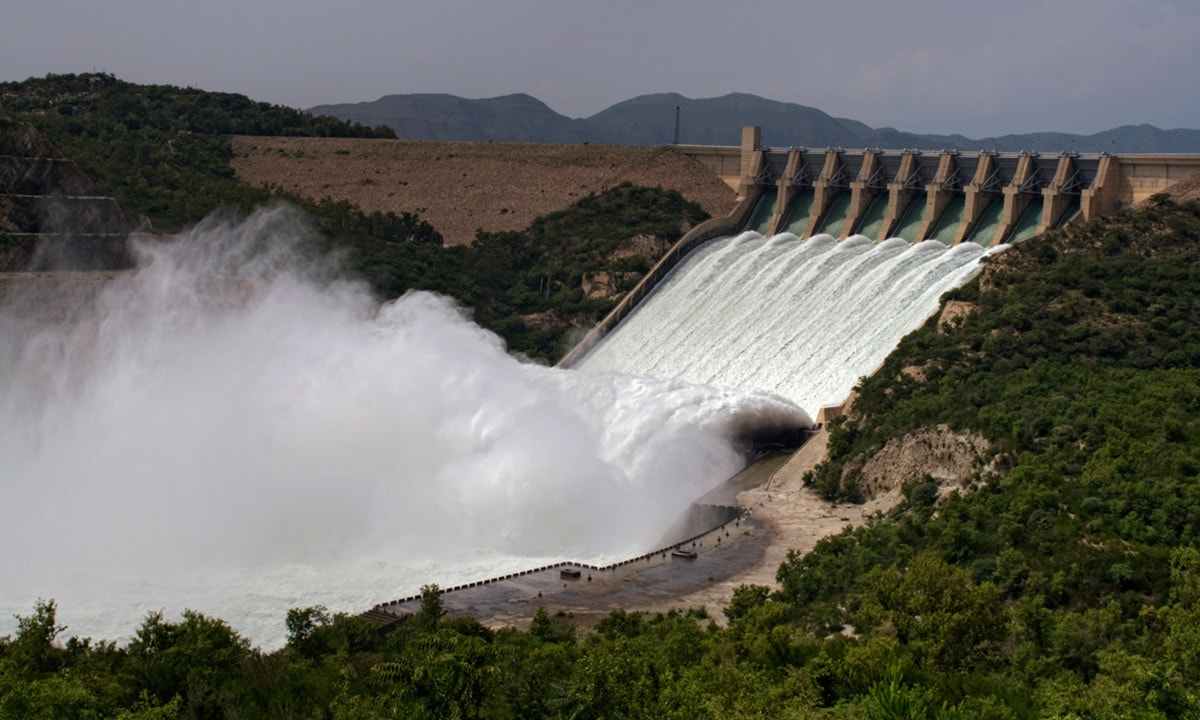
Before the military response, India had taken a series of diplomatic steps to signal its displeasure over the Pahalgam killings. These included suspending the Indus Waters Treaty of 1960, cancelling visas issued to Pakistani nationals, halting bilateral diplomatic movements, and shutting its airspace to Pakistani aircraft. PM Modi also declared that India would no longer allow its rightful share of water to flow out of the country.

He reiterated this stance during a public address, stating that India’s water resources will now be used solely for domestic progress and interests.

Airspace disruption, military drills intensify preparedness

The strikes have also affected air operations across the northern region. IndiGo and SpiceJet issued advisories, stating that flights to and from Srinagar, Jammu, Amritsar, Chandigarh, and Dharamsala may be disrupted due to airspace restrictions.

Air India announced the cancellation of flights operating to and from several cities including Jammu, Leh, Amritsar, Bhuj, Jamnagar, and Rajkot. Srinagar airport has been completely shut for civilian flights for the day.

Simultaneously, the Indian Air Force began a two-day military drill in Rajasthan near the international border with Pakistan, further signalling preparedness. A NOTAM (Notice to Airmen) was issued, restricting flight operations over the Thar desert region from 9:30 pm until 3 am on Friday.

Nationwide civil defence drill marks first since 1971 war

Coinciding with the strikes, India began a national-scale civil defence exercise covering 244 districts. This marks the first such mock drill since the 1971 India-Pakistan war and is aimed at enhancing readiness for any hostile eventuality.

Historic parallels with previous Indian responses to terror

India’s move draws comparisons with past retaliatory actions. In 2016, India carried out surgical strikes across the LoC following the Uri attack. In 2019, after the Pulwama suicide bombing, India conducted airstrikes on a terror training camp in Balakot, marking the first time since 1971 that the Indian Air Force crossed the international border for military action.

That response had resulted in an aerial dogfight between Indian and Pakistani jets, with Wing Commander Abhinandan famously shooting down a Pakistani F-16 before being captured and later released by Pakistan.

“Justice is served”: Government and armed forces stand united

Following the successful operation, Defence Minister Rajnath Singh posted “Bharat Mata Ki Jai” on X. The Indian Army echoed the sentiment with a statement reading, “Justice is served. Jai Hind.” The Indian Embassy in the US also confirmed that National Security Advisor Ajit Doval briefed his American counterpart and Secretary of State Marco Rubio after the strikes.

Meanwhile, US President Donald Trump commented that the US was aware of an impending response and expressed hope that the situation de-escalates quickly.

India News

Congress, BJP attack Bhagwant Mann over remarks on Punjab blasts

Congress and BJP have jointly criticised Punjab CM Bhagwant Mann after he linked recent blasts near defence sites to political motives, triggering a controversy.

Published

on

Bhagwant Mann

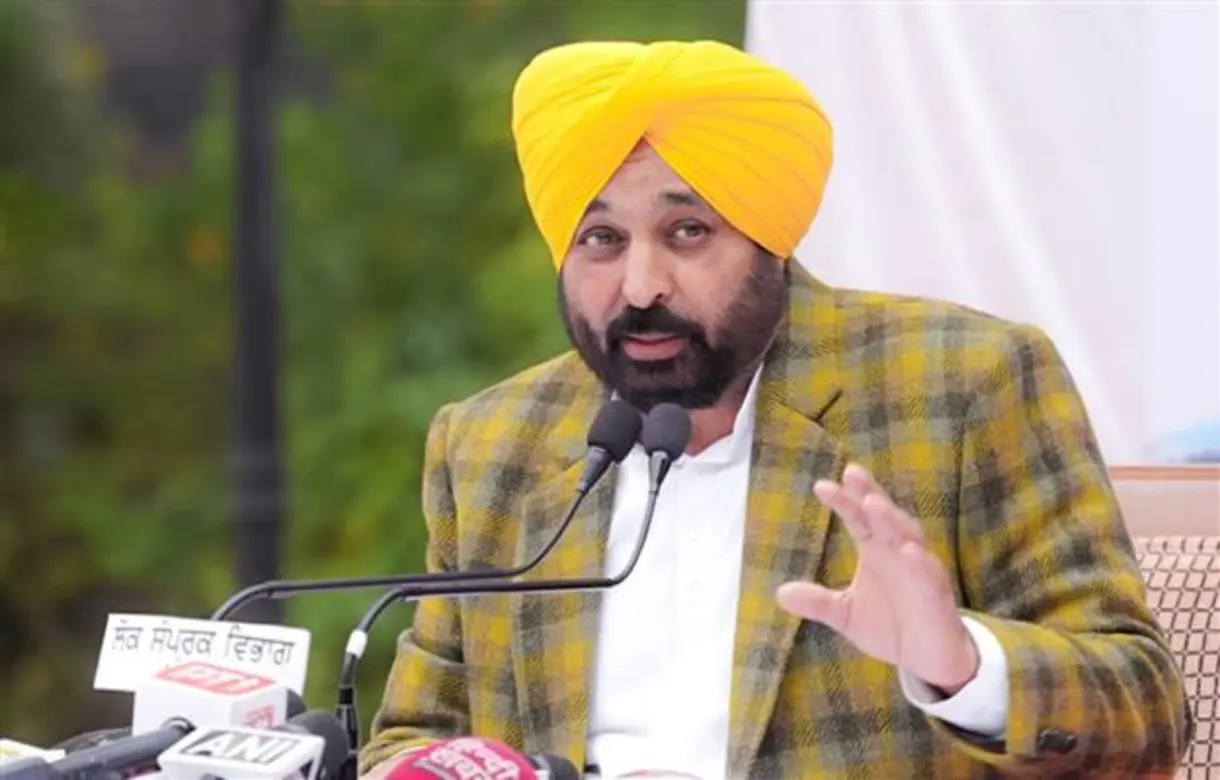
A political row has erupted in Punjab after Chief Minister Bhagwant Mann linked recent blast incidents to political motives, drawing sharp criticism from both the Congress and the Bharatiya Janata Party (BJP).

The controversy follows two low-intensity explosions reported within a short span of time — one near the Border Security Force (BSF) headquarters in Jalandhar and another close to an army cantonment area in Amritsar. The incidents raised concerns over security, particularly given the sensitive nature of the locations.

In response, Mann suggested that the blasts could be part of a larger political strategy. His remarks triggered a strong backlash, with opposition parties accusing him of politicising a serious security issue.

Leaders from the Congress criticised the Chief Minister’s statement, calling it inappropriate and alleging that such comments undermine the gravity of the situation. They stressed that matters related to national security should be handled with caution and responsibility.

The BJP also joined the criticism, questioning the basis of Mann’s claims and urging the state government to focus on investigation and law enforcement instead of making political allegations.

The developments have led to an unusual moment where both Congress and BJP appear aligned in their criticism of the Aam Aadmi Party-led government in the state.

Meanwhile, the blasts themselves have intensified concerns over safety in border regions, with authorities continuing their investigation into the incidents. No casualties were reported, but the proximity to defence establishments has made the issue particularly sensitive.

The episode has further escalated political tensions in the state, with security and accountability emerging as key points of debate.

Continue Reading

India News

Himanta Biswa Sarma resigns as Assam chief minister, oath ceremony likely after May 11

Himanta Biswa Sarma resigns as Assam Chief Minister after BJP-led NDA’s victory. He will continue as caretaker CM until the new government is sworn in after May 11.

Published

on

Himanta sharma

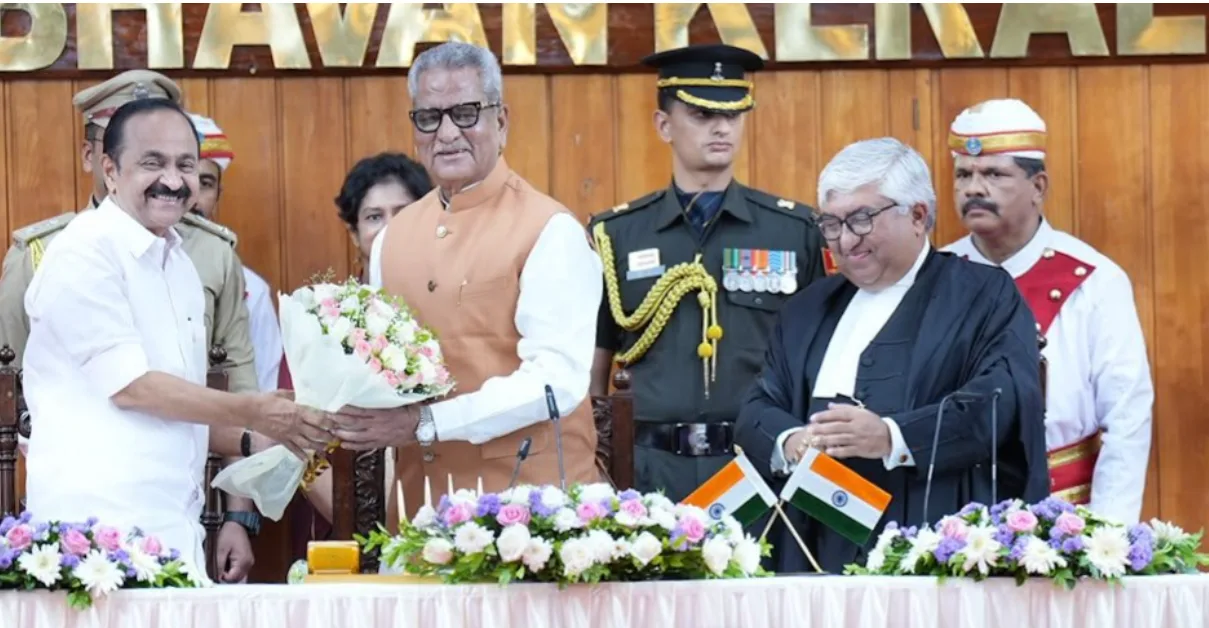
Assam Chief Minister Himanta Biswa Sarma resigned from his post on Wednesday, paving the way for the formation of a new government after the BJP-led NDA secured a decisive victory in the 2026 Assembly elections.

Sarma submitted his resignation to Governor Lakshman Prasad Acharya at Lok Bhawan in Guwahati. The Governor accepted the resignation and asked him to continue as the caretaker Chief Minister until the new government takes charge.

The resignation comes after the NDA’s strong electoral performance, where the alliance won a clear majority in the 126-member Assembly, ensuring its return to power for another term.

Oath ceremony expected after May 11

Speaking to reporters after submitting his resignation, Sarma said the swearing-in ceremony for the new government is likely to be held after May 11.

He indicated that Prime Minister Narendra Modi has been invited to attend the ceremony but is unavailable until May 11, which has influenced the tentative schedule.

Decision on next chief minister soon

Sources suggest that central observers, including senior BJP leaders, are expected to arrive shortly to oversee the selection of the legislature party leader. The newly elected MLAs will then decide on the next Chief Minister.

Despite the formal resignation, party sources indicate that Sarma is likely to continue in the role for another term, given the BJP’s strong mandate in the state.

The move marks the beginning of the government formation process in Assam following the election results declared earlier this week.

Continue Reading

India News

Rahul Gandhi and Vijay alliance took shape through backchannel talks, early signals from Congress leaders

Congress outreach and political calculations led to Rahul Gandhi and Vijay coming together after the Tamil Nadu 2026 election results.

Published

on

The coming together of Rahul Gandhi and actor-politician Vijay in Tamil Nadu after the 2026 Assembly elections was not sudden, but the result of behind-the-scenes political manoeuvring and early signals within the Congress.

According to media reports, some leaders in the Tamil Nadu Congress had already sensed the scale of Vijay’s surge during the campaign, anticipating what was later described as a “wave” in favour of his party.

After the results, where Vijay’s Tamilaga Vettri Kazhagam (TVK) emerged as the single largest party but fell short of a majority, communication channels between the Congress leadership and Vijay quickly became active.

A key moment in this evolving political equation was a phone call from Rahul Gandhi to Vijay, congratulating him on the party’s strong performance. The conversation was seen as more than a courtesy, signalling the possibility of cooperation at a time when government formation required additional support.

Reports indicate that discussions within Congress weighed the political benefits of supporting Vijay, especially given the shifting dynamics in the state where traditional dominance by major Dravidian parties has been challenged.

With TVK needing allies to cross the majority mark, Congress emerged as a potential partner, leading to a broader political realignment in the state. This development also triggered tensions within opposition alliances, highlighting the strategic importance of the decision.

The evolving partnership reflects a mix of electoral pragmatism and changing voter sentiment, particularly the growing influence of younger voters, which leaders acknowledged as a key factor in the election outcome.

Continue Reading

Trending

© Copyright 2022 APNLIVE.com