English हिन्दी
Connect with us

India News

As stealth reshapes air combat, India weighs induction of Sukhoi Su-57 jets

India is assessing the possible induction of up to 40 Sukhoi Su-57 fifth-generation fighter jets as stealth becomes central to future air combat strategy.

Published

on

Sukhoi Su-57 jets

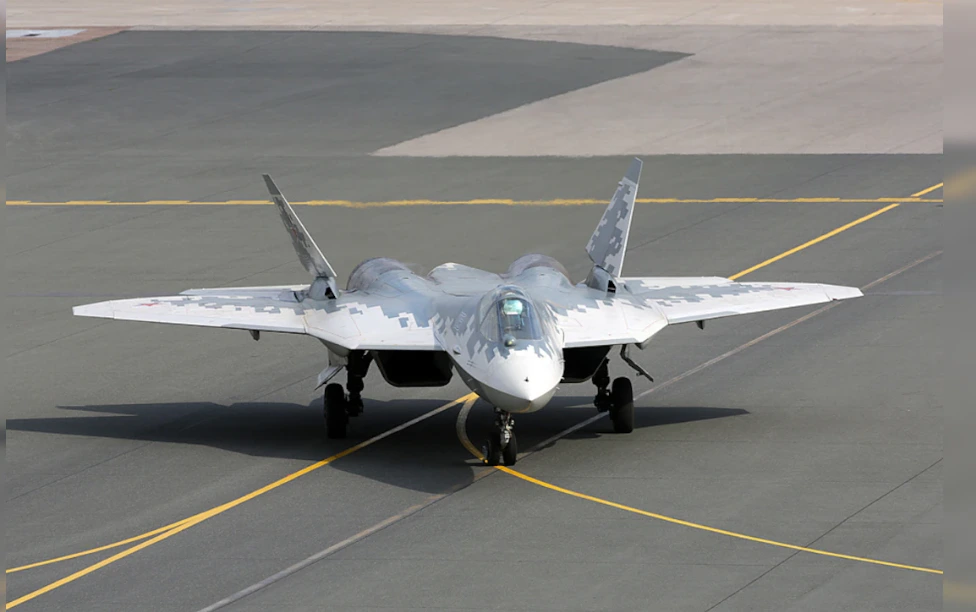
Aerial warfare is increasingly being defined by the ability to remain undetected rather than by traditional dogfighting skills, and India is now assessing options to strengthen its capabilities in this new paradigm. Defence circles are abuzz with indications that the Indian Air Force may consider procuring up to 40 Russian fifth-generation Su-57 fighter jets, according to sources.

The possible move comes less than a year after Operation Sindoor, which was launched in May last year following the Pahalgam terror attack. The air engagements with the Pakistan Air Force during the operation are understood to have provided fresh operational insights, prompting discussions on future preparedness.

Why stealth is central to fifth-generation fighters

Fifth-generation fighter aircraft are designed with a strong emphasis on low observability. Platforms such as the Su-57 incorporate airframes shaped to reduce radar signatures and use radar-absorbent materials to make detection more difficult across radar, infrared and visible spectrums.

These aircraft typically integrate advanced avionics, sensor fusion and supercruise capabilities. They are also configured to carry specialised weapons internally, enhancing stealth during combat missions.

According to information available on Sukhoi’s official platform, the Su-57 is equipped with a deeply integrated avionics suite that offers a high level of automation and intelligent crew support. Its onboard systems enable it to operate autonomously and exchange data in real time with ground control systems or as part of a coordinated task force.

The aircraft can deploy a broad range of air-to-air and air-to-surface munitions, allowing it to undertake both fighter and strike roles. Sukhoi states that the jet is capable of conducting covert missions owing to reduced visibility across multiple wavelength ranges.

The Su-57 is also fitted with an auxiliary power unit designed to improve deployment autonomy and lower fuel consumption during ground operations. An onboard oxygen extraction unit enhances operational endurance. Additionally, the aircraft features an explosion-proof fuel tank system described as a generator-type neutral gas system, aimed at improving combat survivability.

Regional security context

The reported deliberations come amid evolving regional dynamics. China, regarded as Pakistan’s close strategic partner, has developed the J-20 fifth-generation stealth fighter, and there are indications that such capabilities could eventually be shared with Pakistan.

India is also pursuing its own fifth-generation programme, the Advanced Medium Combat Aircraft (AMCA). The first flight of the AMCA is expected around 2028 or 2029, with induction into the Air Force projected around 2035.

In this backdrop, any decision on the Su-57 would form part of a broader effort to ensure that the Indian Air Force remains prepared for future aerial warfare scenarios where stealth and advanced sensing capabilities play a decisive role.

India News

India stresses mutual respect in ties with Italy after Congress’ Meloni remark

India stressed mutual respect and understanding in its ties with Italy after Congress leaders, including Rahul Gandhi, made remarks involving Giorgia Meloni.

Published

on

India underlined the importance of maintaining mutual respect and understanding in its relationship with Italy, a day after Congress leaders, including Rahul Gandhi, took a swipe at Prime Minister Narendra Modi’s handling of foreign policy.

The Ministry of External Affairs said India and Italy share strong bilateral ties and expressed its commitment to further strengthening the relationship.

“We share deep and strong ties with Italy, and we are committed to further strengthening this relationship,” the MEA said. It added that friendship and bilateral relations between countries should be maintained within a framework of mutual respect and understanding.

The statement came after a political controversy over remarks made at a Congress event in Delhi.

Rahul Gandhi’s mock hug draws BJP criticism

At the Congress event, Rahul Gandhi greeted party leader Sandeep Dikshit with a mock hug. Gandhi had earlier criticised the Prime Minister’s approach to diplomacy, suggesting that it was being reduced to symbolic gestures such as hugging foreign leaders.

Dikshit then brought Italian Prime Minister Giorgia Meloni into the exchange with a remark, following which Rahul Gandhi played along.

The episode drew sharp criticism from BJP leaders, who accused the Congress leader of using inappropriate language against the Prime Minister and lowering the dignity associated with the office of the Leader of Opposition.

Union Education Minister Pralhad Joshi questioned Rahul Gandhi’s conduct and said India required mature leadership. He also criticised remarks in which Gandhi had referred to the government as “jokers and clowns”.

BJP leaders target Rahul Gandhi

Union Minister Giriraj Singh also attacked Rahul Gandhi, describing him as “mentally frustrated” and questioning his conduct.

BJP MP Bansuri Swaraj said Rahul Gandhi’s language was inconsistent with the dignity expected from the Leader of Opposition.

BJP leader Shehzad Poonawalla also criticised the Congress leader, saying that while disagreement with Prime Minister Modi was legitimate, bringing a foreign woman leader into what he described as a crude joke was neither appropriate nor statesmanlike.

The MEA’s statement, meanwhile, focused on India’s bilateral relationship with Italy and reiterated that mutual respect and understanding remain important to maintaining ties between the two countries.

Continue Reading

India News

Assam BJP leader Bikash Dhar found dead, 5 arrested for murder

BJP leader Bikash Dhar, 52, was found dead in an abandoned house in Assam’s Sribhumi district after being reported missing on August 12. Police have arrested five people in connection with the alleged murder.

Published

on

A 52-year-old BJP leader who had been missing for two days was found dead in Assam’s Sribhumi district on Friday, with police alleging that he was murdered.

Bikash Dhar, a resident of Chagalmowa village under Bazaricherra police station, was found dead inside an abandoned house in the Yogicherra area near the Tripura border on Friday morning.

Dhar’s family had filed a missing complaint on August 12 after he left home following a phone call.

According to his son Madan Dhar, Bikash left around 1 pm after saying that he had to attend an emergency meeting. When he did not return and his phone was switched off, the family began searching for him and later approached the police.

Five arrested in murder case

Sribhumi Superintendent of Police Leena Doley said an investigation was launched after the missing complaint was received. The probe was conducted under the supervision of the Additional Superintendent of Police (Crime).

Police said five people have been arrested in connection with the alleged murder. They were identified as Abdul Salam, Sifat Ali, Abdul Ahad, Saiful Ali and Badrul Haque.

According to the police, interrogation of Abdul Salam revealed that the accused had an enmity with Dhar. Police alleged that the group killed him and dumped his body near a water body.

Another person, identified as Sunam Miya, was named during the investigation and reportedly fled to Tripura on the night of the incident.

Police find injury and cut marks on body

Police said injury and cut marks were found on Dhar’s body, and a murder case has been registered.

During the recovery of the alleged weapon, police said accused Badrul Haque attempted to escape from custody. A police constable was injured during the incident.

Police said they fired at Haque’s leg to prevent him from escaping, resulting in a bullet wound.

The investigation into the circumstances surrounding Dhar’s death and the alleged involvement of the accused is underway.

Continue Reading

India News

Jharkhand CID raids multiple locations in JPSC exam irregularities case 

Jharkhand CID conducted raids across several districts to arrest seven accused in a case involving alleged irregularities in JPSC competitive examinations.

Published

on

The Jharkhand Crime Investigation Department (CID) has conducted raids at several locations across the state as part of its investigation into alleged irregularities in competitive examinations conducted by the Jharkhand Public Service Commission (JPSC).

According to a CID press release, the searches were carried out to arrest seven accused named in Case No. 16/2026 and execute warrants issued against them.

The accused have been identified as Aditya Pandey, Pawan Kumar Singh, Ravishankar Kumar, Santosh Kumar Singh, Sanand Prakash, Lalu Kumar Yadav and Saurabh Kumar Pandey.

The CID conducted searches in several districts as part of efforts to apprehend the accused. The agency said its investigation into the case is continuing.

CID examining evidence in exam irregularities case

The case relates to alleged irregularities in various competitive examinations conducted by the JPSC.

As part of the investigation, the CID has begun matching OMR carbon copies obtained during the probe and examining other evidence collected in the case.

The agency said further action would be taken according to law on the basis of the evidence gathered. It added that legally permissible action against those found involved in the case is underway.

ABVP protests over JPSC, JSSC exams

The CID raids come amid protests over alleged irregularities and paper leaks in examinations conducted by the JPSC and Jharkhand Staff Selection Commission (JSSC).

On August 13, the Akhil Bharatiya Vidyarthi Parishad (ABVP) held protests in several cities, demanding a Central Bureau of Investigation (CBI) probe and strict action against those responsible.

In New Delhi, students and ABVP workers protested outside Jharkhand Bhawan, calling on the Jharkhand government to take steps to restore confidence in the examination system.

According to the ABVP, similar protests were held in Lucknow, Kolkata, Guwahati, Agartala, Jaipur, Hyderabad, Ahmedabad, Surat, Gorakhpur, Jodhpur, Kota, Raipur, Bhubaneswar, Varanasi and Prayagraj, as well as at university campuses.

The student organisation has sought an impartial CBI investigation into alleged irregularities in JPSC and JSSC examinations. It has also demanded cancellation of the JSSC CGL examination, citing concerns over its integrity, along with fresh examinations where irregularities have been reported.

Meanwhile, JPSC-JSSC aspirants continue to protest at Jaipal Singh Munda Stadium in Ranchi. The ABVP has also alleged that students protesting peacefully on August 10 and 11 faced lathi-charge, water cannons and arrests.

Jharkhand CID has conducted raids at multiple locations in connection with alleged irregularities in JPSC competitive examinations and efforts to arrest seven accused named in Case No. 16/2026.

The action comes amid continuing student protests demanding a CBI probe into alleged JPSC-JSSC exam irregularities.

Continue Reading

Trending

© Copyright 2022 APNLIVE.com