English हिन्दी
Connect with us

India News

What is Indus Waters Treaty, and why India has suspended it now — explained

After the terror attack in Pahalgam, India suspended the Indus Waters Treaty with Pakistan, which had governed the sharing of six rivers since 1960.

Published

on

Indus Water Treaty

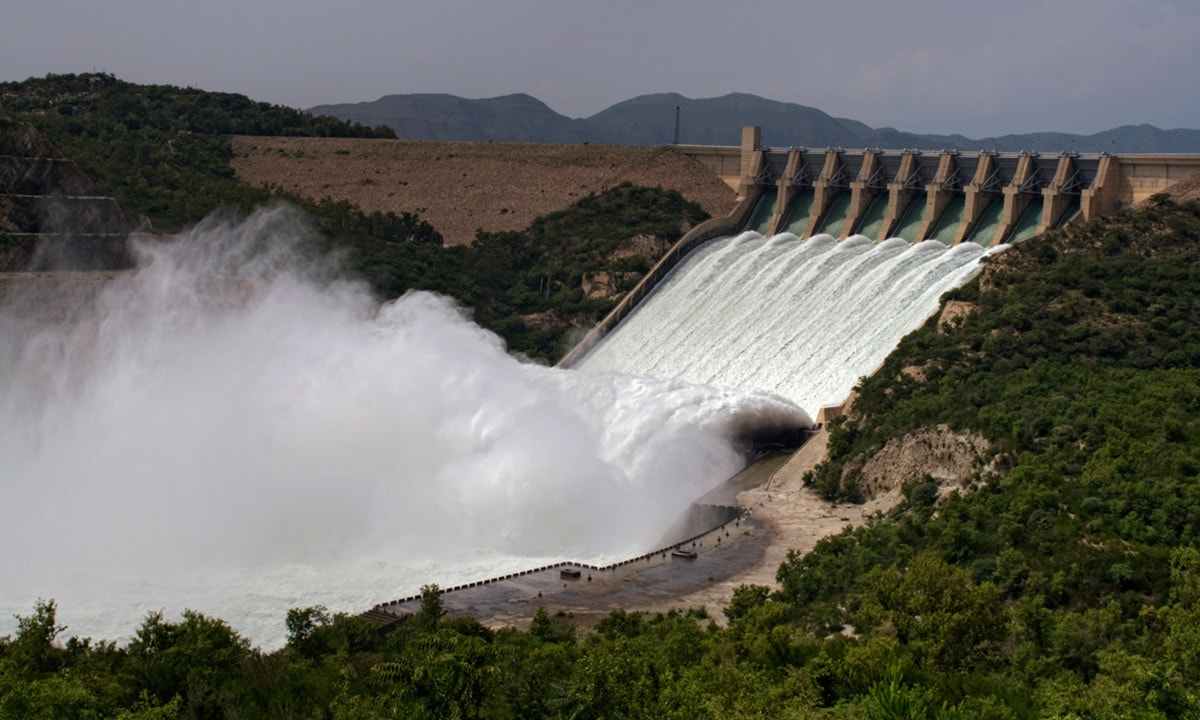
Following the recent terror attack in Pahalgam, Jammu & Kashmir, which claimed 26 lives, India has taken a firm stance against Pakistan by suspending the Indus Waters Treaty—a critical water-sharing agreement that has been in place since 1960. The suspension is part of a broader diplomatic retaliation announced by the Indian government in response to cross-border terrorism.

A brief history of the Indus Waters Treaty

The Indus Waters Treaty was signed on September 19, 1960, after nearly a decade of negotiations. It was brokered with the support of the World Bank and signed by then Indian Prime Minister Jawaharlal Nehru and Pakistan’s Field Marshal Mohammad Ayub Khan. The agreement was intended to resolve water-sharing rights over six rivers of the Indus system, which flow between the two countries.

Allocation of river waters under the treaty

The treaty divided control of the six common rivers between India and Pakistan:

  • Eastern rivers – Sutlej, Beas, and Ravi: Allocated entirely to India, allowing it unrestricted use of around 33 million acre feet (MAF) of water annually.
  • Western rivers – Indus, Jhelum, and Chenab: Assigned largely to Pakistan, with usage rights for approximately 135 MAF of water per year.

India retained limited rights on the western rivers, allowing it to build “run-of-the-river” hydroelectric projects under strict design and operational conditions, which Pakistan has the right to review and contest.

Cooperative mechanism and review structure

One of the key features of the treaty is the institutional framework it sets up:

  • The two nations each appoint a Permanent Indus Commissioner.
  • These commissioners are required to meet at least once annually, alternating between India and Pakistan.
  • The treaty has provisions for resolving disputes and technical issues through bilateral negotiations and, if necessary, third-party arbitration.

A scheduled meeting in March 2020 in New Delhi was cancelled due to the COVID-19 pandemic, illustrating the treaty’s vulnerability to external disruptions.

Why India suspended the treaty now

The Indian government cited the need for robust action following the Pahalgam terror strike, which India blames on Pakistan-based elements. In addition to diplomatic downgrades and expelling defence advisors from the Pakistan High Commission, the suspension of the Indus Waters Treaty marks a significant diplomatic escalation. It signals a strategic pivot in how India intends to respond to cross-border aggression.

Preamble rooted in cooperation now under question

The treaty’s preamble emphasized “goodwill and friendship” and aimed to achieve optimal use of the Indus river system while ensuring peaceful conflict resolution. The decision to suspend the treaty throws into uncertainty a pact once considered a cornerstone of bilateral peace efforts.

India News

Amit Shah praises Dharmendra Pradhan’s resignation, says Nation above post

Amit Shah hailed Dharmendra Pradhan’s resignation as Union Education Minister, saying BJP places the nation and students above any position while highlighting the government’s commitment to examination reforms.

Published

on

Amit Shah

Union Home Minister Amit Shah on Saturday praised Dharmendra Pradhan’s decision to step down as Union Education Minister, saying the move reflected the Bharatiya Janata Party’s commitment to placing the nation and students above any political position.

In a post on X, Shah said that for BJP workers, the country, its youth and students are more important than any office. He described Pradhan’s resignation as an example of the party’s guiding principle of prioritising national interest over personal ambition.

Shah highlights government’s focus on exam reforms

Amit Shah said the Narendra Modi-led government respects the sentiments of students and remains committed to strengthening the examination system following concerns over alleged paper leaks.

He said the Centre has introduced strict measures to ensure severe punishment for those involved in examination paper leaks and expressed confidence that these steps would deliver justice to students who cleared the National Eligibility-cum-Entrance Test (NEET).

Praises Pradhan’s work as Education Minister

Recalling Dharmendra Pradhan’s tenure, Shah highlighted several initiatives undertaken during his time in the Education Ministry. He credited Pradhan with helping implement the National Education Policy (NEP), expanding PM SHRI schools, promoting digital education, strengthening skill development and improving coordination between industry and academic institutions.

Shah also said Pradhan worked towards making examinations more inclusive and student-centric, adding that his tenure reflected his commitment to the vision of a developed India.

Resignation follows NEET controversy

Dharmendra Pradhan’s resignation comes amid nationwide protests over alleged irregularities in the NEET examination and growing demands for accountability.

The resignation has triggered political reactions across party lines. While opposition parties have described the development as a result of sustained student protests, BJP leaders have projected it as an example of accountability and commitment to national interest.

Continue Reading

India News

Assam flood death toll rises to 66, over 6.5 lakh people still affected

Assam’s flood situation improved slightly on Saturday, but more than 6.54 lakh people remain affected in six districts. Four fresh deaths have pushed the state’s flood toll to 66.

Published

on

Assam floods

The flood situation in Assam showed marginal improvement on Saturday, though the disaster continued to impact more than 6.54 lakh people across six districts. Four more deaths were reported during the day, taking the total number of fatalities in this year’s floods to 66.

According to the Assam State Disaster Management Authority (ASDMA), three of the latest deaths were reported from Sivasagar district, while one person lost their life in Charaideo.

The number of affected people declined from over 7.05 lakh across nine districts on Friday to 6,54,800 across six districts on Saturday, indicating a gradual improvement in the overall situation.

Sivasagar remains the worst-hit district

Among the affected districts, Sivasagar continues to be the worst hit, with nearly 2.9 lakh people impacted by the floods. Charaideo follows with around 1.9 lakh affected residents, while more than 1.3 lakh people remain affected in Jorhat.

The other districts still facing flood-related challenges are Dibrugarh, Golaghat and Nagaon.

Relief operations continue across affected areas

The ASDMA said the state administration is operating 274 relief camps and aid distribution centres across the affected districts. Around 18,902 displaced people are currently taking shelter at these facilities.

The latest daily bulletin also stated that floodwaters have inundated 810 villages across the state, while 34,970.8 hectares of agricultural land have suffered damage.

Rivers flowing above danger level

The floods have also damaged embankments, roads, bridges and other public infrastructure in several areas.

Authorities said the Dikhou River in Sivasagar and the Dhansiri River at Numaligarh are flowing above the danger level, and officials continue to closely monitor the situation.

Continue Reading

India News

UP Government forms new SIT led by 3 IPS officers to probe Ayodhya Ram Temple donation theft

The Uttar Pradesh government has formed a new SIT led by three IPS officers to investigate the alleged Ram Temple donation theft case in Ayodhya following Supreme Court directions.

Published

on

Ram Mandir

The Uttar Pradesh government has reconstituted a Special Investigation Team (SIT) headed by IG Kiran S, with DIG Somen Verma and SSP Dr Gaurav Grover as members, to investigate the alleged theft of donations meant for the Ram Temple in Ayodhya. 

The move comes after directions from the Supreme Court, which sought a reconstituted investigation team to ensure an independent and comprehensive probe into the allegations.

The newly formed SIT is expected to continue the investigation and submit a status report before the Supreme Court on July 27.

Senior IPS officers to lead the probe

According to the state government, the investigation will now be supervised by senior IPS officers.  The revamped SIT has been tasked with examining all aspects of the alleged embezzlement of temple donations and carrying the investigation forward.

The Supreme Court had observed that criminal investigations and technical examination of theft-related cases are more effectively handled by experienced police officers, leading to the reconstitution of the SIT under senior IPS leadership.

Probe to continue under court supervision

The case relates to the alleged embezzlement of offerings (chadhava) donated by devotees at the Shri Ram Janmabhoomi Temple in Ayodhya.

The Supreme Court is monitoring the investigation and will review the SIT’s status report at the next hearing.

Authorities are expected to continue examining evidence collected during the earlier stages of the investigation as the newly constituted SIT proceeds with the case.

Continue Reading

Trending

© Copyright 2022 APNLIVE.com