English हिन्दी
Connect with us

Entertainment

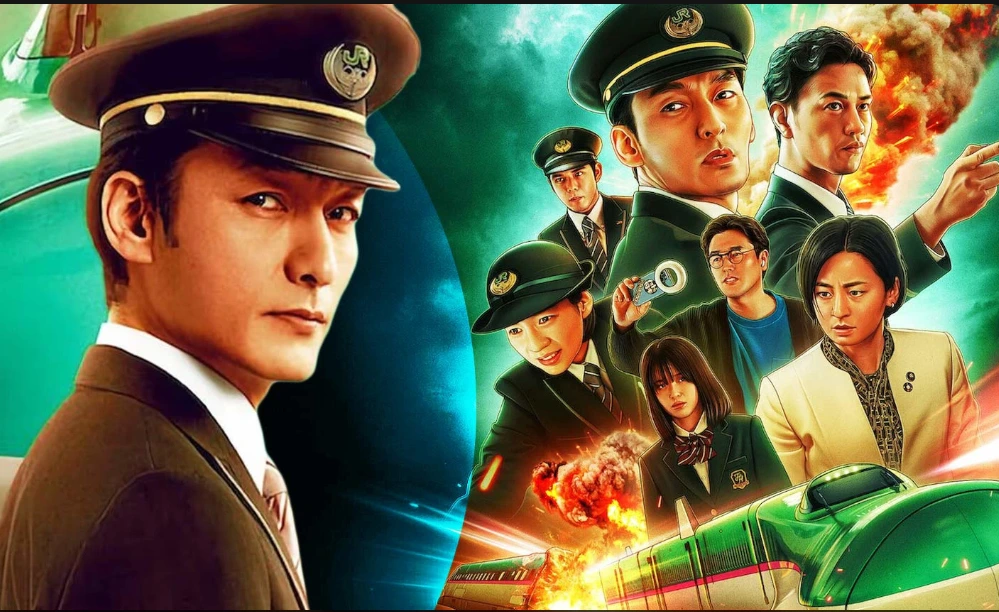
Bullet train explosion review: Gripping disaster drama reboots a 1975 classic with modern urgency

Bullet Train Explosion ditches introspection for action, offering a suspense-filled homage to Japan’s 1975 classic with powerful performances and a gripping pace.

Published

on

Bullet train explosion review: Gripping disaster drama reboots a 1975 classic with modern urgency

The cinematic legacy of Japan’s high-speed trains gets a new-age adrenaline shot in Bullet Train Explosion, a film that acts as a spiritual successor to the 1975 thriller The Bullet Train. Directed by Shinji Higuchi, this high-stakes drama replaces introspection with action, focusing not on the bomber’s mind, but on the societal machinery working to prevent catastrophe.

Unlike its predecessor, which delved deep into the psychological strain of a single antagonist, Bullet Train Explosion pivots the narrative toward the collective — spotlighting train officials, bureaucrats, and emergency teams who scramble to contain an escalating crisis. This modern reimagination appeals especially to millennial audiences unfamiliar with the original, reshaping a legacy thriller into a sleek, contemporary narrative.

High tension, rapid pace

The film thrives on momentum, sacrificing detailed backstories for pulse-pounding urgency. While character development occasionally takes a back seat, the pacing and technical precision more than compensate. Higuchi’s direction—backed by meticulous research—adds a layer of credibility to scenes portraying Japan’s real-world emergency response systems.

The identity reveal of the bomber might elicit chuckles, yet it aligns tonally with the original, offering a nostalgic twist for those in the know. Although the screenplay isn’t without faults, its core narrative remains tight and engaging.

Performances bring realism and emotion

The ensemble cast breathes life into the high-octane drama. Tsuyoshi Kusanagi stands out as Takaichi, the calm and capable conductor navigating chaos with quiet authority. Kanata Hosoda lends emotional depth as the sincere assistant, Fujii. Machiko Ono portrays Kagami’s transformation with intensity, while Jun Kaname’s take on a social media influencer caught in the crisis adds modern relatability to the otherwise high-concept plot.

Their performances bring emotional resonance to a film largely driven by logistical tension and collective action.

A timely tribute to unity in crisis

Beyond the explosions and countdowns, Bullet Train Explosion is ultimately about societal resilience. It serves as a timely reminder of how unity across different sectors—public, private, and civic—can avert disaster. The film sidesteps melodrama, instead choosing realism and teamwork as its heroes.

While it may not achieve emotional depth at every turn, its streamlined storytelling, expert direction, and solid performances make it a worthy successor to the 1975 classic—and a relevant entry into the modern disaster genre.

Continue Reading

Entertainment

Usha Nadkarni reflects on living alone at 80, abusive childhood and sacrifices behind her acting career

Veteran actor Usha Nadkarni reflects on living alone since 1987, her abusive childhood, motherhood and the struggles behind her successful acting career.

Published

on

Veteran actor Usha Nadkarni, known for her memorable performances in Marathi and Hindi films, television and theatre, has opened up about the personal struggles that shaped her life. From surviving an abusive childhood to living alone for decades and balancing motherhood with a demanding acting career, the 80-year-old actor shared intimate details of her journey in recent and past interviews.

Despite the hardships, Nadkarni says she continues to work and live independently in Mumbai while embracing the life she has built over nearly seven decades in the entertainment industry.

Usha Nadkarni says she has lived alone since 1987

Speaking in a recent interview with Rajshri Marathi, Nadkarni revealed that she has been living alone since 1987. With her son now settled overseas and her siblings no longer alive, she has gradually become comfortable with solitude.

She recalled that she initially feared staying alone and would ask the building’s security guard to accompany her to her apartment. Over time, however, those fears disappeared.

The veteran actor also spoke candidly about ageing and mortality, saying she occasionally thinks about death because she lives alone but does not fear it. She added that she believes death comes differently for everyone and has accepted that reality.

Her son was raised by her mother during her busiest years

Nadkarni also reflected on her personal life, sharing that she separated from her husband many years ago. She said there is no bitterness between them and that she has maintained cordial relations with his family over the years.

She explained that her son spent much of his childhood with her mother while she remained occupied with Marathi theatre and acting commitments. In an earlier interview, she had revealed that he also stayed at her brother’s house because it offered more space.

Looking back, Nadkarni shared that her son still tells her she only gave birth to him and that his real mother was actually his grandmother, who raised him during those formative years.

Actor recalls growing up with a violent father

Nadkarni has also spoken publicly about the difficult environment in which she grew up. She described her father, an Air Force officer, as a man with a violent temper whose anger often left the family frightened.

According to the actor, even minor household matters, such as an untidy newspaper or improperly arranged schoolbooks, could trigger angry outbursts.

She also recounted an incident in which she tried to protect her brother from being beaten and was injured on her arm after her father attacked her with a curved farming blade. Despite the injury, she went ahead with a stage performance the following day.

Family opposed her dream of becoming an actor

The actor said her passion for acting began in childhood, but pursuing that ambition was far from easy.

She recalled first confiding in her mother, hoping for support, but instead faced strong opposition. According to Nadkarni, her mother threw her belongings out of the house, forcing her to stay with a friend for nearly a week before eventually returning home.

Reflecting on those years, she said societal opinions did not stop her from following her dream. Nadkarni noted that she first performed on stage while studying in the fourth standard and continues acting even at the age of 80.

Career built on determination

Over nearly 70 years, Usha Nadkarni has established herself as one of the most respected actors in Marathi and Hindi entertainment.

She has previously acknowledged that there were periods when she accepted projects primarily for financial reasons, even when she felt she was not receiving the professional respect she deserved. Despite those challenges, she has continued to remain active in films, television and theatre, building a career defined by perseverance and resilience.

Continue Reading

Entertainment

Veteran actor Pradeep Rawat, known for Ghajini and Lagaan, dies at 74 after cancer battle

Veteran actor Pradeep Rawat, celebrated for his roles in Ghajini, Lagaan and Mahabharat, died at the age of 74 while undergoing treatment for cancer.

Published

on

Veteran actor Pradeep Rawat, best known for his performances in Ghajini, Lagaan and the television epic Mahabharat, died on Tuesday evening while undergoing treatment for cancer. He was 74.

Rawat breathed his last at around 6 pm. He had initially been admitted to Kokilaben Dhirubhai Ambani Hospital in Mumbai before being shifted to a cancer hospital in Bhiwandi around 10 days ago for further treatment. He is survived by his wife and son, Vikramaditya.

Yashpal Sharma pays tribute

Actor Yashpal Sharma paid tribute to Pradeep Rawat through a post on his Instagram handle following the veteran actor’s demise.

Career spanning more than three decades

Pradeep Rawat built a successful acting career across Hindi, Telugu, Tamil, Kannada and Malayalam cinema over more than three decades.

He gained widespread recognition for portraying the ruthless antagonist in the 2005 Tamil film Ghajini. The performance earned him the opportunity to reprise the same role alongside Aamir Khan in the Hindi remake released in 2008.

Before Ghajini, Rawat had shared screen space with Aamir Khan in the 2001 film Lagaan.

Many television viewers also remember him for portraying Ashwatthama, the son of Dronacharya, in BR Chopra’s iconic television series Mahabharat. Although he made his film debut with Meri Jung in 1985, the television role brought him widespread recognition.

Memorable performances across languages

Throughout his career, Rawat appeared in several notable films, including Sarfarosh, The Hero: Love Story of a Spy, Stalin, Veeram, 1: Nenokkadine, Loukyam, Nenu Sailaja, Sarrainodu, Nene Raju Nene Mantri, Aayirathil Iruvar, Market Raja MBBS and Miss Match.

A significant milestone came with SS Rajamouli’s Sye (2004), which marked his debut in Telugu cinema.

Continue Reading

Entertainment

Dhanush’s call for public service fuels speculation on entry into politics

Published

on

Tamil actor Dhanush has sparked political rumours after urging his fan clubs to focus on public service and “find a purpose” beyond celebrating his films during a blood donation camp in Chennai.

While his remarks triggered widespread discussion online, the actor hasn’t formally announced his political entry.

Addressing members of his fan associations, Dhanush encouraged them to channel their collective strength towards welfare initiatives that could positively impact society. He urged his supporters to identify the needs of people in their local communities and extend help wherever possible, saying he wanted his fans to be known for their service rather than just their support for his films.

The speech quickly gained attention on social media, with several users drawing comparisons between Dhanush and actor-politician Vijay, whose fan clubs had similarly expanded their welfare activities before he formally entered politics. Many online users interpreted Dhanush’s emphasis on organised social work as a possible indication of future political ambitions.

Dhanush did not make any reference to joining politics or launching a political outfit during his address. His speech remained focused on encouraging fans to undertake blood donation drives, charitable work and other community welfare initiatives.

The actor’s fan clubs have long been involved in social service activities, including relief work, blood donation camps and assistance during natural disasters. His latest remarks have, however, brought back online discussions over whether he could eventually follow the path taken by Vijay and several other Tamil cinema personalities who entered public life.

Continue Reading

Trending

© Copyright 2022 APNLIVE.com