English हिन्दी
Connect with us

India News

International Peace Day 2021: Here’s the list of Indian Nobel Peace prize winners

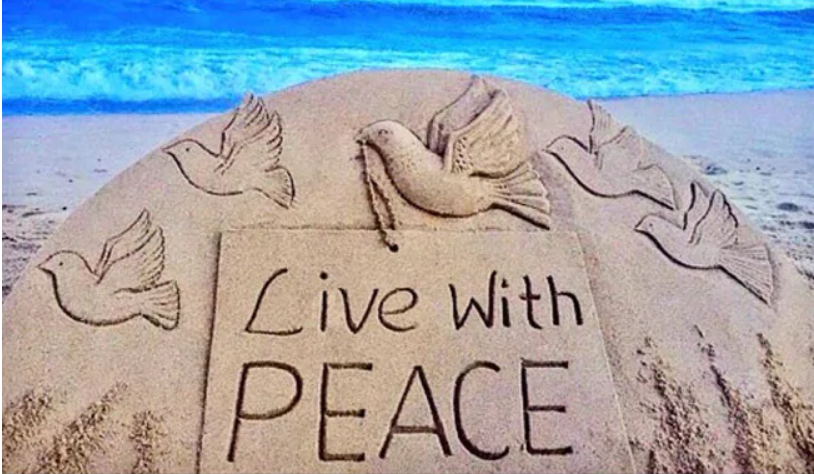
International Day of Peace aka World Peace Day is observed every year on September 21 to strengthen peace across nations. Over the years, many have worked towards bringing peace through different means. On the occasion of World Peace Day, here is a look back at Indians who won Nobel Peace Prize.

Published

on

International Peace Day 2021

International Day of Peace aka World Peace Day is observed every year on September 21 to strengthen peace across nations by observing 24 hours of non-violence and ceasefire.

The United Nations first observed World Peace Day in 1981 while the date to celebrate the day was eventually changed to September 21 in 2002.

The day is also a reminder for the people of all nations to think about universal peace.

The definition of peace is commonly associated with non-violence but it actually goes beyond efforts taken by people to make the world a better place.

The Nobel Peace Prize is the most well-known award given internationally to the people who have contributed to bring peace across the nations.

Over the years, many have worked towards bringing peace through different means.

On the occasion of World Peace Day, here is a look back at Indians who won Nobel Peace Prize. 
Mother Teresa

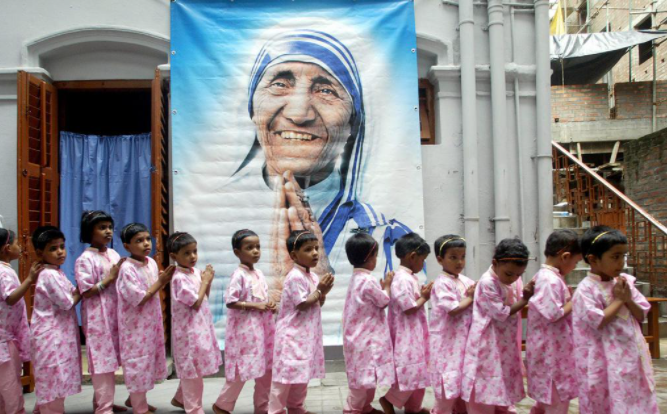
Mother Teresa, an Indian nun born in Macedonia, had won the Nobel Peace Prize in 1979 for her work with the poor and downtrodden, especially in Calcutta. Despite cashing the prize money, she donated it to the poor.

The award was given for work undertaken in the struggle to overcome poverty and distress in the world, which also constitute a threat to peace according to the Norwegian Nobel Committee.

She founded the religious congregation, Missionaries of Charity, in Calcutta in 1950 and worked with it till her death in 1997 in the same city.

Dalai Lama

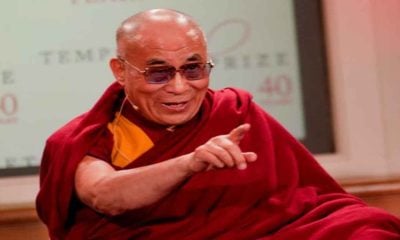
Dalai Lama had won Nobel Peace Prize in 1989, ten years after Mother Teresa. The Dalai Lama was born in Tibet’s Taktser but has been a resident of India since his exile in 1959. He arrived in Mussoorie first, before making Dharamshala in Himachal Pradesh his home. The world has acknowledged his efforts to bring Tibetan free from China through non-violence.

Kailash Satyarthi

In 2014, Kailash Satyarthi, an Indian social reformer won the Nobel Peace Prize along with Pakistani activist Malala Yousafzai, for his efforts to protect children from child labour and help them get an education.

Read Also: World Peace day 2021: UN counting on youth, for an equitable and sustainable world for all

Over 41 years, he has been involved in various initiatives, starting with the Bachpan Bachao Andolan in 1980, which works towards building a child-free society by providing free education.

Notably, Mahatma Gandhi was nominated five times for this award in 1937, 1938, 1939, 1947 and 1948 but did not receive it till the end.

India News

Op Aaghat 3.0: Delhi police arrest over 280 accused ahead of New Year celebrations

Delhi police arrested over 280 accused and detained more than 1,300 individuals under Operation Aaghat 3.0 ahead of New Year, seizing weapons, drugs, liquor and stolen items.

Published

on

Op Aaghat 3.0: Delhi police arrest over 280 accused ahead of New Year celebrations

Delhi police carried out a large-scale preventive crackdown across sensitive pockets of the national capital ahead of New Year, arresting hundreds of accused and detaining over a thousand individuals to ensure peaceful celebrations.

The overnight operation, conducted under Operation Aaghat 3.0, focused on crime-prone areas and resulted in major seizures, including illegal weapons, narcotics, illicit liquor, cash and stolen property, according to police officials.

Major arrests and seizures during the drive

As part of the intensified security drive, at least 285 accused were arrested under various legal provisions, including the Arms Act, Excise Act, NDPS Act and Gambling Act. In addition, 504 people were detained as a precautionary measure to prevent any untoward incidents during the festive period.

Police officials said the operation led to the recovery of 21 illegal weapons, including country-made pistols, along with 20 live cartridges and 27 knives. Authorities also seized over 12,000 quarters of illicit liquor, around Rs 2.5 lakh in cash, and nearly 7 kg of cannabis from different locations.

Focus on habitual offenders and vehicle theft

The crackdown also targeted repeat offenders. Under the operation, 116 habitual offenders, referred to by police as “bad characters,” were taken into custody, while 10 property offenders were arrested.

To curb vehicle-related crimes during New Year celebrations, police dismantled auto-lifting networks and arrested five auto-lifters. During the raids, 231 two-wheelers and one four-wheeler were seized.

Action against gambling and stolen goods

In a parallel action against gambling activities, police recovered Rs 2.3 lakh in cash. The operation also led to the recovery of about 210 stolen or lost mobile phones, offering relief to several complainants.

Apart from arrests and detentions, a total of 1,306 individuals were rounded up under preventive measures, officials added, stating that the coordinated effort was aimed at maintaining law and order and ensuring a crime-free New Year in the capital.

Continue Reading

India News

Over 2,000 Maoists surrender under Chhattisgarh rehabilitation policy, says CM Vishnu Deo Sai

Chhattisgarh Chief Minister Vishnu Deo Sai said more than 2,000 Maoists have surrendered under the state’s rehabilitation policy, which offers skill training, financial assistance and land support.

Published

on

CM surrender Maoist

Chhattisgarh Chief Minister Vishnu Deo Sai on Friday said that more than 2,000 Maoists have surrendered so far under the state’s rehabilitation policy, asserting that the government is committed to treating surrendered cadres fairly and supporting their reintegration into society.

Addressing the issue, the Chief Minister said the state government has repeatedly appealed to Maoists to abandon violence and gunfire and return to the mainstream of development. He said the impact of these efforts is now visible, with a large number of cadres laying down arms.

According to Vishnu Deo Sai, the rehabilitation framework focuses on long-term welfare. Surrendered Maoists are being provided skill training along with monthly financial assistance of Rs 10,000. He added that the new policy also includes provisions for allotment of land for farming and land to build houses in urban areas, aimed at securing their future and livelihood.

Fresh surrenders reported from Bijapur

Earlier, 34 Naxals surrendered in Chhattisgarh’s Bijapur district under the state government’s rehabilitation initiative titled Poona Margham: Punarvas Se Punarjeevan (Return to the Mainstream: Social Reintegration through Rehabilitation). Police officials said the surrendered cadres were carrying a cumulative reward of Rs 84 lakh.

Officials noted that the latest surrenders reflect the growing impact of sustained anti-Naxal measures combined with confidence-building initiatives focused on welfare and reintegration.

Centre’s target to eliminate Naxalism by March 2026

The Chief Minister’s remarks come amid the Central Government’s stated goal to eradicate Naxalism from the country by March 2026 under the leadership of Prime Minister Narendra Modi. Authorities believe that rehabilitation-driven policies, along with security operations, are playing a key role in weakening the influence of Left-wing extremism in affected regions.

Continue Reading

India News

Bangladeshi singer James’ concert cancelled after mob attack in Faridpur

A live concert by Bangladeshi singer James was cancelled in Faridpur after a mob allegedly attacked the venue with bricks and stones, raising concerns over safety of artists.

Published

on

Bangladesh singer concert

A concert by popular Bangladeshi singer James was cancelled in Faridpur, around 120 kilometres from Dhaka, after a mob allegedly threw bricks and stones at the venue, forcing local authorities to call off the event.

According to local reports, the concert was scheduled for 9 pm on Friday to mark the anniversary of a local school. A group of attackers attempted to forcibly enter the venue and began pelting stones, creating panic among the audience. Locals said students present at the site initially tried to resist the attackers, but the situation escalated, prompting authorities to cancel the programme.

Taslima Nasreen raises concern over attacks on culture

Author Taslima Nasreen highlighted the incident on social media, expressing concern over what she described as a growing pattern of attacks on artists and cultural spaces in Bangladesh. In her post, she referred to earlier incidents involving cultural institutions and said that the singer was not allowed to perform due to the actions of radical elements.

Nasreen also cited recent instances involving classical musicians. She mentioned that Siraj Ali Khan, grandson of renowned musician Ali Akbar Khan and a noted artist of the Maihar gharana, returned to India without performing in Dhaka, stating he would not return until artists and cultural institutions were safe. She further said that Arman Khan, son of Ustad Rashid Khan, had also declined an invitation to perform in Dhaka.

James’ popularity and wider concerns

James, a well-known Bangladeshi singer-songwriter, guitarist and composer, is the lead vocalist of the rock band Nagar Baul. He has also sung popular Hindi film songs such as Bheegi Bheegi from Gangster and Alvida from Life In A Metro, making him a familiar name across the region.

The cancellation of his concert has drawn attention to recent attacks on cultural organisations, artists and journalists in Bangladesh. Critics have alleged that the interim administration has failed to rein in violent mobs, amid claims that such incidents are contributing to a deteriorating law-and-order situation ahead of elections scheduled in February.

Continue Reading

Trending

© Copyright 2022 APNLIVE.com