
India News
Jaitley rushes in to defend demonetisation after RBI says 99 per cent banned notes back with banks

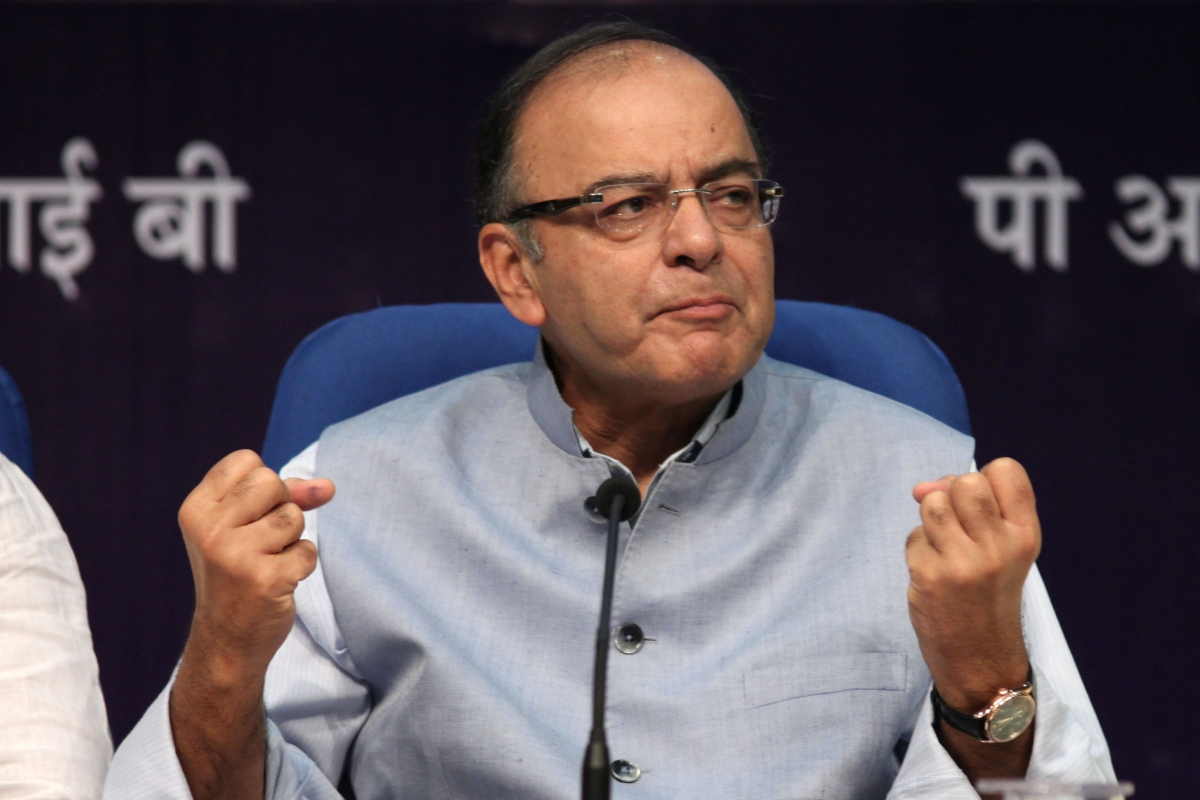
[vc_row][vc_column][vc_column_text]Finance minister admits that not all money deposited with banks post noteban was legal, claims objective of demonetisation was to gradually reduce cash flow and move towards a digitised economy
With the Reserve Bank of India (RBI) declaring that 99 per cent of the banned Rs 500 and Rs 1000 notes were deposited into various banks across the country after demonetisation, Prime Minister Narendra Modi’s claim that his sudden and radical move had crushed the shadow economy and eradicated black money is once again under scrutiny.
On Thursday, Union finance minister Arun Jaitley attempted to launch the Modi government’s refurbished defense of demonetisation that, from the time the Prime Minister announced it on November 8, has been attributed various motives by the Centre.
Insisting that the impact of noteban was “extremely positive”, the finance minister said on Thursday, “Confiscation of money was not the objective of demonetisation… It is needed to be seen in the context of a wider tax base, a more digitalised economy, lesser use of cash and an integration of the informal economy with the formal”.
“The object of demonetisation was not confiscation of money. The object was that India is predominantly a high cash economy therefore that scenario requires to be significantly altered… So rely more on banking transaction and digitisation. The RBI report says the volume of cash currency has come down by 17 per cent,” Jaitley said.
But then the finance minister also added that “My next step would be to end black money in polls”, clearly indicating that the shadow economy was still in operation. Though Jaitley claimed that “terrorist and Naxalite financing stopped almost entirely due to demonetisation”, he or the Modi government have failed to provide any evidence substantiating this claim so far.
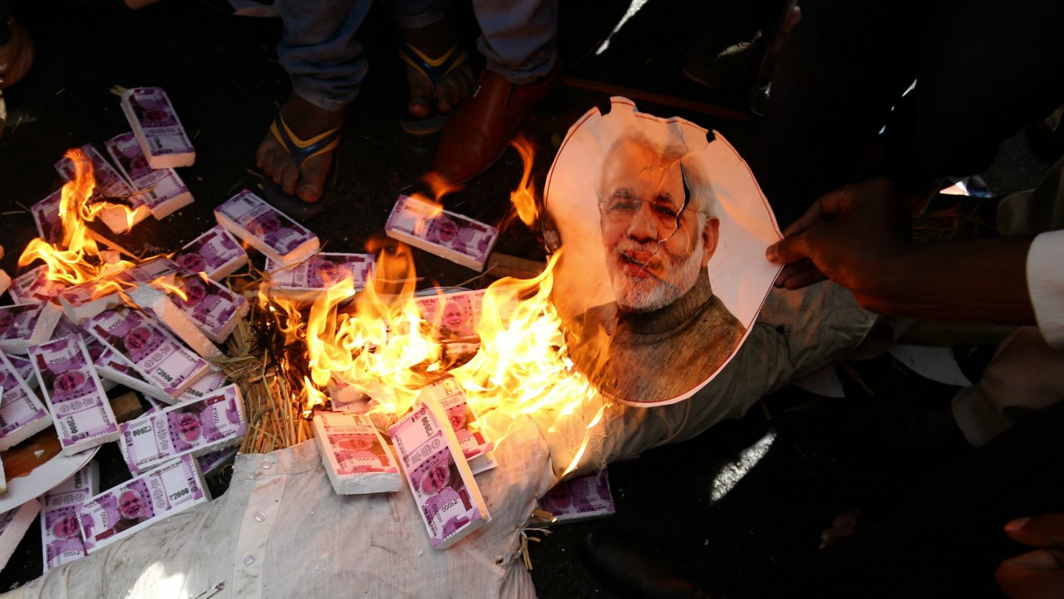
Modi’s originally stated goals of demonetisation were mainly three – clampdown on the black money in the system, ending cash-based corruption and strapping terrorists off funding. Of these, there is no visible evidence to show that the latter two have been achieved – terror strikes, especially in the strife-torn Jammu and Kashmir have only seen a steady increase over the past year while systemic corruption has clearly remained untouched.
That leaves the goal of eradicating black money from the system. If provisional figures released by the RBI – 10 months after the demonetisation exercise – are to be believed then “the estimated value of SBNs (specified bank notes of Rs 500 and Rs 1000) received as on 30 June 2017 is Rs 15.28 trillion (or Rs 15.28 lakh crore).”
Now a back of the envelope calculation would show that if the RBI’s estimate of invalidated Rs 500 and Rs 1,000 notes at the time of demonetisation being pegged at Rs 15.44 lakh crore or around 86 percent of the currency in circulation was correct then, as much as 99 percent of the demonetised currency has found its way back to India’s banking system. Only a little over Rs 16,000 crore of the demonetised Rs 15.44 lakh crore was not returned and could be termed as black money – though a large part of this money too could be what people failed to deposit in the banks due to various reasons, including the time-bar on returning the demonetised notes to banks and the overburdened banking system that saw serpentine queues of haggard citizens lining up at cash deposit counters everyday and often returning home without managing to reach the cashier.
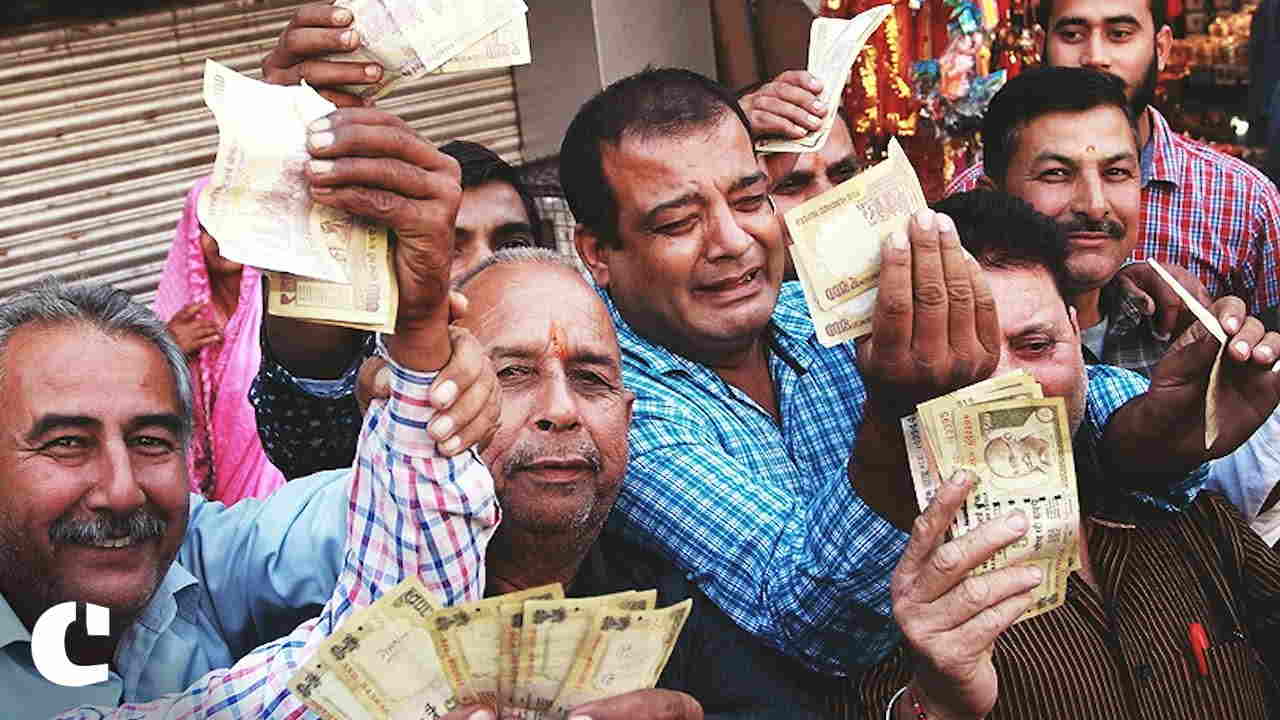
It is also pertinent to mention here that the Rs 15.28 lakh crore in demonetised notes that the RBI claims was back in the banking system is still a provisional figure. The RBI is still in the process of counting old notes received at cooperative banks and old notes submitted by citizens in institutions of Nepal. By the time these numbers are formalised, the final figure of demonetised notes that were deposited back with banks might even reach 100 per cent.
Jaitley underscored on Thursday that one of the objectives of demonetisation was also to check circulation of counterfeit currency. Now, the RBI report shows that the number of counterfeit notes detected during the exercise is only minuscule, just about 7.6 lakh pieces, as compared with 6.3 lakh pieces in the year ahead.
Defending the indefensible is often the test of a good lawyer and Jaitley is, in his professional life a senior and accomplished advocate. No wonder then that the finance minister used this skill in defense of noteban.
“It’s nobody’s case that black money has been completely eliminated after demonetisation… The fallout of demonetisation is on predicted lines… the fact that money got deposited in banks doesn’t make it legitimate money,” Jaitley claimed.
The clear admission of the finance minister about illicit money making its way back into the banking system shows that not only was demonetisation as a tool for eradicating black money an utter failure but also that those who possessed the illicit wealth were able to turn it into ‘white money’.
The RBI report also turns at least two claims made by the Modi government – one by Jaitley himself and the other by Attorney General Mukul Rohatgi – into clear instances of misleading the country.
Senior journalist MK Venu points out: “The finance minister had claimed in November that going by past experience about 15-20 per cent of the demonetised currency, roughly Rs 3 lakh crore, was likely to get extinguished and would not return to the system. It would be tantamount to confiscation and become RBI property, to be eventually handed over to government for the welfare of the poor. The then attorney general Mukul Rohatgi stated this before the Supreme Court. So how can Jaitley now say the confiscation of black money was never the objective? The cash that does not return to the system stands automatically confiscated. It is like money taxed at 100%.”
Forget Rs 3 lakh crore that Jaitley claimed would be ‘extinguished’ due to demonetisation, the banned notes that didn’t finds their way back to the banks – provisionally – account for just Rs 16000 crore.
As former finance minister P Chidambaram points out: “the RBI ‘gained’ Rs 16000 crore but ‘lost’ Rs 21000 crore in printing new notes (of Rs 500 and Rs 2000 that were introduced post noteban). The economist deserves a Nobel Prize!”
Chidambaram took a series of digs at the Centre and its demonetisation drive through his tweets.[/vc_column_text][vc_raw_html]JTNDYmxvY2txdW90ZSUyMGNsYXNzJTNEJTIydHdpdHRlci10d2VldCUyMiUyMGRhdGEtbGFuZyUzRCUyMmVuJTIyJTNFJTNDcCUyMGxhbmclM0QlMjJlbiUyMiUyMGRpciUzRCUyMmx0ciUyMiUzRVJzJTIwMTYwMDAlMjBjciUyMG91dCUyMG9mJTIwZGVtb25ldGlzZWQlMjBub3RlcyUyMG9mJTIwUnMlMjAxNTQ0JTJDMDAwJTIwY3IlMjBkaWQlMjBub3QlMjBjb21lJTIwYmFjayUyMHRvJTIwUkJJLiUyMFRoYXQlMjBpcyUyMDElMjUuJTIwU2hhbWUlMjBvbiUyMFJCSSUyMHdoaWNoJTIwJTI2JTIzMzklM0JyZWNvbW1lbmRlZCUyNiUyMzM5JTNCJTIwZGVtb25ldGlzYXRpb24lM0MlMkZwJTNFJTI2bWRhc2glM0IlMjBQLiUyMENoaWRhbWJhcmFtJTIwJTI4JTQwUENoaWRhbWJhcmFtX0lOJTI5JTIwJTNDYSUyMGhyZWYlM0QlMjJodHRwcyUzQSUyRiUyRnR3aXR0ZXIuY29tJTJGUENoaWRhbWJhcmFtX0lOJTJGc3RhdHVzJTJGOTAyODcxNTY1NDM5NzA1MDg4JTIyJTNFQXVndXN0JTIwMzAlMkMlMjAyMDE3JTNDJTJGYSUzRSUzQyUyRmJsb2NrcXVvdGUlM0UlMEElM0NzY3JpcHQlMjBhc3luYyUyMHNyYyUzRCUyMiUyRiUyRnBsYXRmb3JtLnR3aXR0ZXIuY29tJTJGd2lkZ2V0cy5qcyUyMiUyMGNoYXJzZXQlM0QlMjJ1dGYtOCUyMiUzRSUzQyUyRnNjcmlwdCUzRQ==[/vc_raw_html][vc_raw_html]JTNDYmxvY2txdW90ZSUyMGNsYXNzJTNEJTIydHdpdHRlci10d2VldCUyMiUyMGRhdGEtbGFuZyUzRCUyMmVuJTIyJTNFJTNDcCUyMGxhbmclM0QlMjJlbiUyMiUyMGRpciUzRCUyMmx0ciUyMiUzRTk5JTI1JTIwbm90ZXMlMjBsZWdhbGx5JTIwZXhjaGFuZ2VkJTIxJTIwV2FzJTIwZGVtb25ldGlzYXRpb24lMjBhJTIwc2NoZW1lJTIwZGVzaWduZWQlMjB0byUyMGNvbnZlcnQlMjBibGFjayUyMG1vbmV5JTIwaW50byUyMHdoaXRlJTNGJTNDJTJGcCUzRSUyNm1kYXNoJTNCJTIwUC4lMjBDaGlkYW1iYXJhbSUyMCUyOCU0MFBDaGlkYW1iYXJhbV9JTiUyOSUyMCUzQ2ElMjBocmVmJTNEJTIyaHR0cHMlM0ElMkYlMkZ0d2l0dGVyLmNvbSUyRlBDaGlkYW1iYXJhbV9JTiUyRnN0YXR1cyUyRjkwMjg3MjQxNTU3NDc5NDI0MSUyMiUzRUF1Z3VzdCUyMDMwJTJDJTIwMjAxNyUzQyUyRmElM0UlM0MlMkZibG9ja3F1b3RlJTNFJTBBJTNDc2NyaXB0JTIwYXN5bmMlMjBzcmMlM0QlMjIlMkYlMkZwbGF0Zm9ybS50d2l0dGVyLmNvbSUyRndpZGdldHMuanMlMjIlMjBjaGFyc2V0JTNEJTIydXRmLTglMjIlM0UlM0MlMkZzY3JpcHQlM0U=[/vc_raw_html][vc_column_text]The Twitteratti too gave a big thumbs down to demonetisation as well as Jaitley’s claims over the RBI report. All through Thursday hastags like #DeMonetisationFailed, #DeMonetisationDisaster and #DeMonetisationScam were trending on the micro-blogging website.[/vc_column_text][vc_raw_html]JTNDYmxvY2txdW90ZSUyMGNsYXNzJTNEJTIydHdpdHRlci10d2VldCUyMiUyMGRhdGEtbGFuZyUzRCUyMmVuJTIyJTNFJTNDcCUyMGxhbmclM0QlMjJlbiUyMiUyMGRpciUzRCUyMmx0ciUyMiUzRVdobyUyMHNheXMlMjAlM0NhJTIwaHJlZiUzRCUyMmh0dHBzJTNBJTJGJTJGdHdpdHRlci5jb20lMkZoYXNodGFnJTJGRGVNb25ldGlzYXRpb25GYWlsZWQlM0ZzcmMlM0RoYXNoJTIyJTNFJTIzRGVNb25ldGlzYXRpb25GYWlsZWQlM0MlMkZhJTNFJTNGJTIwTG9vayUyQyUyMHRoZXJlJTIwaXMlMjBubyUyMEJsYWNrJTIwbW9uZXklMjBub3clMjBidXQlMjBvbmx5JTIwUGluayUyQyUyMEJlaWdlJTJDJTIwSGFydmVzdCUyMEdvbGQlMjAlMjZhbXAlM0IlMjBUdXJxdW9pc2UlMjElMjAlRjAlOUYlQTQlQjclRTIlODAlOEQlRTIlOTklODIlRUYlQjglOEYlRjAlOUYlQTQlQTYlRTIlODAlOEQlRTIlOTklODIlRUYlQjglOEYlMjAlM0NhJTIwaHJlZiUzRCUyMmh0dHBzJTNBJTJGJTJGdC5jbyUyRmQ0dWJVak05SEolMjIlM0VwaWMudHdpdHRlci5jb20lMkZkNHViVWpNOUhKJTNDJTJGYSUzRSUzQyUyRnAlM0UlMjZtZGFzaCUzQiUyMEdhdXJhdiUyMFBhbmRoaSUyMCUyOCU0MEdhdXJhdlBhbmRoaSUyOSUyMCUzQ2ElMjBocmVmJTNEJTIyaHR0cHMlM0ElMkYlMkZ0d2l0dGVyLmNvbSUyRkdhdXJhdlBhbmRoaSUyRnN0YXR1cyUyRjkwMzExNTE1MjYyMjM2NjcyMiUyMiUzRUF1Z3VzdCUyMDMxJTJDJTIwMjAxNyUzQyUyRmElM0UlM0MlMkZibG9ja3F1b3RlJTNFJTBBJTNDc2NyaXB0JTIwYXN5bmMlMjBzcmMlM0QlMjIlMkYlMkZwbGF0Zm9ybS50d2l0dGVyLmNvbSUyRndpZGdldHMuanMlMjIlMjBjaGFyc2V0JTNEJTIydXRmLTglMjIlM0UlM0MlMkZzY3JpcHQlM0U=[/vc_raw_html][vc_raw_html]JTNDYmxvY2txdW90ZSUyMGNsYXNzJTNEJTIydHdpdHRlci10d2VldCUyMiUyMGRhdGEtbGFuZyUzRCUyMmVuJTIyJTNFJTNDcCUyMGxhbmclM0QlMjJlbiUyMiUyMGRpciUzRCUyMmx0ciUyMiUzRUZvciUyMHRoaXMlMjBtYW4lMjBhbG9uZSUyQyUyME5ldmVyJTIwZm9yZ2l2ZSUyMCUzQ2ElMjBocmVmJTNEJTIyaHR0cHMlM0ElMkYlMkZ0d2l0dGVyLmNvbSUyRm5hcmVuZHJhbW9kaSUyMiUzRSU0MG5hcmVuZHJhbW9kaSUzQyUyRmElM0UlMjAlMkMlMjAlM0NhJTIwaHJlZiUzRCUyMmh0dHBzJTNBJTJGJTJGdHdpdHRlci5jb20lMkZhcnVuamFpdGxleSUyMiUzRSU0MGFydW5qYWl0bGV5JTNDJTJGYSUzRSUyMCUyNmFtcCUzQiUyMGFsbCUyMHRob3NlJTIwd2hvJTIwZGVmZW5kJTIwJTNDYSUyMGhyZWYlM0QlMjJodHRwcyUzQSUyRiUyRnR3aXR0ZXIuY29tJTJGaGFzaHRhZyUyRkRlTW9uZXRpc2F0aW9uRmFpbGVkJTNGc3JjJTNEaGFzaCUyMiUzRSUyM0RlTW9uZXRpc2F0aW9uRmFpbGVkJTNDJTJGYSUzRSUyMHN0aWxsJTIwJTNDYSUyMGhyZWYlM0QlMjJodHRwcyUzQSUyRiUyRnQuY28lMkZOc01weEtidW1BJTIyJTNFcGljLnR3aXR0ZXIuY29tJTJGTnNNcHhLYnVtQSUzQyUyRmElM0UlM0MlMkZwJTNFJTI2bWRhc2glM0IlMjBHdXJwcmVldCUyMHNpbmdoJTIwUmlua3UlMjAlMjglNDByaW5rdWt1cmFsaSUyOSUyMCUzQ2ElMjBocmVmJTNEJTIyaHR0cHMlM0ElMkYlMkZ0d2l0dGVyLmNvbSUyRnJpbmt1a3VyYWxpJTJGc3RhdHVzJTJGOTAzMDkzNzYyNzc5Mjk5ODQwJTIyJTNFQXVndXN0JTIwMzElMkMlMjAyMDE3JTNDJTJGYSUzRSUzQyUyRmJsb2NrcXVvdGUlM0UlMEElM0NzY3JpcHQlMjBhc3luYyUyMHNyYyUzRCUyMiUyRiUyRnBsYXRmb3JtLnR3aXR0ZXIuY29tJTJGd2lkZ2V0cy5qcyUyMiUyMGNoYXJzZXQlM0QlMjJ1dGYtOCUyMiUzRSUzQyUyRnNjcmlwdCUzRQ==[/vc_raw_html][vc_column_text]Congress vice president Rahul Gandhi too joined the Twitteratti to hit out at the Centre over demonetisation.[/vc_column_text][vc_raw_html]JTNDYmxvY2txdW90ZSUyMGNsYXNzJTNEJTIydHdpdHRlci10d2VldCUyMiUyMGRhdGEtbGFuZyUzRCUyMmVuJTIyJTNFJTNDcCUyMGxhbmclM0QlMjJlbiUyMiUyMGRpciUzRCUyMmx0ciUyMiUzRUElMjBjb2xvc3NhbCUyMGZhaWx1cmUlMjB3aGljaCUyMGNvc3QlMjBpbm5vY2VudCUyMGxpdmVzJTIwYW5kJTIwcnVpbmVkJTIwdGhlJTIwZWNvbm9teS4lMjBXaWxsJTIwdGhlJTIwUE0lMjBvd24lMjB1cCUzRiUyMCUzQ2ElMjBocmVmJTNEJTIyaHR0cHMlM0ElMkYlMkZ0d2l0dGVyLmNvbSUyRmhhc2h0YWclMkZEZW1vbmV0aXNhdGlvbkRpc2FzdGVyJTNGc3JjJTNEaGFzaCUyMiUzRSUyM0RlbW9uZXRpc2F0aW9uRGlzYXN0ZXIlM0MlMkZhJTNFJTIwJTNDYSUyMGhyZWYlM0QlMjJodHRwcyUzQSUyRiUyRnQuY28lMkZZWE5kVzh4QlRMJTIyJTNFaHR0cHMlM0ElMkYlMkZ0LmNvJTJGWVhOZFc4eEJUTCUzQyUyRmElM0UlM0MlMkZwJTNFJTI2bWRhc2glM0IlMjBPZmZpY2UlMjBvZiUyMFJHJTIwJTI4JTQwT2ZmaWNlT2ZSRyUyOSUyMCUzQ2ElMjBocmVmJTNEJTIyaHR0cHMlM0ElMkYlMkZ0d2l0dGVyLmNvbSUyRk9mZmljZU9mUkclMkZzdGF0dXMlMkY5MDI5NDc0NzM4NzgwMTYwMDAlMjIlM0VBdWd1c3QlMjAzMCUyQyUyMDIwMTclM0MlMkZhJTNFJTNDJTJGYmxvY2txdW90ZSUzRSUwQSUzQ3NjcmlwdCUyMGFzeW5jJTIwc3JjJTNEJTIyJTJGJTJGcGxhdGZvcm0udHdpdHRlci5jb20lMkZ3aWRnZXRzLmpzJTIyJTIwY2hhcnNldCUzRCUyMnV0Zi04JTIyJTNFJTNDJTJGc2NyaXB0JTNF[/vc_raw_html][/vc_column][/vc_row]








India News
Supreme Court questions EC over missing records in Sringeri election dispute
The Supreme Court questioned the Election Commission over missing video footage of the 2023 counting in Karnataka’s Sringeri constituency. The case involves a revised result following a recount of postal ballots.

India News
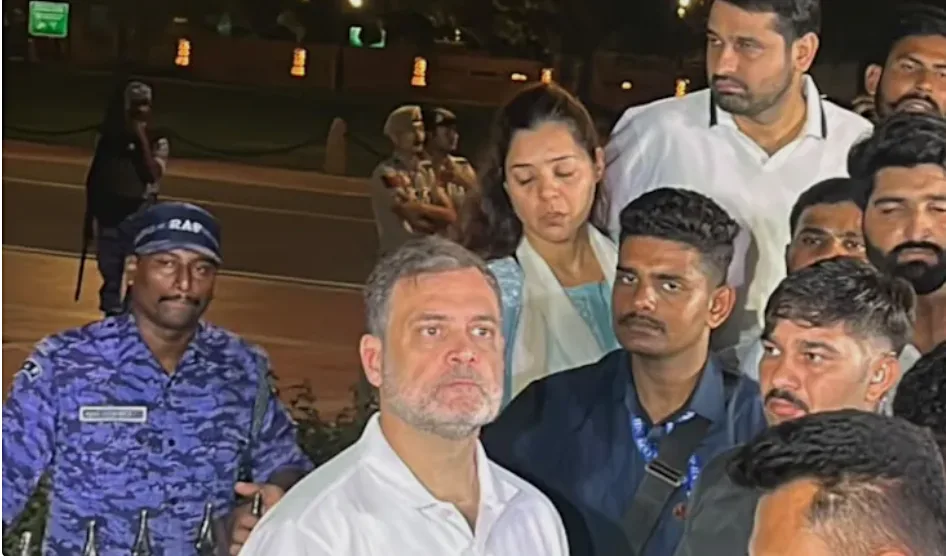
Rahul Gandhi joins India Gate protest by Ankita Bhandari’s parents
Rahul Gandhi joined the protest by Ankita Bhandari’s parents at India Gate in New Delhi on October 14. The demonstration has brought renewed attention to the 2022 murder case and the family’s concerns following Dushyant Gautam’s appointment as Sikkim Governor.
India News
Meerut murder: Muskaan Rastogi and Sahil Shukla get death sentence
A Meerut court has sentenced Muskaan Rastogi and Sahil Shukla to death in the blue drum murder case involving the killing of merchant navy officer Saurabh Rajput in March 2025.

CJP leaders Saurav Das, Ashutosh Ranka, Ajinkya Shinde sent to 5-day judicial custody

PM Modi speaks to Mark Carney as India and Canada push to strengthen ties

S Jaishankar says India is a natural option for Russia amid Europe tensions

Meerut murder: Muskaan Rastogi and Sahil Shukla get death sentence

Rahul Gandhi joins India Gate protest by Ankita Bhandari’s parents

Supreme Court questions EC over missing records in Sringeri election dispute
Rahul Gandhi joins India Gate protest by Ankita Bhandari’s parents
Meerut murder: Muskaan Rastogi and Sahil Shukla get death sentence
PM Modi speaks to Mark Carney as India and Canada push to strengthen ties
S Jaishankar says India is a natural option for Russia amid Europe tensions

Afghan Men Try To Hang With The Jet Engine Of The Aircraft in Kabul- Afghanistan News – Kabul News
Trending Top 10 News: 10000 Crore Fine on Flipkart, Apple to Launch Unique Feature, Hdfc Bank Job Ad

Trending Top 10 News: Nokia 6310, Apple sales, Bachpan ka Pyar Video Kid, Dainik Bhaskar IT Raid

Trending Top 10 News: Canada bans Indian flights, Rain in Delhi NCR, AIMIM Twitter hacked, Raj Kundra case

Trending Top 10 News: Shein India, Apple New Service, Pocket Oxygen, Oppo Launched New Phone
-
 India News20 hours ago
CJP leaders Saurav Das, Ashutosh Ranka, Ajinkya Shinde sent to 5-day judicial custody
-
 India News19 hours ago
PM Modi speaks to Mark Carney as India and Canada push to strengthen ties
-
 Latest world news20 hours ago
S Jaishankar says India is a natural option for Russia amid Europe tensions
-
 India News9 hours ago
Meerut murder: Muskaan Rastogi and Sahil Shukla get death sentence
-
 India News8 hours ago
Rahul Gandhi joins India Gate protest by Ankita Bhandari’s parents
-
 India News8 hours ago
Supreme Court questions EC over missing records in Sringeri election dispute
