English हिन्दी
Connect with us

India News

Jammu & Kashmir statehood: Omar Abdullah hopes UT status is temporary, asks Centre to fulfill its promise

He noted that the Supreme Court had also asserted that statehood should be reinstated promptly.

Published

on

Jammu & Kashmir statehood: Omar Abdullah hopes UT status is temporary, asks Centre to fulfill its promise

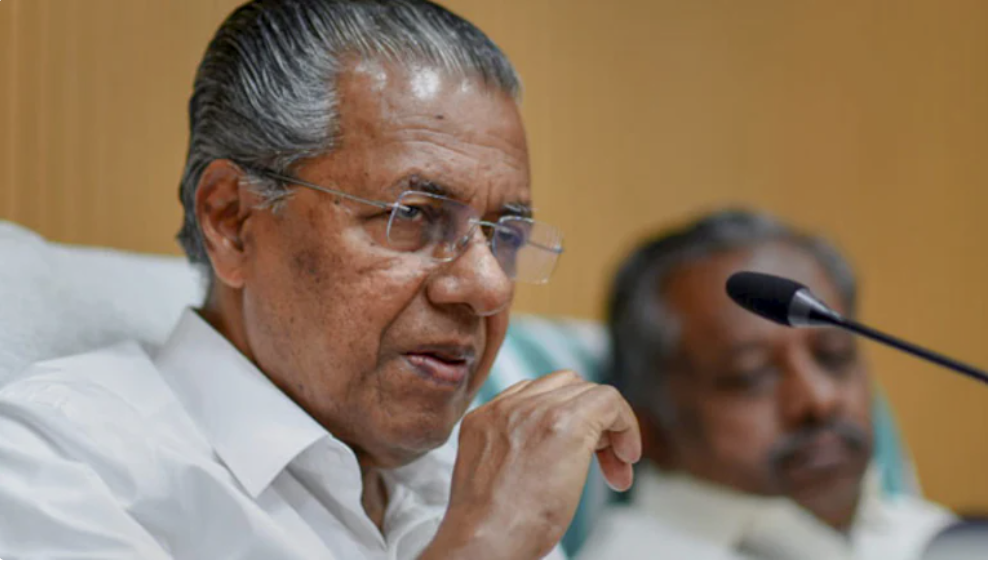
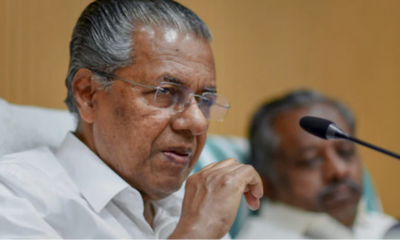
Jammu and Kashmir Chief Minister Omar Abdullah on Thursday expressed hope that J&K’s status as a Union Territory is a temporary situation and reiterated the central government’s commitment to restoring its statehood.

“It has been a little over two months since we assumed office. We needed time to comprehend the functioning of the UT government. Our previous experience of governance vastly differs from the current framework,” Abdullah stated during a media interaction at the Sher-i-Kashmir International Convention Centre (SKICC).

He described the initial phases of the new government as “decent” and indicated that they encountered minimal challenges. “We are committed to our election pledges. We have initiated the implementation of some promises, while others require systemic changes. I remain hopeful that Jammu and Kashmir’s status as a UT is only temporary,” Abdullah remarked.

The Chief Minister emphasized that the populace expects the fulfillment of the promises made to them, with the restoration of statehood being the most significant. He noted that the Supreme Court had also asserted that statehood should be reinstated promptly.

“A year has elapsed, and we believe this timeframe is adequate,” he added. Abdullah underlined the importance of respecting the sentiments of the people and addressing their aspirations.

Referring to the event, the Chief Minister characterized it as an interaction rather than a formal press conference. “We are not making any substantial announcements as speculated on social media. Our intention was merely to engage, and we will strive to respond to your inquiries,” he stated. He expressed a preference for such engagements without a set agenda at least twice annually.

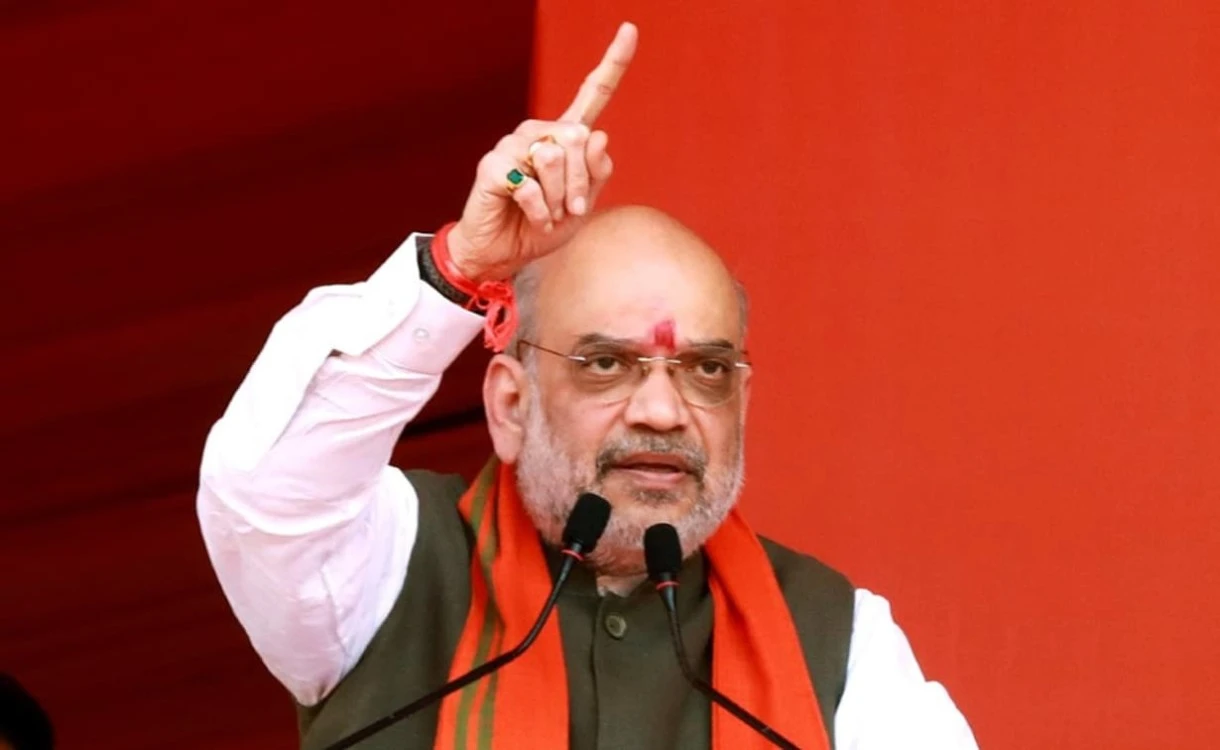
On December 19, 2024, Abdullah met with Union Home Minister Amit Shah in New Delhi, where they discussed the restoration of statehood for Jammu and Kashmir and the challenges faced by the newly elected government over the past two months. This meeting marked Abdullah’s second request to meet with the Home Minister since taking office. He has consistently advocated for the restoration of statehood to Jammu and Kashmir with the Centre.

“The meeting occurred in a cordial atmosphere, and conversations regarding the situation in Kashmir, particularly about restoring J&K’s statehood, have been ongoing. We are hopeful that these discussions will ultimately benefit the people of Jammu and Kashmir and lead to the restoration of statehood,” Abdullah remarked following the meeting.

Official sources indicated that Abdullah also addressed issues necessitating the Centre’s support for effective governance in Jammu and Kashmir. “The experiences and challenges we have encountered in the past two months, after establishing the popular government, were also discussed during this meeting,” Abdullah explained.

He also clarified the reasons for the delay in formulating the Transaction of Business Rules (TBR), which will outline the roles of the Chief Minister, the Council of Ministers, and the Lieutenant Governor in Jammu and Kashmir.

India News

First in my bloodline to build a rocket PM Modi recalls journey at IIT Delhi

PM Modi urged IIT Delhi graduates to stay curious, question accepted ideas and continuously learn during the institute’s 57th convocation.

Published

on

PM Modi

Prime Minister Narendra Modi urged IIT Delhi graduates to remain curious, question ideas that are accepted without thought and have the courage to find solutions as they begin the next chapter of their lives.

Addressing the 57th convocation ceremony of IIT Delhi, PM Modi said India’s young engineers are contributing to achievements in areas such as launch vehicles and rockets.

He highlighted the aspirations of young engineers while referring to the pride of someone becoming the “first in my bloodline to build a rocket.”

PM Modi’s message to IIT Delhi graduates

PM Modi asked the students not to limit themselves to questioning existing ideas but to also work towards finding solutions.

He said an empowered youth population would contribute to an empowered country and highlighted India’s efforts towards self-reliance in economic, technological and industrial sectors as part of the foundation of Viksit Bharat.

The Prime Minister also advised the graduates to keep their curiosity alive and maintain their instinct to learn.

‘The one who continuously learns is the one who will win’

Speaking about the rapid pace of technological change and its impact on the global landscape, PM Modi said the current period presents both challenges and opportunities.

He encouraged the students to continue learning throughout their lives, saying that those who keep learning will be the ones who succeed.

PM Modi also stressed that an IIT degree represents more than a high CGPA or a lucrative placement. According to him, the degree demonstrates the ability to solve difficult problems.

PM Modi praises students and new AI initiatives

The Prime Minister congratulated the graduating students and their families on their academic achievements and praised the medal recipients.

He also highlighted the launch of new artificial intelligence initiatives at the institute.

Reflecting on the students’ journey from orientation to convocation, PM Modi referred to the different paths they may now pursue, including taking up jobs, building startups or preparing for competitive examinations.

He urged the graduates to approach difficulties by breaking large challenges into smaller, manageable problems, drawing a parallel with solving complex laboratory simulations.

PM Modi said that while difficulties would arise in life, new opportunities would also emerge, and students should remain alert to them.

Continue Reading

India News

Amarnath Yatra Suspended From Jammu Amid Heavy Rain Forecast

Amarnath Yatra movement from Jammu was suspended on Saturday amid a forecast of heavy rain in Jammu and Kashmir.

Published

on

The Amarnath Yatra was suspended from Jammu on Saturday as authorities took precautionary measures following an adverse weather forecast and the possibility of heavy rainfall in Jammu and Kashmir, particularly in the Jammu division.

No fresh batch of pilgrims was allowed to leave the Bhagwati Nagar Yatri Niwas in Jammu for the Kashmir Valley on Saturday. Officials said the situation would be reviewed depending on weather conditions.

Weather forecast prompts precautionary halt

The decision came after the Meteorological Department forecast heavy rain in the region. Authorities are also closely monitoring the condition of the Jammu-Srinagar National Highway, which is the route used by pilgrims travelling from Jammu towards the yatra’s base camps.

Officials said the movement of pilgrims would depend on weather conditions and the status of the highway.

More than 4.75 lakh pilgrims had visited the holy cave shrine for darshan till Friday. The number of pilgrims arriving in Jammu for the pilgrimage has also declined.

Yatra continues from Baltal route

The annual Amarnath Yatra began on July 3 and is scheduled to conclude on August 28, coinciding with Shravan Purnima and Raksha Bandhan.

At present, pilgrims are undertaking the yatra from the Baltal base camp in north Kashmir’s Ganderbal district. The route from the Nunwan base camp in south Kashmir’s Pahalgam is currently unavailable because track maintenance work is underway.

The latest suspension follows an earlier one-day halt on Thursday due to security arrangements on the seventh anniversary of the abrogation of Articles 370 and 35A.

On Thursday, a fresh batch of 1,801 pilgrims left the Bhagwati Nagar Yatri Niwas in Jammu for Baltal. The group included men, women, sadhus and sadhvis and travelled in 74 vehicles under security arrangements.

More than 4.71 lakh pilgrims had darshan

Since the start of this year’s pilgrimage, more than 4.71 lakh pilgrims had already visited the holy cave shrine, according to officials.

The Amarnath cave is located at an altitude of around 3,880 metres in the Kashmir Himalayas. The shrine houses an ice stalagmite formation that changes in size with the phases of the moon and is revered by devotees as a symbol associated with Lord Shiva.

Continue Reading

India News

Delhi-NCR rain: IMD forecasts showers till August 14 amid waterlogging

Delhi-NCR is likely to see intermittent rain till August 14, with the IMD warning of waterlogging, traffic congestion and reduced visibility.

Published

on

Delhi Rain 2026

Delhi and several parts of the National Capital Region are likely to remain under generally cloudy skies with intermittent rain spells through August 14, according to the India Meteorological Department (IMD). The forecast comes after heavy rainfall caused widespread waterlogging and traffic disruptions across the region.

The IMD had issued a yellow alert for Delhi-NCR for August 8. The rain also brought down temperatures across the capital, with maximum temperatures remaining 3 to 7 degrees Celsius below the seasonal average.

Delhi records heavy rainfall

All 11 administrative districts of Delhi recorded significant rainfall during the 24-hour period ending at 8:30 am on August 8.

South Delhi recorded some of the highest rainfall totals. The automatic weather station at the Pharmaceutical Sciences and Research University recorded 165 mm of rain, while the IGNOU campus station recorded 138 mm and Aya Nagar received 115 mm.

Palam recorded 104.6 mm, Najafgarh 103.5 mm and Janakpuri 102.5 mm during the same observation period. At Safdarjung Observatory, the official baseline station for New Delhi, 98.7 mm of rainfall was recorded.

The neighbouring NCR cities also received significant rainfall. Gurgaon recorded 96.5 mm, while Ghaziabad received 33 mm and Noida 28.5 mm during the same 24-hour period.

Temperatures fall as rain continues

The widespread rainfall brought a sharp drop in temperatures across the capital. Daytime maximum temperatures ranged between 26.5 degrees Celsius and 28.4 degrees Celsius, compared with a climatological norm of around 34.2 degrees Celsius for this period.

Minimum temperatures were recorded between 21.7 degrees Celsius and 25.9 degrees Celsius, also remaining below seasonal averages. Relative humidity reached 100% at several monitoring stations, while easterly winds of 20 to 25 km/h added to the cool and damp conditions.

Why is Delhi receiving so much rain?

According to the IMD’s analysis, multiple weather systems are contributing to the current rainfall over Delhi-NCR.

The monsoon trough is passing across North India, while the remnants of a weakened low-pressure system are associated with a cyclonic circulation over northeast Rajasthan and neighbouring areas. A mid-tropospheric western disturbance is also interacting with the monsoon flow.

Delhi-NCR rain forecast till August 14

The IMD expects generally cloudy conditions with intermittent rain spells across Delhi and adjoining NCR cities, including Noida, Ghaziabad, Gurgaon and Faridabad, through August 14.

On Sunday, August 9, very light rain is possible from early morning to forenoon, with another light spell likely towards the evening. Temperatures are expected to rise slightly, with maximum temperatures between 33 and 35 degrees Celsius.

On Monday, August 10, the sky is expected to remain generally cloudy, with one or two spells of very light to light rain possible during the afternoon or evening.

On Tuesday, August 11, light rain is forecast from early morning to noon and again during the evening or night.

From Wednesday, August 12, to Friday, August 14, overcast conditions are expected to continue, with short spells of light rain possible between the forenoon and evening hours. Maximum temperatures are likely to remain between 32 and 35 degrees Celsius.

IMD issues waterlogging and travel advisory

The weather department has warned of localised waterlogging on major roads and low-lying underpasses, along with traffic congestion and reduced visibility during heavy downpours.

The IMD has advised commuters to check real-time traffic updates before travelling, follow directions issued by traffic authorities and avoid roads and underpasses that are prone to water accumulation during monsoon spells.

Continue Reading

Trending

© Copyright 2022 APNLIVE.com