English हिन्दी
Connect with us

India News

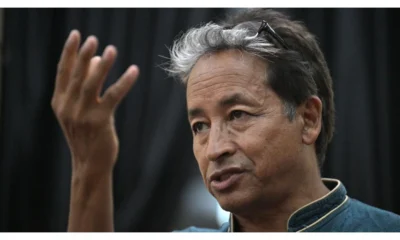
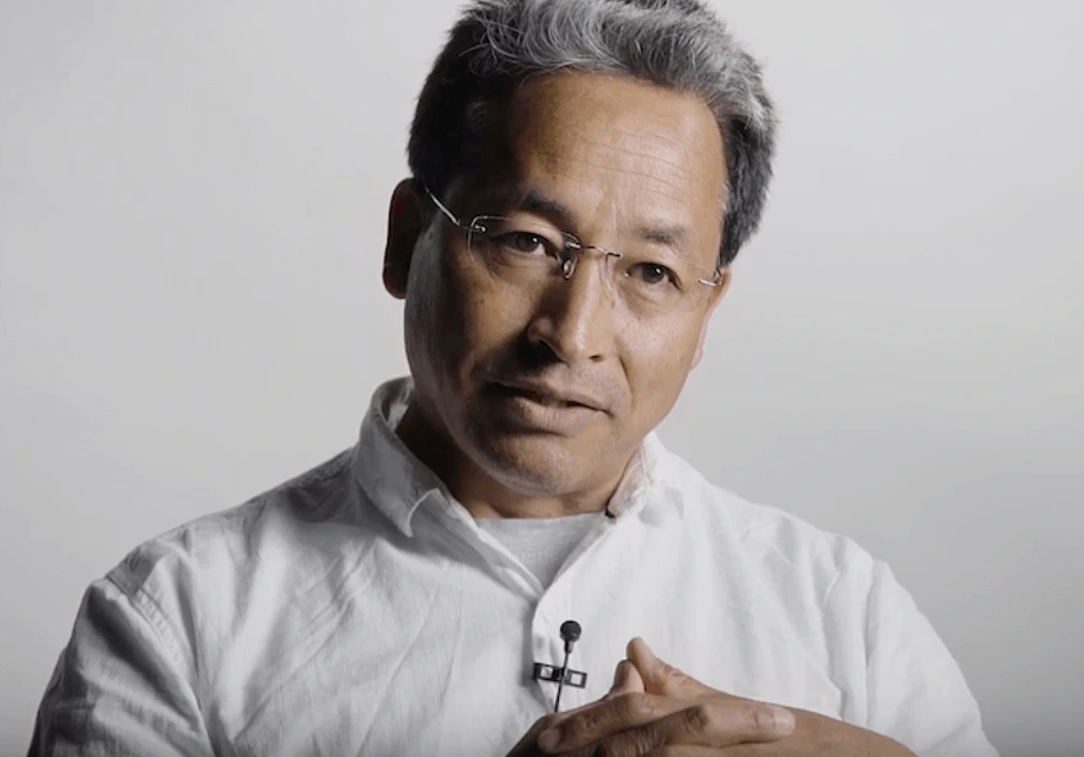
Centre revokes detention of climate activist Sonam Wangchuk after nearly six months

The central government has revoked the NSA detention of climate activist Sonam Wangchuk after nearly six months, saying the decision was taken after due consideration as Ladakh continues to witness political tensions.

Published

on

songm wangchuk

Climate activist Sonam Wangchuk, who had been detained for nearly six months under the National Security Act (NSA), will be released after the central government decided to revoke the detention order.

The Ministry of Home Affairs (MHA) said the decision was taken after due consideration, noting that Wangchuk had already completed nearly half of the permissible detention period under the law.

In a statement, the government said the move was part of its broader effort to maintain peace and encourage dialogue in Ladakh.

According to the ministry, the government remains committed to creating an atmosphere of stability and mutual trust in the region so that constructive engagement with all stakeholders can continue.

The statement added that ongoing protests and bandhs had affected normal life and disrupted several sections of society, including students, job seekers, businesses, tour operators and tourists.

The government also reiterated its commitment to providing safeguards for Ladakh and expressed hope that regional concerns would be resolved through discussions, including through the High-Powered Committee and other dialogue mechanisms.

Detained after protests in Leh

Wangchuk was detained on September 26 last year, two days after violent protests broke out in Leh over demands for statehood and constitutional protection for Ladakh.

The clashes reportedly left four people dead and about 50 others injured, including security personnel.

Authorities detained Wangchuk under the NSA on the orders of the Leh district magistrate to maintain public order. He was later transferred to Jodhpur prison.

Long-running agitation over Ladakh safeguards

The activist has been one of the prominent voices in the movement seeking constitutional safeguards for Ladakh, particularly the inclusion of the Union Territory under the Sixth Schedule of the Constitution.

Since 2023, Wangchuk has led campaigns highlighting the impact of climate change on Ladakh’s fragile ecosystem.

Last year, he undertook a 35-day fast demanding statehood and constitutional protections for the region. The protest eventually escalated into unrest, after which he called off the fast, saying his message of pursuing a peaceful path had not succeeded.

Legal challenge and court remarks

Wangchuk’s detention was challenged in the Supreme Court by his wife Gitanjali Angmo, an educator.

During the hearing, the court raised concerns about the translation of a speech cited as evidence for his detention. Judges observed that if a three-minute speech was transcribed into a seven- or eight-minute text, it could suggest possible malice.

Opposition reaction

Congress MP Shashi Tharoor welcomed the government’s decision to revoke the detention but questioned the length of time Wangchuk spent in custody.

In a post on social media platform X, Tharoor said the 169-day detention appeared excessively long and called on the Supreme Court to establish strict norms for the maximum period of detention without trial.

He also argued that indefinite detention without trial was a practice inherited from the colonial era and should not exist in a mature democracy.

India News

Paytm Payments Bank licence cancelled by RBI, regulator moves for winding up

RBI revokes Paytm Payments Bank licence over regulatory violations and begins winding-up process.

Published

on

Reserve Bank of India

Central bank cites regulatory violations and depositor interest concerns, initiates process to shut down operations

The Reserve Bank of India (RBI) has cancelled the banking licence of Paytm Payments Bank Limited, marking a major regulatory action against one of India’s prominent digital banking entities. The decision came into effect from the close of business on April 24, 2026.

With the licence revoked, the bank is no longer permitted to carry out any banking activities, including accepting deposits or offering services defined under banking laws. The RBI has also said it will approach the High Court to initiate the process of winding up the bank.

Reasons behind RBI action

The central bank cited multiple serious concerns in its order. It stated that the affairs of the bank were conducted in a manner detrimental to the interests of depositors and the broader public. Additionally, the management practices were found to be prejudicial to depositor interests.

The RBI further noted that the bank failed to comply with conditions attached to its payments bank licence, and allowing it to continue operations would not serve any public interest.

Long history of regulatory issues

The latest move comes after prolonged regulatory scrutiny. Earlier, in January 2024, the RBI had already barred Paytm Payments Bank from accepting fresh deposits due to non-compliance issues, including lapses in customer due diligence, fund usage, and technology systems.

Over time, restrictions tightened as the bank failed to address regulatory concerns, ultimately leading to the cancellation of its licence.

What happens to customers

Despite the shutdown process, the RBI has indicated that the bank has sufficient liquidity to repay its depositors during the winding-up phase.

Customers are expected to be able to withdraw their existing funds, although the bank will not be allowed to continue normal banking operations going forward.

Impact on fintech sector

The cancellation of Paytm Payments Bank’s licence is being seen as one of the strongest regulatory actions in India’s fintech space. It signals stricter enforcement of compliance norms and could have wider implications for digital banking and payments companies operating under similar frameworks.

Continue Reading

India News

Raghav Chadha joins BJP, claims two-thirds of AAP Rajya Sabha MPs merging with ruling party

Raghav Chadha joins BJP and claims two-thirds of AAP’s Rajya Sabha MPs are merging, marking a major political shift.

Published

on

A major political development unfolded on Friday as Raghav Chadha announced his decision to join the Bharatiya Janata Party, claiming that a significant section of the Aam Aadmi Party’s Rajya Sabha members will also merge with the ruling party.

Addressing a press conference, Chadha said that nearly two-thirds of AAP’s Members of Parliament in the Rajya Sabha have decided to move to the BJP. He added that the decision has been formally communicated to the Chairman of the Upper House.

According to available information, AAP currently has around 10 MPs in the Rajya Sabha, which means roughly 6 to 7 members could be part of this shift.

Chadha described the move as a political and ideological decision, alleging that AAP had moved away from its original principles of clean and honest governance. He stated that he had been associated with the party for over a decade but now felt compelled to take a different path.

Several other MPs, including leaders like Sandeep Pathak and Ashok Mittal, were also present during the announcement and are expected to be part of the transition.

Political reactions and implications

The development is being seen as a major setback for AAP and its leadership under Arvind Kejriwal. The party has accused Chadha of betraying its mandate, while also criticising the BJP over the development.

On the other hand, the move could strengthen the BJP’s position in the Rajya Sabha, potentially aiding its legislative agenda in the Upper House.

Importantly, the merger may not attract disqualification under the anti-defection law, as Indian constitutional provisions allow such a shift if two-thirds of a party’s legislators agree to merge with another party.

This marks one of the most significant political realignments involving AAP in recent years and could have wider implications for opposition politics at the national level.

Continue Reading

India News

Mamata Banerjee says she will take over Delhi after Bengal win, sharpens attack on BJP

Mamata Banerjee says her party will move towards Delhi after winning Bengal, signalling national ambitions.

Published

on

Mamata Banerjee

West Bengal Chief Minister Mamata Banerjee has made a strong political statement during the ongoing West Bengal assembly elections 2026, saying her party will aim for a larger role at the national level after securing victory in the state.

Addressing a rally, Banerjee said that once her party wins the Bengal elections, it will move forward to “take over Delhi,” indicating a broader political strategy beyond the state. The remark comes at a time when campaigning has intensified across constituencies.

Her statement is being seen as part of a wider push by the Trinamool Congress to position itself as a key force against the Bharatiya Janata Party at the national level.

Banerjee has repeatedly expressed confidence that her party will return to power in West Bengal, aiming for another consecutive term.

Political context

The West Bengal elections have witnessed aggressive campaigning from both the ruling Trinamool Congress and the BJP. Leaders from both sides have exchanged sharp remarks, highlighting the high-stakes nature of the contest.

Banerjee’s latest comment adds to her earlier calls for opposition unity and signals her intent to expand political influence beyond the state. Similar remarks in recent weeks have indicated that her party sees the Bengal result as a stepping stone toward a larger national role.

At the same time, BJP leaders have projected confidence about their performance in the elections, further intensifying the political contest.

High-stakes election

The 2026 West Bengal assembly elections are crucial for both parties, with the Trinamool Congress seeking to retain power and the BJP aiming to make significant inroads in the state.

Banerjee’s “Delhi” remark underscores the broader national implications of the election, as regional parties increasingly position themselves in the national political landscape.

Continue Reading

Trending

© Copyright 2022 APNLIVE.com