English हिन्दी
Connect with us

India News

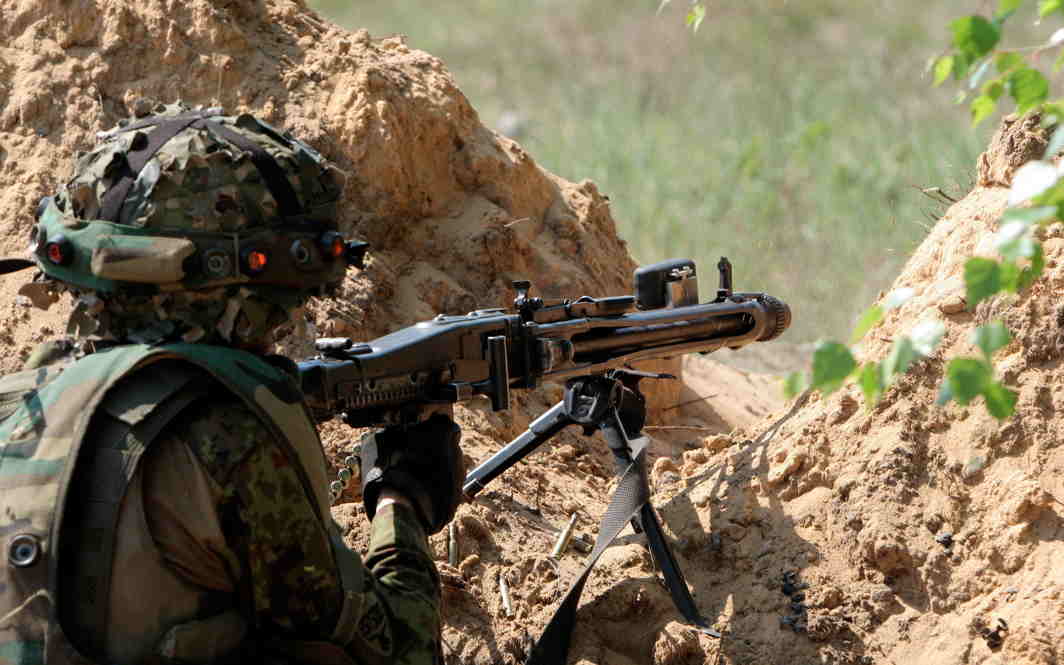
Kashmir back on boil after six killed by security forces

Published

on

Situation in sought Kashmir took a turn for the worse on Monday, March 5, as people came out on streets to protest the deaths in firing by security forces on Sunday.

Hundreds of people, including some gun-toting militants reportedly attended the funeral of a slain Lashkar-e-Taiba commander in south Kashmir despite prohibitory orders and a clamp down on internet services across the Kashmir Valley.

Media reports said there were dozens of clashes involving stone-pelting erupted in Shopian.

While the security forces claim that all those killed were militants or their over-ground workers, separatist leaders and locals alleged that four of them were civilians.

The deaths on Sunday evening occurred after a militant travelling in a car attacked an Indian Army’s mobile vehicle checkpost near Pahnoo village in Shopian district, some 60 km south of Srinagar. An Army spokesperson claimed the youths were overground militant workers, but local residents claimed they were civilians travelling in the car, according to media reports. Four persons were confirmed dead on Sunday night and two more bodies were recovered on Monday morning, said reports quoting the police.

While the police have not identified the three youths killed on Sunday, locals identified them as Suhail Ahmad Wagay , Nawaz Ahmad Wagay and Shahid Khan, said a report in The Hindustan Times (HT).

While the army called them “over-the-ground workers or accomplices” of the militants travelling in a Maruti Swift car, the locals said they were just civilians. A statement by police spokesman also referred to the three youths as “individuals”, the HT report said.

A relative of Suhail said the three were innocent and had nothing to do with militancy. “Suhail was a 22-year-old man doing fruit business of his family. His father and brother were in Delhi for business. Suhail had hired the services of the other two boys to help him transport fruit carts into the cold storage. He had called them overnight and was taking them home so that they could start work early next morning,” HT quoted Suhail’s relative, Fayaz Ahmad Mir, as saying.

Mir said that the three had bullet wounds in their backs. “No militant was accompanying them. He had called his family minutes before the shootout saying he was reaching home with the two boys.”

On the slain militant, the army’s identification differed from that of the police. While the army said he was Shahid Ahmad Dar, a resident of Jamnagri Shopian, the police spokesman identified him as Amir Ahmed Malik, a resident of Harmeen Shopian, belonging to banned LeT outfit and active since July 2017.

Later, police said they recovered the bullet-ridden body of Lashkar-e-Taiba militant Ashiq Hussain Bhat at Saidpora area in Shopian, about six km from the firing spot. He was missing since November 13, 2017.

“Preliminary investigation suggests that Bhat’s death was part of Sunday’s gunfight in Pahnoo village. Further investigation is on,” a police officer was quoted as saying.

The body of a civilian, Gowhar Ahmad Lone, 24, was also found on Monday morning, some 250 metres away from the gunfight site.

The killings have triggered outrage in the Valley.

Chief Minister Mehbooba Mufti said she was “deeply distressed by more deaths of civilians caught in the crossfire in Shopian” and expressed her “heartfelt condolences to the deceased’s families”.

Separatist leaders Syed Ali Geelani, Mirwaiz Umar Farooq and Yasin Malik called for a valley-wide protest shutdown against the killings.

Fearing street protests, the authorities imposed restrictions in parts of Srinagar city and south Kashmir region. Internet connectivity in south Kashmir was suspended while its speed was curbed at other places in the Valley.

The State Public Service Commission ordered the cancellation of Monday’s civil services exams in the state. All university and school board exams scheduled on Monday were postponed.

People thronged Kapran village of Shopian to participate in the funeral of Lashkar commander Ashiq Hussain Bhat. Half a dozen militants were also seen offering the congregational Nimaz-e-Janaza of the slain commander. The militants then fired in the air to honour their dead colleague.

Protests also broke out in neighbouring Anantnag and Pulwama districts, north Kashmir’s Bandipora district and Badgam in central Kashmir where youths clashed with the security forces.

Jammu and Kashmir Liberation Front chief Malik was arrested from here on Monday during a protest march against the killings. Police intercepted the Malik-led protest march and took the separatist leader and some of his supporters into custody.

India News

Delhi-Meerut Namo Bharat corridor set to extend till Haridwar and Rishikesh

The proposed 150-km Meerut-Haridwar-Rishikesh Namo Bharat corridor has received in-principle approval, with DPR survey work underway to expand rapid rail connectivity between Delhi-NCR, western Uttar Pradesh and Uttarakhand.

Published

on

The proposed expansion of the Namo Bharat rapid rail network is set to strengthen connectivity between Delhi-NCR and Uttarakhand, with plans to extend the Delhi-Meerut corridor to Haridwar and Rishikesh.

The upcoming Meerut-Haridwar-Rishikesh Regional Rapid Transit System (RRTS) corridor has received in-principle approval, and work on the Detailed Project Report (DPR) survey is currently underway.

The proposal was approved during a meeting attended by Uttarakhand Chief Minister Pushkar Singh Dhami and Union Housing and Urban Affairs Minister Manohar Lal Khattar.

The National Capital Region Transport Corporation (NCRTC), along with the governments of Uttar Pradesh and Uttarakhand, will jointly work on extending the existing Delhi-Meerut Namo Bharat corridor.

Proposed route to cover around 150 km

The proposed rapid rail extension will be around 150 kilometres long and will begin from Modipuram, the last station of the Delhi-Meerut Namo Bharat corridor.

Of the total distance, approximately 72 kilometres will be in Uttar Pradesh, passing through Meerut and Muzaffarnagar, while the remaining 78 kilometres in Uttarakhand will cover Roorkee, Haridwar and Rishikesh.

According to the proposed alignment, the train will run through Modipuram, Daurala, Khaatauli, Muzaffarnagar, Purkazi and Roorkee before reaching Har Ki Pauri in Haridwar and terminating near Lakshman Jhula in Rishikesh.

To facilitate project implementation, the Uttarakhand government has appointed Additional Secretary Reena Joshi as the nodal officer. NCRTC and the Uttar Pradesh government have also designated coordination officers to expedite land acquisition and route survey work.

Direct link with Delhi-Meerut Namo Bharat corridor

The proposed corridor will connect with the existing 82.15-km Delhi-Ghaziabad-Meerut Namo Bharat corridor through Modipuram station.

Once operational, commuters will get direct connectivity to stations including Sahibabad, Duhai, Guldhar, Anand Vihar and Sarai Kale Khan via the existing rapid rail network. The project is also expected to improve access for passengers travelling from Noida and Ghaziabad to Rishikesh.

Better interchange with upcoming rapid rail corridors

The expansion will also integrate with other planned Namo Bharat corridors across the National Capital Region.

Sarai Kale Khan will serve as the principal interchange hub for the proposed Delhi-Gurugram-Shahjahanpur-Neemrana-Alwar corridor, allowing passengers travelling from Haridwar and Rishikesh to reach destinations such as Gurugram, Neemrana and Alwar through the rapid rail network.

Passengers travelling towards Haryana will also benefit from interchanges with the proposed Delhi-Sonipat-Panipat corridor at Sarai Kale Khan or Hazrat Nizamuddin.

In addition, the planned Ghaziabad-Noida International Airport corridor will enable travellers from Haridwar, Rishikesh and Muzaffarnagar to access Noida International Airport in Jewar through the Ghaziabad interchange.

Metro and rail connectivity to improve

Passengers using the Namo Bharat service will continue to have access to the Delhi Metro’s Blue and Pink Lines from Anand Vihar, along with connectivity to Anand Vihar Railway Terminal and the Inter-State Bus Terminal (ISBT).

The Pink Line also provides direct access to Hazrat Nizamuddin Railway Station and the ISBT.

With the proposed expansion, the Namo Bharat network is expected to enhance regional connectivity by linking religious destinations such as Haridwar and Rishikesh with Delhi, the National Capital Region and the upcoming Noida International Airport.

Continue Reading

India News

Under fire for donation theft, Ram temple trust calls for applications for CEO post

Published

on

By

The Shri Ram Janmabhoomi Teerth Kshetra Trust has invited applications for the post of its first Chief Executive Officer (CEO) to strengthen the administration of the Ram Temple in Ayodhya.

The Trust has set a July 18, 4 pm deadline for applications. This is the first time the Trust is appointing a CEO to oversee the temple’s day-to-day functioning.

The decision was taken under the leadership of Trust Chairman Mahant Nritya Gopal Das. The selected CEO will work under Trust General Secretary Champat Rai and will be responsible for managing the temple’s daily operations, supervising administrative departments, coordinating with officials, ensuring smooth arrangements for devotees, and maintaining transparency in the temple’s functioning.

The Trust notification said candidates applying for the post should be between 50 and 70 years of age and must have at least three years of experience in a senior administrative or leadership position. Applicants should also be practising Hindus and devotees of Lord Ram. To ensure a fair selection process, the Trust has formed a three-member committee to examine applications and recommend suitable candidates for the final appointment.

The move comes after the Trust decided to further strengthen its administrative system as the number of visitors to the Ram Temple continues to increase. In recent months, the temple administration has also focused on improving financial monitoring and overall management, making the appointment of a professional CEO an important step.

The Ram Temple in Ayodhya has emerged as one of India’s most prominent pilgrimage destinations since its inauguration. Every day, thousands of devotees visit the temple, creating the need for a dedicated executive to manage operations efficiently and ensure better services for pilgrims.

The Trust believes that appointing its first CEO will improve coordination, accountability, and administrative efficiency while supporting the temple’s future expansion plans. After the application deadline on July 18, the selection committee will review all applications before making its recommendation. The final appointment will be made by the Shri Ram Janmabhoomi Teerth Kshetra Trust, marking a significant milestone in the professional management of the Ram Temple.

The Trust has been at the receiving end of the public backlash following the theft of money and articles donated to the temple. Investigations are underway to find the real culprits.

Continue Reading

India News

Sonam Wangchuk’s health declines during hunger strike, actor Omi Vaidya calls for more popular support

Published

on

By

Actor Omi Vaidya, best known for playing Chatur Ramalingam in 3 Idiots, has appealed to people to support climate activist Sonam Wangchuk, whose health has reportedly deteriorated during his indefinite hunger strike on the Cockroach Janta Patry dais at Jantar Mantar in New Delhi.

Sharing a video message on Instagram, Vaidya referred to Wangchuk as the “real-life Phunsukh Wangdu,” the character in 3 Idiots inspired by the Ladakh-based innovator. He urged people not to remain silent and said, “Don’t let Phunsukh Wangdu die.” Calling Wangchuk’s work an inspiration, the actor appealed for greater support as concerns over the activist’s health continue to grow.

Recent updates from Wangchuk’s supporters indicate that his health has significantly declined after fasting for over two weeks. His blood glucose level reportedly dropped to 67 mg/ dL, and he has lost over 8 kg since beginning the indefinite hunger strike. The protest is aimed at drawing attention to environmental protection and governance-related demands concerning Ladakh.

Sonam Wangchuk, an engineer, education reformer and Ramon Magsaysay Award winner, is widely recognised as the real-life inspiration behind Wangdu, the iconic character played by Aamir Khan in Rajkumar Hirani’s 2009 film 3 Idiots. Although Wangchuk has previously distanced himself from direct comparisons with the character, his work in education and sustainable development has often been linked to the film.

Vaidya’s appeal has added a film industry voice to the growing concern over Wangchuk’s health. As his hunger strike continues, supporters and public figures have called for immediate attention to his condition and renewed dialogue over the issues he has raised. The protest is underway demanding Education Minister Dharmendra Pradhan resign over the NEETUG fiasco.


Continue Reading

Trending

© Copyright 2022 APNLIVE.com