English हिन्दी
Connect with us

India News

Maharashtra elections: Milind Deora to fight against Aaditya Thackeray from Worli seat

The elections for the 288 Assembly seats in Maharashtra are scheduled for November 20, with the counting of votes set to take place on November 23.

Published

on

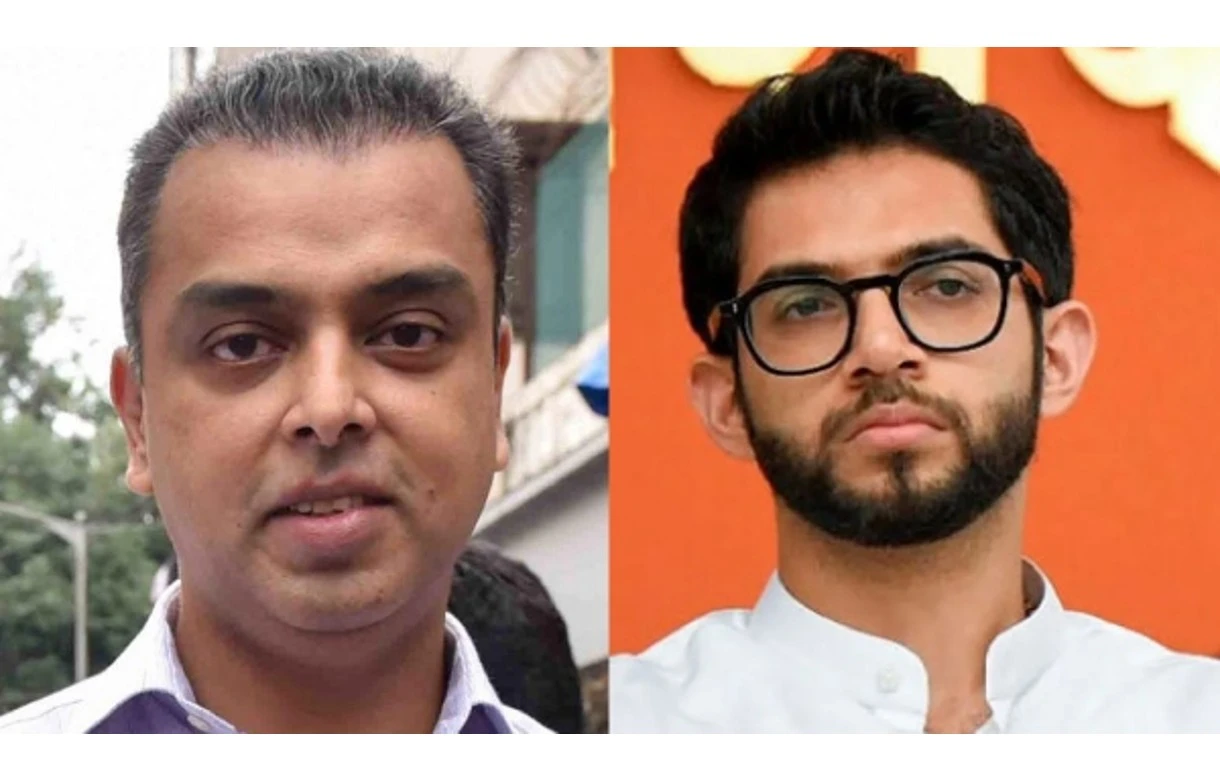
Maharashtra Chief Minister Eknath Shinde-led Shiv Sena has declared Rajya Sabha MP Milind Deora as its candidate for the Worli Assembly seat, setting the stage for a high-stakes battle against Shiv Sena (UBT) leader Aaditya Thackeray.

Taking to X on Friday, Deora said: “Chief Minister Eknath Shinde believes that justice for Worli and Worlikars is long overdue. Together, we’re paving the way forward and will share our vision soon. It’s Worli now!”

Deora, who recently switched from the Congress party to Shiv Sena due to feeling marginalised, was initially considered for the South Mumbai seat against Arvind Sawant of Shiv Sena and was expected to contest in the election. However, ultimately, another member from Shiv Sena’s Byculla constituency unsuccessfully vied for that seat.

The Worli constituency, which Thackeray won in his electoral debut in 2019, is now poised for a triangular contest, with Maharashtra Navnirman Sena’s (MNS) Sandeep Deshpande emerging as the third contender.

Aaditya Thackeray filed his nomination from the traditional Worli seat on Thursday, expressing his confidence to win in the upcoming state polls and hoping that people would bless him with their votes.

Speaking to ANI, he said, “I am very confident that the people will bless me because we are about to form government in Maharashtra and that is for sure. As you can see, this atmosphere is very good, you can see the love people are giving me.”

Thackeray’s interest in contesting from Worli prompted strategic moves by the party, including bringing Ahir into their fold and elevating him to the Legislative Council. Additionally, Shinde was similarly accommodated to ensure a clear path for Thackeray.

Releasing its first list of candidates on Tuesday, which included Chief Minister Eknath Shinde contesting from Kopri-Panchpakhadi in Thane city and more than half a dozen cabinet members from their respective seats, the ruling Shiv Sena also renominated almost all the MLAs who supported Shinde during his revolt against the then Chief Minister Uddhav Thackeray in June 2022. The party aims to contest a total of 45 seats in the state Assembly elections.

The Shiv Sena’s announcement comes shortly after its ally, the BJP, released a list of 99 candidates for the state Assembly polls.

The elections for the 288 Assembly seats in Maharashtra are scheduled for November 20, with the counting of votes set to take place on November 23.
India News

Congress protests against Gyanesh Kumar, demands Election chief’s resignation

Congress workers took to the streets against Chief Election Commissioner Gyanesh Kumar, with protests and demonstrations held over the party’s allegations concerning the Election Commission.

Published

on

Congress stepped up its campaign against Chief Election Commissioner Gyanesh Kumar, with party workers taking to the streets and demanding his resignation amid the ongoing row over the Election Commission.

The protests followed repeated criticism by Congress leaders of the poll panel and its functioning. The party has alleged irregularities in the electoral process and has sought accountability from the Election Commission.

Congress leaders have also targeted Gyanesh Kumar personally, with Rahul Gandhi among those calling for the Chief Election Commissioner to step down.

Congress takes protest to streets

Congress workers staged demonstrations in different places as part of the party’s campaign against the Election Commission.

The protests featured sharp symbolism, including masks and handcuffs, as Congress sought to highlight its allegations against the poll panel and demand action against Gyanesh Kumar.

The demonstrations are part of a wider confrontation between the Congress and the Election Commission over issues related to electoral rolls and the conduct of elections.

Congress demands Gyanesh Kumar’s resignation

The Congress has repeatedly demanded the resignation of Gyanesh Kumar, accusing the Election Commission of failing to adequately address the concerns raised by the opposition party.

Rahul Gandhi has also stepped up his criticism of the poll panel. In a statement on Thursday, he demanded that Gyanesh Kumar resign and alleged that the Election Commission had acknowledged the issue of “vote theft”. These are allegations made by the Congress and should not be treated as an established finding unless confirmed by the relevant authority.

The dispute comes amid a broader political debate over electoral rolls, voter verification and the functioning of the Election Commission.

Election Commission under opposition scrutiny

The Congress has intensified its campaign against the poll body in recent weeks, with party leaders repeatedly questioning its decisions and procedures.

The Election Commission, meanwhile, has maintained that India’s electoral process is conducted according to the Constitution, electoral laws and prescribed procedures. Chief Election Commissioner Gyanesh Kumar has previously defended the integrity of the electoral system and rejected claims that electronic voting machines can be remotely hacked.

The latest protests add to the continuing political confrontation over the Election Commission and the opposition’s demands concerning the poll panel’s functioning.

Continue Reading

India News

Assam makes Muslim marriage registration compulsory under new rules

Assam has approved rules for compulsory registration of Muslim marriages, with couples able to register through government marriage registrars.

Published

on

The Assam Cabinet has approved the Assam Muslim Marriage Registration (Compulsory) Rules, 2026, establishing the procedure for mandatory registration of Muslim marriages in the state.

The rules operationalise the Assam Compulsory Registration of Muslim Marriages and Divorces Act, 2024, which replaced the earlier Assam Muslim Marriages and Divorces Registration Act, 1935.

Who will register Muslim marriages in Assam?

Chief Minister Himanta Biswa Sarma said Muslim couples will now be able to register their marriages with government marriage registrars.

The government had earlier decided that kazis would not register Muslim marriages under the new system, but there was uncertainty over who would carry out the registration. The newly approved rules establish the registration mechanism through marriage registrars.

Sarma said that if the number of applications becomes large, the government could give marriage-registration powers to officers at the panchayat level so that applicants do not face difficulties.

What does the 2024 law say?

The 2024 Act made the registration of Muslim marriages and divorces with the government mandatory. It also prohibits registration of marriages that do not meet the legally prescribed minimum age requirements.

The law specifies the minimum marriage age as 18 years for females and 21 years for males.

The legislation was introduced by the Assam government with the stated objective of curbing child marriage and ending the earlier kazi-based registration system.

Under the previous 1935 law, marriage registration was conducted through kazis and was not compulsory. The earlier system also allowed registration involving minors in certain circumstances, while the new law does not permit such registration.

Registration timeline and penalties

The 2024 legislation provides that Muslim marriages should be registered within 30 days of the marriage. It also provides for registration of divorces within one month of their occurrence.

The law also contains penalties for violations. Producing fake or forged certificates can attract imprisonment of up to two years, a fine of up to Rs. 10,000, or both, along with action under relevant provisions of the Bharatiya Nyaya Sanhita, 2023.

Registering a marriage in violation of the law can attract imprisonment of up to one year and a fine of up to Rs. 50,000.

The Assam Cabinet’s approval of the 2026 rules provides the administrative framework for implementing the compulsory registration system.

Continue Reading

India News

Trump-Xi Summit: Trade, Taiwan and AI among key takeaways

Trade, Taiwan, artificial intelligence and strategic rivalry were among the key issues highlighted during Donald Trump’s summit with Xi Jinping in Washington.

Published

on

Trump-Xi Summit

US President Donald Trump and Chinese President Xi Jinping met at the White House amid discussions on trade, artificial intelligence and the broader strategic relationship between the United States and China.

The summit came as Washington and Beijing continued to navigate disagreements over tariffs, Chinese purchases, rare-earth supplies, technology restrictions and Taiwan.

Here are five key takeaways from the Trump-Xi summit.

Trade truce gets an extension

The United States and China agreed to extend their trade truce by two months, giving both sides additional time for negotiations.

US Treasury Secretary Scott Bessent said the extension would provide Washington and Beijing more time to work on economic issues. However, several major questions remain part of the negotiations, including tariffs, Chinese purchases, rare-earth supplies and technology restrictions.

Bessent said China was meeting its earlier commitment to buy 25 million tonnes of US soybeans but was behind its pledge to purchase $17 billion worth of other agricultural goods.

US officials have also said that Chinese rare-earth deliveries were falling short.

Taiwan remains a major point of tension

Taiwan was another important issue during the discussions.

Xi Jinping pressed Trump on Taiwan and urged the United States to handle the issue with “prudence”, according to China’s official news agency. Its English-language service also said Xi hoped Washington would oppose Taiwanese independence.

The report noted that the US has traditionally said it does not support Taiwanese independence, while avoiding an explicit statement that it opposes it.

There was no immediate White House readout of the exchange on Taiwan.

Trump and Xi differ on AI

Artificial intelligence was another area where the two leaders expressed different positions.

Trump has said he wants to avoid new AI guardrails and instead rely on the US Department of Justice. He has also maintained that China shares this approach.

Xi, however, said the United States and China have both the capability and responsibility to develop and manage AI for good.

He said AI development should remain under human control and serve people’s well-being.

The contrasting positions underline the importance of AI and technology in the broader US-China relationship.

Strategic rivalry remains a concern

Xi also referred to the “Thucydides Trap”, a theory associated with the risk of conflict between a rising power and an established one.

He argued that competition between the United States and China should be about catching up rather than a contest in which one side must defeat the other.

Xi said the risks could be overcome and called for regular military dialogue and stronger mechanisms to prevent crises.

Trump, meanwhile, highlighted areas where the two countries could cooperate, referring to their shared wartime history and common interests.

Summit also featured elaborate ceremony

The White House visit was accompanied by an elaborate display of ceremony.

The programme included military performances, fighter jets and bombers flying overhead, as well as the recently redesigned South Lawn and a large helipad bearing the presidential seal.

The highly publicised setting contrasted with the unresolved differences between Washington and Beijing on trade, Taiwan, technology and strategic issues.

The summit therefore highlighted both the effort to maintain dialogue between the two powers and the significant issues that remain unresolved.

Continue Reading

Trending

© Copyright 2022 APNLIVE.com