English हिन्दी
Connect with us

India News

French President Emmanuel Macron, Malaysia PM Anwar Ibrahim pay tribute to former PM Manmohan Singh

Malaysia PM Anwar Ibrahim said that the weight of grief bears down on him at the news of the passing of his cherished friend Manmohan Singh.

Published

on

French President Emmanuel Macron, Malaysia PM Anwar Ibrahim pay tribute to former PM Manmohan Singh

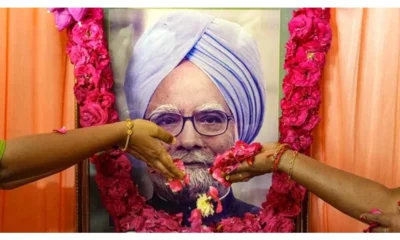
French President Emmanuel Macron and Malaysia Prime Minister Anwar Ibrahim paid tribute to former Prime Minister Manmohan Singh, who passed away on Thursday. Manmohan Singh was India’s 14th Prime Minister. 

French President Emmanuel Macron said that India has lost a great man and France a true friend, in the person of Dr. Manmohan Singh. The President added that  Manmohan Singh devoted his life to his country. 

Remembering the former Prime Minister, Malaysia PM Anwar Ibrahim said that the weight of grief bears down on him at the news of the passing of his cherished friend Manmohan Singh. He added that obituaries, essays and books, a plenty there will surely be about this great man, celebrating him as the architect of India’s economic reforms. As Prime Minister, Dr Manmohan Singh was the midwife of India’s emergence as one of the world’s economic giant, he continued.
The Malaysia Prime Minister further recalled that not many people know this, and it is time that he share it with Malaysians that during the years of his incarceration, Manmohan Singh extended a kindness that he didn’t have to, one that was neither politically expedient nor, as one can imagine, appreciated by the Malaysian government at that time. Yet, true to his character, he did it anyway, he continued.

PM Anwar Ibrahim said that the former Prime Minister offered scholarships for his children, particularly his son, Ihsan. Although he had declined the gracious offer, such a gesture undoubtedly showed Manmohan Singh’s extraordinary humanity and generosity, demonstrative, as the Bard would have it, of a man so full of the milk of human kindness.

Speaking to the media, former Sri Lankan President Ranil Wickremesinghe said that he has known Manmohan Singh since 1992, and had discussions with him. He remembered him as a good friend, a good leader, and one of those who made modern India.

Former Prime Minister Manmohan Singh died due to age-related medical complications. He had been in poor health for the past few months. The funeral will be held at 9:30 am on Saturday with full state honours. Also, a seven-day state mourning will be observed throughout the country as a mark of respect to Dr Manmohan Singh. 

India News

Supreme Court stays defamation case against Rahul Gandhi over PM Modi remarks

The Supreme Court has temporarily halted trial court proceedings in the criminal defamation case against Rahul Gandhi over his alleged remarks concerning Prime Minister Narendra Modi. The court has issued notices seeking responses within four weeks.

Published

on

Rahul Gandhi

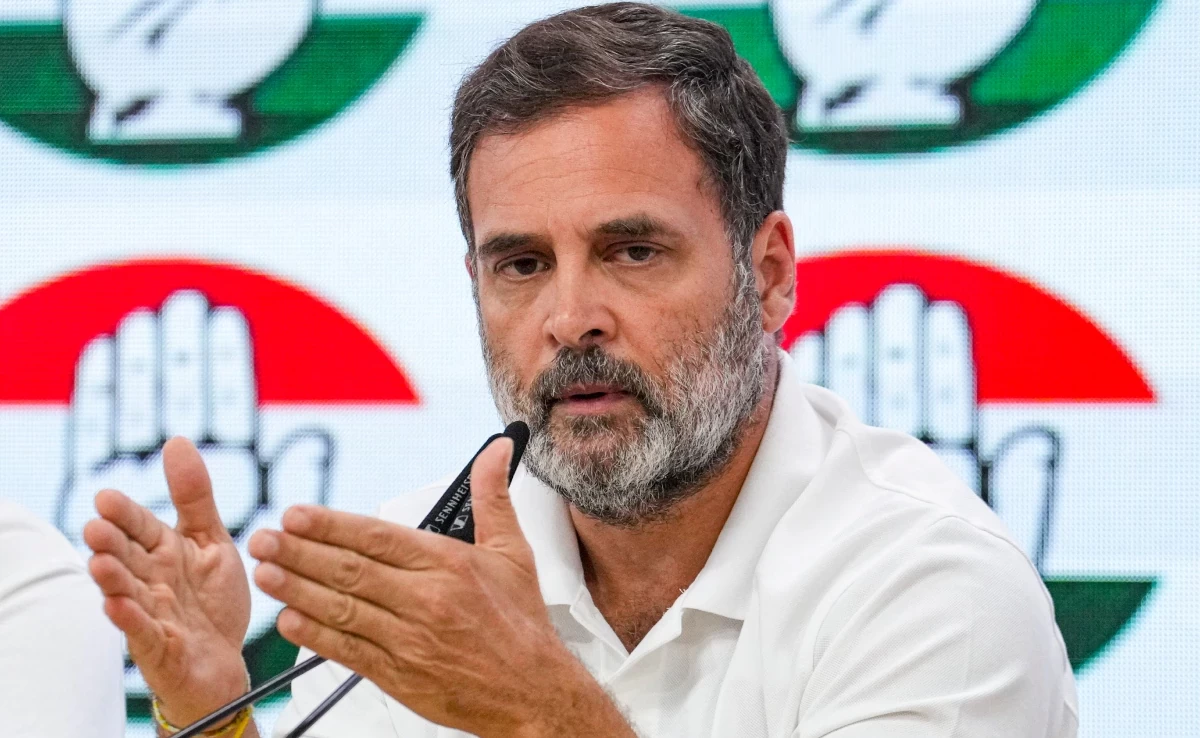
The Supreme Court has stayed further proceedings before the trial court in a criminal defamation case against Congress leader Rahul Gandhi over his alleged remarks concerning Prime Minister Narendra Modi.

A bench comprising Justices Vikram Nath and Aparesh Kumar Singh issued notices to the Maharashtra government and the complainant, seeking their responses within four weeks. The order provides interim relief to Gandhi while the Supreme Court considers his challenge to an earlier Bombay High Court decision.

The case concerns remarks allegedly made by Gandhi in 2018. A magistrate’s order dated August 28, 2019, initiated proceedings against him in the criminal defamation case. The Supreme Court’s latest order temporarily pauses the trial court proceedings; it does not amount to a final ruling on the allegations.

Why Rahul Gandhi approached the Supreme Court

Gandhi challenged the Bombay High Court’s September 8 order, which declined to quash the summons issued against him in the criminal defamation case.

The complaint was filed by Maharashtra-based BJP member Mahesh Shrishrimal before a magistrate court in Girgaum, Mumbai. The complaint concerns remarks Gandhi allegedly made about Prime Minister Narendra Modi during a public address in Rajasthan on September 20, 2018.

The complainant alleged that Gandhi’s remarks were defamatory and affected the reputation of the Prime Minister and BJP members. These remain allegations and have not been established by a final court judgment. These are allegations in the complaint, rather than findings established by a final court judgment.

Gandhi had sought to have the criminal proceedings quashed, challenging the maintainability of the complaint and the complainant’s standing to bring the case.

What the Bombay High Court had ruled

On September 8, the Bombay High Court rejected Gandhi’s plea to quash the criminal defamation proceedings.

The Bombay High Court rejected Gandhi’s plea to quash the proceedings, holding that the complaint could not be dismissed at that stage merely on the ground that the complainant was a BJP member. It observed that whether the alleged remarks were directed solely at the Prime Minister or could also affect members of the party would require examination during the trial.

The High Court’s decision allowed the proceedings to remain in place, although it had earlier provided temporary protection to Gandhi to enable him to approach the Supreme Court.

What happens next

The Supreme Court has now stayed further proceedings before the trial court and sought responses from the Maharashtra government and Mahesh Shrishrimal within four weeks.

The Supreme Court has sought responses within four weeks. The next hearing date should be included only if it has been confirmed by the court or the reference report. The interim stay pauses the trial court process while the Supreme Court considers Gandhi’s challenge to the High Court’s order.

The latest development does not determine whether the alleged remarks amount to criminal defamation. That issue remains subject to the legal proceedings.

Continue Reading

India News

CJP claims Saurav Das, Ashutosh Ranka detained at Jantar Mantar

The Cockroach Janta Party (CJP) claimed that leaders Saurav Das and Ashutosh Ranka were detained by Delhi Police during a protest at Jantar Mantar against Chief Election Commissioner Gyanesh Kumar.
Published

on

Saurabh Das Ashutosh Ranka

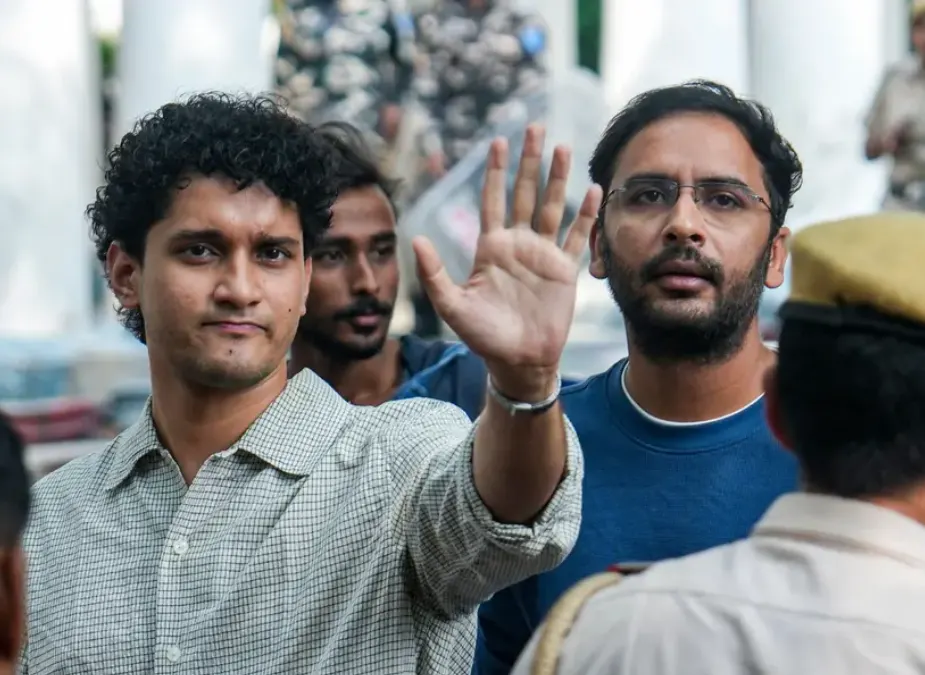
The Cockroach Janta Party (CJP) claimed on Tuesday, October 13, that its leaders Saurav Das and Ashutosh Ranka had been detained during a protest in Delhi against Chief Election Commissioner Gyanesh Kumar. The party said its members had reached the protest site carrying the national flag.

The CJP has been organising protests against alleged irregularities in the Special Intensive Revision (SIR) of electoral rolls. The party has demanded accountability from the Election Commission and the resignation of the Chief Election Commissioner.

CJP founder Abhijeet Dipke said that Saurav Das, Ashutosh Ranka and other party members had been detained, according to the party’s account.

Dipke criticised the restrictions on protests, saying that resistance could not be stopped by changing the status of a designated protest venue.

Why the CJP is protesting

The CJP has been protesting against Chief Election Commissioner Gyanesh Kumar over alleged irregularities in the voter-roll revision exercise. The party has raised concerns about the deletion and alleged manipulation of voters’ names. These claims remain allegations and should not be treated as independently established findings.

Earlier detention of CJP leaders

The latest reported detentions follow an earlier incident involving CJP founder Abhijeet Dipke and leaders Saurav Das and Ashutosh Ranka. The three were detained at Delhi’s Indira Gandhi International Airport on October 10 ahead of the planned Jantar Mantar demonstration.

According to related reporting, the three CJP leaders were released on October 11 following proceedings before an executive magistrate after furnishing a surety bond for maintaining peace and good behaviour for one year.

The CJP’s claims come amid its protests against Chief Election Commissioner Gyanesh Kumar over alleged irregularities in the voter-roll revision exercise.

Continue Reading

India News

Rahul Gandhi leads INDIA bloc march to Supreme Court over voter list row

Rahul Gandhi led the INDIA bloc’s protest march towards the Supreme Court in New Delhi as opposition parties intensified their campaign over the voter list revision process and alleged electoral irregularities.

Published

on

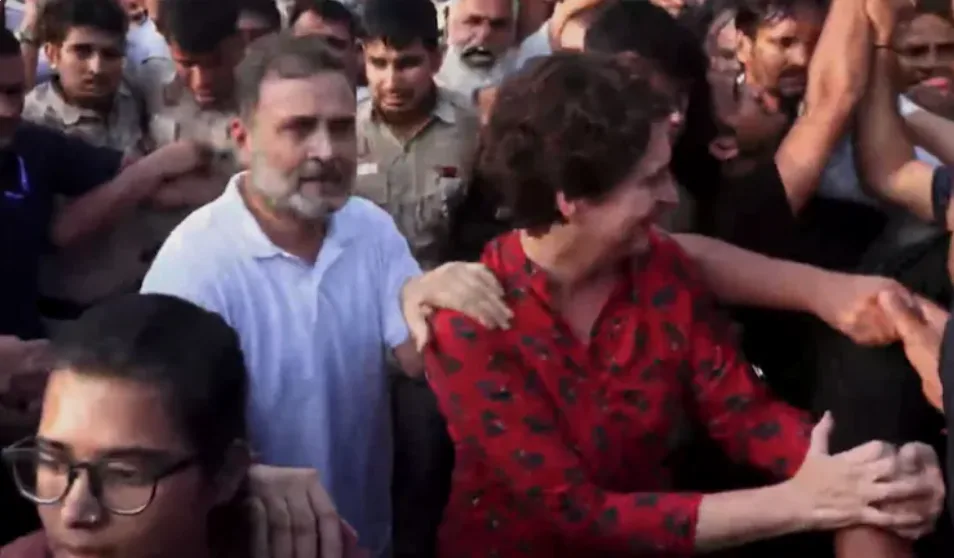
Congress leader Rahul Gandhi led an INDIA bloc protest march towards the Supreme Court in New Delhi on Monday, October 12, as opposition parties stepped up their campaign over alleged irregularities in the revision of electoral rolls.

The demonstration was part of a wider opposition mobilisation demanding accountability from Chief Election Commissioner Gyanesh Kumar over the Special Intensive Revision (SIR) of voter lists. Opposition leaders have alleged irregularities in the revision of electoral rolls and have called for action against Chief Election Commissioner Gyanesh Kumar 

The opposition has accused the Election Commission of electoral irregularities in connection with the Special Intensive Revision (SIR) of electoral rolls. Rahul Gandhi has called for Chief Election Commissioner Gyanesh Kumar to resign 

INDIA bloc intensifies protest over voter lists

The march brought opposition parties together around their objections to the SIR process and their demand for Kumar’s resignation. Rahul Gandhi had called on political parties, students and civil society groups to participate in the demonstration.

The INDIA bloc has also raised broader concerns about electoral integrity and the treatment of voters whose names were removed from electoral rolls. The INDIA bloc has challenged alleged electoral irregularities in the SIR process and demanded accountability from Chief Election Commissioner Gyanesh Kumar. 

According to the report, the opposition’s legal team filed a petition against the poll panel chief over alleged ‘vote chori’ (vote theft). 

Chief Justice declines meeting request

Ahead of the march, Chief Justice of India Surya Kant declined a request to meet opposition leaders, according to reports citing sources familiar with the response.

The response did not prevent the opposition from proceeding with its planned march. The Supreme Court can consider legal challenges through its judicial process, rather than through an administrative meeting with a political delegation.

Security measures and metro restrictions in Delhi

Authorities tightened security in parts of central Delhi ahead of the demonstration. The Delhi Metro Rail Corporation announced that entry and exit at six stations would remain closed until 4 pm on October 12 for security reasons.

The affected stations were Patel Chowk, Janpath, Rajiv Chowk, Mandi House, Central Secretariat and Barakhamba Road. Interchange facilities remained available at the affected stations under the announced arrangement.

The restrictions came amid a series of protests in the capital over demands for Kumar’s resignation and allegations concerning the electoral roll revision process.

Dispute over the SIR process continues

The Special Intensive Revision has become a point of contention between opposition parties and the Election Commission, with opposition leaders alleging electoral irregularities in the revision of voter lists. 

The INDIA bloc’s campaign has focused on electoral irregularities and demands for accountability from the Election Commission’s leadership 

The dispute is now unfolding through both street protests and legal proceedings. The outcome will depend on the relevant judicial processes and any further decisions by the authorities concerned.

Continue Reading

Trending

© Copyright 2022 APNLIVE.com