
India News
RIP Mannu Bhandari: Here are some notable works by novelist who portrayed Indian women in new light
Mannu Bhandari who is known for her short stories and novels dies at the age of 90 because of age-related ailments. Here are some of her notable works.

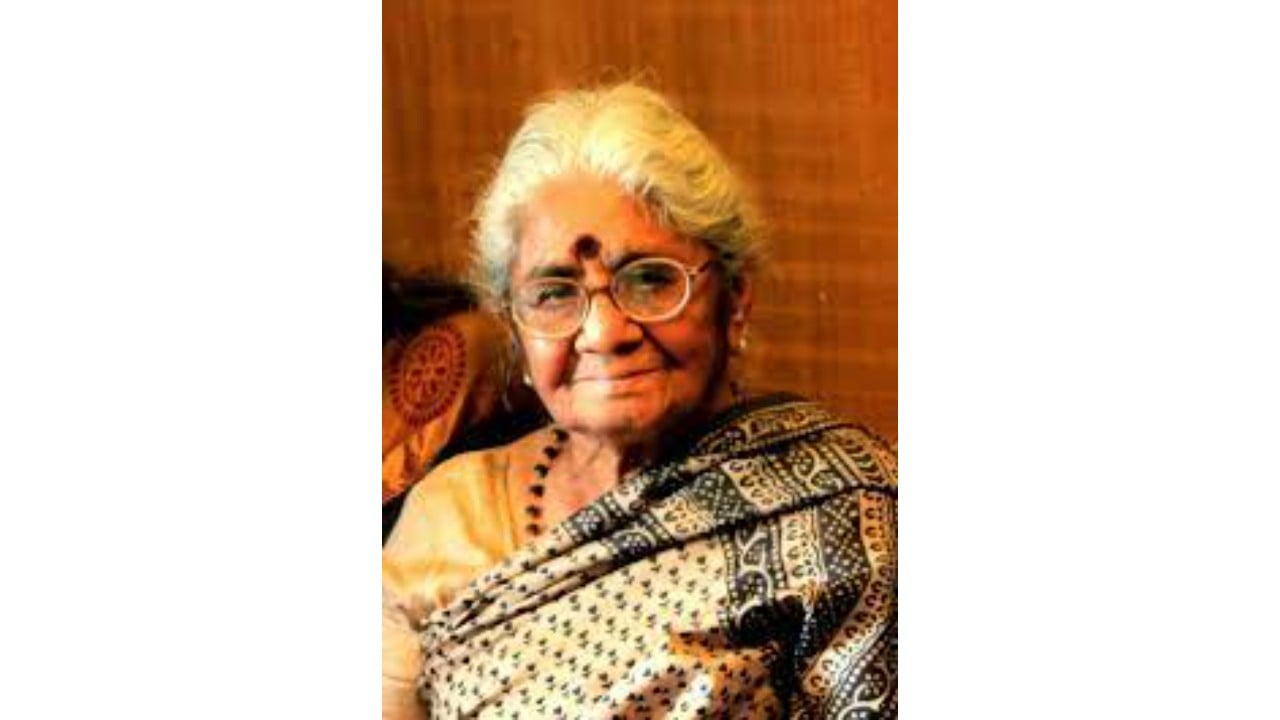
A renowned Hindi litterateur Mannu Bhandari who is known for her short stories and novels dies at the age of 90 on Monday. She breathed her last in Gurugram because of age-related ailments. She had suffered a series of strokes over the last few years but this time she was hospitalized for an infection that turned fatal, her daughter Rachana Yadav said in a statement.
Her female characters in her stories are portrayed as strong, independent individuals, breaking old habits and emerging and creating an image of ‘a new woman’.
Mannu Bhandari’s notable works
Most of her famous novels had also been turned into movies. Her novel ‘Yahi Sach Hai’ amazed the Hindi film director Basu Chatterjee and he transformed her long short story into a feature ‘Rajnigandha’ in 1974. The film was both a critical and commercial success. This novel was about a woman who tries to choose between her two loves- one from her past and one from her present. This movie also won the Filmfare Best Movie Award in 1974.
Her novel ‘Aap Ka Bunty’ was a huge success and this novel was described as a ‘milestone and a turning point in Hindi literature’. It has been translated widely, including into French, English and Bengali. This novel depicted the breakdown of a marriage through the eyes of a child, the titular Bunty, whose parents eventually divorce and remarry other people. Later this story was eventually adapted into an extremely popular and successful play, which was played all throughout the country, including at the (Bharat Rang Mahotsav) (National Theatre Festival) in New Delhi.
The novel ‘Mahabhoj,’ which is set in a political scenario, has also been immensely successful. The work has been published in 32 editions so far. Mahabhoj has been translated into multiple languages, and countless plays have been staged based on it.
She has also written an autobiography ‘Ek Kahaani Yeh Bhi’ which is a story of how her life was shaped by her contemporaries, her college life, her life as a freedom fighter and the pados culture of India before independence.
She also wrote the screenplay and the dialogues for the film Swami, which was based on a novel written by Saratchandra Chattopadhyaya.
Some of her famous works include Trishanku which was translated into German and English, Nai Naukari translated into French, Stri Subodhini translated into English, Shaayad translated into Hungarian. She wrote many stories for children, such as ‘Aankhon Dekha Jhooth’, ‘Asmata’ and ‘Kalava’.
Read Also: 5 relatives of late actor Sushant Singh Rajput killed in road accident
Bhandari’s Mahabhoj story was also adapted into a telefilm by William Ash for BBC London and Asamyik Mrityu was also adapted into a telefilm for Delhi Doordarshan by Manju Singh.
Awards
She was honoured with almost all the prominent literary awards in the country such as Delhi’s Shikhar Samman, Vyas Samman, Bharatiya Bhasha Parishad, Uttar Pradesh Hindi Sansthan, and Rajasthan Sangeet Natak Akademi.
India News
India-US trade deal first phase finalised, drafting underway
The first phase of the India-US trade agreement has been finalised and is undergoing legal drafting, Commerce Minister Piyush Goyal said. The deal is expected to be operationalised once India secures a competitive advantage over peer countries.


India News
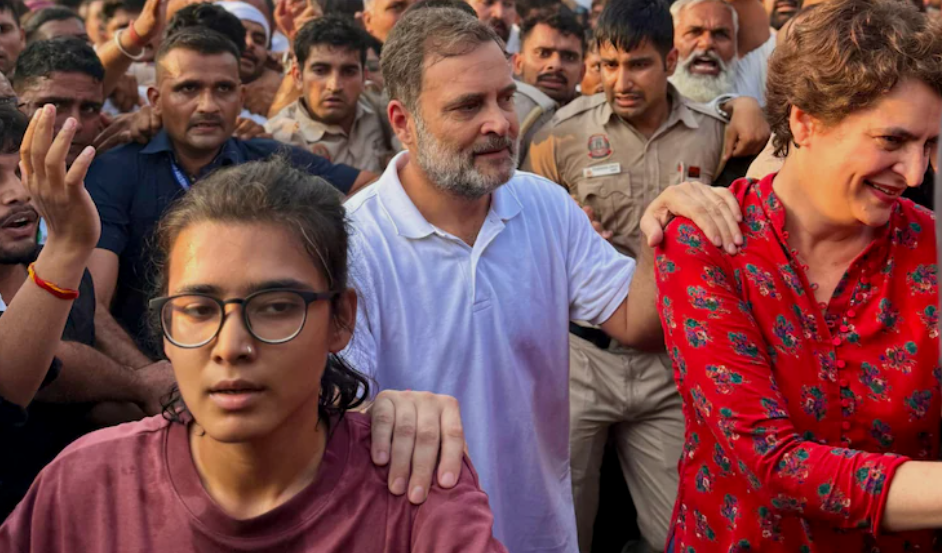
Nobody can browbeat judiciary, Chief Justice warns over Rahul Gandhi’s march
The Supreme Court issued notices to opposition leaders, including Rahul Gandhi and Akhilesh Yadav, over their march to the court on October 12 concerning irregularities in the Special Intensive Revision of electoral rolls.
India News
Dhruv Rathee gets fresh summons in 2018 BJP IT cell video case
YouTuber Dhruv Rathee has received fresh summons from a Delhi court in a 2018 criminal defamation case filed by Vikas Pandey over a video concerning the BJP IT Cell. The matter will next be heard on October 17.


Meerut murder: Muskaan Rastogi and Sahil Shukla get death sentence

Rahul Gandhi joins India Gate protest by Ankita Bhandari’s parents

Supreme Court questions EC over missing records in Sringeri election dispute

Dhruv Rathee gets fresh summons in 2018 BJP IT cell video case

Nobody can browbeat judiciary, Chief Justice warns over Rahul Gandhi’s march

India-US trade deal first phase finalised, drafting underway
Nobody can browbeat judiciary, Chief Justice warns over Rahul Gandhi’s march
Dhruv Rathee gets fresh summons in 2018 BJP IT cell video case
Supreme Court questions EC over missing records in Sringeri election dispute
Rahul Gandhi joins India Gate protest by Ankita Bhandari’s parents

Afghan Men Try To Hang With The Jet Engine Of The Aircraft in Kabul- Afghanistan News – Kabul News
Trending Top 10 News: 10000 Crore Fine on Flipkart, Apple to Launch Unique Feature, Hdfc Bank Job Ad

Trending Top 10 News: Nokia 6310, Apple sales, Bachpan ka Pyar Video Kid, Dainik Bhaskar IT Raid

Trending Top 10 News: Canada bans Indian flights, Rain in Delhi NCR, AIMIM Twitter hacked, Raj Kundra case

Trending Top 10 News: Shein India, Apple New Service, Pocket Oxygen, Oppo Launched New Phone
-
 India News23 hours ago
Meerut murder: Muskaan Rastogi and Sahil Shukla get death sentence
-
 India News22 hours ago
Rahul Gandhi joins India Gate protest by Ankita Bhandari’s parents
-
 India News22 hours ago
Supreme Court questions EC over missing records in Sringeri election dispute
-
 India News10 hours ago
Dhruv Rathee gets fresh summons in 2018 BJP IT cell video case
-
 India News6 hours ago
Nobody can browbeat judiciary, Chief Justice warns over Rahul Gandhi’s march
-
 India News2 hours ago
India-US trade deal first phase finalised, drafting underway
