English हिन्दी
Connect with us

India News

Meta India head booked over alleged posts targeting PM Modi during CJP protest

Hyderabad Cybercrime Police have registered cases against Meta India’s head and several social media accounts over alleged circulation of manipulated content targeting Prime Minister Narendra Modi during the CJP protests.

Published

on

Hyderabad Cybercrime Police have registered cases against Meta India’s head, Arun Srinivas, along with several Facebook and Instagram accounts over the alleged circulation of morphed and objectionable content targeting Prime Minister Narendra Modi during the recent Cockroach Janta Party (CJP) protests.

The action follows complaints alleging that manipulated videos and images of the Prime Minister were shared on social media platforms, accompanied by abusive and derogatory comments.

Complaints allege circulation of manipulated content

According to the complaints, two individuals claimed they encountered multiple digitally altered or AI-generated videos and images of Prime Minister Modi while browsing Instagram. The complainants alleged that the content portrayed the Prime Minister in an obscene, misleading and derogatory manner.

The complaints further stated that several comments accompanying the posts contained offensive language, ridicule and indecent remarks directed at the Prime Minister and other individuals featured in the content.

According to the complainants, the alleged content had the potential to mislead the public, spread misinformation, incite hatred or public unrest, disturb public order and violate applicable legal provisions.

Cases registered after complaints by two individuals

The complaints were filed by S. Aravind Reddy, a 29-year-old businessman, and T. Saikiran Goud, a Telangana BJP activist.

Police have registered cases against Meta India’s head and several Facebook and Instagram accounts. The report does not indicate that charges have been proven, and the matter remains under investigation.

Many social media posts and comments shared during the student protests that allegedly contained abusive or profane language have also come under scrutiny.

Meta recently outlined safeguards for PM Modi’s account

The development comes days after Meta drew criticism from the government after a video posted from Prime Minister Modi’s official account was briefly blocked on Facebook.

Following the incident, Meta assured the government that it had strengthened safeguards for the Prime Minister’s account. According to sources, posts from prominent accounts will receive additional oversight, with only senior Meta officials authorised to review such content before moderation decisions are made. The company has also reportedly informed the government that such decisions will undergo review by at least two senior officials.

Sources also indicated that Meta representatives are expected to meet government officials to discuss content regulation and other related issues.

Delhi Police had also sought removal of offensive posts

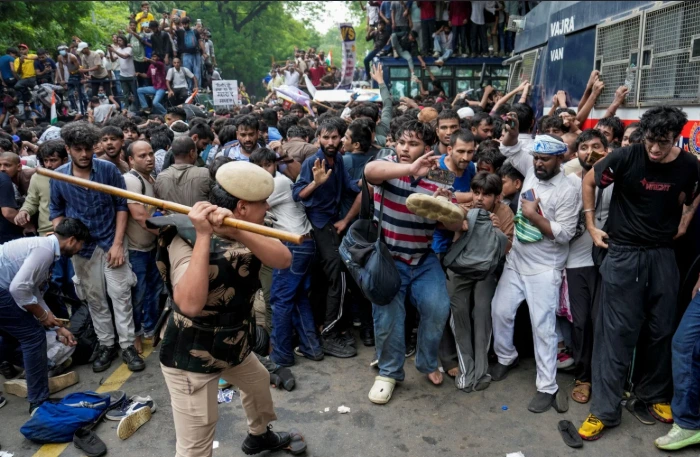
Earlier, Delhi Police directed multiple social media platforms to remove posts and videos containing allegedly offensive and abusive remarks against the Prime Minister that were uploaded during the student protests at Jantar Mantar and the violence linked to the July 20 ‘Sansad Chalo’ march.

The police also issued notices to several social media accounts, including some news portals, over posts allegedly targeting the Prime Minister.

India News

PM Modi says anti-paper leak Bill will make examination system more robust

PM Modi welcomed Parliament’s passage of the anti-paper leak Bill, saying it will strengthen the examination system through stricter punishments and fast-track courts.

Published

on

Prime Minister Narendra Modi has welcomed Parliament’s passage of the Public Examination (Prevention of Unfair Means) Amendment Bill, 2026, saying the legislation will make India’s examination system more robust and trustworthy.

In his fourth Instagram video within a week on the issue of education reforms and paper leaks, the Prime Minister said the Centre has been taking multiple steps to improve the examination system and crack down on organised paper leak networks.

PM Modi highlights reforms to curb paper leaks

The Bill was passed by the Lok Sabha on Wednesday and approved by the Rajya Sabha on Thursday. According to the Prime Minister, the legislation fulfils the commitment he had made earlier to introduce stricter legal measures against paper leaks.

In the video posted on Thursday night, PM Modi said reforms have become necessary as paper leaks have affected both central and state-level examinations for many years, putting students’ futures at risk.

He said the government has already taken several steps, including constituting a task force, setting up fast-track courts, consulting states, and encouraging greater use of technology to strengthen examination systems.

The Prime Minister also said those involved in paper leak rackets or attempting to manipulate examinations would face strict legal action under the new law.

Bill proposes tougher punishment and fast-track trials

The amendment increases punishment for individuals found guilty of paper leaks or other unfair examination practices to a minimum of five years’ imprisonment, extendable to 10 years, along with a fine of up to Rs. 50 lakh.

For organised offences, the Bill proposes a minimum prison term of seven years and a fine of at least Rs. 10 crore.

It also empowers state governments and Union Territory administrations to designate Courts of Session as special fast-track courts for paper leak cases. The proposed law aims to ensure that trials are completed within three months from the filing of the chargesheet.

Series of Instagram messages on education reforms

The latest video is the fourth in a series of Instagram posts by the Prime Minister addressing paper leaks and examination reforms.

In his first video on July 23, PM Modi said the government would introduce legislation providing stricter punishment for paper leak offences and announced the establishment of fast-track courts for such cases.

A day later, he thanked young people for sharing suggestions and said his engagement with them would continue.

On July 26, he announced that a task force headed by Infosys co-founder Nandan Nilekani would study India’s examination system and recommend further improvements.

Separately, on July 24, the Prime Minister also encouraged Union Cabinet colleagues to engage more actively with younger audiences on Instagram.

Continue Reading

India News

Gujarat puts 13 districts on high alert as IMD forecasts heavy rain till August 2

Gujarat has intensified disaster preparedness by placing 13 districts on high alert, cancelling officials’ leave and activating emergency response measures after the IMD forecast heavy to extremely heavy rainfall between July 31 and August 2.

Published

on

Heavy rainfall

The Gujarat government has stepped up disaster preparedness after the India Meteorological Department (IMD) forecast heavy to extremely heavy rainfall across parts of the state between July 31 and August 2. Authorities have placed 13 districts on high alert, cancelled leave for officials in vulnerable areas and strengthened emergency response systems to deal with any weather-related emergencies.

The preparedness measures were reviewed during a meeting chaired by Additional Chief Secretary (Revenue) Dr Jayanti Ravi at the State Emergency Operation Centre (SEOC) in Gandhinagar. The meeting was held through video conferencing with district collectors and senior officials from Surat, Vadodara, Ahmedabad, Bhavnagar, Bharuch, Anand, Narmada, Tapi, Dang, Chhota Udepur, Panchmahal, Dahod and Mahisagar.

Dr Ravi reviewed the preparedness of the identified districts and directed district administrations to remain on maximum alert. She instructed that all leave of government officials in the affected districts be cancelled with immediate effect to ensure adequate manpower during the forecast period.

To strengthen emergency management, she directed all districts to operate control rooms round the clock. A Class-I officer has also been asked to remain on duty 24×7 to supervise operations and coordinate response efforts.

NDRF, SDRF and armed forces kept ready

Dr Ravi instructed officials to deploy National Disaster Response Force (NDRF) and State Disaster Response Force (SDRF) teams immediately wherever required, particularly in low-lying and flood-prone areas.

Emphasising that public safety remains the top priority, she directed authorities to evacuate residents from vulnerable locations whenever necessary. She also said the Indian Army, Navy and Air Force have been kept on standby to assist with rescue and relief operations if the situation worsens.

District Collectors have been authorised to decide on declaring holidays for schools and anganwadis depending on rainfall conditions in their respective districts.

Officials have also been instructed to ensure that evacuation shelters are equipped with food, safe drinking water and essential medical facilities for displaced residents.

Government urges people to avoid unnecessary travel

To curb misinformation during the weather event, Dr Ravi directed district administrations to regularly provide verified updates to the media regarding rainfall conditions and relief measures.

Relief Commissioner Gaurang Makwana said instructions have been issued across the state to remove unsafe hoardings, banners and signboards that could pose risks during strong winds. Authorities have also been directed to take preventive measures against accidents involving old or damaged buildings and other unsafe structures.

Stating that the entire government machinery has been placed on alert mode, Makwana appealed to residents to cooperate with authorities and avoid stepping outside unless absolutely necessary.

According to the IMD forecast, parts of Gujarat are expected to receive heavy to extremely heavy rainfall between July 31 and August 2, prompting the state administration to intensify precautionary measures to minimise risks and ensure a swift emergency response.

Continue Reading

India News

Lok Sabha passes bill to criminalise insult to Vande Mataram

Parliament has passed the Prevention of Insults to National Honour (Amendment) Bill, 2026, extending legal protection to Vande Mataram and making insults to the national song a punishable offence.

Published

on

Parliament on Thursday approved legislation that makes insulting the national song Vande Mataram a punishable offence, with the Lok Sabha clearing the bill after it had already been passed by the Rajya Sabha. The amendment extends legal protection currently available to the national anthem, Jana Gana Mana, to the national song.

The Prevention of Insults to National Honour (Amendment) Bill, 2026 was passed by a voice vote in the Lok Sabha amid protests from the Opposition. With approval from both Houses, it becomes the first legislation cleared during the ongoing Monsoon Session of Parliament.

What the amendment changes

The existing Prevention of Insults to National Honour Act penalises acts such as intentionally preventing the singing of the national anthem or disrupting an assembly where it is being sung.

The new amendment brings Vande Mataram under the same legal framework, making insults to the national song a criminal offence. Under the existing law, such offences can attract imprisonment of up to three years, a fine, or both. Repeat convictions carry a mandatory minimum prison term of one year.

Government says bill gives due recognition to national song

Replying to the discussion in the Lok Sabha, Minister of State for Home Nityananda Rai said the amendment places Vande Mataram on par with the national anthem.

He criticised the Congress, alleging that the party failed to accord the national song the respect it deserved during its years in power and accused it of pursuing appeasement politics. Rai said the Narendra Modi government was giving the song the recognition it merits and concluded his remarks with a chant of “Vande Mataram.”

Opposition raises objections

The bill faced criticism from Opposition members during the debate.

DMK MP K Kanimozhi opposed the legislation, describing it as a “Hindutva agenda” presented in the name of nationalism. She argued that making all six stanzas of Vande Mataram compulsory and criminalising non-compliance was against the country’s secular and federal principles.

BJP MP Sambit Patra, however, defended the legislation, saying previous governments had not accorded the national song the respect it deserved.

The Opposition’s proposed amendments were rejected by the House. During the proceedings, DMK MP A. Raja tore documents and threw them towards the Well of the House amid protests before the Lok Sabha was adjourned for the day.

First bill passed in Monsoon Session

The amendment is the first bill to receive approval from both Houses during the ongoing Monsoon Session, which has witnessed repeated disruptions by the Opposition, largely over the NEET paper leak issue.

Continue Reading

Trending

© Copyright 2022 APNLIVE.com