English हिन्दी
Connect with us

India News

Meta executive Joel Kaplan apologises over restriction of PM Modi’s social media post

Meta’s Chief Global Affairs Officer Joel Kaplan apologised to IT Minister Ashwini Vaishnaw after the company admitted it mistakenly restricted Prime Minister Narendra Modi’s social media post before restoring it.

Published

on

Meta’s Chief Global Affairs Officer Joel Kaplan on Wednesday apologised to Union IT Minister Ashwini Vaishnaw on behalf of the company after Prime Minister Narendra Modi’s social media post was mistakenly restricted.

Kaplan said he conveyed the apology to the minister over what he described as an error that led to the restriction of the Prime Minister’s post.

Meta says restriction was an error

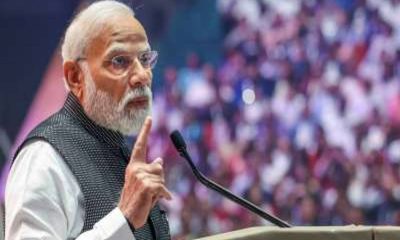
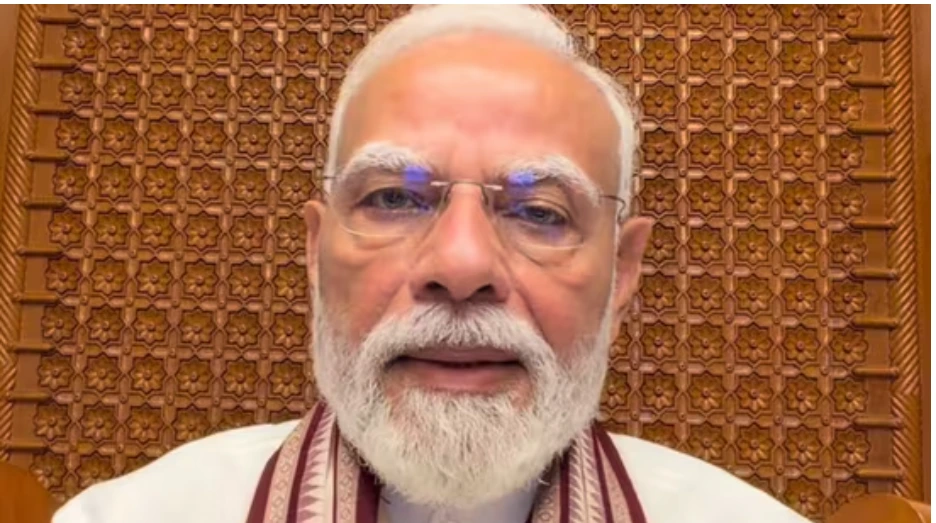
Prime Minister Narendra Modi had shared a vertical video on July 23 in which he addressed the public directly. According to Meta, the video was briefly removed from Facebook and Instagram before being restored.

The company attributed the removal to a technical glitch and said the content had been taken down in error before being reinstated on its platforms.

Government found explanation inadequate

The Ministry of Electronics and Information Technology (MeitY) reviewed the incident and described Meta’s initial explanation as “inadequate”. The company subsequently maintained that the removal was unintentional and restored the post.

India remains Meta’s largest user market, with hundreds of millions of people using Facebook, Instagram and WhatsApp.

India News

Lok Sabha passes Bankers’ Books Evidence Bill, 2026 to recognise digital bank records as evidence

The Lok Sabha has passed the Bankers’ Books Evidence Bill, 2026, replacing the colonial-era law and recognising digital, electronic and cloud-based bank records as admissible evidence in courts.

Published

on

The Lok Sabha on Wednesday passed the Bankers’ Books Evidence Bill, 2026, paving the way for digital and electronic bank records to be recognised as admissible evidence in courts. The proposed law aims to replace the colonial-era Bankers’ Books Evidence Act, 1891 and update the legal framework in line with modern banking practices.

Bill passed amid opposition protests

The legislation was passed through a voice vote after persistent disruptions in the House prevented a detailed discussion.

When the Lok Sabha reconvened at 2 pm following an earlier adjournment, opposition members continued raising slogans despite repeated appeals from the Chair to take up the Bill for discussion.

Finance Minister Nirmala Sitharaman moved the Bill for consideration and passage amid the disruptions. With the protests continuing, the House passed the legislation without a debate. The Bill had been introduced in the Lok Sabha on Monday.

What the new Bill proposes

The proposed law, to be known as the Bankers’ Books Evidence Act, 2026, seeks to modernise the legal framework governing bank records used in legal proceedings.

According to the statement of objects and reasons, rapid technological advancement and the growing use of digital banking have made it necessary to update the existing law, which was enacted when banking records were maintained primarily in physical form.

The Bill expands the definition of “bankers’ books” to include records maintained in physical, electronic, digital, virtual, cloud-based and other formats. This aims to create a technology-neutral and future-ready legal framework for the banking sector.

Key provisions of the legislation

The Bill also proposes standardised certificate formats and allows authentication through manual, digital or electronic signatures. It expressly recognises electronic bank records as admissible evidence and permits their production in either physical or electronic form during legal proceedings.

Another provision empowers the central government to extend the applicability of the law to other entities or classes of entities operating in the financial sector, subject to specified conditions.

The legislation also defines the term “special cause”, under which a court may direct a bank officer to produce bankers’ books or appear as a witness to prove transactions, accounts or other matters in legal proceedings where the bank is not a party.

Why the law is being replaced

The existing Bankers’ Books Evidence Act, 1891 was enacted during the pre-independence period to allow certified copies of bank records to be accepted as evidence without requiring the original records to be produced before the court.

Since the law was framed when banking records were predominantly maintained in physical form, the government has proposed replacing it with legislation better suited to today’s digital banking ecosystem.

Continue Reading

India News

Jammu and Kashmir parties observe August 5 as Black Day, hold protests over Article 370

Political parties in Jammu and Kashmir observed August 5 as “Black Day” on the anniversary of Article 370’s abrogation. The National Conference and PDP held protests, renewed demands for restoration of statehood, and criticised the Centre over the continued Union Territory status.

Published

on

August 5 marked the seventh anniversary of the abrogation of Article 370, with major political parties in Jammu and Kashmir observing the day as “Black Day” and organising protests across the Union Territory.

Article 370, which granted special constitutional status to the former state of Jammu and Kashmir, was revoked through a Presidential Order on August 5, 2019. The move also led to the reorganisation of the state into the Union Territories of Jammu and Kashmir and Ladakh.

While the BJP commemorates the date as a milestone in Jammu and Kashmir’s integration with the rest of the country, regional parties including the National Conference (NC) and the Peoples Democratic Party (PDP) continue to oppose the decision.

PDP stages candlelight protest, demands Article 370 restoration

On the eve of the anniversary, the Peoples Democratic Party, led by Mehbooba Mufti, organised a candlelight march in Srinagar. Party members alleged that Mufti’s daughter, Iltija Mufti, was detained during the protest.

Addressing supporters, Mehbooba Mufti described the occasion as a “black night” for Jammu and Kashmir and said the party would continue its protests until the Jammu and Kashmir issue is resolved and Article 370 is restored.

The PDP has also announced protest programmes across various districts of the Union Territory.

National Conference calls August 5 ‘Black Day’

The ruling National Conference also organised demonstrations at its headquarters in Srinagar and in district units across Jammu and Kashmir.

Senior National Conference leader Rattan Lal Gupta said the party observes August 5 as “Black Day” to protest what it described as the unilateral abrogation of Jammu and Kashmir’s constitutional guarantees. He also criticised the Centre for not restoring statehood despite repeated assurances.

National Conference MP Chowdry Ramzan has invited members of the INDIA bloc to participate in a protest outside Parliament in New Delhi. While several opposition parties have largely remained silent on the Article 370 decision itself, many have supported the demand for the restoration of Jammu and Kashmir’s statehood.

Statehood remains a key political demand

The demand for restoring Jammu and Kashmir’s statehood has remained central to the National Conference’s political campaign.

Recently, Chief Minister Omar Abdullah and National Conference president Farooq Abdullah led a protest in Delhi seeking the restoration of statehood.

The Centre had informed the Supreme Court in 2023 that Jammu and Kashmir’s Union Territory status was temporary and that statehood would be restored after Assembly elections.

Assembly elections were held in September 2024. Following the formation of the government, the Omar Abdullah-led cabinet passed a resolution seeking restoration of statehood. The Jammu and Kashmir Assembly later also passed a resolution calling for the restoration of the region’s special status.

BJP defends 2019 decision

The BJP has consistently maintained that the abrogation of Article 370 and the reorganisation of Jammu and Kashmir have strengthened national integration, reduced terrorism and improved normalcy in the region.

However, the National Conference has questioned those claims, citing recent terrorist attacks and arguing that security concerns remain.

Continue Reading

Cricket news

Ajit Agarkar’s future as BCCI chief selector uncertain amid Rohit Sharma ODI controversy, says report

Ajit Agarkar’s position as BCCI chief selector is reportedly under scrutiny, with a report claiming VVS Laxman is being considered as his successor amid the Rohit Sharma ODI controversy.

Published

on

The future of Ajit Agarkar as the chairman of the BCCI’s senior men’s selection committee is reportedly uncertain, with a media report claiming that the board is considering appointing former India batter VVS Laxman as his successor.

According to the report, Agarkar’s tenure as chief selector was originally scheduled to conclude in June 2026. However, he received a three-month extension from the Board of Control for Cricket in India (BCCI). While another extension until the end of the 2027 ODI World Cup was reportedly expected, recent developments surrounding Rohit Sharma’s ODI future have complicated the situation.

Rohit Sharma’s ODI future reportedly became a key issue

The report states that discussions over Rohit Sharma’s place in India’s ODI setup have emerged as a major factor in the ongoing developments.

It claims that ahead of India’s three-match ODI series against England, there were indications that the series could mark Rohit’s final appearance in the format. The report further alleges that the Agarkar-led selection committee had discussed with the Gautam Gambhir-led team management the possibility of leaving the veteran batter out of future ODI assignments.

However, the situation reportedly changed after speculation emerged that the third ODI at Lord’s would be Rohit’s last match. Rohit responded with a century in that game, a performance that, according to the report, put both the selectors and team management in a difficult position.

BCCI secretary issues clarification on Rohit’s future

Following the speculation, BCCI Secretary Devajit Saikia publicly dismissed suggestions that the Lord’s ODI would be Rohit’s final appearance in the format.

“Rohit is a regular member of the Indian ODI team, and he will continue to represent the country as long as he is in the scheme of things. In other words, the Lord’s ODI won’t be his last match,” Saikia told PTI.

The report also claims that some individuals involved in managing the Indian team do not favour Rohit’s participation in the 2027 ODI World Cup, though no official announcement has been made by the BCCI on the matter.

Review meeting yet to take place

According to the report, the BCCI had planned a review meeting after India’s tour of England following the team’s eight defeats in ten matches across the Ireland and England tours.

However, the meeting has reportedly not taken place. The Indian team has since travelled to Sri Lanka for a two-match Test series without the scheduled review being held.

As of now, the BCCI has not officially announced any decision regarding Ajit Agarkar’s tenure as chief selector or any appointment of VVS Laxman as his replacement.

Continue Reading

Trending

© Copyright 2022 APNLIVE.com