English हिन्दी
Connect with us

India News

Government cancels auction of 11 critical mineral blocks due to poor response

Looking forward, India is poised to launch a Critical Mineral Mission in the upcoming year aimed at securing essential resources for green energy and technology.

Published

on

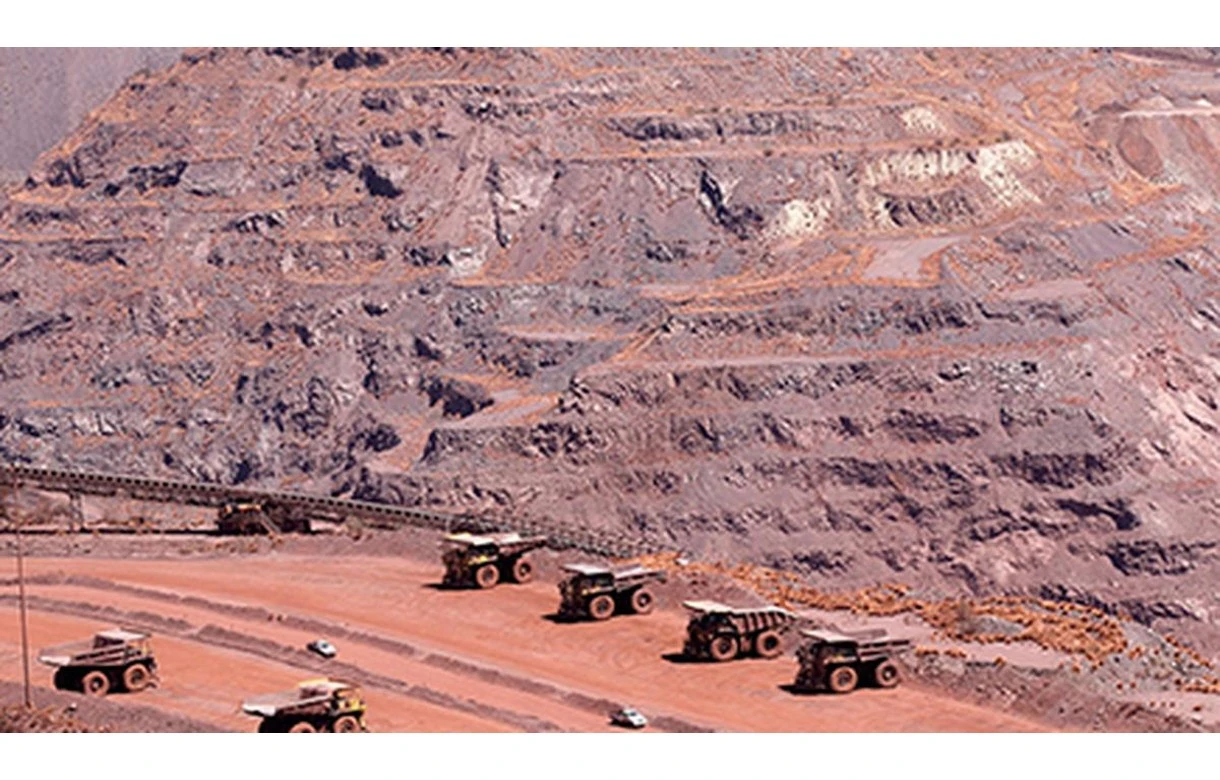
The government has announced the cancellation of the auction for 11 critical mineral blocks in the fourth round, attributing this decision to a lack of interest from bidders. Specifically, no bids were submitted for four of the blocks, while the remaining seven received fewer than three technically qualified bidders, as stated in the annulment notice. The four blocks, which include tungsten and glauconite, are situated in the states of Chhattisgarh and Arunachal Pradesh.

As mentioned in the notice, “Since there were nil bids received….the auction process for four mineral blocks stands annulled.” Critical minerals, including cobalt, copper, lithium, nickel, and rare earth elements, are essential for the development of clean energy technologies utilized in wind turbines and electric vehicles. The notice further indicated that “since there were less than three technically qualified bidders…the auction process of these seven mineral blocks stands annulled.”

Previously, the government had also cancelled the auction of three critical mineral blocks in the third round, alongside 14 blocks in both the second and first rounds, due to similarly tepid responses from the market. According to government statements, a total of 24 critical and strategic mineral blocks have successfully been auctioned across four rounds. “Out of 48 blocks put to e-auction, 24 have been successfully auctioned, including four mining lease (ML) and 20 composite licenses (CL) blocks,” confirmed the mines ministry.

Looking forward, India is poised to launch a Critical Mineral Mission in the upcoming year aimed at securing essential resources for green energy and technology. This initiative seeks to foster collaboration among government bodies, industry stakeholders, and research institutions, prioritizing the acquisition of international assets like lithium and cobalt, especially from Australia, while also enhancing domestic mining efforts through auctions and promotional roadshows.

With a series of internationally oriented roadshows planned and strategies to acquire vital mineral assets in Australia, India aims to attract global investors and establish a significant presence on the international mining landscape. Nations worldwide are now competing to secure these critical resources, recognizing the strategic importance of minerals like lithium and cobalt in shaping the 21st-century economy.

According to World Bank estimates, it is projected that by 2050, the output of key minerals such as lithium and cobalt will need to expand by nearly 500% to satisfy the escalating demand for clean energy technologies. Meanwhile, the International Energy Agency anticipates that the growth of electric vehicles and battery storage will amplify the need for these minerals by at least 30 times by 2040.

Critical minerals are also vital to the semiconductor industry, which is increasingly becoming a key focus as India strives to establish itself as a global hub for semiconductor manufacturing, a sector expected to reach a valuation of one trillion dollars globally by 2030. The production of semiconductors, which drive various technologies from smartphones to electric vehicles, relies heavily on resources such as silicon, cobalt, and rare earth elements, alongside essential technological access.

Continue Reading

India News

BJP attacks Rahul Gandhi over traitor remark against PM Modi, Amit Shah

Published

on

Rahul-Gandhi

Leader of Opposition Rahul Gandhi triggered a sharp political controversy on Wednesday after calling Prime Minister Narendra Modi, Union Home Minister Amit Shah and the Rashtriya Swayamsevak Sangh “traitors” during an address to Congress workers in Uttar Pradesh’s Rae Bareli.

The remarks drew an immediate backlash from the Bharatiya Janata Party, with several leaders accusing the Congress MP of using “the language of terrorists” and attempting to insult democratic institutions.

According to reports, Rahul Gandhi told party workers that when RSS members speak about PM Modi and Amit Shah, they should respond by saying, “Your Prime Minister is a traitor, your home minister is a traitor, your organisation is a traitor.” He further alleged that the ruling establishment had “worked to sell out India” and attacked the Constitution as well as the ideals of Dr BR Ambedkar and Mahatma Gandhi.

The Congress leader made the remarks while addressing workers in Rae Bareli, his parliamentary constituency in Uttar Pradesh. His comments quickly became the centre of a heated political exchange between the BJP and Congress.

BJP leaders strongly condemned the statement, saying Rahul Gandhi’s comments crossed democratic boundaries. Party leaders claimed his language echoed narratives used by hostile elements against India and accused him of targeting the Indian state for political gains.

The controversy intensified further after Rahul Gandhi also criticised PM Modi over a viral video showing the Prime Minister gifting a packet of “Melody” candy to Italian Prime Minister Giorgia Meloni during his visit to Rome. Gandhi reportedly mocked the gesture amid ongoing political debates over economic and governance issues.

The latest exchange adds to the escalating war of words between the BJP and Congress ahead of key political battles in several states and the broader national political contest. Political tensions between the two parties have intensified in recent weeks over issues ranging from governance and foreign visits to economic concerns and constitutional debates.

Continue Reading

India News

Meta to eliminate 8,000 jobs in major restructuring shift

A major controversy has erupted after Norway’s largest newspaper published a cartoon depicting PM Narendra Modi as a snake charmer, drawing widespread allegations of racism and a colonial mindset.

Published

on

In an effort to streamline operations and aggressively fund its pivot toward artificial intelligence, Meta Platforms has announced a fresh round of workforce reductions. The corporate decision will impact approximately 8,000 employees globally, translating to nearly 10 per cent of its total workforce. In addition to the workforce downsizing, the technology giant will also eliminate 6,000 currently open job positions across various teams.

Strategic reallocation toward advanced technology

According to an internal memo sent to staff by Chief People Officer Janelle Gale, the workforce adjustments are scheduled to take effect from May 20. Gale acknowledged that the announcement brings unwelcome news and places teams in an uneasy position, but maintained that the choice represents the best path forward given the company’s current operational demands. The organizational overhaul comes as the parent company of Facebook and Instagram drastically increases its capital expenditure to support high-cost AI infrastructure, models, and specialized technical talent.

The tech major has actively adjusted its spending trajectory, with projections for the current financial year mounting significantly to fund developments such as specialized data centers, high-performance automated software, and compensation packages intended to capture top-tier industry experts. Media reports indicate that the company is looking to build smaller, more agile product development structures that utilize advanced computing tools to achieve output targets traditionally requiring much larger operational divisions.

Corporate focus shifts to lean operations

Chief Executive Mark Zuckerberg has previously emphasized that advanced digital tools are altering internal production cycles, allowing smaller engineering units to deliver applications in shorter timeframes. While leadership maintains that automation is intended to enhance worker output rather than entirely swap out human professionals, the sheer scale of the restructuring has triggered broader anxieties regarding corporate workforce security across the silicon landscape.

For the affected workforce in the United States, the organization has laid out a severance structure offering 16 weeks of base compensation alongside an additional two weeks of pay for every completed year of service. The company will also sustain health coverage for eligible workers and their dependents for a span of 18 months. For professionals impacted in international jurisdictions, severance support is expected to align with regional legal guidelines alongside dedicated immigration and career placement guidance. Finance Chief Susan Li noted that the enterprise continues to evaluate its optimal structural size as new technological implementation rapidly transforms the capacity and daily output expected from single personnel units.

Continue Reading

India News

Mamata Banerjee says BJP will be removed from Centre in coming days

Published

on

mamta banerjee

West Bengal Chief Minister and Trinamool Congress chief Mamata Banerjee on Tuesday launched a sharp attack on the BJP-led central government, saying the party “will be removed from power in Delhi in the coming days” following the Trinamool Congress’s defeat in the 2026 West Bengal Assembly elections.

According to reports, Mamata Banerjee made the remarks during a meeting with TMC MLAs and senior party leaders at her Kalighat residence in Kolkata. She reportedly urged party workers not to lose morale and asked them to continue strengthening the organisation at the grassroots level.

The statement comes days after the BJP secured a historic victory in West Bengal, ending the Trinamool Congress’s long rule in the state. Senior BJP leader Suvendu Adhikari recently took oath as West Bengal’s first BJP chief minister after the party won a clear majority in the Assembly elections.

During the meeting, Mamata Banerjee also reportedly accused the BJP of using pressure politics and “bulldozer culture” against opposition parties. She signalled that the TMC would continue to oppose the BJP aggressively at the national level despite losing power in Bengal.

The political atmosphere in West Bengal has remained tense after the election results. Several TMC leaders have questioned different aspects of the polls, while the BJP has dismissed the allegations and described the result as a mandate for political change in the state.

The BJP’s victory marked a major political shift in Bengal politics. After years of emerging as the principal opposition force, the party finally crossed the majority mark in the 2026 Assembly election and formed the government in the state.

Political observers believe Mamata Banerjee’s latest remarks are aimed at keeping opposition unity alive nationally while the Trinamool Congress focuses on rebuilding its organisation in West Bengal after the electoral defeat.

Continue Reading

Trending

© Copyright 2022 APNLIVE.com