
India News
MJ Akbar’s defamation suit: Court takes cognisance, to hear on Oct 31


The Patiala House Court in New Delhi today (Thursday, October 18), took cognisance of the criminal defamation complaint filed by BJP MP and former minister MJ Akbar against Priya Ramani, the first woman journalist to publicly accuse him of sexual misconduct, fixing October 31 for examining the complaint and recording witnesses’ statements.
The court said that it has taken cognisance of the offence under Section 500 of the Indian Penal Code.
Akbar, a former journalist of stature, resigned as the union minister of state for external affairs on Wednesday (October 17) amid a barrage of allegations levelled by women scribes about his alleged sexual, moral and ethical misconduct after Ramani related her experience when she worked at The Asian Age newspaper over 20 years ago when Akbar was the editor.
Following Ramani’s claims against Akbar, over 15 women journalists have so far raised similar allegations against him. Akbar is now a BJP MP in Rajya Sabha.
Akbar has dismissed all these allegations as being baseless and politically motivated. Earlier this week, he had hired senior advocate Raian Karanjawala and his firm to represent him in the criminal defamation suit against Ramani.
Calling his resignation a ‘vindication,’ Ramani had said she was ready for the legal battle. Twenty women journalists have urged the court to also consider their testimonies, and to be called as witnesses.
On Thursday, as the case came up for hearing in the court of ACMM Samar Vishal, senior advocate Geeta Luthra appeared on behalf of Akbar and argued that the baseless comments made by Ramani in an article and then on Twitter had tarnished the reputation of her client.
Luthra alleged that the tweets, retweeted by many, have caused irreparable damage to the reputation of the former minister. Akbar has resigned due to these allegations and they show the damage caused to his reputation, his lawyer argued.
To establish Akbar’s credentials before the court, Luthra talked about his 40 year stint as a highly regarded journalist and editor, a former Lok Sabha member and a union minister till just a day ago.
She asserted that Ramani’s allegations, which in turn provoked similar charges being levelled by a slew of other women scribes, had done irreparable damage to Akbar’s image and had not just diminished his reputation but made it vanish altogether.
ACMM Samar Vishal heard the submissions made by Luthra and said that he was taking cognizance of the defamation suit under section 500 of the Indian Penal Code. The court then fixed October 31, 12 noon, as the next date and time of hearing in the case when it will conduct an examination of the plea filed by Akbar.
While Akbar wasn’t present in court today, he will have to appear in person to record pre-summoning evidence.
The witnesses to be examined on the next date of hearing are Joyeeta Basu, Veenu Sandal, Syed Habibur Rehman, Tapan Chaki, Sunil Gujral, Manjal Ali etc.
Akbar had filed the case against Ramani on Monday, seeking her prosecution under Sections 499 and 500 of the IPC for defamation.
Meanwhile, the Editors Guild of India and a large number of eminent citizens like senior advocate Indira Jaising and common people – men and women alike – who have voiced their support for the #MeToo campaign have urged Akbar to withdraw the defamation suit against Ramani.
The Editors Guild of India came out in support of the 20 women journalists who have named journalist-turned-politician MJ Akbar in the growing #MeToo movement, accusing him of sexual harassment. The top body of editors representing the media industry expressed its concern over Akbar’s defamation case against one of the journalists, Priya Ramani, and said he should withdraw the case.
“We hope that Mr Akbar will also display the grace to withdraw the criminal defamation case he has filed against one of these complainants. While Mr Akbar is entitled to all legal instruments available to a citizen to seek vindication, it would be paradoxical for a veteran editor to employ the instrument of criminal defamation,” the Editors Guild said in a statement.
The Editors Guild assured its full support to the other women journalists in case he decides to sue them. “If any of them were to need legal advice or assistance, the Guild will do the best it can to help and also appeal to eminent lawyers to represent them pro bono,” Editors Guild said.









India News
Supreme Court questions EC over missing records in Sringeri election dispute
The Supreme Court questioned the Election Commission over missing video footage of the 2023 counting in Karnataka’s Sringeri constituency. The case involves a revised result following a recount of postal ballots.

India News
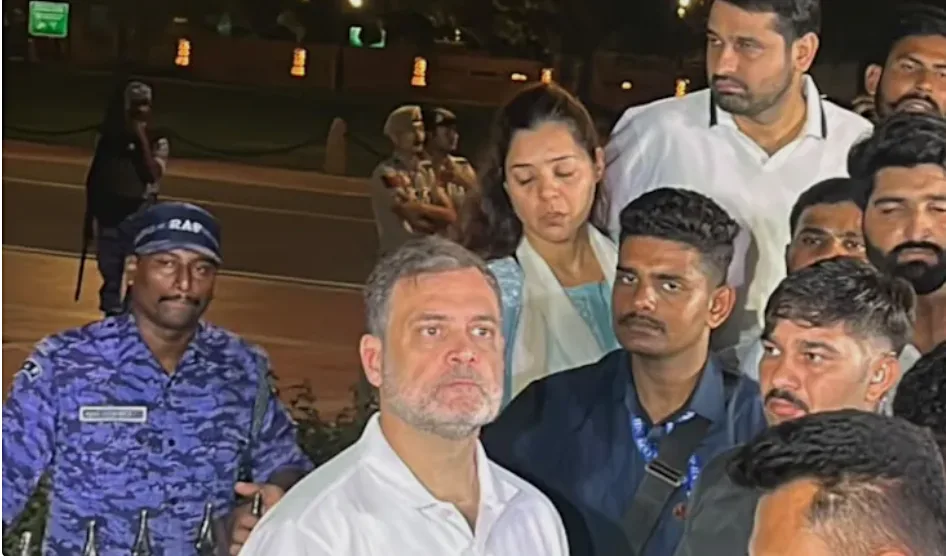
Rahul Gandhi joins India Gate protest by Ankita Bhandari’s parents
Rahul Gandhi joined the protest by Ankita Bhandari’s parents at India Gate in New Delhi on October 14. The demonstration has brought renewed attention to the 2022 murder case and the family’s concerns following Dushyant Gautam’s appointment as Sikkim Governor.
India News
Meerut murder: Muskaan Rastogi and Sahil Shukla get death sentence
A Meerut court has sentenced Muskaan Rastogi and Sahil Shukla to death in the blue drum murder case involving the killing of merchant navy officer Saurabh Rajput in March 2025.

CJP leaders Saurav Das, Ashutosh Ranka, Ajinkya Shinde sent to 5-day judicial custody

PM Modi speaks to Mark Carney as India and Canada push to strengthen ties

S Jaishankar says India is a natural option for Russia amid Europe tensions

Meerut murder: Muskaan Rastogi and Sahil Shukla get death sentence

Rahul Gandhi joins India Gate protest by Ankita Bhandari’s parents

Supreme Court questions EC over missing records in Sringeri election dispute
Rahul Gandhi joins India Gate protest by Ankita Bhandari’s parents
Meerut murder: Muskaan Rastogi and Sahil Shukla get death sentence
PM Modi speaks to Mark Carney as India and Canada push to strengthen ties
S Jaishankar says India is a natural option for Russia amid Europe tensions

Afghan Men Try To Hang With The Jet Engine Of The Aircraft in Kabul- Afghanistan News – Kabul News
Trending Top 10 News: 10000 Crore Fine on Flipkart, Apple to Launch Unique Feature, Hdfc Bank Job Ad

Trending Top 10 News: Nokia 6310, Apple sales, Bachpan ka Pyar Video Kid, Dainik Bhaskar IT Raid

Trending Top 10 News: Canada bans Indian flights, Rain in Delhi NCR, AIMIM Twitter hacked, Raj Kundra case

Trending Top 10 News: Shein India, Apple New Service, Pocket Oxygen, Oppo Launched New Phone
-
 India News20 hours ago
CJP leaders Saurav Das, Ashutosh Ranka, Ajinkya Shinde sent to 5-day judicial custody
-
 India News20 hours ago
PM Modi speaks to Mark Carney as India and Canada push to strengthen ties
-
 Latest world news20 hours ago
S Jaishankar says India is a natural option for Russia amid Europe tensions
-
 India News10 hours ago
Meerut murder: Muskaan Rastogi and Sahil Shukla get death sentence
-
 India News9 hours ago
Rahul Gandhi joins India Gate protest by Ankita Bhandari’s parents
-
 India News8 hours ago
Supreme Court questions EC over missing records in Sringeri election dispute
