
India News
Modi-Abe kick off bullet train project, sign new 15 MoUs between India and Japan

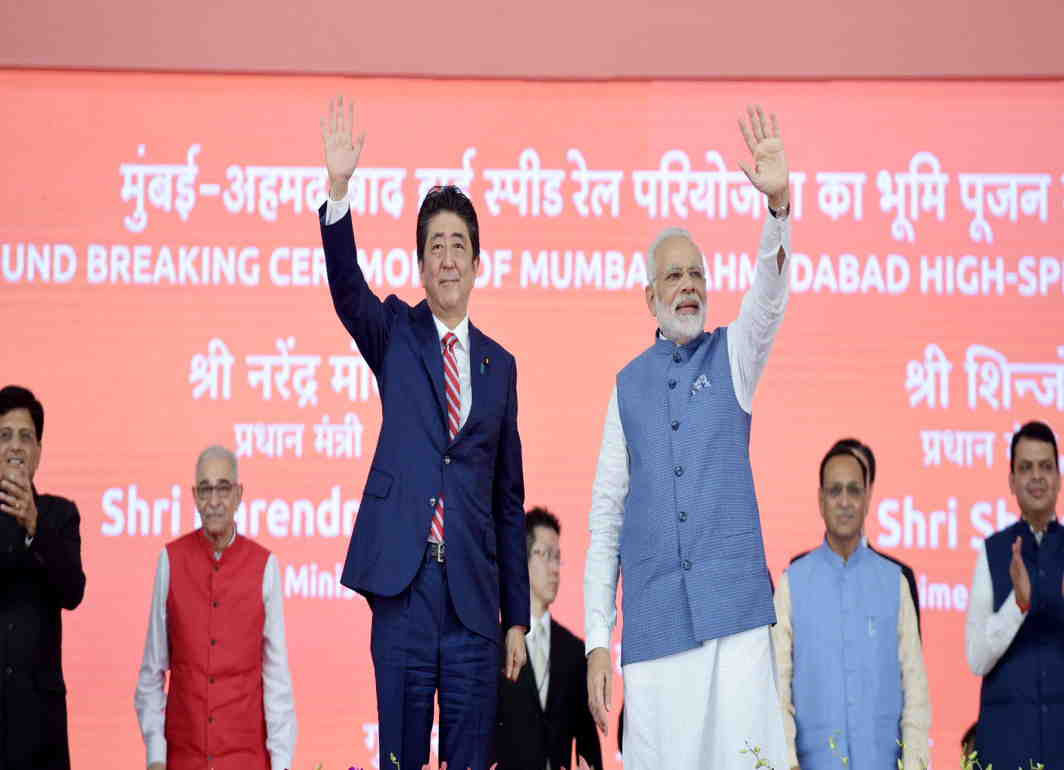
[vc_row][vc_column][vc_column_text]Japan to give India a loan of Rs 88,000 crore at 0.1 per cent interest for Rs 1.10 lakh crore bullet train project which is to be completed by August 15, 2022
India and Japan, on Thursday, inked 15 agreements to further broad-base their strategic partnership and agreed to strengthen cooperation in the Indo-Pacific region where China is increasing its assertiveness.
The developments, being touted by the Indian establishment as a major leap in bilateral relations with Japan, came on a day when Prime Minister Narendra Modi and his Japanese counterpart Shinzo Abe also launched the ambitious Rs 1.10 lakh crore Ahmedabad-Mumbai bullet train project at a massive function organised at Ahmedabad’s Athletics Stadium.
The project – India’s first effort at operating the high-speed bullet train – is expected to bring in employment, revenue and international trade to Ahmedabad and Mumbai. Once operational, the train is expected to reduce the travel time between the two cities to less than three hours. Japan has agreed to give India a loan of Rs 88,000 crore at 0.1 per cent interest for the project which is scheduled to be completed by August 15, 2022 – India’s 75th Independence Day – as a joint venture between Indian Railways and Japan’s Shinkansen Technology.
“The bullet train is in a way a big gift from Japan to India. It is in a way a project being constructed for free,” Modi said.
With an average speed of 320 kmph, the bullet train is proposed to stop at 12 railway stations between Ahmedabad and Mumbai, but only for 165 seconds each. The train will cover 21-kms through a newly dug tunnel between Boisar and Bandra Kurla Complex in Mumbai, of which seven-km is expected to be under water.
With 92 percent of its route planned to be elevated, and six percent through tunnels, the bullet train will only cover 825 hectares on the ground. The Indian Railways are planning to run at least 35 bullet trains, with 70 trips a day, when the project becomes operational. With 10 coaches proposed for each train, the bullet train is tipped to have an average capacity of ferrying 750 passengers per ride.
The launch of the bullet train project aside, Modi and Abe also held wide-ranging talks on key bilateral, regional and international issues and discussed ways to deepen ties in trade, security and civil nuclear energy.
Addressing a joint press event with Shinzo Abe, Prime Minister Modi said Indo-Japan ties were not limited to bilateral or regional spheres. The two sides also closely cooperated on key global issues.
“The range of special strategic and global partnership is not just limited to bilateral and regional sphere. We have close cooperation on global issues as well,” Prime Minister Modi said.
During the talks between the two leaders, India and Japan inked 15 pacts to give a boost to cooperation in various key sectors, including civil aviation, trade, and science and technology.
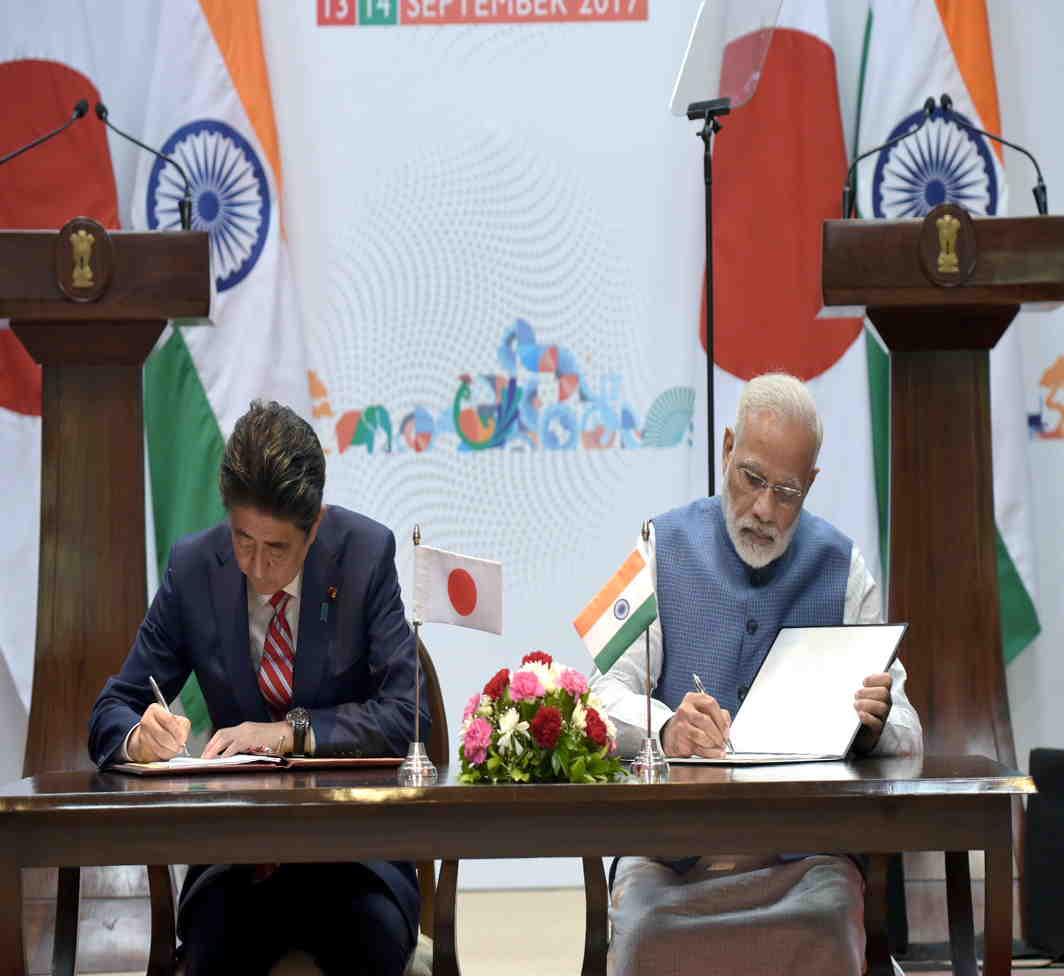 [/vc_column_text][/vc_column][/vc_row][vc_row css=”.vc_custom_1505397529480{border-bottom-width: 20px !important;padding-top: 20px !important;background-color: #a1b2bf !important;}”][vc_column][vc_column_text css=”.vc_custom_1505397199059{padding-top: 5px !important;padding-right: 5px !important;padding-bottom: 5px !important;padding-left: 5px !important;background-color: #a2b1bf !important;border-radius: 5px !important;}”]Below is the full list of agreements signed on Thursday between India and Japan:
Disaster Risk Management
MOC between India’s Ministry of Home Affairs and the Cabinet Office of Japan to cooperate and collaborate in the field of disaster risk reduction and to share the experiences, knowledge and policies on disaster prevention
Skills Development
MoC in the field of Japanese language education in India between MEA and MOFA, Japan, to strengthen bilateral relations and cooperation in the field of Japanese language education in India
Connectivity
The India Japan Act East Forum to enhance connectivity and promote developmental projects in the northeastern region of India in an efficient and effective manner.
Economic & Commercial
Arrangement between India Post and Japan Post on administrative instruction for the implementation of cool EMS service aims at implementing the commercial arrangement of ‘Cool EMS’, through which fresh food can be sent from Japan to India in cool boxes
Investment
The India-Japan Investment Promotion Road map between DIPP and METI to facilitate and accelerate Japanese investments in India
MoC between METI and the state of Gujarat on ‘Japan-India special programme for Make In India’ in Mandal Bechraj-Khoraj, to cooperate in infrastructure development programmes in the Mandal Bechraj-Khorajregion.
Civil Aviation
Exchange of RoD on Civil Aviation Cooperation, which opens skies between India and Japan i.e. Indian and Japanese carriers can mount unlimited flights to select cities
Science and technology
Agreement for international joint exchange programme between inter-disciplinary theoretical and mathematical sciences program (iTHEMS), RIKEN and National Centres for Biological Sciences (Simons-NCBS) to establish a ‘Joint Exchange Programme’ to identify and foster talented young scientists from both countries
Joint research contract between National Institute of Advanced Industrial Science & Technology (AIST), Japan, and Department of Biotechnology (DBT) to conduct joint research and to establish an international centre named ‘DBT-AIST International CENter for Translational & Environmental Research (DAICENTER)’ at AIST, Japan, in order to promote science and technology in both.
MoU signed between DBT and National Institute of Advanced Science & Technology (AIST), to promote research collaboration between DBT research institutes and AIST in the fields of life sciences and biotechnology.
Sports
MoU signed on international academic and sports exchange between Lakshmibai National Institute of Physical Education (LNIPE) and Nippon Sports Science University, Japan (NSSU).
MoU signed on international academic and sports exchange between the Sports Authority of India and Nippon Sports Science University, Japan (NSSU)
Letter of intent signed between Lakshmibai National Institute of Physical Education (LNIPE) and the University of Tsukuba, Japan to strengthen strategic collaboration, joint research programmes and exchanges
Letter of intent signed between Sports Authority of India and University of Tsukuba, Japan to strengthen strategic collaboration, joint research programme and exchanges
Academics/Think Tank
MoU signed between RIS and IDE-JETRO for promotion of cooperation in research-related activities to promote institutional cooperation between RIS and IDE-JETRO to strengthen the capacity of research and effectiveness of dissemination of research findings.[/vc_column_text][/vc_column][/vc_row][vc_row][vc_column][vc_column_text]“We have just signed a joint statement which will serve as a milestone to open a new era for Japan-India relationship… based on that we will strongly promote Japan-India special strategic and global partnership to drive peace and prosperity for Indo-Pacific region and the whole world,” Prime Minister Abe said.
The visiting leader also referred to the recent Malabar Japan-India-US naval exercise and said cooperation would be further strengthened.
Abe said the two sides had agreed upon a Japan-India investment support road map.
Referring to the Indo-Japan civil nuclear pact, PM Modi said it would open a new chapter in cooperation in the clean energy sector between the two countries.
“We had signed a historical pact for peaceful use of nuclear energy during my visit to Japan last year. I am whole-heartedly thanking Japan’s parliament, its people and particularly Prime Minister Abe for its ratification,” PM Modi said.
The nuclear cooperation agreement was signed last November during Prime Minister Modi’s visit to Tokyo. The deal allows Japan to export nuclear technology to India, making it the first non-NPT signatory to have such a deal with Tokyo.
On the bullet train project between Ahmedabad and Mumbai, PM Modi said, “It is a major step. It is not just the beginning of high-speed rail. I consider this railway philosophy a lifeline (jeevan rekha), considering our future requirements.”
PM Modi said India Post and Japan Post would start a ‘cool box service’ for Japanese people living in India so they could order their favorite food from Japan. He also talked about various reform initiatives, including in the areas of taxation, to promote economic growth and asked Japanese companies to take advantage of ease of doing business in India.
Modi said Japan invested $4.7 billion in India in 2016-17 which is 80 per cent higher than last year.
The two nations have also agreed to fight against terrorist outfits like al-Qaeda, Islamic State and Pakistan-based Jaish-e-Mohammed and Lashkar-e-Taiba.
Read the full text of the Indo-Japan joint statement here.[/vc_column_text][/vc_column][/vc_row]





India News
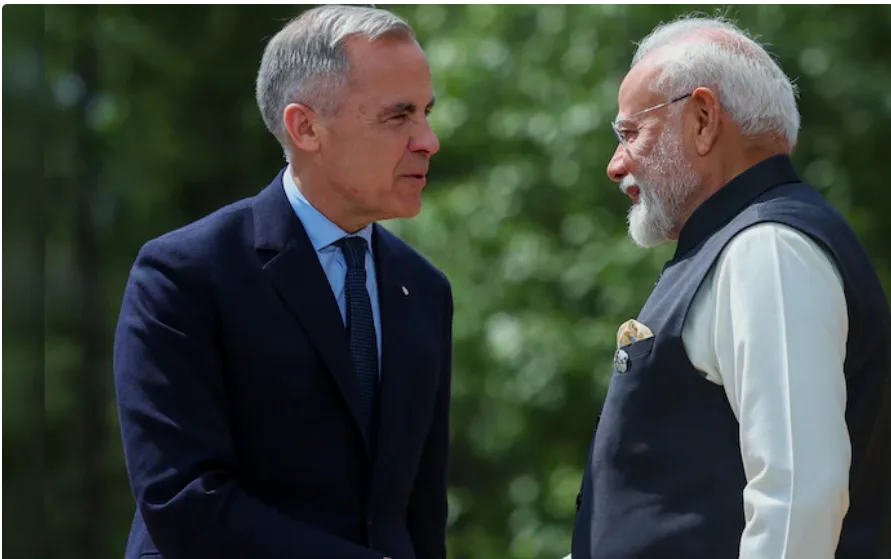
PM Modi speaks to Mark Carney as India and Canada push to strengthen ties
Prime Minister Narendra Modi held a telephone conversation with Canadian Prime Minister Mark Carney on October 13, with both leaders agreeing to strengthen India-Canada ties and pursue concrete outcomes across key areas of their strategic partnership.

India News
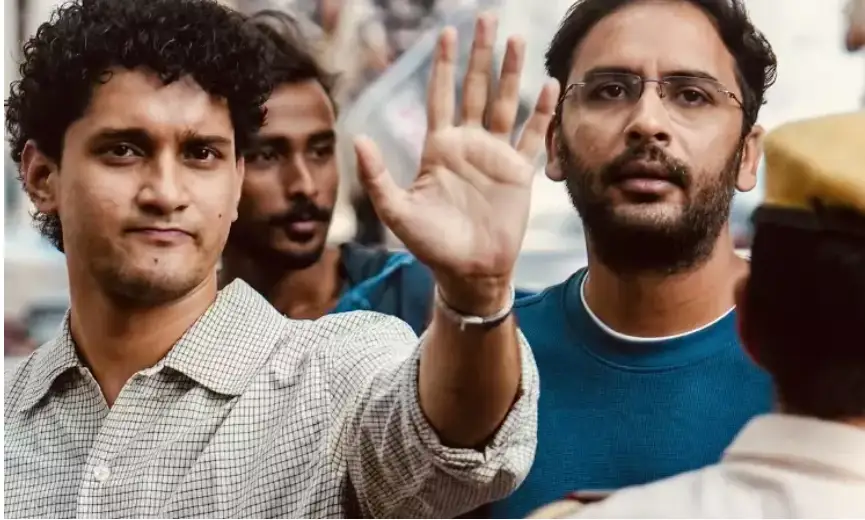
CJP leaders Saurav Das, Ashutosh Ranka, Ajinkya Shinde sent to 5-day judicial custody
Three CJP leaders, Saurav Das, Ashutosh Ranka and Ajinkya Shinde, were placed under preventive arrest following a protest at Delhi’s Jantar Mantar over Chief Election Commissioner Gyanesh Kumar.
India News
BJP focuses on religion as opposition pushes BDM strategy in UP
The BJP is emphasising religious issues ahead of the Uttar Pradesh Assembly elections, while opposition parties are seeking to consolidate Backward, Dalit and Minority voters. Recent exchanges involving Yogi Adityanath, Akhilesh Yadav and Asaduddin Owaisi have added to the political contest over the state’s electoral narrative.


CJP claims Saurav Das, Ashutosh Ranka detained at Jantar Mantar

Supreme Court stays defamation case against Rahul Gandhi over PM Modi remarks

Rahul Gandhi hosts high tea for INDIA bloc after Gyanesh Kumar protests

L Murugan quits Union ministry to strengthen BJP in Tamil Nadu

Amit Shah attacks Rahul Gandhi over Congress poll losses, questions SIR row

PM Modi speaks to Mark Carney as India and Canada push to strengthen ties

S Jaishankar says India is a natural option for Russia amid Europe tensions

CJP leaders Saurav Das, Ashutosh Ranka, Ajinkya Shinde sent to 5-day judicial custody

BJP focuses on religion as opposition pushes BDM strategy in UP
L Murugan quits Union ministry to strengthen BJP in Tamil Nadu

Afghan Men Try To Hang With The Jet Engine Of The Aircraft in Kabul- Afghanistan News – Kabul News
Trending Top 10 News: 10000 Crore Fine on Flipkart, Apple to Launch Unique Feature, Hdfc Bank Job Ad

Trending Top 10 News: Nokia 6310, Apple sales, Bachpan ka Pyar Video Kid, Dainik Bhaskar IT Raid

Trending Top 10 News: Canada bans Indian flights, Rain in Delhi NCR, AIMIM Twitter hacked, Raj Kundra case

Trending Top 10 News: Shein India, Apple New Service, Pocket Oxygen, Oppo Launched New Phone
-
 India News24 hours ago
CJP claims Saurav Das, Ashutosh Ranka detained at Jantar Mantar
-
 India News22 hours ago
Supreme Court stays defamation case against Rahul Gandhi over PM Modi remarks
-
 India News14 hours ago
Rahul Gandhi hosts high tea for INDIA bloc after Gyanesh Kumar protests
-
 India News13 hours ago
L Murugan quits Union ministry to strengthen BJP in Tamil Nadu
-
 India News13 hours ago
Amit Shah attacks Rahul Gandhi over Congress poll losses, questions SIR row
-
 India News12 hours ago
BJP focuses on religion as opposition pushes BDM strategy in UP
-
 India News1 hour ago
CJP leaders Saurav Das, Ashutosh Ranka, Ajinkya Shinde sent to 5-day judicial custody
-
 Latest world news1 hour ago
S Jaishankar says India is a natural option for Russia amid Europe tensions
