English हिन्दी
Connect with us

India News

Muslim man dies in police custody in Uttar Pradesh’s Kasganj, opposition says another misdeed of state police

Published

on

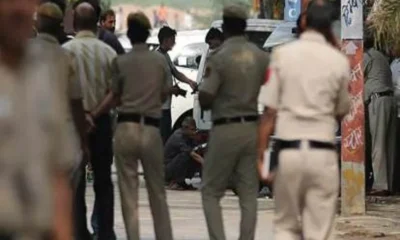
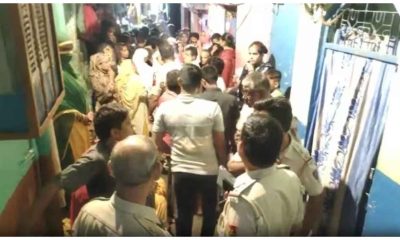
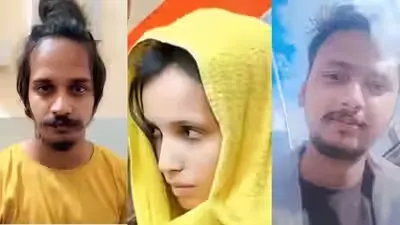
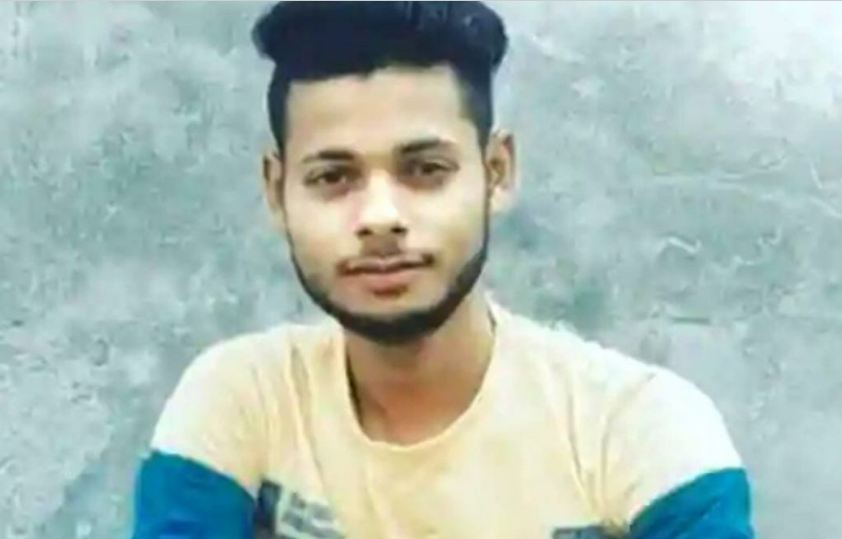
A 22-year-old Muslim youth called for questioning at the police station died on Wednesday in the lock-up in Uttar Pradesh’s Kasganj district. The police said that Altaaf, an accused of running away with a woman from his village of Ahirauli in Kasganj, found him in an unconscious state inside the police station washroom.

The Kasganj Police statement has, however, been slammed on social media, with many, including actor Sushant Singh, raising questions about the police version.

https://twitter.com/FahadZoy/status/1458429927057813509

Hitting out at Yogi Adityanath, the Samajwadi Party chief Akhilesh Yadav branded the incident as another misdeed of UP’s thoko police. Condemning the incident, the SP took to Twitter and wrote under the patronage of the UP chief minister, criminals and police are committing an encounter of law and order in Uttar Pradesh. The guilty policemen should face a murder case and must be punished, the SP wrote on its official Twitter handle in Hindi.

https://twitter.com/shuja_2006/status/1458413577086242817

Altaaf died by hanging himself in the washroom tap of the police station, the police said. When the police took him to a community health centre at Ashok Nagar in Kasganj, he died after 5 minutes of his treatment, the police said.

In a video widely shared on Twitter, Altaaf’s father said his son was murdered in custody while cops claimed that he hanged himself in a police station washroom with the drawstring of his jacket hood. It is not suicide, it is a police killing and they killed his son, Miya said.

Earlier, a sanitation worker, who was accused of stealing Rs 25 lakh from Jagdishpura police station in Agra, died in police custody after his health deteriorated during interrogation.

Altaaf’s father Chahat Miya claimed that he handed over his son to the police at 8 pm on Monday. His father was also in favour of fair investigation but on Tuesday when he went to see his child, the police didn’t allow him to meet Altaaf and also does misbehave with Altaaf’s father. Later in the evening, he died in police custody. We want justice now, his father said.

India News

IPS Officer Nupur Prasad gets Medal for Meritorious Service after Sushant Singh Rajput probe

IPS officer Nupur Prasad, who led the CBI investigation into Sushant Singh Rajput’s death, has been selected for the Medal for Meritorious Service this year.

Published

on

IPS officer Nupur Prasad, who led the CBI investigation into actor Sushant Singh Rajput’s death, has been recognised with the Medal for Meritorious Service (MSM) this year.

A 2007-batch AGMUT cadre officer, Ms Prasad recently returned to the Delhi Police after completing her tenure with the CBI. She is currently serving as Joint Commissioner of Police in the Economic Offences Wing (EOW), where she oversees investigations involving financial and economic crimes.

The award is part of this year’s recognition for police personnel for distinguished and meritorious service. Such honours recognise contributions in areas including investigation, crime prevention, public service, law and order and administration.

Nupur Prasad’s role in Sushant Singh Rajput case

Ms Prasad came into national focus during the CBI investigation into the death of Sushant Singh Rajput, who was found dead at his Mumbai residence on June 14, 2020.

The case was transferred to the CBI in August 2020 following a complaint by the actor’s family and a legal dispute over jurisdiction.

During her tenure with the agency, Ms Prasad supervised key aspects of the investigation, including the examination of witness statements, forensic evidence and medical records.

In 2025, the CBI filed closure reports, saying its investigation found no evidence of foul play, abetment to suicide or criminal conspiracy in the actor’s death.

Career across Delhi Police, CBI

Ms Prasad has served in several positions during her career, including assignments in the Delhi Police, CBI, Arunachal Pradesh and West Bengal.

Before joining the CBI, she held senior positions in the Delhi Police and became the first Deputy Commissioner of Police (DCP) of Shahdara. During her tenure, she worked on establishing the district’s policing framework following its creation.

She also led operations targeting drug networks and illegal gambling activities while focusing on crime-prevention measures.

Later, as DCP of North Delhi, she oversaw security arrangements for major events, including Independence Day celebrations at the Red Fort and Delhi University elections.

Community-focused policing initiatives

Beyond investigations, Ms Prasad has been associated with community-focused programmes involving women’s self-defence, youth development, cyber safety and drug de-addiction.

During her CBI tenure, she was also associated with several prominent investigations. Media reports have linked her to cases concerning businessman Vijay Mallya and the AgustaWestland helicopter deal.

Current role in Delhi Police

After completing her assignment with the CBI, Ms Prasad returned to the Delhi Police and took charge as Joint Commissioner of Police in the Economic Offences Wing.

The latest recognition adds to her career spanning investigations, policing and public service across several challenging assignments.

Continue Reading

India News

Kharge, Rahul Gandhi skip Independence Day event for 2nd straight year

Congress chief Mallikarjun Kharge and Rahul Gandhi skipped the 80th Independence Day celebrations at the Red Fort for the second consecutive year.

Published

on

Rahul Kharge

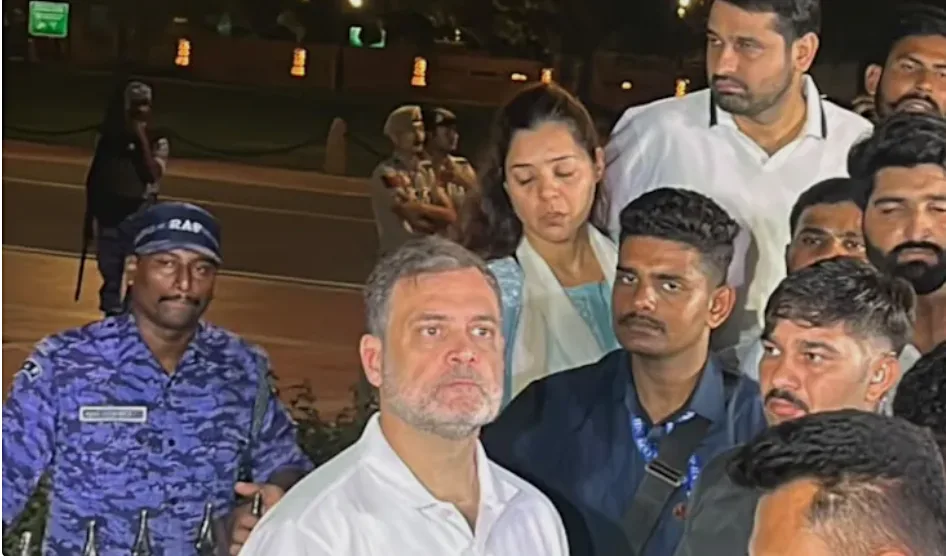
Congress president Mallikarjun Kharge and Leader of Opposition in the Lok Sabha Rahul Gandhi skipped the 80th Independence Day celebrations at Delhi’s Red Fort for the second consecutive year.

Prime Minister Narendra Modi led the Independence Day celebrations at the historic venue on Saturday.

The absence of the two senior Congress leaders comes amid strained relations between the ruling party and the Opposition, which further deteriorated during the Monsoon Session of Parliament that concluded on Thursday.

2024 seating controversy

Rahul Gandhi had attended the Independence Day celebrations in 2024 but his seating arrangement triggered a controversy. The Congress leader, who holds the status of a Cabinet minister as Leader of the Opposition in the Lok Sabha, was seated in the second-last row during the ceremony at the Red Fort.

The Opposition had criticised the seating arrangement, calling it an insult to the people. The Defence Ministry, which organised the event, said the arrangement had been modified to accommodate Olympians at the venue.

According to protocol, the Leader of the Opposition is seated in the front row during ceremonial events.

Opposition-ruling party tensions

Relations between the government and the Opposition remained tense during the Monsoon Session, which ended on Thursday.

The session saw repeated clashes between the two sides, with both the Opposition and the ruling party blaming each other for the low productivity of Parliament.

The session began on July 20, with students marching towards Parliament on the first day. Twelve bills were passed during the session, while detailed discussion took place on only one legislation, concerning paper leaks.

The Congress, along with the Trinamool Congress and Samajwadi Party, also boycotted the customary tea party hosted by Lok Sabha Speaker Om Birla after the House was adjourned sine die.

Continue Reading

India News

PM Modi’s Saptadhara Vision: 7 streams driving India’s next growth phase

PM Modi outlined “Shakti Ki Saptadhara”, identifying seven streams including manufacturing, farming, technology, defence, green energy and soft power.

Published

on

PM modi speech

Prime Minister Narendra Modi, in his Independence Day address from the Red Fort on Saturday, outlined “Shakti Ki Saptadhara”, describing seven key streams that he said can drive India’s next phase of growth and strengthen its journey towards self-reliance and development.

The seven streams identified by the Prime Minister are manufacturing, farming, technology, Gatishakti, Raksha Shakti, green and blue economy, and soft power.

Calling on the country to focus on these areas, PM Modi said the seven streams represent India’s strength and can help the country become more self-reliant.

Manufacturing as the engine of growth

PM Modi called manufacturing the first stream of Saptadhara and stressed the need to significantly strengthen the sector.

He said India needs to produce both components and complete products and should emerge as a key destination in global supply chains.

The Prime Minister highlighted cost, quality and scale as important factors for Indian manufacturers to compete globally. He also stressed the importance of attractive packaging and precision in manufacturing.

Farming and food processing

Agriculture and food processing were identified as the second stream.

PM Modi said global markets are increasingly accessible to Indian farmers and called for greater efforts to take agricultural products from farms to international markets.

He highlighted traditional foods, millets, spices, fruits and vegetables, saying these products should be developed into global brands.

Technology and innovation

Technology and innovation form the third stream of Saptadhara, according to PM Modi.

He highlighted areas such as data centres, robotics and emerging technologies, saying India should aim to become a hub for these sectors.

Referring to the country’s experience with UPI and Digital Public Infrastructure, PM Modi said India has already demonstrated its technological capabilities and must now take the next leap in next-generation communication technology.

He also spoke about the goal of Made-in-India 6G reaching across the country.

Gatishakti and faster connectivity

The fourth stream is Gatishakti, with the Prime Minister stressing the importance of speed and connectivity for India’s growth.

PM Modi called for greater emphasis on roads and expressways to support businesses and said the country needs seamless, high-speed connectivity.

He also highlighted high-speed rail connectivity between cities and port-led development as areas requiring greater focus.

Raksha Shakti and self-reliant defence

Defence is the fifth stream of Saptadhara.

PM Modi called for greater self-reliance in defence manufacturing and highlighted the need to develop advanced technologies in the sector.

He particularly stressed the importance of drone and counter-drone technology, saying India needs to invest in these areas.

The Prime Minister also said India should move beyond being a market for defence equipment and work towards becoming a global supplier by developing next-generation defence technologies.

Green and blue economy

Green energy forms the sixth stream of Saptadhara.

PM Modi called for greater innovation in green energy and said India should aim for global leadership in green hydrogen, renewable energy and energy storage while continuing to contribute solutions to global challenges.

He also highlighted opportunities in the Blue Economy, particularly in fisheries, coastal tourism and ocean technology, saying these areas can create new pathways for India’s growth.

Soft power

Soft power is the seventh stream identified by PM Modi.

He cited Yoga, handicrafts, films, animation, gaming, digital content and the creative sector as examples of India’s soft power.

The Prime Minister also highlighted India’s potential to attract global tourists and called for greater focus on the country’s tourism opportunities, including its national parks and other attractions.

With “Shakti Ki Saptadhara”, PM Modi outlined a broad growth framework covering manufacturing and agriculture, emerging technology, connectivity, defence, sustainable energy, the blue economy and India’s cultural and creative influence.

Continue Reading

Trending

© Copyright 2022 APNLIVE.com