
India News
I am innocent but will have to live like a criminal, no plan to meet Gandhi family, says Nalini after release from jail
Six convicts in the former Prime Minister Rajiv Gandhi assassination case were released from different jails in Tamil Nadu on Saturday evening.


Rajiv Gandhi assassination convict Nalini Sriharan has thanked former CM J Jayalalithaa after being released from jail. She said that Madam Jayalalithaa was the first to take the initiative to get her out of jail. Along with this, she has also declared himself innocent.
Nalini told the media that there she had no plan to meet the Gandhi family. She further said that wherever my husband goes, I will go there.
Nalini is going to hold a press meet in Chennai today, where she will talk about jail and related matters.

Let’s take a look at what all remarks Nailini made after her release:-
– I am thankful to the people of Tamil Nadu, who supported me for 32 years. I thank both the state and the central government.
– I want to be with my family. My family members were waiting for this day for a long time.
– I am also thankful to the DMK party and CM Stalin. They helped us with parole and so we could proceed with the matter.
– I also have to accept the fact that I will have to live like a criminal forever.
– I believe that I am innocent. If not, how could I have slept through these nights in all these years.
6 convicts of Rajiv Gandhi assassination released
Six convicts in the former Prime Minister Rajiv Gandhi assassination case were released from different jails in Tamil Nadu on Saturday evening. These include Nalini Sriharan, her husband V Sriharan besides Santhan, Robert Payas, Jayakumar and Ravichandran. Among them Sriharan and Santhan are citizens of Sri Lanka.

At the time the decision came to the fore, Nalini was on parole. She completed her release by reaching the Women’s Jail in Vellore on Saturday. After this she reached Vellore Central Jail, where she got emotional seeing her husband Sriharan. The Supreme Court on Friday ordered the release of all the convicts. She was released from jail today after completion of paperwork.

Nalini was on parole to take care of her mother
Nalini was granted a month-long parole in December 2021 to take care of her mother Padmavati, which was extended by the State government. After the release, Nalini spoke to the media. She said that her family was very happy and that she was going to start a new life with her loved ones.
Earlier, on May 18 this year, the court had acquitted Perarivalan, convicted in the case. All the convicts, including Perarivalan, have already served 31 years of life imprisonment in the case.
Congress bid – Court did not take care of the feelings of the country
On the release of the Rajiv Gandhi assassination convicts, the Congress has said that this was not acceptable. Congress General Secretary Jairam Ramesh said that the Supreme Court did not take into consideration the sentiments of the country while giving its verdict. The judgment is full of errors.
CM Stalin welcomes the decision
After the release of Rajiv Gandhi’s assassins, Tamil Nadu Chief Minister MK Stalin has said, I welcome the decision of the Supreme Court. The appointed Governor should not override the decision of the elected government.
Sonia had forgiven Nalini
When Nalini was arrested for the assassination of Rajiv Gandhi, she was pregnant. It was two months of her pregnancy. Then Sonia Gandhi forgave Nalini. She had said that how can an innocent child be punished for Nalini’s mistake, who has not yet come into the world.


India News
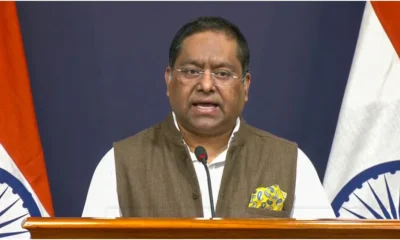
MEA responds after ITBP chief flags ongoing face-offs with China in Arunachal
India said deviations by Chinese forces from established patrolling patterns periodically disturb the situation along the Line of Actual Control, as the government addressed remarks by the ITBP chief about ongoing face-offs in Arunachal Pradesh.

India News
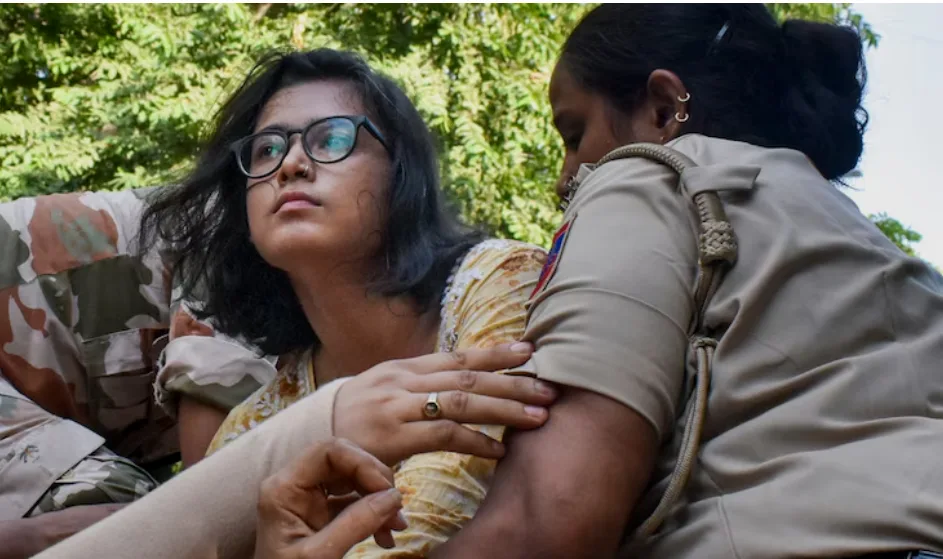
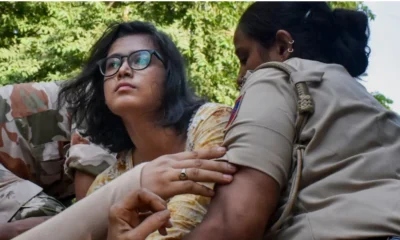
Delhi High Court rejects Neha Bora’s plea against peace bond notice
The Delhi High Court has rejected AISA president Neha Bora’s petition challenging a police notice requiring her to execute a peace bond following her participation in recent protests in the national capital.
India News
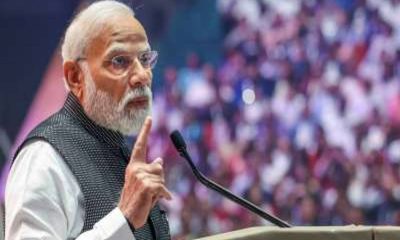
PM Modi to inaugurate Rs 169-crore RBI data centre in Odisha on October 25
Prime Minister Narendra Modi is scheduled to visit Odisha on October 25 to inaugurate the Reserve Bank of India’s Rs. 169-crore data centre in Jatni, near Bhubaneswar.


Om Prakash Mathur sworn in as Keralam Governor

PM Modi to inaugurate Rs 169-crore RBI data centre in Odisha on October 25

Delhi High Court rejects Neha Bora’s plea against peace bond notice

MEA responds after ITBP chief flags ongoing face-offs with China in Arunachal
MEA responds after ITBP chief flags ongoing face-offs with China in Arunachal
Delhi High Court rejects Neha Bora’s plea against peace bond notice
PM Modi to inaugurate Rs 169-crore RBI data centre in Odisha on October 25
Om Prakash Mathur sworn in as Keralam Governor

Two election commissioners complained against senior poll officer, RTI reveals

Afghan Men Try To Hang With The Jet Engine Of The Aircraft in Kabul- Afghanistan News – Kabul News
Trending Top 10 News: 10000 Crore Fine on Flipkart, Apple to Launch Unique Feature, Hdfc Bank Job Ad

Trending Top 10 News: Nokia 6310, Apple sales, Bachpan ka Pyar Video Kid, Dainik Bhaskar IT Raid

Trending Top 10 News: Canada bans Indian flights, Rain in Delhi NCR, AIMIM Twitter hacked, Raj Kundra case

Trending Top 10 News: Shein India, Apple New Service, Pocket Oxygen, Oppo Launched New Phone
-
 India News13 hours ago
Om Prakash Mathur sworn in as Keralam Governor
-
 India News13 hours ago
PM Modi to inaugurate Rs 169-crore RBI data centre in Odisha on October 25
-
 India News12 hours ago
Delhi High Court rejects Neha Bora’s plea against peace bond notice
-
 India News11 hours ago
MEA responds after ITBP chief flags ongoing face-offs with China in Arunachal
