English हिन्दी
Connect with us

India News

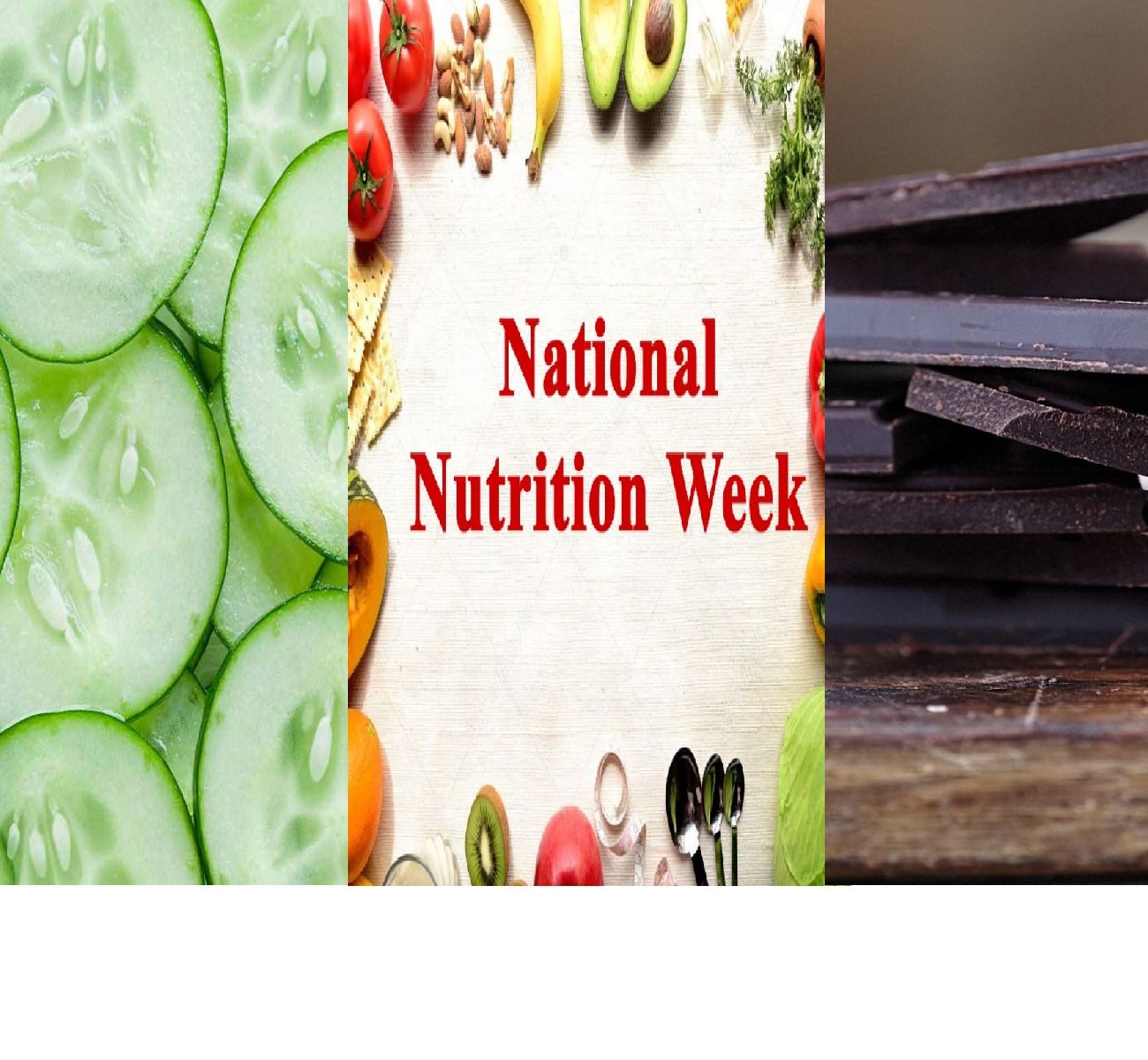
National Nutrition Week 2021: 6 nutrients you need for smooth and healthy hair

National Nutrition Week is celebrated to create awareness about health and nutrition. The healthy week is observed from September 1 to September 7 every year.


Published

on

nutrients you need

National Nutrition Week is celebrated to create awareness about health and nutrition. The healthy week is observed from September 1 to September 7 every year.

In March 1973, members of the American Dietetic Association introduced National Nutrition Week to spread a nutrition education message and promote the profession of dietetics. Inspired by the initiative, the government of India started observing the week in India in 1982. The main objective of the initiative was to spread awareness and encourage everyone to understand the nutritional value and follow a healthy lifestyle.

This year, the theme of National Nutrition Week is feeding smart right from start.

Conditioning our body is crucial for a healthy and sustainable lifestyle. The healthier you are on the inside, the healthier you’ll look on the outside. Smooth and healthy hair surely plays a pivotal part in adding that extra glow to your appearance. The right balance of nutrients is the ultimate key to achieve desired hair goals.

On the occasion of National Nutrition Week 2021, here are 6 important nutrients you need for smooth and healthy hair:

Iron:

When the iron level falls at a certain point, you may suffer from anemia. Balancing the iron contents in your body is as important as breathing. Loss of iron can cause severe hair loss making your hair frizzy and thin. Food like red meat, fish, and chicken contains iron with high bioavailability. For vegetarians, food like lentils, spinach, broccoli, kale, green salad, and other leafy vegetables can be consumed as iron sources.

Vitamin B:

This nutrient works to stimulate hair follicles to grow healthy hair. According to several researchers, vitamin B plays a prominent role in hair fall reduction, shiny hair, and reducing gray hair. Food like brown rice, leafy vegetables, chicken, quinoa oatmeal, and salmon are the ideal sources of vitamin B. The nutrient strengthens hair follicles and increases their circulation to the skin.

Zinc and Selenium:

The lack of zinc and selenium can cause a dry and flaky scalp leading to hair fall. These two nutrients work wonders for the scalp. Whole grains and fortified cereals along with oysters, beef, and eggs are a good source of zinc.

Protein:

Our hair is formed of protein, so it is vital to regulate our protein intake. The lack of protein can make your hair dry and brittle. On the other than, low protein consumption can restrict your hair growth. Food like chicken, eggs, fish, turkey, and other dairy products are excellent sources of protein.

Read Also: Medal tally truth: Indian Paralympic athletes better than Olympic athletes

Omega-3:

Omega-3s are found in the cells that line the scalp and also provide the oils that keep your scalp and hair hydrated. Oily fish such as salmon, trout, herring, sardines, and mackerel are rich sources of omega-3. Also include avacado, walnuts, and pumpkin seeds to improve the quality of your hair.

Vitamin A

Your body turns beta carotene into vitamin A. You need this nutrient to make sebum, an oily substance created by your hair sebaceous glands, and provides a natural conditioner for your scalp. The nutrient helps protect your hair from dullness and dryness. Include sweet potato, carrots, pumpkin, mangoes, and cantaloupe for a rich source of vitamin A.

India News

BJP’s Punjab outreach faces fresh challenge as farmers return to Shambhu border

The BJP’s push to shift Punjab’s political focus towards development has encountered a fresh challenge as farmers resume protests at the Shambhu border over concerns surrounding the proposed India-US trade agreement.

Published

on

Prime Minister Narendra Modi’s recent visit to Punjab had signalled what many viewed as a fresh political outreach by the Bharatiya Janata Party (BJP) in a state where it has struggled to recover from the fallout of the 2020-21 farm laws protest. However, the return of farmers to the Shambhu border over concerns surrounding the proposed India-US trade agreement has once again brought agrarian issues to the forefront.

Thousands of farmers gathered at the Punjab-Haryana border, while Haryana Police stopped them from marching towards Delhi. The scenes have drawn comparisons with both the 2020-21 farm laws protest and the farmers’ agitation witnessed in 2024.

BJP’s development narrative faces disruption

During his recent Punjab visit, Prime Minister Modi focused on development, infrastructure and investment, signalling the BJP’s intention to shift political discussions away from the farm laws controversy ahead of the Assembly elections, which are expected in about six months.

His decision to wear a green turban, a colour closely associated with Punjab’s farming community, was widely viewed as a symbolic gesture aimed at reaching out to rural voters.

However, the ongoing protest over the proposed India-US trade agreement has interrupted that narrative, with farmers once again mobilising at the Shambhu border.

Concerns over proposed India-US trade agreement

Farmer organisations have expressed concern that lower import duties under the proposed India-US trade agreement could allow heavily subsidised American agricultural and dairy products to enter the Indian market. They argue this could reduce domestic prices and negatively impact farmers’ incomes.

The groups have also maintained that waiting until the agreement is finalised would leave little opportunity to safeguard farmers’ interests.

Punjab BJP president Kewal Singh Dhillon has appealed to farmers not to draw conclusions before the agreement is finalised. He said no final pact has been signed and asserted there would be “no compromise on the interests of farmers and livestock rearers”. He also said Prime Minister Modi has assured that Punjab’s farmers would not be adversely affected.

Opposition steps up attack

The issue has quickly become a political flashpoint in Punjab.

The Congress has launched a campaign against the proposed trade agreement, alleging it could adversely affect the state’s agriculture and dairy sectors.

The Aam Aadmi Party has described the proposed pact as the “biggest betrayal of farmers” and has demanded that the Centre make the draft agreement public.

The Shiromani Akali Dal has also extended support to the agitation, accusing the Centre of ignoring the concerns of Punjab’s farming community.

Political implications ahead of Punjab polls

The BJP has been attempting to broaden its support beyond its traditional urban voter base by expanding its presence in rural Punjab ahead of the Assembly elections.

Political observers had viewed Prime Minister Modi’s recent visit as the beginning of that outreach. However, the renewed farmers’ mobilisation risks reviving memories of the 2020-21 farm laws agitation, which had significantly affected the BJP’s standing among many farmers in the state.

Unlike the earlier movement, which centred on domestic agricultural reforms, the current agitation focuses on a proposed international trade agreement. If the movement gathers further momentum, it could become India’s first large-scale farmers’ protest against a foreign trade pact, bringing renewed attention to how political parties balance international trade objectives with the interests of domestic agriculture.

With Assembly elections approaching, the renewed agitation has the potential to once again make farmers’ concerns a central issue in Punjab’s political discourse.

Continue Reading

India News

CJP warns of fresh protest if cases against students not withdrawn by Tuesday

The Cockroach Janta Party has threatened to resume protests if cases against students are not withdrawn, alleging the Centre violated assurances made during recent talks.

Published

on

The Cockroach Janta Party (CJP) has warned that it will resume protests from Tuesday if the Centre does not withdraw cases filed against demonstrators and stop further police action against students involved in the nationwide agitation.

The Abhijeet Dipke-led movement, which began as a satirical campaign and later evolved into a nationwide protest over alleged examination irregularities, had ended its 37-day sit-in at Delhi’s Jantar Mantar over the weekend following discussions with the government.

According to the organisation, the protest was withdrawn in “good faith” after Education Minister Dharmendra Pradhan resigned, one of the group’s key demands.

CJP alleges breach of assurances

CJP spokesperson Ashutosh Ranka alleged that authorities had failed to honour assurances made during negotiations by continuing police action against protesters.

In a post on X, he claimed that hundreds of students had been arrested in Bihar and West Bengal, while volunteers and protesters in Delhi and other states were facing surveillance and harassment.

Ranka urged senior ministers JP Nadda and Jitendra Singh, who represented the government during the talks, to ensure that all FIRs registered against protesters are withdrawn and that no fresh cases are filed by Delhi Police, central investigative agencies or police forces in BJP-allied states.

He also sought a written copy of the understanding reached during the negotiations regarding legal action against protesters.

Demands raised after talks with Centre

Following the third round of discussions held at the Constitution Club on Saturday, the CJP had said the Centre agreed to provide suitable compensation to the families of NEET aspirants who died by suicide and assured that FIRs lodged against protesters across the country would be withdrawn.

The organisation had submitted a five-point charter of demands to the government and said another round of talks would be held after four weeks.

One of the group’s major demands was the withdrawal of FIRs registered after the July 20 ‘Chalo Sansad’ march and a commitment that no further legal action would be initiated against protesters.

Police action and Parliament debate

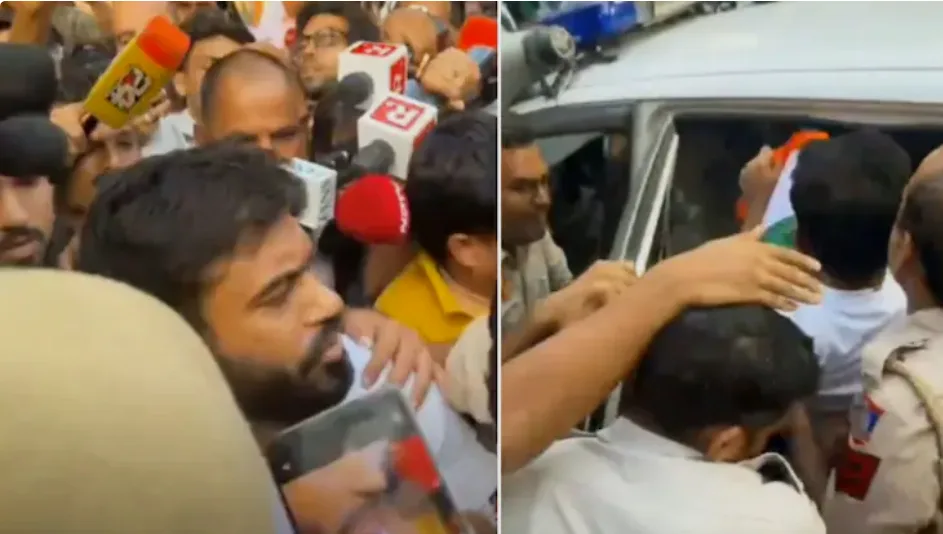
Several FIRs were filed following clashes during the July 20 protest near Parliament after demonstrators attempted to march from Jantar Mantar towards Parliament.

Police used tear gas and batons to disperse the crowd, leading to clashes and multiple detentions.

On Monday, the issue echoed in Parliament as Opposition members repeatedly demanded a government response over the police crackdown on protesters.

Meanwhile, despite disruptions in the House, the government introduced a Bill in the Lok Sabha proposing stricter penalties for examination paper leaks.

Continue Reading

India News

India summons Ukrainian envoy after ships with Indian crew attacked in Black Sea

Published

on

India has summoned the Ukrainian Ambassador after two merchant vessels carrying Indian crew were attacked in the Black Sea, raising concerns over the safety of Indians working in the conflict zone.

The Ministry of External Affairs (MEA) described the incidents as a matter of serious concerns and conveyed India’s position directly to the Ukrainian envoy.

According to the MEA, the attacks took place amid the ongoing Russia-Ukrainian war, where commercial shipping has increasingly come under threat due to military operations. Although no deaths have been reported, several Indian seafarers were on board the affected vessels, prompting the government to seek immediate clarification from Ukraine and stress the need to ensure their safety.

During the meeting, the MEA reiterated that merchant ships engaged in commercial trade and civilian crew members must not become targets during armed conflict. India urged Ukraine to take all possible steps to prevent such incidents and to uphold international maritime law, which protects civilian shipping operating in international waters.

The ministry said it is in constant contact with Indian missions abroad, shipping companies, and maritime authorities to monitor the condition of Indian crew members. Officials have assured that diplomatic and consular assistance for the crew.

The attack have once again highlighted the dangers faced by thousands of Indian seafarers employed on international cargo vessels operating in conflict-affected regions. The continuing war has disrupted shipping routes in the Black Sea, creating risks for commercial trade and the safety of multinational crews.

The latest diplomatic move reflects India’s consistent position on the Russia-Ukraine conflict. While maintaining relations with both countries, India has repeatedly called for dialogue, a peaceful resolution to the conflict, and the protection of civilians and commercial vessels under international law.

Continue Reading

Trending

© Copyright 2022 APNLIVE.com