English हिन्दी
Connect with us

India News

Viral video: Uttarakhand minister finds solution to divert, control rainfall by mobile app, Twitter users surprised, former CM Harish Rawat recommends Bharat Ratna for minister

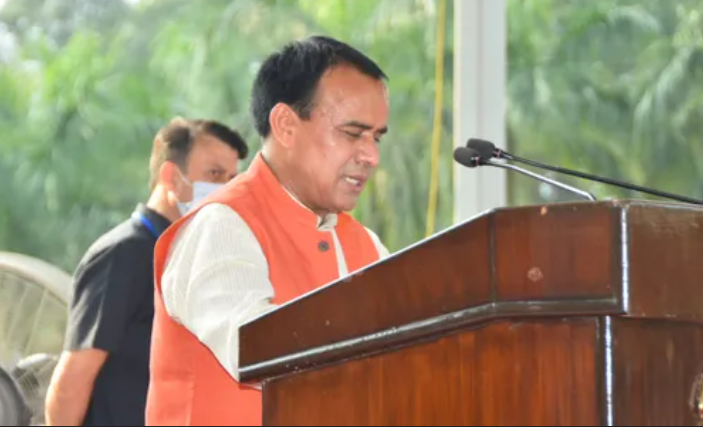
Uttarakhand Health and Disaster Management Minister Dhan Singh Rawat created headlines on Monday when a video of him saying that an application was being developed to regulate excess rainfall went viral on social media. In the video he is seen claiming that an application can divert and control rain.

Published

on

Uttarakhand Health and Disaster Management Minister Dhan Singh Rawat

Uttarakhand Health and Disaster Management Minister Dhan Singh Rawat created headlines on Monday when a video of him saying that an application was being developed to regulate excess rainfall went viral on social media. In the video he is seen claiming that an application can divert and control rain.
In a short video surfaced on Twitter, Rawat can be heard saying that an app is being developed which can help regulate and distribute excessive rainfall in a place. The app will also alert about the probable natural calamities beforehand, he said.

In a joint venture with National Disaster Management Authority (NDMA), IIT Roorkee has built an app that can predict natural disasters.

Twitter users expressed surprise over the video, wondering if the minister was serious while making the statement. However, it was not clear when or where the video was made.

https://twitter.com/AnjaliChamoli96/status/1432426320021975044

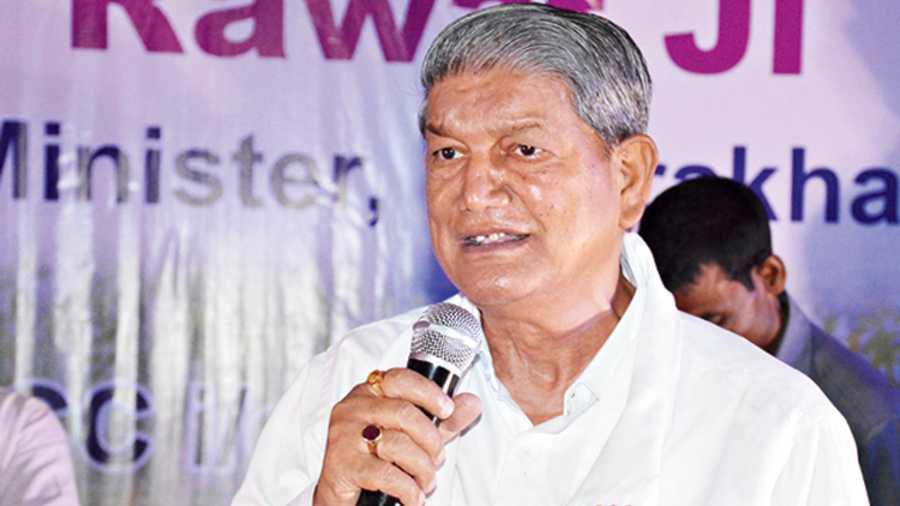
Taking a dig at Dhan Singh Rawat, former Uttarakhand CM Harish Rawat took to social media and recommended Bharat Ratna for the minister who is claiming to divert and control rain through mobile app.

Earlier, Harish Rawat had also emphasized on the need to find a way to deal with natural disasters during the Uttarakhand cloudburst.

The former CM’s statement comes after Dhan Singh Rawat told the reporters that the Uttarakhand government was working on a mobile application that will be able to alert locals about the potential natural disasters.

Read Also: Yogi Adityanath bans meat, liquor trade in UP’s Mathura

Dhan Singh Rawat also said that he had requested the Central government to simplify the 2011 disaster parameters and was bringing a proposal for the same. The minister also informed the reporters that the Doppler radar in Mukteshwar has started functioning and will also be set up at Surkanda Devi within 1-1.5 months.

Dhan Singh Rawat is the cabinet minister of Uttarakhand and is currently holding the state’s Education ministry, Medical Health and Medical Education and Disaster Management portfolios.

Rawat has earned masters and doctoral degrees from Hemwati Nandan Bahuguna Garhwal University.

From cloud bursts to landslides, Uttarakhand often bears the brunt of natural disasters including excessive rainfalls every year.

In other India News, Taliban attacked Panjshir Valley after withdrawal of US troops from Afghanistan

India News

PM Modi assures no discrimination in women’s quota, delimitation debate intensifies in Parliament

PM Narendra Modi has assured that women’s reservation will be implemented without discrimination, amid a heated debate over delimitation in Parliament.

Published

on

PM modi

Prime Minister Narendra Modi has assured that there will be no discrimination in the implementation of women’s reservation, as Parliament witnessed a sharp debate over the proposed linkage between the quota and delimitation exercise.

During the ongoing special session, the government reiterated its commitment to ensuring fair representation while addressing concerns raised by opposition parties regarding the timing and structure of the legislation.

The proposed framework aims to reserve 33 percent of seats for women in the Lok Sabha and state assemblies. However, its implementation is tied to a fresh delimitation exercise, which is expected after the next census.

Opposition questions timing and intent

Opposition leaders have raised concerns that linking the women’s quota to delimitation could delay its implementation. They argue that the process of redrawing constituencies may push the actual rollout further into the future.

The issue has triggered a broader political confrontation, with multiple parties questioning whether the move could alter representation across states.

Some critics have also alleged that the delimitation exercise could disproportionately benefit certain regions based on population, a charge the government has rejected.

Government reiterates commitment to fair implementation

Responding to these concerns, the Centre has maintained that the reforms are necessary to ensure accurate and updated representation based on population data.

Leaders from the ruling side have repeatedly emphasized that the process will be carried out transparently and without bias. The assurance that there will be “no discrimination” is aimed at addressing fears among states and opposition parties.

The debate marks a key moment in Parliament, with both sides engaging in intense exchanges over one of the most significant electoral reforms in recent years.

Continue Reading

India News

Give all tickets to Muslim women, Amit Shah says, attacking Akhilesh Yadav on sub-quota demand

A sharp exchange between Amit Shah and Akhilesh Yadav in Parliament over sub-quota for Muslim women highlights key divisions on women’s reservation implementation.

Published

on

A heated exchange broke out in Parliament during discussions on the women’s reservation framework, with Union Home Minister Amit Shah and Samajwadi Party chief Akhilesh Yadav locking horns over the demand for a sub-quota for Muslim women.

The debate unfolded as the government pushed forward key legislative measures to implement 33% reservation for women in the Lok Sabha and state assemblies.

Akhilesh Yadav argued that the proposed reservation must ensure representation for women from marginalised communities, including Other Backward Classes (OBCs) and Muslim women. He said that without such provisions, large sections could remain excluded from political participation.

He also questioned the timing of the bill, alleging that the Centre was avoiding a caste census. According to him, a census would lead to renewed demands for caste-based reservations, which the government is reluctant to address.

Government rejects religion-based quota

Responding to the demand, Amit Shah made it clear that reservation based on religion is not permitted under the Constitution.

He stated that any proposal to provide quota to Muslims on religious grounds would be unconstitutional, firmly rejecting the idea of a separate sub-quota for Muslim women within the broader reservation framework.

The government has maintained that the existing framework already includes provisions for Scheduled Castes (SC) and Scheduled Tribes (ST) women within the overall reservation structure.

Wider political divide over implementation

The issue of sub-categorisation within the women’s quota has emerged as a major flashpoint, even as most opposition parties broadly support the idea of women’s reservation.

Samajwadi Party leaders reiterated that their support for the bill depends on inclusion of OBC and minority women, while the government continues to defend its constitutional position.

The debate is part of a broader discussion during the special Parliament session, where multiple bills linked to delimitation and implementation of the women’s quota are being taken up.

Continue Reading

India News

No state will lose a seat, Centre assures as delimitation debate takes centre stage in Parliament

Parliament’s special session begins with key focus on implementing women’s reservation and delimitation, setting the stage for major electoral changes.

Published

on

Parliament

A special session of Parliament commenced on Thursday, with the Centre set to take up crucial legislation related to women’s reservation and delimitation of constituencies. The session, scheduled over three days, is expected to witness intense debate as the government pushes forward its legislative agenda.

At the centre of discussions is the proposal to operationalise the women’s reservation law, which seeks to allocate 33 percent of seats in the Lok Sabha and state assemblies to women. The law, passed earlier, requires enabling provisions before it can be implemented.

The rollout of the reservation is closely tied to the delimitation exercise — a process that redraws parliamentary constituencies based on updated population data. The implementation is expected only after the next census and delimitation process are completed.

The government is aiming to put in place the framework so that the reservation can be enforced in future elections, likely around 2029.

Delimitation and numbers at play

Delimitation is a key aspect of the proposed changes, as it will determine how seats are redistributed and which constituencies are reserved. The exercise is expected to reflect population shifts and may also involve an increase in the total number of Lok Sabha seats.

This linkage has made the issue politically sensitive, with several opposition parties backing women’s reservation in principle but raising concerns over how and when delimitation will be carried out.

Political reactions and expected debate

The session is likely to see sharp exchanges between the government and opposition. While there is broad agreement on increasing women’s representation, disagreements remain over the timing, process, and potential political implications of the delimitation exercise.

Some leaders have argued that delimitation could significantly alter the balance of representation among states, making it a contentious issue beyond the women’s quota itself.

The government, however, has framed the move as a step toward strengthening women’s participation in governance and ensuring more inclusive policymaking.

Continue Reading

Trending

© Copyright 2022 APNLIVE.com