
India News
National Tourism Day 2022: 5 spell-bounding places in India that you must explore to skip the crowd amidst Covid-19 outbreak
Travelling in the Covid-19 outbreak seems a little difficult. So, we have compiled the top 5 places in India to escape from the hustle-bustle of cities and can indulge in the scenic beauty of not-so-known places.


Gone are the days when we could make our vacation plans on the spur of the moment. The Covid-19 outbreak has been going on for nearly two years, and making travel plans appears to be challenging. Traveling appears hard with states setting rigorous guidelines and modifying them on a regular basis to stop the spread of coronavirus.
We are also concerned about contracting the virus if we travel. So, we have compiled the top 5 places in India to escape from the hustle-bustle of cities and can indulge in the scenic beauty of not-so-known places.
These are places that you must visit in order to create memorable experiences.
Malana, Himachal Pradesh
Malana is an ancient Indian village located in Himachal Pradesh. The Chandrakhani pass, the Rashol pass, and the stunning Jhari falls are just a few of the village’s hiking spots. The village is famous for the Jamlu temple which is built-in Kathkuni style, and with wooden carving and deer heads. Malana is famous for its “Malana Cream”, a product made from cannabis plants that grow in the Parvati valley.
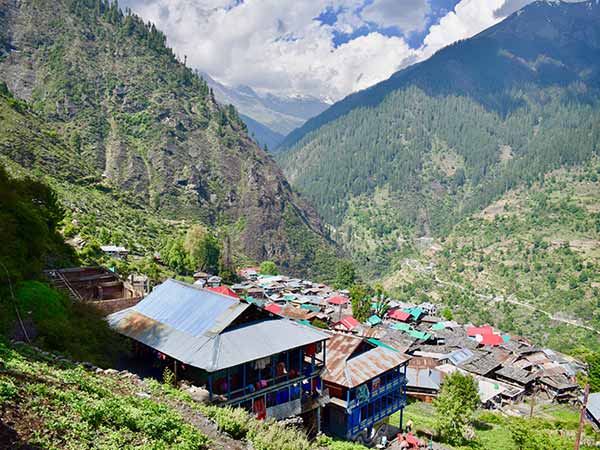
How to reach Malana- The most common route to the village is by taxi or bus from Jhari. One-stop prior to Malana.
Majuli, Assam
Majuli is a river island in the Brahmaputra River, Assam and in 2016 it became the first island to be made a district in India. This village attracts visitors from all over the world because of its unique blend of culture and history. The best time to visit is between November and March when the weather is pleasant and the wildlife seeing chances are plentiful.
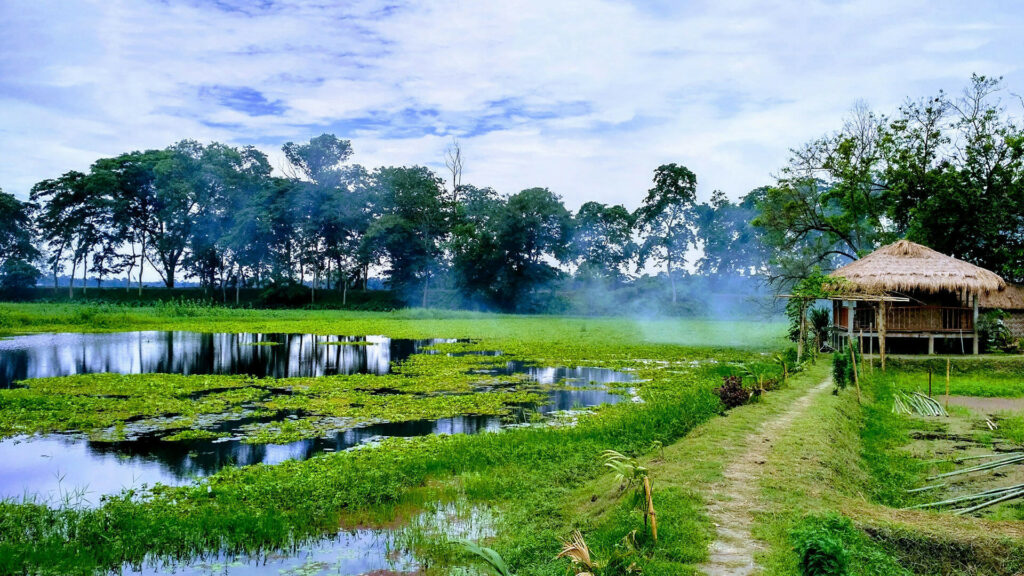
How to reach Majuli– Majuli is 20 km from Jorhat. One can take the bus or a hired taxi to the Nimati Steamer Ghat from where ferry services ply. The distance takes over three hours to cover, with three bus rides and two ferry rides.
Nandi Hills, Karnataka
Nandi Hills is located 1478 meters above sea level. It is a town in Karnataka blessed with pleasant weather all over the year. The town takes its name from the mythological bull ‘Nandi’ who protects the Yoganandeeshwara Temple. The hills are very rich in birdlife making it a popular location for birdwatchers. The hill slopes are the home of the yellow-throated bulbul, a species endemic to the hills of peninsular India. Nandi Hills is a destination for hiking and trekking for beginners to intermediate levels.
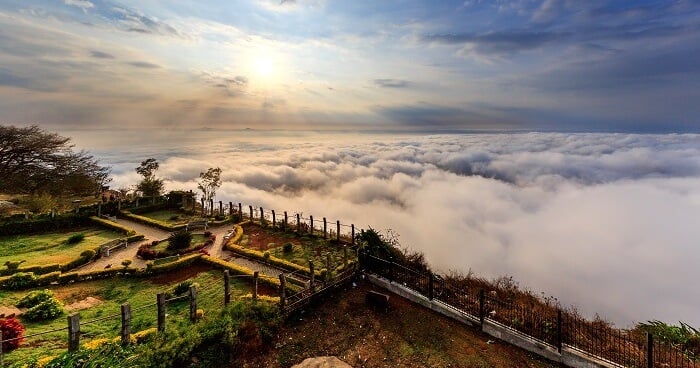
How to reach Nandi Hills- The nearest railway station is in Chikkaballapur (9 kilometres), and the nearest airport is in Bangalore (58 kilometres), from which taxis to Nandi Hills are accessible. Both buses and cabs are available from Bangalore and most neighboring cities.
Zuluk, Sikkim
Zuluk is a small hamlet located at a height of 9,400 feet in Sikkim, which lies on the ancient Silk route. Despite the lack of tourist attractions other than a cave Nag temple, the location provides a glimpse into paradise in the form of a magnificent sunrise view that makes one feel completely at peace. The three-level switchback roads of Zuluk offer views of the Kangchenjunga and its mountain range.
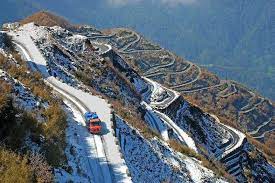
How to reach Zuluk– Dzuluk is located on the National Highway-717B, which runs through Rongli and connects Rhenock and Menla. Zuluk is around a 7-hour drive from Siliguri. Tourists can also reach Dzuluk from Gangtok in around 4 hours via hired vehicles.
Mawlynnong, Meghalaya
Mawlynnong is a village in Meghalaya state which is known for its cleanliness. It is also known as God’s Own Garden and is Asia’s cleanest village for good cause. Mawlynnong received the distinction of Cleanest Village in Asia in 2003. Apart from cleanliness, the village has accomplished a lot, including a 100% literacy rate and a women empowerment status that the rest of the world can only fantasize of.

How to reach Mawlynnong– Mawlynnong is located 90 km from Shillong, along the India–Bangladesh border. From Shillong airport, you can take a taxi to Khasi Hills Sumo stand at Bara Bazaar market. From there shared sumo run till Mawlynnong.



India News
Centre mandates 60% free seat allocation on flights, caps selection fees
Airlines must now offer 60% seats without extra charges and ensure better seating arrangements for passengers under new government rules.


India News
Mamata Banerjee warns BJP, EC over Bengal polls, says they will be accountable
Mamata Banerjee holds BJP and Election Commission responsible for any incidents during Bengal polls, raising concerns over officer transfers.

India News
Centre assures action on LPG supply disruption, court closes distributors’ plea
The Bombay High Court closed a plea by LPG distributors after the Centre assured diplomatic efforts to stabilise supply amid global disruptions.

Centre assures action on LPG supply disruption, court closes distributors’ plea

Mamata Banerjee warns BJP, EC over Bengal polls, says they will be accountable

Top US counterterrorism official resigns over Iran war, cites conscience

US strikes Iranian missile sites near Hormuz with 5,000-pound bunker buster bombs

Netanyahu dismisses death rumours in video with US envoy, says I’m alive

Centre mandates 60% free seat allocation on flights, caps selection fees
Netanyahu dismisses death rumours in video with US envoy, says I’m alive
US strikes Iranian missile sites near Hormuz with 5,000-pound bunker buster bombs
Top US counterterrorism official resigns over Iran war, cites conscience
Mamata Banerjee warns BJP, EC over Bengal polls, says they will be accountable

Afghan Men Try To Hang With The Jet Engine Of The Aircraft in Kabul- Afghanistan News – Kabul News
Trending Top 10 News: 10000 Crore Fine on Flipkart, Apple to Launch Unique Feature, Hdfc Bank Job Ad

Trending Top 10 News: Nokia 6310, Apple sales, Bachpan ka Pyar Video Kid, Dainik Bhaskar IT Raid

Trending Top 10 News: Canada bans Indian flights, Rain in Delhi NCR, AIMIM Twitter hacked, Raj Kundra case

Trending Top 10 News: Shein India, Apple New Service, Pocket Oxygen, Oppo Launched New Phone
-
India News17 hours ago
Centre assures action on LPG supply disruption, court closes distributors’ plea
-
 India News15 hours ago
Mamata Banerjee warns BJP, EC over Bengal polls, says they will be accountable
-
 Latest world news15 hours ago
Top US counterterrorism official resigns over Iran war, cites conscience
-
 Latest world news2 hours ago
US strikes Iranian missile sites near Hormuz with 5,000-pound bunker buster bombs
-
 Latest world news2 hours ago
Netanyahu dismisses death rumours in video with US envoy, says I’m alive
-
 India News56 mins ago
Centre mandates 60% free seat allocation on flights, caps selection fees
