English हिन्दी
Connect with us

India News

Mountaineering icon Nirmal Purja dies after avalanche on Broad Peak

Record-breaking mountaineer Nirmal ‘Nims’ Purja died after an avalanche struck Broad Peak. Expedition company Elite Exped confirmed the tragedy and paid tribute to his remarkable legacy.

Published

on

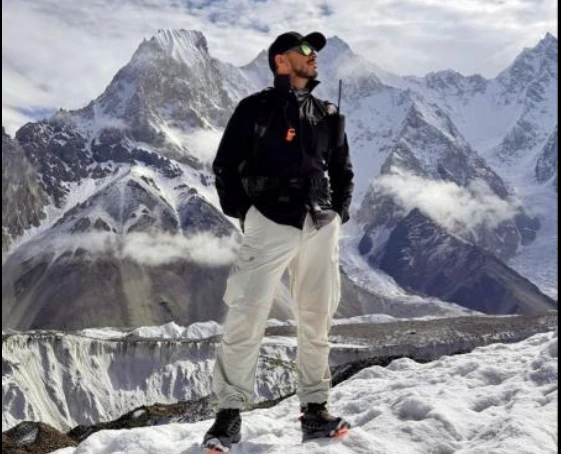
Legendary mountaineer Nirmal ‘Nimsdai’ Purja has died after an avalanche struck Broad Peak, the world’s 12th-highest mountain, his expedition company Elite Exped confirmed in an Instagram post on Saturday.

Purja and five other climbers had been reported missing since Friday after an avalanche hit the expedition on Broad Peak’s standard West Ridge route. According to Elite Exped, the incident also claimed the lives of other members of the team.

“Today, it is with profound sadness and immense heartbreak that we confirm that Nirmal ‘Nimsdai’ Purja tragically lost his life following the avalanche on Broad Peak. We have also received confirmation that other members of the expedition sadly did not survive,” the company said.

Avalanche struck on Broad Peak

Broad Peak is located in the Karakoram mountain range along the border of Gilgit-Baltistan in Pakistan and China’s Xinjiang region, close to K2 in Pakistan-Occupied Kashmir (PoK).

The avalanche struck the expedition along the mountain’s standard West Ridge route at an altitude of approximately 21,600 to 21,850 feet.

Elite Exped also confirmed the deaths of Purja’s climbing partners and guides, Pur Bahadur Gurung (Yukta) and Nima Sherpa, while expressing condolences to the families of all those who lost their lives.

“The world has lost one of mountaineering’s greatest climbers; a leader who inspired millions through his courage, humility and unwavering belief that human potential is far greater than we often imagine,” the company said.

A pioneering career in mountaineering

Before becoming a full-time mountaineer and expedition guide, Purja served in Britain’s Brigade of Gurkhas and later in the Royal Marines’ elite Special Boat Service (SBS).

He rose to global prominence in 2019 after completing his ambitious Project Possible, climbing all 14 mountains above 8,000 metres in just six months and six days, setting a world record.

In 2021, Purja was part of the 10-member Nepali team that achieved the first successful winter ascent of K2, one of mountaineering’s most celebrated achievements.

His accomplishments also reached a global audience through the Netflix documentary 14 Peaks: Nothing Is Impossible, which chronicled his record-breaking expedition and inspired renewed interest in high-altitude climbing.

According to Elite Exped, Purja’s legacy will continue through the organisations he founded and the countless people he inspired to push beyond perceived limits.

Continue Reading

India News

PM Modi, Putin share car ride in Delhi after bilateral talks

PM Modi and Vladimir Putin shared a car ride to Bharat Mandapam after bilateral talks, marking their fourth joint journey by car.

Published

on

PM Modi putin

Prime Minister Narendra Modi and Russian President Vladimir Putin shared a car ride in New Delhi on Friday after holding bilateral talks, marking their fourth joint journey by car.

The two leaders travelled together in a limousine to the INNOPROM exhibition at Bharat Mandapam, where the 11-member BRICS Summit is scheduled to take place. Their joint ride came a day before the summit.

Modi and Putin’s fourth joint car ride

PM Modi and President Putin have shared a car on three previous occasions. Their first such ride took place during the Shanghai Cooperation Organisation (SCO) Summit in China last year.

The two leaders also met earlier this month at an SCO summit in Kyrgyzstan. Putin’s most recent visit to India before the current trip was in December 2025.

Their latest joint journey followed a bilateral meeting in which the two leaders discussed several areas of the India-Russia relationship.

India-Russia talks cover trade, energy and defence

According to the Ministry of External Affairs, PM Modi and Putin held wide-ranging discussions on the India-Russia Special and Privileged Strategic Partnership.

The talks covered cooperation in areas including trade, energy, defence, space and people-to-people ties. The two sides also exchanged views on regional and global issues, including conflicts in West Asia and the Black Sea region.

PM Modi reiterated that dialogue and diplomacy remain the way forward for resolving conflicts and said India is ready to assist in peace efforts, according to the Ministry.

Modi gifts Putin Russian translation of Thirukkural

During the bilateral meeting, PM Modi presented Putin with a Russian translation of the Thirukkural, the classical Tamil work associated with the poet and saint Thiruvalluvar.

Modi said the translation of the ancient text into Russian could help strengthen people-to-people ties between India and Russia.

The joint car ride added another notable moment to the two leaders’ interactions ahead of the BRICS Summit in New Delhi.

Continue Reading

India News

PM Modi calls for secure sea routes at BRICS event, references Hormuz

PM Modi highlighted the need for secure sea lanes, open supply routes and seafarer safety at the BRICS Business Forum amid tensions in the Strait of Hormuz.

Published

on

PM Modi

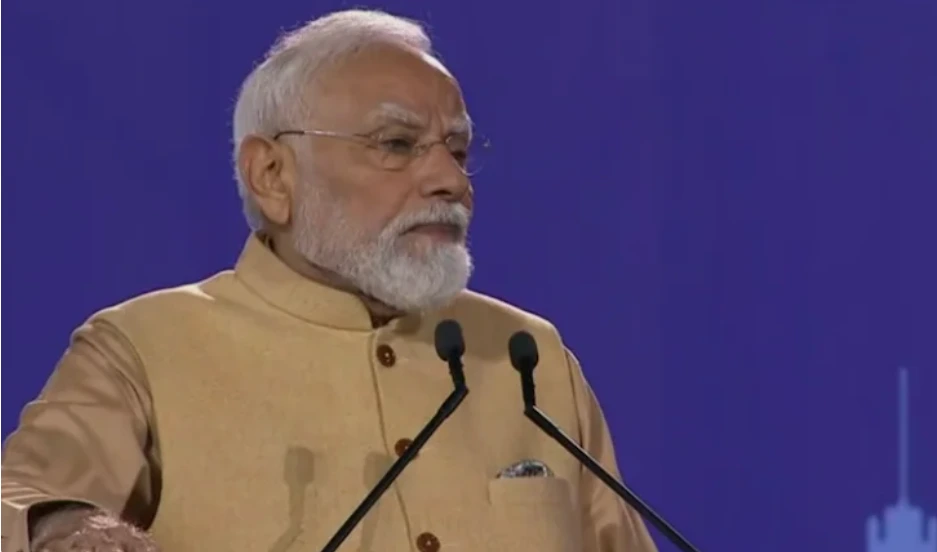
Prime Minister Narendra Modi on Friday stressed the importance of secure maritime routes and the safety of seafarers while addressing the BRICS Business Forum in New Delhi.

Speaking at the forum, which was also attended by Iranian President Masoud Pezeshkian, PM Modi linked the growth of global trade with the need to keep sea lanes secure, supply routes open and seafarers safe.

PM Modi stresses freedom of navigation

PM Modi said that global trade can progress only when maritime routes remain secure and supply lines stay open. He also reaffirmed India’s support for freedom of navigation and the safety of seafarers.

The remarks came against the backdrop of recent attacks on ships, particularly in and around the Strait of Hormuz. The strategically important waterway has been affected by the ongoing conflict involving the United States and Iran.

The issue of maritime security is also significant for India because disruptions to shipping routes can affect trade and the safety of Indian seafarers.

PM Modi highlights BRICS economic growth

During his address, PM Modi also highlighted the expanding economic importance of the BRICS grouping.

He said BRICS countries now account for around 50 per cent of the world’s population, 40 per cent of global GDP and more than 25 per cent of global trade. According to the Prime Minister, the combined GDP of BRICS nations has expanded nearly four-and-a-half times, compared with global GDP growth of about two-and-a-half times.

PM Modi described BRICS countries as emerging centres for innovation and said the business forum being hosted by India was the largest BRICS Business Forum so far.

Focus on trade and business cooperation

The Prime Minister also spoke about India’s efforts to reduce trade barriers and expand opportunities for businesses.

He said India has entered into free trade agreements with 40 countries and highlighted new cooperation networks established under India’s BRICS presidency in areas including agriculture, healthcare, skills and smart grids.

PM Modi also referred to initiatives such as the BRICS Incubator Network, BRICS MSME Portal and BRICS Startup Innovation Fund, aimed at connecting startups and small businesses with markets and finance.

Iran highlights global economic uncertainty

Iranian President Masoud Pezeshkian, who was present at the forum, spoke about the impact of geopolitical uncertainty and supply-chain disruptions on the global economy.

He said geopolitical tensions and the use of economic measures as political instruments had made the environment for countries and businesses more complicated. Pezeshkian argued that BRICS should turn its economic potential into practical cooperation in trade, investment and joint financing.

Russian President Vladimir Putin also spoke about major structural changes taking place in the global economy, saying new engines of growth were emerging.

PM Modi separately held bilateral meetings with Russian President Vladimir Putin and President Pezeshkian on the sidelines of the 18th BRICS Summit. During his meeting with Putin, Modi said dialogue and diplomacy were the way forward for resolving conflicts.

Continue Reading

India News

Shashi Tharoor lists BRICS benefits after P Chidambaram questions gains

Shashi Tharoor highlighted BRICS’ diplomatic value and role for the Global South after P Chidambaram questioned the tangible benefits India has gained from recent summits.

Published

on

Shashi Tharoor

Congress MP Shashi Tharoor has highlighted the diplomatic and global significance of BRICS after senior party leader P Chidambaram questioned the tangible benefits India has received from recent meetings of the grouping.

Speaking ahead of the BRICS summit in Delhi, Tharoor described BRICS as an important platform for the Global South and said hosting the summit was a matter of prestige for India. He also acknowledged challenges within the grouping, including differences among member countries and India’s trade imbalance with BRICS nations.

What Shashi Tharoor said about BRICS benefits

Tharoor said BRICS provides an important platform for the Global South. He pointed out that the grouping has 11 countries representing a majority of the world’s population and 41% of global GDP.

According to Tharoor, the size and diversity of the grouping make it significant on the global stage. He said the platform should therefore be taken seriously by other countries.

He also highlighted the importance of India hosting the BRICS summit. Tharoor said the presence of several heads of state and government, along with observers attending at the presidential and prime ministerial level, was a matter of prestige for India.

He linked the summit to India’s diplomatic convening power, saying that its value extends beyond immediate outcomes.

Tharoor flags challenges for BRICS

While listing the benefits, Tharoor also acknowledged that BRICS faces several challenges.

One of the key issues, according to him, is the difficulty of reaching a common position on major international developments. He pointed to differences over the Iran war and the Russia-Ukraine conflict.

Tharoor noted that when BRICS foreign ministers met in New Delhi in May, the countries were unable to agree on a joint statement. India, as the chair, instead issued a chair’s declaration.

He said the ability of the grouping to reach consensus would remain an important challenge for diplomats.

India faces trade imbalance with BRICS countries

Tharoor also raised concerns about the economic side of BRICS.

He said trade among BRICS countries has been growing but argued that the trend has been disadvantageous for India. According to him, India’s exports to BRICS countries have declined while imports from those countries have increased.

This trade imbalance was presented as one of the practical concerns that India needs to consider while assessing its engagement with the grouping.

What P Chidambaram said about BRICS

Tharoor’s comments came a day after former Union minister and Congress leader P Chidambaram questioned the tangible benefits India has received from recent BRICS summits.

Chidambaram said he did not think the last two or three BRICS meetings had produced significant tangible benefits or results for India.

He also pointed out that India participates in several multilateral groupings, including BRICS, the Shanghai Cooperation Organisation, the G20 and the Quad, and questioned what concrete benefits the country had received from them.

The BJP criticised Chidambaram’s remarks and described him as part of the “naraaz phupha” group that, according to the party, could not accept India’s progress.

Why are BRICS benefits being debated?

The latest exchange highlights two sides of the BRICS debate.

Chidambaram has questioned whether the grouping has delivered enough concrete outcomes for India, while Tharoor has emphasised its diplomatic importance, its representation of the Global South and India’s ability to bring major countries together.

At the same time, Tharoor has acknowledged challenges related to consensus and India’s trade position within the grouping.

Continue Reading

Trending

© Copyright 2022 APNLIVE.com