English हिन्दी
Connect with us

India News

Noida software engineer jumps from 20th floor, police suspect spat with woman friend to be reason

The two friends had checked into the apartment on Thursday and drank liquor. Subsequently on Friday morning, the woman had also invited her friend from Delhi to come to the apartment.


Published

on

A story has come to light from Uttar Pradesh’s Noida where a software engineer turned to suicide as he went on to jump from 20th floor. According to reports, the man was in an inebriated state while he took the drastic step.

It is reported that the reason for the man to turn to suicide was due to a spat with his friend who had also come out to caution the security guard of building about him trying to take the drastic step.

The incident reportedly transpired in Noida’s Sector 168 Golden Palm’s society around 9 pm. The police told the media that the man and his friend had booked the society flat for a day where they also consumed liquor during their meeting. It was reported that the software engineer was considering moving out of the country and had come to Noida to meet his childhood friend.

The two friends had checked into the apartment on Thursday and drank liquor. Subsequently on Friday morning, the woman had also invited her friend from Delhi to come to the apartment. After the woman’s friend left, the software engineer reportedly got into an argument with his childhood friend over her inviting her friend, which led to the drastic measure by the software engineer.
Reports suggest, after the drunk software engineer was agitated and threatened his childhood friend of jumping off of the 20th floor. The woman rushed to the security guard office for them to intervene, however, by the time she informed them it was too late as the guard and woman heard a loud thud noise from the ground floor cafeteria.

Upon tracing the noise to the cafeteria on the ground floor, the guard and the security staff found the software engineer lying face down on an outdoor dining table as the man lay in his own pool of blood.

Police action

After being informed about the situation, the police rushed to the spot and took the body into custody. The body was also sent for autopsy by the police officials. According to reports, the police informed the media that the family had reached Noida on Saturday and the family are yet to file a complaint in the matter.

India News

Supreme Court flags risk of lawlessness, pauses FIRs against ED officers in Bengal case

The Supreme Court paused FIRs against ED officers in the Bengal I-PAC raid case, warning that obstruction of central probes could lead to lawlessness and seeking responses from the Centre and state.

Published

on

Supreme Court

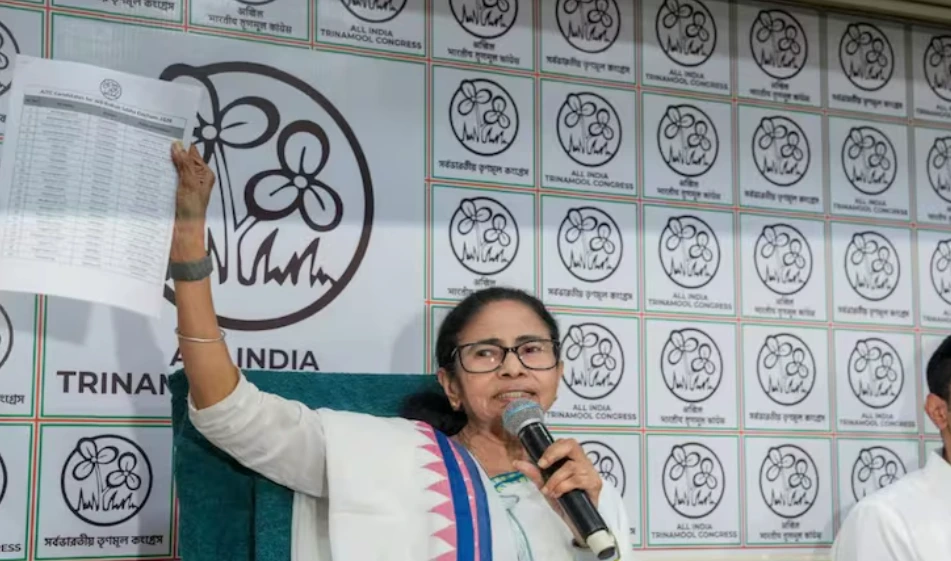
The Supreme Court on Wednesday delivered a sharp rebuke to the Mamata Banerjee-led West Bengal government, pausing FIRs lodged against officers of the Enforcement Directorate over searches linked to political consultancy I-PAC. The court said the case raises serious questions about interference in investigations and warned that failure to address them could lead to “lawlessness”.

A bench of Justice Prashant Mishra and Justice Vipul Pancholi sought replies from the Ministry of Home Affairs, the Department of Personnel and Training, Chief Minister Mamata Banerjee and the Trinamool Congress government on the ED’s plea. The central agency has also sought the suspension of Bengal Director General of Police Rajeev Kumar and Kolkata Police Commissioner Manoj Kumar Verma, and a probe by the CBI. The matter will be heard next on February 3.

The ruling follows a standoff between the ED and the Bengal government after the agency conducted searches at premises linked to I-PAC, which manages election campaigns for the Trinamool Congress, in connection with a corruption case.

Court questions obstruction of central probes

Recording its prima facie view, the Supreme Court said the petition raised a “serious issue” concerning investigations by central agencies and possible obstruction by state authorities.

“There are larger questions which emerge and if not answered shall lead to lawlessness. If central agencies are working bona fide to probe a serious offence, a question arises: Can they be obstructed by party activities?” the bench observed.

Earlier in the day, the court also expressed disturbance over scenes of chaos in the Calcutta High Court during a hearing related to the same dispute.

ED alleges interference, seeks action against top cops

The Enforcement Directorate accused the West Bengal administration of interfering with its searches and investigation. Appearing for the agency, Solicitor General Tushar Mehta alleged that evidence was removed from the residence of an I-PAC co-founder and argued that such actions could encourage state police officers to aid and abet obstruction. He sought suspension of senior police officials.

Describing the disruption in the Calcutta High Court on January 9, Mehta called it “mobocracy”, saying a group of lawyers unconnected to the case disrupted proceedings, forcing an adjournment. The bench asked whether the high court had been turned into a protest site, to which Mehta responded that messages had circulated calling lawyers to gather at a specific time.

Banerjee’s counsel defends move, cites election confidentiality

Senior advocate Kapil Sibal, appearing for Mamata Banerjee, questioned the timing of the ED’s presence in Bengal ahead of Assembly elections. He said the last development in the coal scam case dated back to February 2024 and argued that I-PAC handled election-related work under a formal contract with the Trinamool Congress.

According to Sibal, election data stored at the premises was confidential and critical to campaign strategy. He said the party leadership had a right to protect such information.

Representing the Bengal government and the DGP, senior advocate Abhishek Singhvi referred to the January 9 disruption but argued it could not justify parallel proceedings in different courts. The bench responded that emotions “cannot go out of hand repeatedly”.

Continue Reading

India News

Shashi Tharoor warns US tariffs on Iran could make Indian exports unviable

Shashi Tharoor has warned that cumulative US tariffs linked to Iran trade could rise to 75%, making most Indian exports to America commercially unviable.

Published

on

Shashi Tharoor

Congress MP and chairman of the Standing Committee on Foreign Affairs Shashi Tharoor has expressed serious concern over the United States’ latest tariff announcement targeting countries that continue to trade with Iran, warning that such measures could severely impact Indian exporters.

Reacting to the decision by US President Donald Trump to impose a 25% tariff on countries doing business with Iran, Tharoor said Indian companies would struggle to remain competitive if cumulative tariffs rise to 75%. He noted that India was already at a disadvantage compared to several regional competitors.

Tharoor said he had been troubled by the US tariff regime from the outset, pointing out that India was initially subjected to a 25% tariff while rival exporting nations in Southeast Asia were charged significantly lower rates. According to him, countries such as Vietnam, Thailand, Indonesia, Pakistan and Bangladesh faced tariffs ranging between 15% and 19% on labour-intensive goods exported to the US.

He explained that the situation had worsened with additional sanctions-linked duties. With the existing 25% tariff, another 25% related to Russia-linked sanctions, and a further 25% tied to Iran-related measures, the total burden could rise to 75%. At that level, Tharoor said, most Indian exports would no longer be commercially viable in the American market.

While noting that certain sectors such as pharmaceuticals may continue to export as they are not heavily impacted by sanctions, he warned that other key export categories would be hit hard. Tharoor described the situation as very serious and said it required urgent attention.

The Congress MP also expressed hope that the newly appointed US Ambassador could help facilitate progress on a bilateral trade agreement. He stressed that India could not afford to wait through the entire year for a deal and said an agreement should ideally be concluded in the first quarter of 2026.

Commenting on recent diplomatic engagements between India and the US, Tharoor underlined the need for faster consensus on trade issues. He said that at tariff levels as high as 75%, the idea of a meaningful trade deal loses relevance. According to him, a rate closer to what the UK enjoys with the US, around 15%, would reflect the respect due to a strategic partner.

Tharoor’s remarks come after President Trump announced that any country continuing business with Iran would face a 25% tariff on all trade with the United States, a move that has raised concerns among several trading partners.

Continue Reading

India News

Indian Army symbolizes selfless service and duty, says PM Modi on Army Day

PM Narendra Modi on Army Day praised the Indian Army as a symbol of selfless service and unwavering duty, saluting the courage and sacrifice of its soldiers.

Published

on

pm modi speech

On the occasion of Army Day, Prime Minister Narendra Modi on Thursday paid tribute to the Indian Army, describing its soldiers as a symbol of selfless service who protect the nation with unwavering resolve, even in the most challenging circumstances.

In a message shared on social media platform X, the prime minister said the country salutes the courage and steadfast commitment of Indian Army personnel. He noted that their dedication to duty inspires confidence and gratitude among citizens across the country.

“Our soldiers stand as a symbol of selfless service, safeguarding the nation with steadfast resolve, at times under the most challenging conditions,” PM Modi said. He added that the nation remembers with deep respect those who have laid down their lives while serving the country.

Army Day is observed every year on January 15 to commemorate a historic moment in India’s military history. The day marks the appointment of Field Marshal K M Cariappa as the first Indian Commander-in-Chief of the Indian Army in 1949, when he took over from British officer General Sir F R R Bucher.

The occasion serves as a reminder of the Indian Army’s role in defending the country’s sovereignty and honour, as well as the sacrifices made by its personnel in the line of duty.

Continue Reading

Trending

© Copyright 2022 APNLIVE.com

Left Menu Icon